
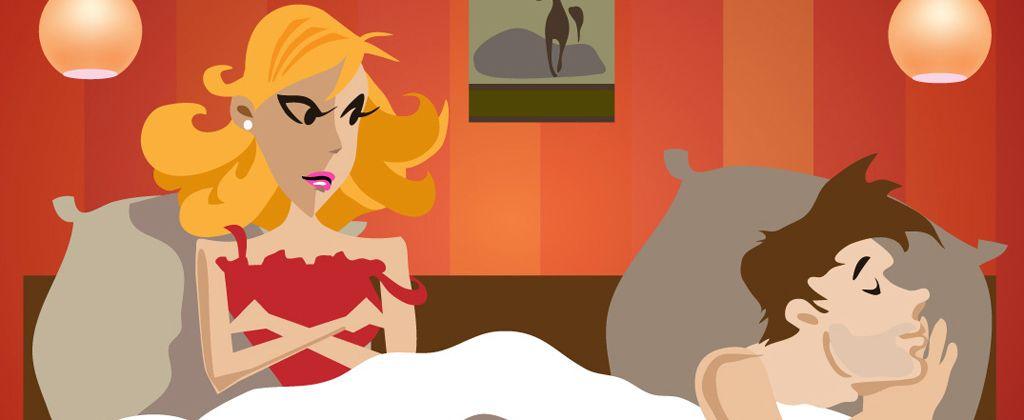

While cultural sensitivities dictate that we approach such topics delicately, believe me when I tell you that having treated thousands of males from just about every country and culture over the years, the very common issue of low libido (not to be confused with erectile dysfunction or impotence) is prevalent everywhere – and in equally frustrating measure.
So let’s talk about it.
Libido is essentially a person’s overall sexual drive or desire. Now let’s assume that the goal of most of us is to be in a healthy, monogamous relationship. Well one of the ways we do that is to maintain a healthy level of sexual intimacy with our partner. It plays a key role after all in allowing a man and woman to truly connect and build a bond of trust.
And so what follows when intimacy occurs far less frequently or disappears altogether is the development of tension and a weakening of the connection you once had with your partner – which in time can end up entirely destroying the relationship.
This means that if a shrinking libido is significantly affecting the levels of intimacy you once shared with your partner, you’d be wise not to ignore it. And you shouldn’t have to, because there are a number of things you can do to quickly improve the situation.
Life happens
So why do so many of us males get to a point in our lives where we lose interest in that one thing that was at one time about the only thing we could never stop thinking about no matter what else was going on in our lives? Well, without getting into a lengthy discussion on how biology and procreation and the link to our desire for immortality through offspring drives so much of our, well, sex drive – let’s just say that priorities change.
Or better would be to say that “hey, life happens.” We get older, we have families, we take on much more financial responsibility and responsibility in general – and so at the same time the body’s biological evolution is occurring (read getting older and older), we get deeper and deeper into the “real world.”
Let’s start with the getting older issue, because that is the main issue for most of us. If you are a regular reader of my articles you know hormone imbalance is a major cause of many of our physical and mental concerns. Starting at age 30, hormone levels in the human body start to drop a few percentage points a year, and by the time you hit 40 the effects can be major.
For a number of you in the late-30s bracket and up, I am sure if you gave it some thought right this moment you would without a doubt note a marked difference in your libido today versus where it was several years ago. That will be due in large part to lower or imbalanced levels of hormones, including testosterone (the biggie), progesterone, DHEA, thyroid, and others. Hormones essentially drive the physiological responses that lead to arousal. If for any reason your body were unable to produce certain sex hormones, you would experience no sexual desires.
More extreme medical conditions can of course also have a severe impact on libido. These can include everything from cardiovascular issues to diabetes to cancer to depression – and much of this ties back to effects these conditions have on the body’s hormone levels.
Then there is the stress that none of us seem able to properly deal with in today’s world – and yes, once again this ties back to the impact on our hormonal system. Chronic stress (that everyday, nagging stress) leads to an imbalance of many of the body’s hormones, healthy levels of which are needed to maintain libido.
Stress unfortunately comes in just about every shape and size. Feelings of inadequacy on the career front, financial struggles, relationship turbulence, any type of conflict with any other person, physical health issues – you can add just about anything to this list. When your brain is full of this, you stop thinking about that.
Getting back your swagger
I think worth pointing out that gracefully surrendering some of your libido as you age is not a bad thing. After all, those levels you had in your late teens and twenties were distracting to say the least. We do need to get on with life at some point.
And so it comes down to finding the right balance. It should be quite clear to you what a healthy level of sexual intimacy with your partner should be. I wouldn’t put numbers on it. It will vary per couple. But what you need to be aware of is the difference between not always having the time versus not having the desire.
If you find yourself in that place of indifference, then yes, you need to do something. I put most of the weight upfront on exploring the issue of general health. I carry out modern health tests across the full medical spectrum to rule out the major issues, and then I also look at the complete hormone panel.
Most of the time – about 70% for the 30s-and-up age bracket – low libido is in fact hormone-related, and when that is the case the problem is for the most part quite easy to deal with. Bioidentical hormone therapy is usually prescribed, which will result in a relatively quick return (about three-to-four weeks) to a healthy libido.
Then I tell my clients the rest lies with them: No, you cannot have a donut for breakfast because poor nutrition greatly affects libido, you should not have your smartphone nagging you about work during all waking hours, you need to get good sleep, you must limit conflict and stress, and the gym should be a regular hangout.
And I also add a special mention with respect to late nights and alcohol. Coming home twice a week at three in the morning tired and intoxicated needs to be brought under control. Excessive alcohol over the years can cause tremendous problems for libido, and in the moment, well, the Porter in Macbeth said it best: “Drinking stimulates desire but hinders performance.”
So it all comes down to the usual “lifestyle suspects.” Discipline there and balanced hormone levels will take you back just the right amount of years while contributing to the health of your relationship.
 Graham Simpson, MD is Chief Medical Officer and Founder of Intelligent Health, a preventive medical centre located in Jumeirah. Dubai. He graduated from the University of the Witwatersrand Medical School in Johannesburg, South Africa, and is board certified in Internal Medicine and Emergency Medicine. As a founding member of the American Holistic Medical Association (AHMA) Dr Simpson is also a licensed homeopath.