


Meet Bennu—the asteroid that has orbited our sun for millions of years, named after an ancient Egyptian deity, and may be on a collision course with Earth.
If you’ve heard of Bennu before, that’s because it’s one of the most studied asteroids in history, and is in fact the best characterized asteroid in the solar system, according to University of Arizona planetary scientist Dante Lauretta.
But the last time we measured Bennu, we found something curious—Bennu is actually more likely to hit earth than we previously thought.
The study was published in the scientific journal Icarus, using data from NASA’s OSIRIS-REx spacecraft that was checking the likelihood that Bennu will make impact with earth between now and the year 2300.
To their surprise, they found that the likelihood had actually gone up, and was now at 1 in 1,750 between now and then.
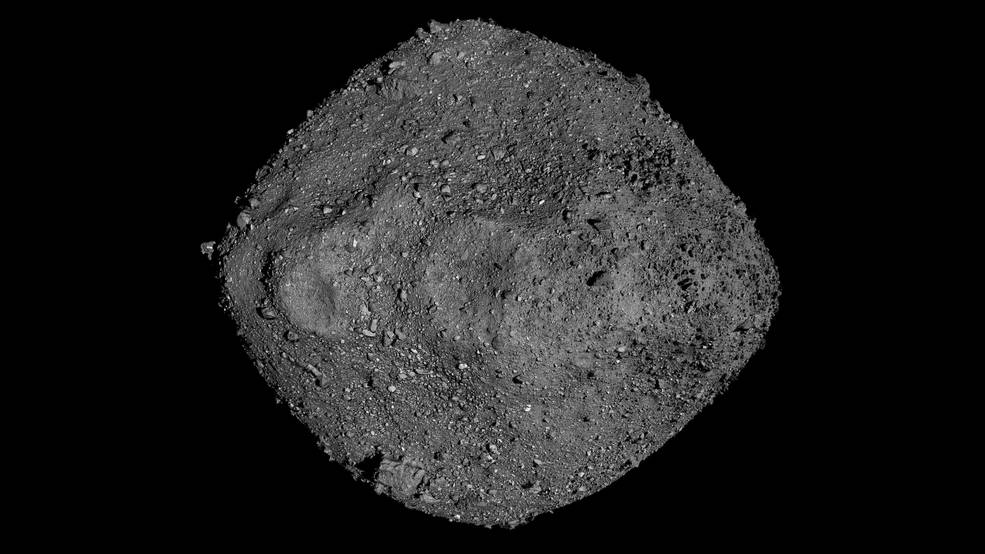
If Bennu hit earth, the destruction would be massive. To put it precisely, it would be around 2 million times the explosive energy that rocked Beirut in the devastating port explosion tragedy on August 4, 2020.
If you want to make a day in your Google calendar, try circling September 24, 2182—that’s the single most likely day that Bennu will make impact. Granted, the chances are around 1 in 2,700, but it’s still the day that Bennu may be flying the closest by our planet.
The biggest risks come between the late 2100s and early 2200s overall.
So, how did they find out?
The team that was led by Davide Farnocchia, a navigation engineer at the NASA Jet Propulsion Laboratory, was analyzing Bennu’s distance from earth between 2019 and 2020, with a level of precision that was within 2 meters. (Yes—we can measure asteroids millions of km away within 2 meters now.)
“If you want to be able to predict where an asteroid is going to go in the future, that prediction is entirely determined by how well you can measure where it is today, says University of Arizona planetary scientist Amy Mainzer, an expert on near earth asteroids.
“This team has made an extremely precise measurement,” she added.
Don’t stress too much though—it’s still quite unlikely, and it’s nowhere near as big as the asteroid Chicxulub that likely caused the mass extinction of the dinosaurs 66 million years ago, which was likely 10km across, whereas Bennu is around 1 km wide.
If it doesn’t hit then, it could still be more likely beyond that. In fact, though Bennu was likely formed 4.5 billion years ago in the Main Asteroid Belt between Mars and Jupiter, due to the Yarkovsky effect, Bennu has moved closer and closer to the earth because it has absorbed sunlight and then reemits it as heat, as well as due to the gravitational pull of other bodies in the solar system.
The sun could actually continue to push it closer to us—upping the chances of an eventual impact.
Bennu the Asteroid: A closer look
Here’s some more facts about Bennu, if you’re keen.
Bennu is a B-type asteroid, which means simply that it contains a lot of carbon, meaning that the surface reflects about four percent of the light that hits it—which isn’t a lot compared to Venus, for example, which reflects around 65 percent of incoming sunlight, and Earth reflects about 30 percent of the sunlight that hits it. That makes it a pretty dark asteroid.
Also, because it’s so old, Bennu might actually contain molecules that were present when life first formed on earth—potentially helping to understand how life began. It also likely contains platinum and gold.
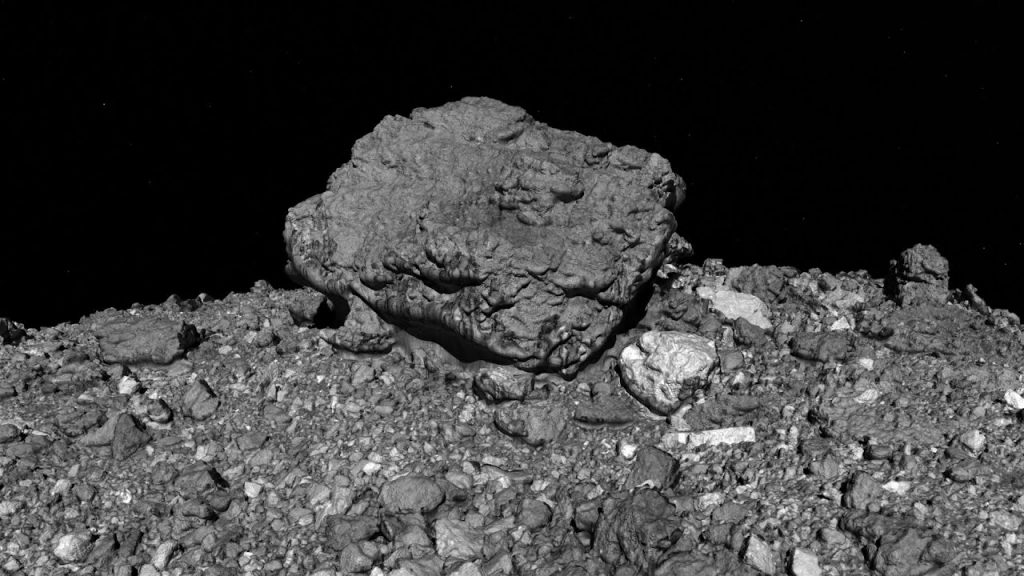
If you’re curious about the name, Bennu is the ancient Egyptian deity linked with the Sun, creation and rebirth —and Bennu is the living symbol of Osiris.
NASA also recently figured out why Bennu appears so rocky.
Well, now you’ve met Bennu. Let’s hope you don’t get the chance to do so in person any time soon!
Stay safe, everyone.