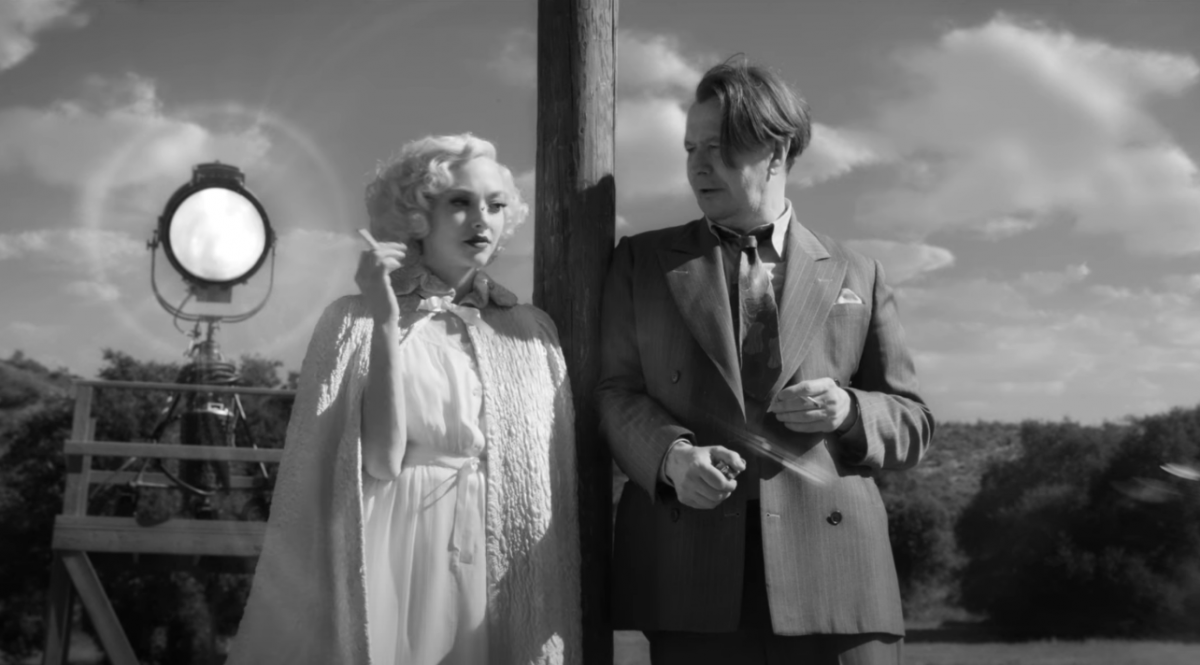

Maybe in an old movie house, with retracting red seats lined with frayed fabric, with sticky floors and a distant smell of popcorn, things would be different. But as it stands, Mank, a film made for streaming, is basically unwatchable at home.
For decades, David Fincher, director of Seven, Zodiac, and the Social Network, sat on a script written by his late father Jack Fincher about the golden era of Hollywood, following screenwriter Herman J Mankiewicz and the making of Citizen Kane, and all the corruption, chaos and intrigue that surrounded it and the broader industry of that era.
Fincher tried to do it while his father was still alive, after he made The Game in 1998, but no one would buy into his idea of doing it in black and white and fully as a throwback, as if it was a lost film of old Hollywood itself. Finally in 2019, a few years after he became the first A-list director to partner with Netflix, the streaming service returned the favour, and allowed him to indulge himself in his passion project.
Ironic, then, that there’s no worse place for a film like this than Netflix, where immediacy is everything, and any slight disturbance will cause its viewers spoiled for choice to click back and pick something else. Mank is a film that never gives its viewer much to cling onto, and after your ears readjust to the reverberated sound design, it becomes a meandering jumble of scenes that at best deliver a pleasant stream of well-delivered one liners and exquisitely crafted sentences that are worthy of a George Cukor or Billy Wilder film on their own, but without any of the clear eyed sense of character and storytelling that makes those films so worth rediscovering.
If this was meant to feel like a lost film, perhaps it should have stayed lost.

Esquire now has a newsletter – sign up to get it sent straight to your inbox.
Want up-to-the-minute entertainment news and features? Just hit 'Like' on our Esquire Facebook page and 'Follow' on our @esquiremiddleeast Instagram and Twitter account.