
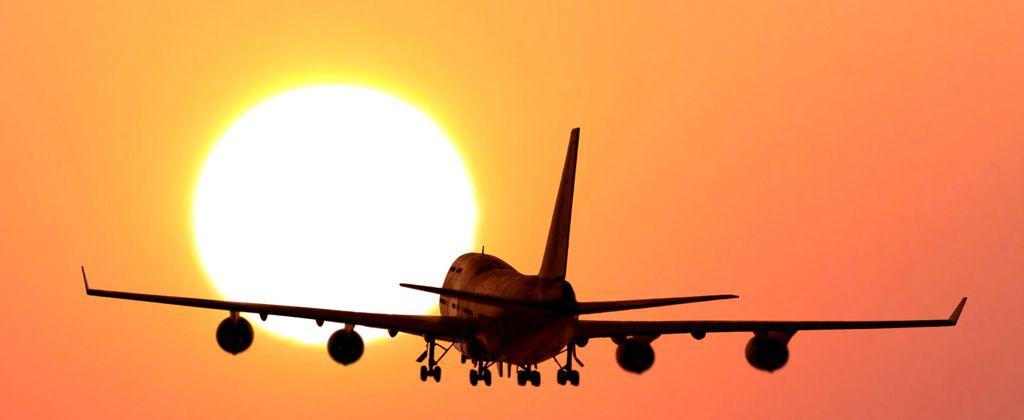

For many of us in Dubai, a plane is like our second office. We are a city of frequent flyers – whether it is going back home to see the family or jetting off on one of the many business trips you’ll take this year. But as you’re tapping away on your laptop or watching a movie or catching up on some sleep, your body may be taking its fair share of abuse. In fact, according to experts, spending time in that plane is like spending time at a nuclear power plant.
The reason? Exposure to so-called “cosmic radiation.”
While studies have so far focused mainly on pilots and air crew, there is a growing buzz around whether frequent business travellers might fit the ‘occupationally exposed’ category – a term previously used for people working in environments known to have elevated levels of radiation.
From outer space
As the name hints at, cosmic radiation originates in outer space. It is categorised as “ionising,” meaning it has the potential to damage the molecules that make up living cells – your and my living cells. While small doses are not usually harmful, higher levels can lead to the development of cancers or genetic disorders.
Luckily for us, the earth’s atmosphere manages to absorb much of the cosmic radiation before it can reach the ground, so while we’re down here we’re shielded to a large extent. However, all that changes when we’re cruising at 40,000 feet and the atmosphere is much thinner.
As a general rule, cosmic radiation roughly doubles for each 6,500 feet increase in altitude, so someone in an aircraft flying at 40,000 feet has much greater exposure than someone on the ground. The latitude of the aircraft is also important, specifically its proximity to the north or south pole where the earth’s magnetic field is strongest and causes the highest radiation levels.
How long you’re on the aircraft – the duration of the flight – also comes into play, as does the number of flights taken each year. And finally, there is solar activity – let’s call it space weather – and whether your flight coincides with any radiation-causing solar flares.
But is it bad for us?
So let’s talk health risks: Specifically, are we or are we not harming our health when we fly? To find out, let’s see what the research tells us.
The United Nations Scientific Committee on the Effects of Atomic Radiation reported in 1993 that the average effective dose of radiation to flight crews was marginally higher than that for nuclear workers. At a glance, this is a major discovery and one that could have implications for business travellers. However, the report goes on to state that the increase in lifetime risk of developing a fatal cancer from this exposure is less than half of one percent.
But then there is this: In 2002, a study out of Scandinavia looked at data from 10,000 male airline pilots over the previous 17 years and found greater risk of developing melanoma and prostate cancer. And a combined Japanese and Italian study in 2006 found that women working on planes were more likely than average to develop breast cancers and melanomas.
For both studies, however, a major caveat was added: Lifestyle factors looking at specific behaviours of flight crews such as, for example, more time spent sunbathing than the average person (yes, this in fact the case), means a direct connection to time spent in the skies cannot be made.
What can we do?
The absence of definitive findings aside, we clearly have our concerns. In the United States, pilots and flight attendants have been officially classified as “radiation workers” by the Federal Aviation Administration. And many airlines around the world limit the air time of pregnant crew because prenatal exposure to high doses of radiation can be harmful to the developing child.
There is increasing pressure from a number of bodies to persuade airlines to carry out much greater monitoring of radiation during flights, as well as flight plan rescheduling to avoid radiation, and in-depth studies of both crew and frequent flyers. So let’s see where that goes. Unfortunately, the most obvious solution is also the least plausible: Shielding the aircraft in some way is simply not possible from an aerodynamic point of view.
Here is a neat one: A company called Premier Micronutrient Corporation (PMC) out of Denver, Colorado, has actually come up with a pill to protect us against radiation exposure. In cooperation with NASA, tests were carried out on both animals and humans, and it was shown that the pill, called BioShield, offered significant protection against radiation exposure – even against potentially lethal doses. PMC says it is the first commercially available product ever shown to significantly protect DNA from ionizing radiation.
So where does this leave us? As a doctor having looked at a lot of the available evidence, I am not yet losing any sleep over this, and you shouldn’t either. I think the real dangers from frequent flying have to do with that lifestyle in general: That is, when we are away from home it is much harder to stick to a healthy diet and get our exercise. So while we look forward to future studies and more definitive evidence on the link between flying and health, we can in the meantime stay focused on those aspects of health management that we control.
 Graham Simpson, MD is Chief Medical Officer and Founder of Intelligent Health, a preventive medical centre located in Jumeirah. Dubai. He graduated from the University of the Witwatersrand Medical School in Johannesburg, South Africa, and is board certified in Internal Medicine and Emergency Medicine. As a founding member of the American Holistic Medical Association (AHMA) Dr Simpson is also a licensed homeopath.