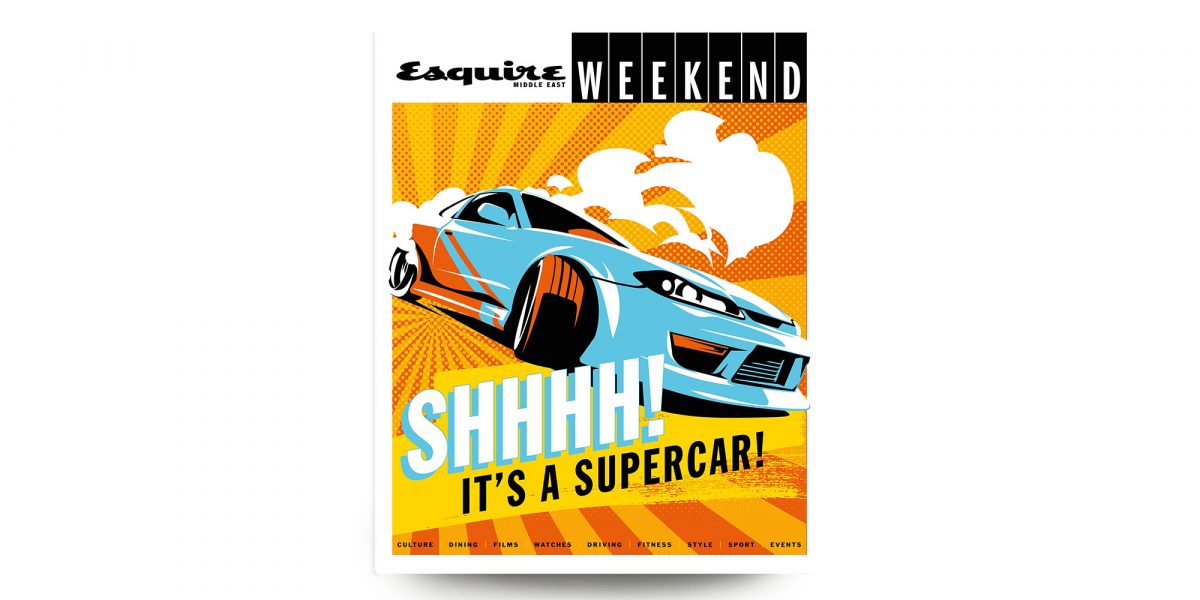
Today an engine’s note is as carefully considered as every other part of the car’s design, with some car makers even resorting to artificially manipulate the sound it makes. How is it done? Why does a certain rumble illicit such a spine-tingling response? And, with the rise of the eco supercar, is the roar about to be silenced?
This is a Maserati, ended a radio advertisement from the Italian sports car manufacturer just few years ago. What preceded, however, was not the usual litany of product benefits, rather what was conspicuous about this ad was that it gave so few details about the car in question.
Aptly enough for the radio, it reduced all of the usual sales pitch to just 30 or so seconds of its engine sound. This distinctive throaty roar is, the ad implied, all you need to know. It’s what you might expect from a company that, although founded in 1914, has for the last couple of decades seen it dedicate a team of engineers just to designing the sound of its engines.
“People who buy an Aston Martin want what they feel to be an Aston Martin sound – put a Ferrari sound in an Aston Martin and it would just be wrong. There’s a brand sound”
But Maserati—among other prestige carmakers—may be too late. The thrill of the acceleration, the smell of the petrol, the gentle, almost inaudible hum of the battery—if boy racers love to rev their engines, if the thrill of a live Formula One experience is dominated by the guttural scream of all that horsepower, the future of the car, in indisputably being electric, is set to be much, much quieter.

Maserati has previously marketed its cars on the back of its engine’s sound
That, in the decades to come, is going to make a profound difference to our cityscapes; after all, much of the noise that defines the urban environment comes from our vehicles, most of which will be hushed. Ironically, electric engines—and their lack of noise—are going to allow for the creation of temporary inner-city tracks for Formula E racing too.
But the quiet is posing all sorts of problems before then, not least, it’s argued, for pedestrians. One 2015 study by the Guide Dogs for the Blind Association concluded, are 40 percent more likely to be hit by an electric or hybrid-engined vehicle than a conventionally-engined one; another study, by the University of California, found that subjects had to be 74 percent closer to a car to hear it if it had an electric engine rather than a combustion one. So don’t enjoy the silence just yet.

Tesla preparing to fit speakers to newer models for safety reasons
Last year the European Union—the legislative body overseeing one of the world’s biggest single car markets, and home to many of its leading makers—introduced new rules that stated traditional engines must make 25 percent less noise, around four decibels’ worth.
But also that—from this summer—new silent electric cars must also be fitted with some kind of sound generator that kicks in below 20kph, basically to prevent pedestrians from walking out in front of them.
Perplexingly, legislators argue that above this speed even electric cars will make enough noise—through their tyres, wind resistance and the like—to warn of their coming. Similar laws in the US—set to come into force next year—set the speed/sound limit 30kph.

The EU and US Department of Transportation are forcing automakers to add pedestrian noise devices to cars
So get ready to talk a lot about the AVAS in your car. That’s the acoustic vehicle alerting system, also known as waterproof speakers fixed behind the grill of your car—and not to play some booming bass music. “[Rather] this electric warning device will make a sound very similar to that of cars with a regular combustion engine so that people will be able to clearly hear these vehicles, allowing them to judge how safe a road is to cross,” reckons Chris Davies, environment spokesman for the Liberal Democrats, the British party that introduced the law. The stated objective has been to create a generic blend of white and tonal noise for these low speeds—one that is in theory is audible but not environmentally disturbing, while also not driving the driver to distraction.
“That’s a strange enough concept—the electric engine, which then has to in some way mimic its defunct predecessor, the combustion engine, in order that people can safely use it.”
That’s a strange enough concept—a technological advance, the electric engine, revolutionising the nature of a product, which then has to in some way mimic its defunct predecessor, the combustion engine, in order that people can safely use it. Add in what might be considered a profound societal good—quiet cities—and then in part diminish that opportunity, and it can seem doubly strange. Indeed, since there’s no industry-wide agreement on what AVAS should sound like, at least not yet, there’s a possibility that the generic engine noise we’re all familiar with will be replaced by a cacophony of chirrups, beeps, buzzes, whirs and whines—albeit that these all need to operate within certain frequencies both so as to not be too obtrusive, but also to be readily comprehensible as a warning signal by pedestrians.
Of course, the issue is compounded by the fact that each car brand wants its own distinctive sound. It’s a branding opportunity. For the same reason, the question of what sounds your car makes, if any, is all much trickier still for some makers. After all, for some—as that Maserati advertisement suggested—the engine note itself has become a significant brand statement.

Ferrari is yet to commit to a 100% electric supercar
“It’s a fundamental aspect of the character of every Ferrari,” as Nicola Boari, Ferrari’s chief brand diversification officer, puts it. “It’s vital in expressing the company’s emphasis on performance and represents its racing heritage. Each model is individually engineered to give it a recognisable sound, just like a musical instrument. The sound is taken into consideration from the moment we start to engineer a new engine.”
We all know some of the tunes too. In broad strokes one can cite the distinction between the high revving, screaming sound of Italian sportscars, versus the low and rumbling sound of American super-cars, placing, say, Aston Martin’s graveliness somewhere in the middle. But developing a more precise brand sound is of course more complex than these descriptions allow for. At Aston Martin the marketing department will suggest the kind of sound it wants from a proposed car, independent juries are used to assess preferred sounds ‘blind’—including those of competitor companies—and advanced computer simulation tools are used to work out if such a sound can be achieved with the engine. Most customers want what they feel to be an Aston Martin sound—put a Ferrari sound in an Aston Martin and it would just be wrong. There’s a brand sound.
Most customers want what they feel to be an Aston Martin sound—put a Ferrari sound in an Aston Martin and it would just be wrong

Indeed, while Boari argues that customers are unlikely to buy a specific car for its engine sound—this is more something the driver learns to love as expressive of performance—sports car manufacturers are increasingly taking every step to make sure that sound is transmitted to the driver, while having to find the right balance with keeping the cabin environment comfortable to be in.
In developing its LFA Lexus, for example, worked with Yamaha—the instrument maker, not the engine-builder—to help develop components that directed engine sound to the cabin. Porsche’s ‘Sound Symposer’ is a tube housing a diaphragm and a valve which, in sport mode, opens to amplify the engine sound. With Ferrari’s front-engined cars—in which the engine is relatively more distant from the cabin and isolated by the front bulkhead —special tubes are used to channel a small amount of sound from the intake plenum to the cabin. Retaining this sonic experience has been sufficiently important to many sportscar makers that they have been reengineered their exhaust manifolds to retain the brand sound in the face of, for example, a tightening of legal decibel limits in urban areas, or the sector’s shift over to turbo-charging, increasingly used to improve emissions while maintaining performance. As Boari has it, sounding somewhat disappointed, “turbos literally act as a plug to engine sound”.

To build its LFA supercar, Lexus worked with musical instrument-maker Yamaha
Ferrari stresses that the sound of its engines are never enhanced. Yet this is not always the case for other manufacturers, such is the emphasis on engine sound as a crucial aspect to the driving experience. In recent years BMW, for example, has found that the chassis of its M5 was so effective at isolating the cabin from outside noise that it chose to play an exterior recording of the engine through the car’s stereo, the precise sample played selected according to RPM. For some of its models Volkswagon too has used what it calls a ‘Soundaktor’, a dedicated speaker located near the engine’s throttle body.
“Technology evolves. It’s like the shift between having buttons on your mobile phone and then a touch screen”
But now we face an electric future in which all engine sound will, in effect, have to be enhanced, if there’s any sound at all. Certainly John Caress’s job has taken a turn. He’s vehicle line director for the Rapide E, Aston Martin’s flagship electric vehicle. And, like other auto engineers, while placing considerable emphasis on the particular quality of the sound of the engine, he also does all he can to minimise cabin sound in almost every other aspect of our experience of a car.
“Silence is what you normally want, in a luxury saloon, for example,” he says. “But [with the advent of the electric engine] now we have a question we’ve not had to ask ourselves in the 106 years of our history”. That question? What does an Aston Martin electric engine sound like? Can it sound anything like its distinctive combustion engines? And his tough answer? It sounds like nothing at all.
“Drivers of performance cars do connect with the sound of the vehicle—the exhaust note, the engine—and not having that feature anymore means we just have to encourage them to connect to the other senses,” he argues. “There are many benefits that an electric drive-train brings to a car, but it will require a level of recalibration that drivers will have to go through. I’m a huge petrolhead and I’m not regretful of the loss of the engine sound because there are other pay-offs. Technology evolves. It’s like the shift between having buttons on your mobile phone and then a touch screen.
MORE FROM ESQUIRE WEEKEND
Lebanese music festival cancelled amid controversy
The real reason Snapchat is trolling Instagram
Hublot’s sky blue ceramic watch is seriously summery
The Four Seasons private jet is heading to the Middle East
The user adapts. And I don’t miss my old Nokia either. Every brand will respond in a way that’s right for it, but we don’t want to provide a fake experience—there can’t be some V12 rumble when there’s no V12 there.”
Aston Martin isn’t, of course, the only company looking to find a new acoustic means of expressing who they are—a sound signature in a world of silent vehicles, or, conversely, one legally obliged to make some kind of sound even if near silence is technically feasible. Harley-Davidson—for the legislation applies to motorcycles too—has gone for a straight electronic replication of the distinctive muscular ‘hog’ sound for its LiveWire electric model. Bizarrely, this spring Mercedes-AMG hired the American rock band Linkin Park to help develop the right sound for its electric super-cars.

The question is, ‘what does Aston Martin’s electric engine sound like?’
But this isn’t all just about protecting pedestrians. Nor, Jaguar and other makers argue, is some kind of engine sound just for drivers’ pleasure. That’s part of it. But it’s crucial to their safety too. It has given its new I-Pace car—its first all-electric model—an AVAS, like a gently rising generator-style hum, but also what it calls Active Sound Design, which, as with a conventional engine, makes more cabin sound the more the vehicle accelerates. There’s silence if you want it; in ‘calm’ mode the ‘engine’ can barely be heard; in ‘dynamic’ mode it’s full-on race track—but such modes are designed to give drivers a form of auditory feedback about the state of the vehicle, one we’re entirely used to getting.
Certainly, for anyone who has experienced a new, high-end non-performance car—one designed to be quiet —it’s remarkable how fast you can find yourself driving without realising it for lack of this feedback. And the I-Pace’s feedback is certainly memorable, something akin to a conventional engine as imagined by Star Fleet’s house band playing a 23rd century synth (in fact, Jaguar wanted to give its AVAS a more sci-fi tone too, but found that people typically looked up at the sky on hearing it). This is to say it’s familiar yet futuristic. Volkswagon, for one, has likewise stressed how important it is that its electric sound is nothing like any vehicle it’s made in the past. Acoustic engineers will now, in effect, have to score an electric car much like a composer scores a movie.
“It’s a matter of looking at the level of interaction between the driver and the car and whether a sound that reflects what the car is about adds to that interaction,” explains Iain Suffied, NVH technical specialist for Jaguar and the man who led the development of its Active Sound Design. “We’re using technology to extend the bandwidth of what the car can do, from silent to a sound that gives the kind of engagement that, without it, means you just don’t drive the car in the same way. As humans we like experiences—and silence tends to be uninspiring.
“We knew it would be weird just to mimic a combustion engine, though there were plenty of petrolheads around here who just said ‘great, we’ll make it sound like a V8’.”
“That said, we knew it would be weird just to mimic a combustion engine, though there were plenty of petrolheads around here who just said ‘great, we’ll make it sound like a V8’. Rather we actually took the design language of the I-Pace as our starting point and tried to turn images into the building blocks of sound. The I-Pace had to sound as futuristic as the car looks. And if you don’t like it you can just turn it off.”
Yet silence isn’t golden for all. Will the super-car market see a resistance among drivers to embracing electric vehicles because of the lack of authentic sound once so integral to their enjoyment? Some in the industry speak of super-cars remaining defiantly conventionally-engined, driven at speed only at private tracks—the thoroughbred racehorses of the automotive world, stabled beyond legislation. Yet certainly many factors that might prompt initial discrimination against electric super-cars are fast disappearing—top speeds are comparable, torque is breathtaking and it’s an electric super-car that now holds the world record for acceleration, for example.
“Sure, there is a lot of scepticism about eco engines in super-cars, even though obviously there’s a need for them,” concedes Mike Kakogiannakis, co-founder of Dubuc, the developer behind the Tomahawk electric super-car—and just one of a new generation of electric super-car start-ups, counting among them the likes of Acura, Elextra, Dendrobium, NIO and, most famously, Tesla.
“Personally I’ve owned several super-cars and I love the sound of a conventional engine, as well as the smell and the vibration,” he adds. “But the fact is that there are always better, newer ways of doing things, which these start-up makers embody. Just 10 years ago to buy such an electric or hybrid-engined super-car would have been more out of passion. You’d have had to have gone out of your way.
Now buying is just that much more feasible because the technology required to make these engines practical is evolving at an unprecedented rate. And attitudes to that tech, and our adaptability to it,are rapidly changing too.”
MORE FROM ESQUIRE WEEKEND
Ferrari threatens legal action against Philipp Plein
Japan has made its Olympic medals out of old phones
Ralph Lauren is getting his very own (stylish) documentary
Mr Porter gets a commitment to men’s mental health
Indeed, far from being dissuasive, tech—which, as with a laptop or smartphone, that silent running perfectly expresses—might in the years to come prove the real selling point for these next generation cars. Arguably, it won’t take long for the difference between a conventionally-engined super-car and an eco one to be seen as comparable to the difference between a black and white TV and a 4D flatscreen. And which consumer tends to want the very latest tech? What will probably drive this gear-change in culture is less a grudging acceptance that engine note—or at least a real one—is no longer part of the petrolhead package, so much as a fundamental change in the mindset of those buying such vehicles.
“The fact is that the rich who can afford these kinds of cars are getting younger and younger and they’re less and less interested in old technology,” argues Robert Palm, the designer and CEO of Classic Factory, the company behind Elextra. “They might even see it as a negative thing to be seen to be driving, say, a conventionally-engined Lamborghini. That’s one reason why even if these electric super-cars had been around 20 years ago they wouldn’t have sold—the market for them wasn’t there.”
But now things are different. They’re more progressive. And soon they may be quieter too.