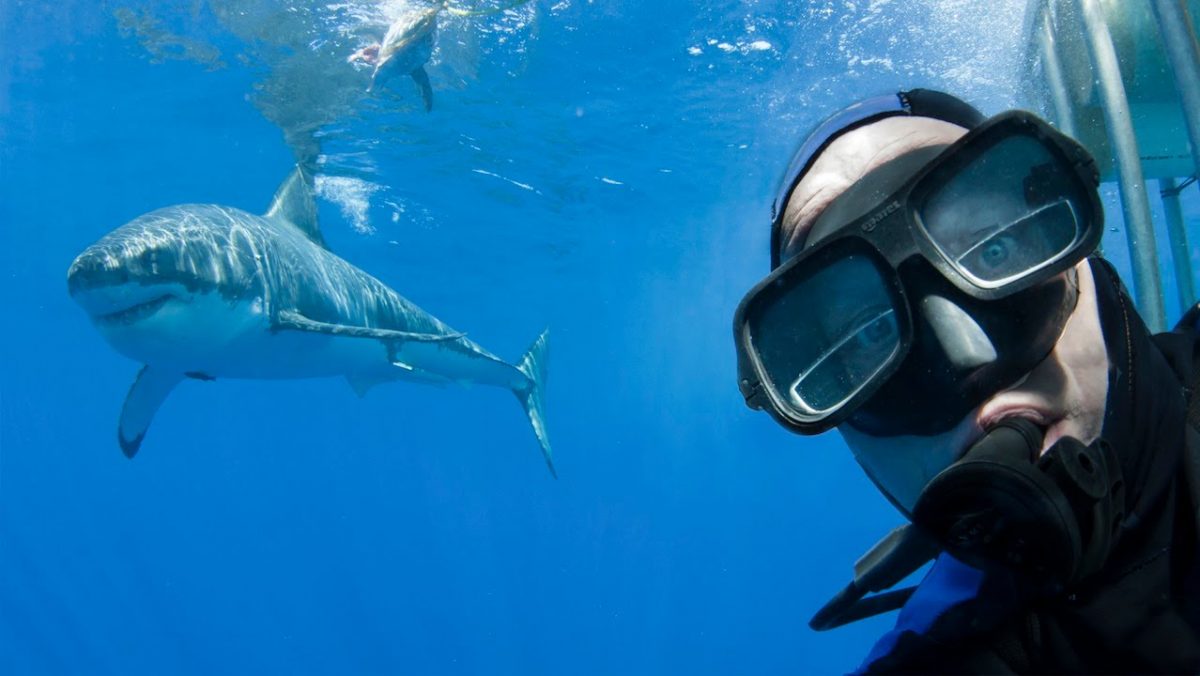
Over the last decade that selfies have been a ‘thing’ they have remarkably killed five times more people than shark attacks.
The death toll has slowly risen each year, as smartphones become more sophisticated and selfie sticks increase the range at which people can snap themselves. This, in turn, has led to people taking bigger risks than ever to get that perfect shot. And the stats don’t lie.
Between October 2011 and November 2017, at least 259 people were killed taking selfies around the globe. That’s compared to just 50 people who have died from shark attacks.
While women are the ones who take the most selfies, it is young men who are the most prone to take risks. They make up three-quarters of selfie deaths.

India – which has more than 1.3 billion people and 800 million cell phones – holds the record for the number of people dying in the act of photographing themselves. More than 159 people have perished on the sub-continent while taking a selfie.
The situation has become such a threat, that the city of Mumbai has had to set up 16 “no selfie” zones.
In Russia, after several deaths of teenagers falling from bridges and high-rise buildings, the police had to issue a guide to ‘selfies without danger’ back in 2015.
In the United States, a majority of selfie deaths occurred as men and women fatally shot themselves while trying to get a good pose while holding a firearm.
And in January, Taiwanese social media star Gigi Wi – knows as the Bikini Climber for taking selfies on top of mountain peaks dressed in skimpy clothing – died when she fell into a ravine.

The UAE has seen its own share of selfie obsession. In 2017, Russian model Viktoria Odintcova climbed Dubai’s Cayan Tower to take a dangerous selfie. The model dangled over the side of the building being held by hand.