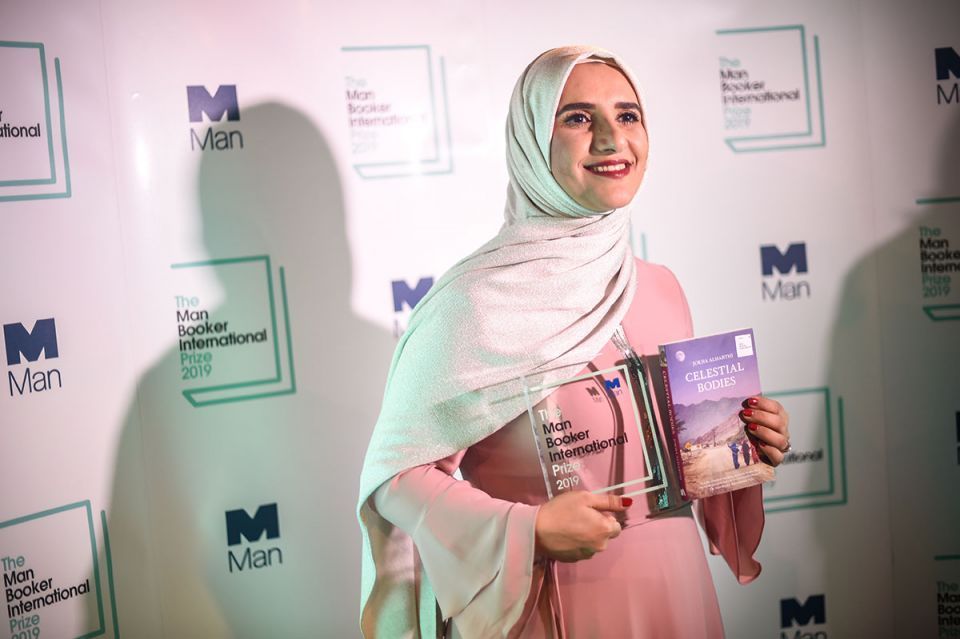

- Oman novelist Jokha Alharthi was among five female nominees shortlisted for the award for her novel ‘Celestial Bodies’
- The British-based prize celebrates the translated English-language versions of novels from around the world
- The Man Booker Prize is the leading literary award in the English speaking world, and has brought recognition, reward and readership to outstanding fiction for five decades
- She was revealed as the winner in London on May 21
For the first time in the history of the Man Booker International Prize, an Omani author has won the illustrious award. Oman novelist Jokha Alharthi was among five female nominees for this year’s Man Booker International Prize and she took home the prize!
Alharthi won for her novel ‘Celestial Bodies’, which follows three sisters in the village of al-Awafi in Oman. AFP’s description of the book says: “These three women and their families witness Oman evolve from a traditional, slave-owning society which is slowly redefining itself after the colonial era, to the crossroads of its complex present.”
She studied classical Arabic poetry at Edinburgh University and teaches at Sultan Qaboos University in Muscat.
“Oman inspired me but I think international readers can relate to the human values in the book – freedom and love,” she said.
She won the 50,000-pound ($64,000) prize, which is split equally between the author and the translator.

Last year’s award was won by Polish author Olga Tokarczuk, who is also one of the shortlisted authors this year. Women dominated this award with five of the six nominees being women.
The Man Booker International Prize is awarded each year to the best book translated into English and published in Britain or Ireland. Celestial Bodies was selected by a panel of five judges, chaired by Bettany Hughes, award-winning historian, author and broadcaster, and made up of writer, translator and chair of English PEN Maureen Freely; philosopher Professor Angie Hobbs; novelist and satirist Elnathan John and essayist and novelist Pankaj Mishra.
We’re delighted to announce our #MBI2019 winner is Celestial Bodies by Jokha Alharthi, translated by Marilyn Booth and published by Sandstone Press. Read more here: https://t.co/rWHBRXwDOy pic.twitter.com/SfJr2Yg98u
— Man Booker Prize (@ManBookerPrize) May 21, 2019