
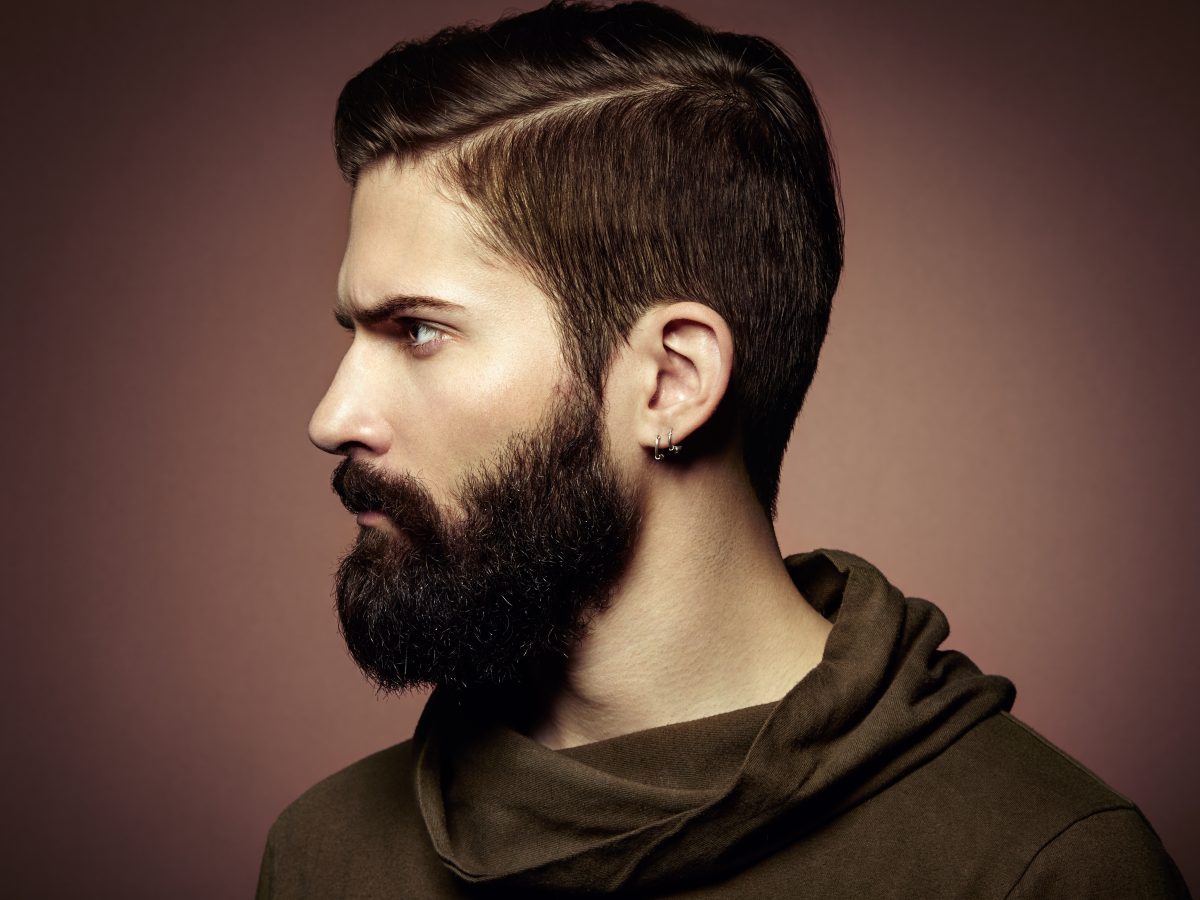
Growing out a beard is no excuse not to keep your grooming game on point, but constant trips to the barber can be time consuming (and expensive). So we’ve devised a few straightforward steps to make maintaining any sort of facial hair at home as easy as shaving it all off each morning.
Step 1: Keep It Clean and Soft
A dry, dirty beard isn’t ideal for obvious reasons. But it’s especially bad when it comes time for a trim. So keep it clean. First, wash with a beard shampoo, because your face skin is different from your scalp, and it’s best to have something purpose-built for the occasion. Then, condition. It’ll soften things up and make the next step a lot easier.
Step 2: Brush It Out
After your beard dries, take a brush and run it against the grain, so that the hairs stand up and out. Not only will this make it easier to trim, but it will also highlight any inconsistencies in length.
Step 3: Trim
Use clippers to trim to your preferred length. (It’s best to start with a bigger guard, to prevent accidentally cutting everything too short.) If you’re looking for something simple and short, an even length all around is fine. If you’re going longer or want to give it some shape, you’ll need to complicate things a bit. Don’t worry, it’s not all that complicated.

There are a lot of ways to play with beard shape, but the most universally flattering technique requires leaving the hairs a little longer around the chin and shorter on the sides of your face. Think a number 3 setting at the temples but a 4 or 5 setting when you get to the goatee area, which you can roughly define by looking to the corners of your mouth and using those as an outer limit. The mustache, which tends to have denser hair growth, should be kept about as short as the hair on your cheeks and temples.
Step 4: About That Mustache
Once you’ve trimmed down with clippers—try running them widthwise across your face so the guard doesn’t get caught in your nostrils—you’ll want to clear those hairs off of your upper lip. A pair of beard or mustache scissors will do just fine for that. As for how high above your lip to trim? It’s a judgment call. Some guys like a lot of clearance, and some prefer a little overhang. Start lower and adjust upwards to taste.
Step 5: Define Your Neckline
Now comes the trickiest part: trimming the neckline. The biggest way to compromise your beard is to ignore this crucial demarcation, or to trim it in the wrong place. Stop too close to the jawbone, and it will make it look like you have a double chin, even if you don’t. Let it wander too far down your neck, however, and you’ll invite comparisons to feral creatures.
The safest bet is to trim everything below your Adam’s apple, but where exactly you want to draw the line can vary a bit from person to person. Some folks have longer necks, some have shorter ones; you might need to go a little above or below the Adam’s apple for an optimal beard. But it’s still a good reference for the lowest point that beard line will dip. Then you just extend that up in a soft curve towards your ears to create a shallow “U” shape.
You still want the beard itself to wrap around your jawline and the underside of your chin, but after that it’s time to either shave everything off for a “hard stop” on the beard line or taper it down for an equally fine look that’s just a touch less severe.
Step 6: Finish with Oil
Just like the hair on the top of your head, your beard needs moisture to stay healthy. So finish the whole process off with a good beard oil that’ll moisturize and help keep your facial hair looking its best. Then run a beard comb through it to distribute the oil, as well as to style your beard back into place, post-trim. This will also help reveal strays that got passed over while trimming, which you can take care of with your scissors.