

Samsung has been making folding phones for seven years. Huawei has made one that folds twice. Google, Honor, Oppo and Xiaomi have all had a go, too.
And yet, for most people, the smartphone still looks much as it did a decade ago: one screen, one slab, one increasingly enormous camera bump.
That might be about to change.
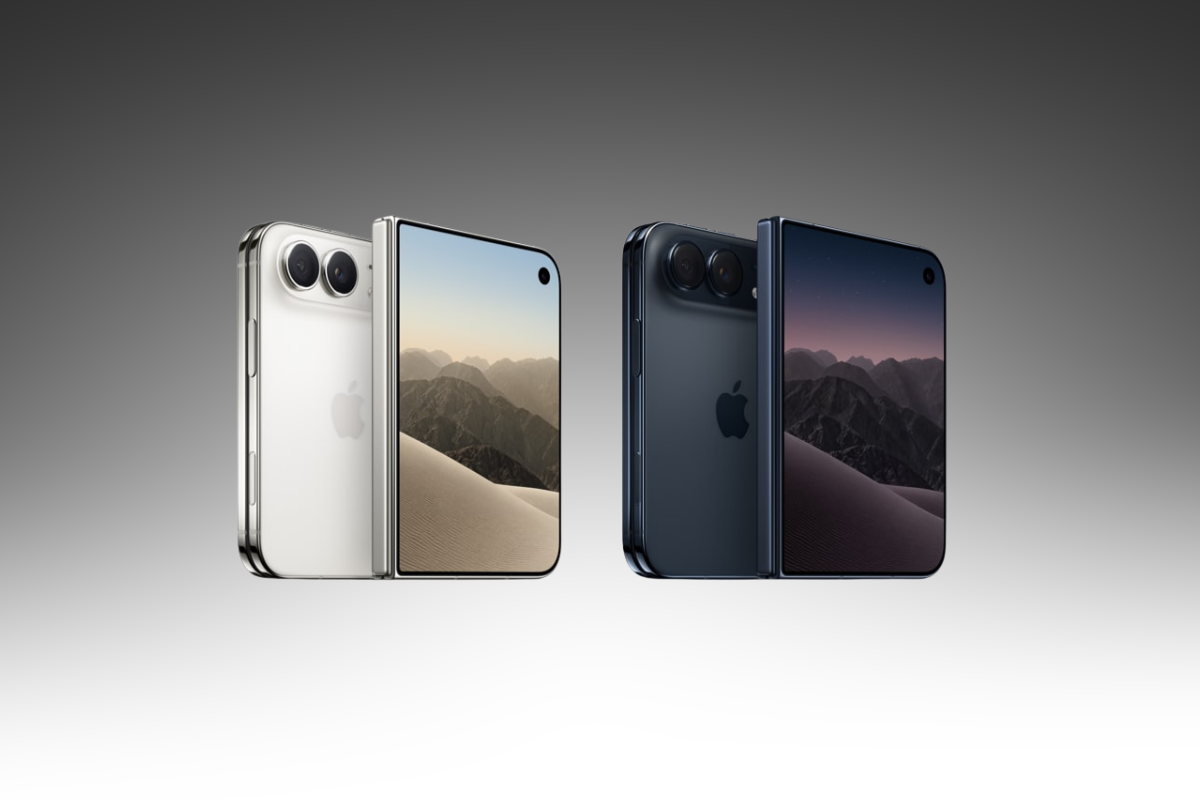
Apple has announced the iPhone Duo, its first folding iPhone, and perhaps the first foldable that has a genuine shot at making the format feel ordinary.
Not because Apple invented anything here. It very much did not. But this is Apple, and when the company throws the weight of the iPhone behind a new piece of hardware, the rest of the world tends to pay attention.
The Duo starts at AED8,499, with preorders opening October 16 before it goes on sale on October 23. That buys you 256GB of storage, although Apple will happily sell you one with as much as 2TB.
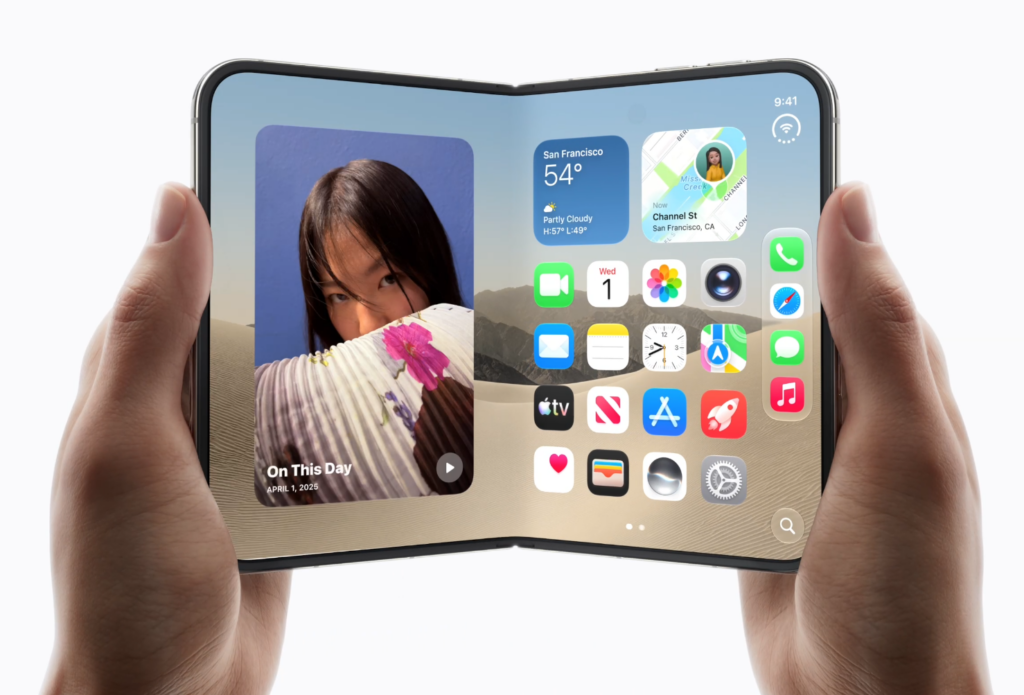
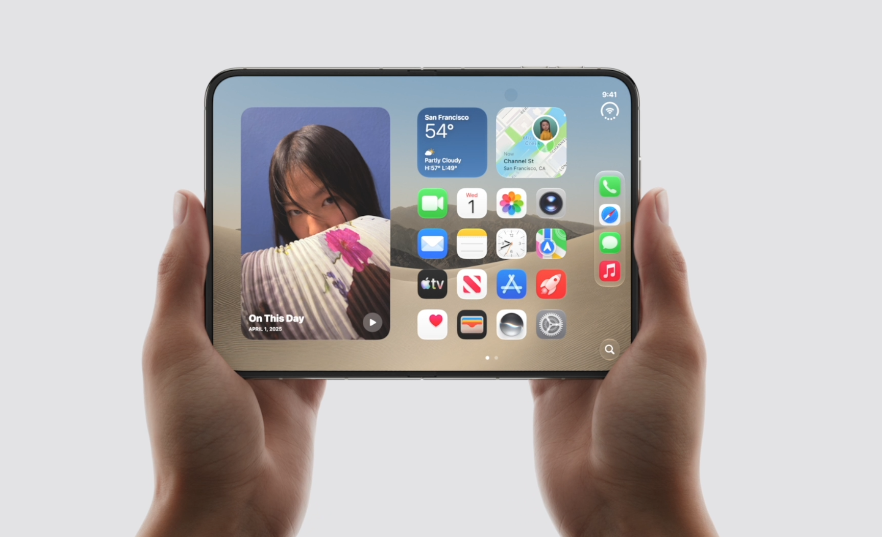
Closed, it is roughly the size of a passport, with a relatively compact 5.4-inch screen. Open it and you get a 7.6-inch display, the largest Apple has ever put on an iPhone.
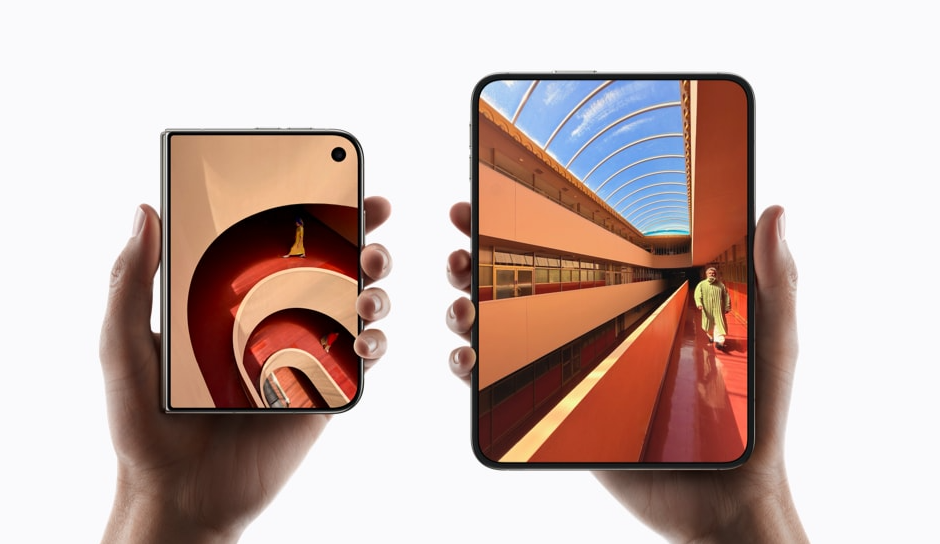
That paltry first number is second to the one that really that matters.
The inner display is 50 percent larger than the screen on the iPhone 18 Pro Max and 80 percent larger than the iPhone 18 Pro. Which makes sense, as the Duo is more tablet than smartphone to begin with.
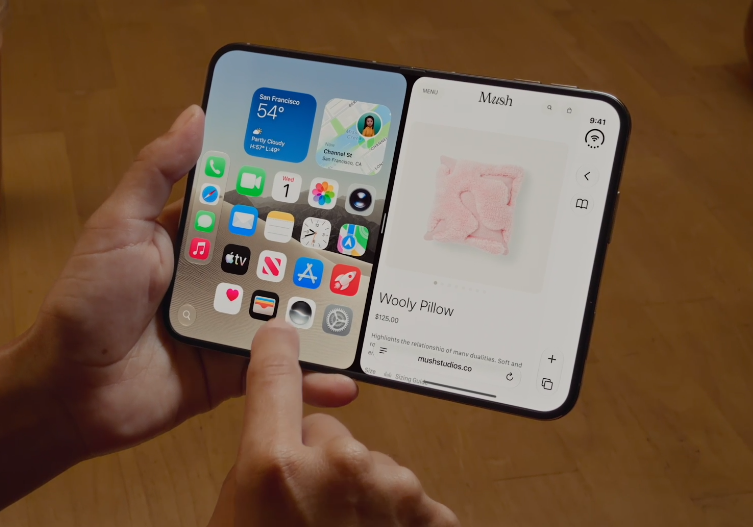
What does that means in practice? Emails are bigger. Maps make more sense. Films get a screen worth watching them on. Documents, photos and presentations suddenly have room to breathe. And when you’re finished, the whole thing folds shut and goes back in your pocket.
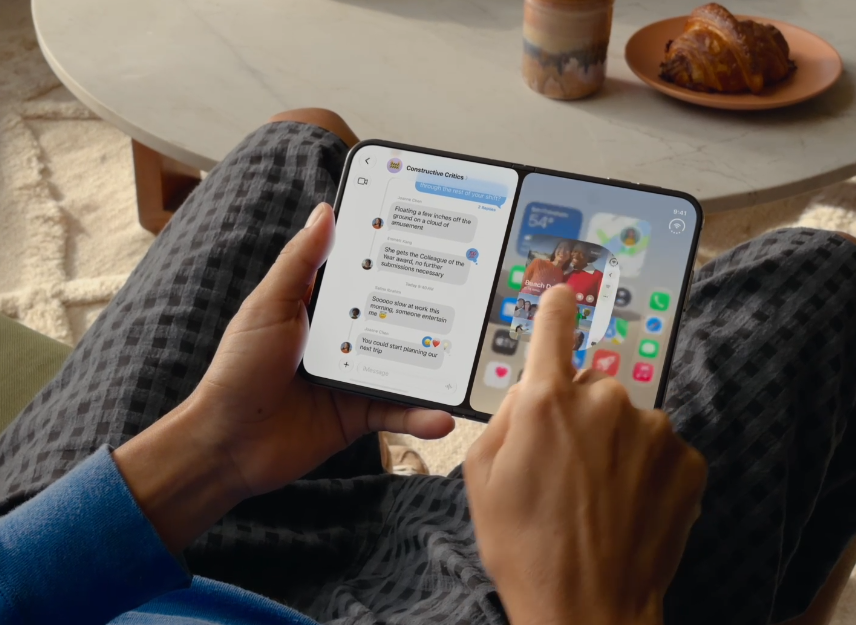
But the hardware itself is suitably serious.
The frame is predominantly titanium, reinforced internally with ceramic fibres Apple says are three times stronger than Grade 5 titanium. There is Ceramic Shield glass on the rear, Ceramic Shield 2 on the front and an IP68 rating for protection against dust and water.
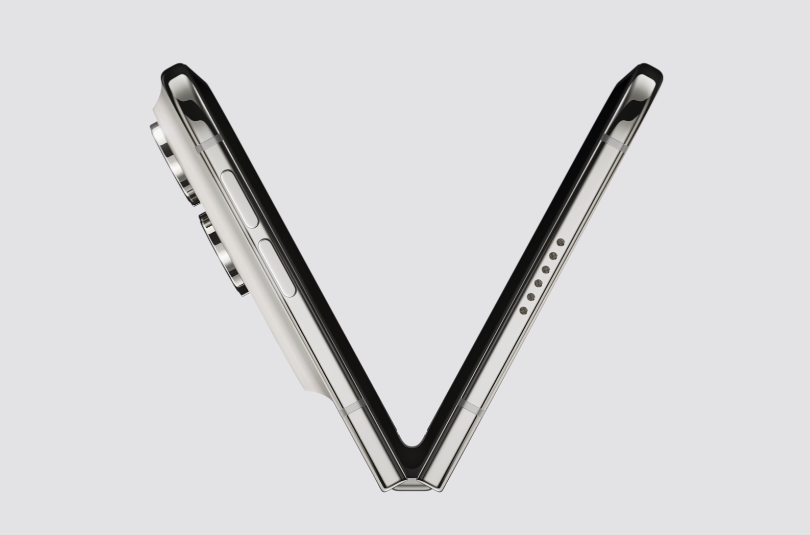
Colours are kept simple, you get two. Star White and a dark blue called Night Sky.
More interesting is what Apple has removed to produce the Duo.
There is no Dynamic Island and no Face ID. Instead, Touch ID has moved into a button on the side of the phone. There is a conventional selfie camera on the outside screen, while another camera sits underneath the folding display, where you cannot see it.
Inside is the same A20 Pro chip used in the iPhone 18 Pro and Pro Max, together with Apple’s C2 modem. The 2nm processor has six CPU cores, a seven-core GPU and a 32-core neural processing unit, while a much larger vapour chamber has been fitted to keep everything cool.
Which is an awful lot of engineering to make a phone bend in half without making it feel like it does. And that, perhaps, is where the Duo becomes interesting beyond the usual new-iPhone conversation.
Foldables have improved enormously since Samsung’s first Galaxy Fold arrived in 2019, but they remain a tiny part of the market. They accounted for just 1.6 percent of smartphone sales in 2025.
Part of the issue has simply been habit. For all the impressive hardware, there has never been an overwhelming reason for most iPhone owners to abandon the familiar rectangle they already know. But Apple now gets to make that case itself. And history suggests that the company can have an outsized effect.
Now we find out what happens when they do.
At its price point, the Duo is not about to replace the regular iPhone overnight. Nor does it need to. Apple only has to make the idea of a folding phone feel less unusual than it did yesterday.
Samsung and others proved that a foldable phone could work. Apple may be about to prove that everybody wants one.
The iPhone Duo starts at AED 8,499 in the UAE. Pre-orders open on Friday, October 16, 2026, with general availability beginning Friday, October 23, 2026.