
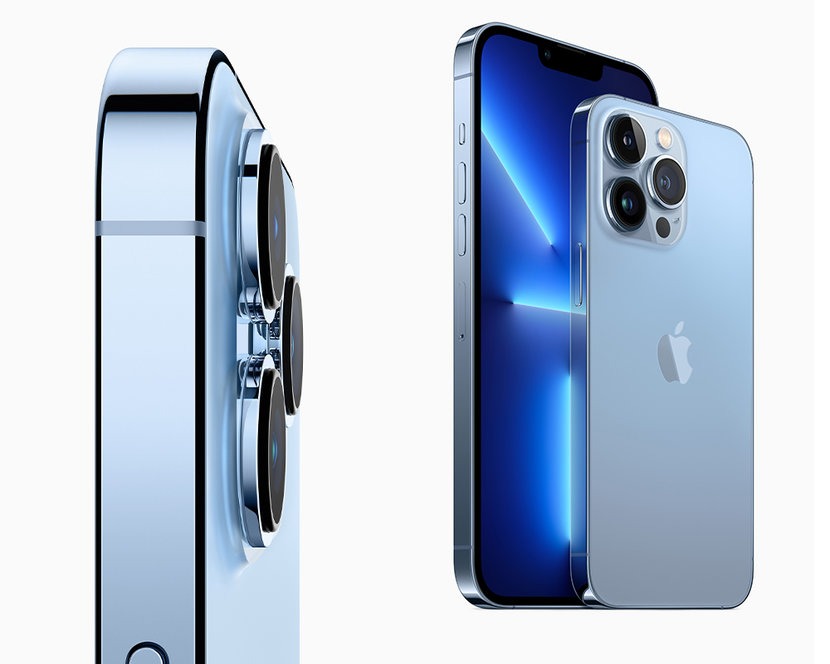

Apple has just unveiled the stars of its 2021 – 2022 season; the iPhone 13 Pro and the Pro Max.
Much like the new iPhone 13 and iPhone 13 Mini (read the full review of those here) these feature a ton of iterative improvements, across just about everything – the display, battery life, performance and cameras.
That’s not to say the improvements aren’t meaningful, because they are. Saying that there have only been small upgrades is more a testament to how advanced last year’s iPhone 12 Pro was, over these not being special.
However, unlike the regular iPhone 12 there are some killer features worth getting excited about – namely with regards to the display and the camera.
Jump to iPhone 13 Pro Design
Jump to iPhone 13 Pro Camera
Jump to iPhone 13 Pro Performance
iPhone 13 Pro design – what’s old is new again

The iPhone 13 Pro and its bigger iPhone 13 Pro Max sibling looks more or less exactly like the previous model.
The flat-edged boxy-design harks back to the iPhone 4 of old, and the look has also been mirrored across Apple’s iPad Mini, Air and Pro tablets. But that’s not a bad thing – we think the design is still exceptional, and unique – especially in a world of smartphones that are just slabs of screen and glass.
That boxy design comes in handy when dealing with the iPhone 13 Pro Max, however. As the squared-off sides make it far easier to hold (especially if you aren’t overly large-handed). You also get some new colours: blue, silver, graphite and gold.
The only noticeable difference between the iPhone 13 Pro and the previous iteration are indeed those colours, as well as a slightly heftier camera bump and half a centimeter thickness. Unfortunately, that means that last year’s cases won’t fit the new Pro smartphones. But on the plus side, Apple has made good use of that ever-so-slightly larger bit of space.
iPhone 13 Pro screen – here’s looking at you

If the iPhone 13 Pro had one killer feature over the regular model, it would be in the screen department.
Apple finally saw fit to include a screen feature that Android users have long had – a super-high refresh rate display. Or as Apple calls it, a Super Retina XDR display with ProMotion.
ProMotion already exists on the iPad Pro, but effectively it means the screen can hit up to a 120Hz refresh rate. Last year’s models were capped at 60Hz.
In practice, that means flicking through applications or surfing the web or looking through photos feels that much faster and more fluid. It makes navigation a joy, and will lead to better-looking video playback and gaming.
But that’s not the display’s only trick. It will actually ramp up and down the refresh rate as and when you need it; so it uses less power when you’re not actively flicking through the phone’s display. And the battery buff is very noticeable after a long day of smartphone use.
The iPhone 13 comes with a 6.1-inch screen, to the iPhone 13 Pro Max’s 6.7-inch shiner.
iPhone 13 Pro camera – cinephiles’ delight
Apple has long touted the photographic skills of its Pro-level cameras, and the latest version is no different. Unlike last year, the smaller iPhone 13 Pro has the exact same camera sensor as its bigger brother, which means size depending both smartphones will take the same high-quality snaps.
And high-quality snaps they certainly are; the iPhone 13 Pro and Pro Max take the best photos of any smartphone currently on the planet. There, I said it. So if you absolutely need the best smartphone camera out there – be it for work, play or anything in between – and money is no object, then you need not continue with the review. Get yourself to an Apple store post-haste!
Where the iPhone Pro 13 camera really shines is in low light. This time around the wide-angle sensor has seen the biggest upgrade, with a wider aperture and some tuning improvements under the hood. Shots in questionable light – such as a restaurant or outside at night – have more dynamic range, less image noise and take around half the time to do its night mode thing.
Elsewhere, that wide-angle has also learned a brand new trick: macro photography. Bring the phone close to a subject, and you will see the camera switch over automatically to Macro mode. That means you can get as close as 2 centimeters away, and still get an in-focus shot.