
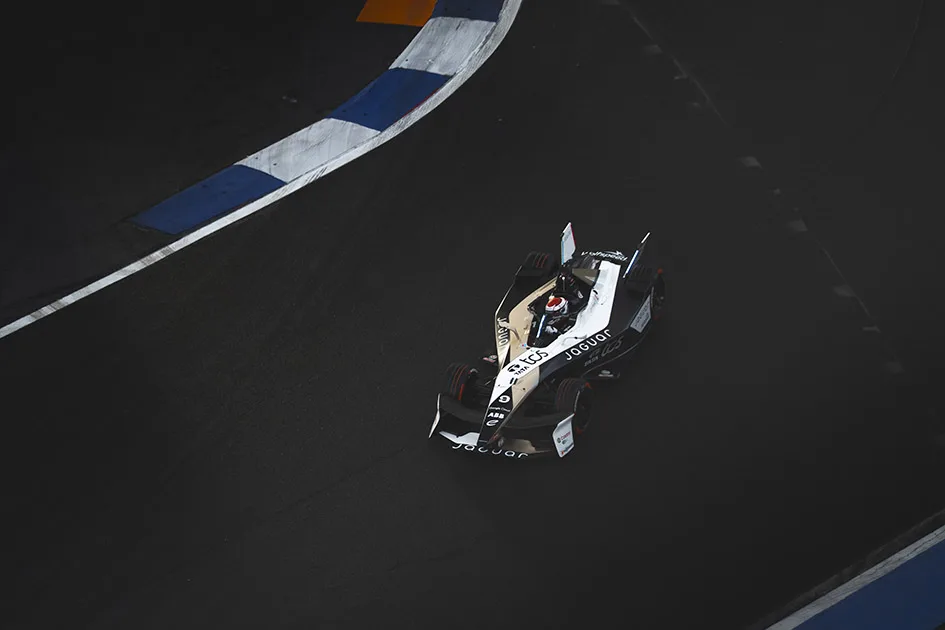
From an eye-catching rebrand to a first Formula E Teams’ World Championship, it has been a noteworthy few months for Jaguar. Esquire Middle East goes behind the scenes at Jaguar’s motorsport HQ to explore how the heritage car manufacturer is accelerating towards the future.
An industrial estate on the outskirts of an English village seems an unlikely place from which to plan global motorsport domination. But it is here, in unremarkable, rural Kidlington, that the Jaguar TCS Racing team has plotted – and successfully executed – its ascent to the top of Formula E.
With the rain lashing down and temperatures hovering just above freezing, Kidlington certainly feels a long way from Jeddah, Saudi Arabia, host of Jaguar’s next E-Prix this weekend (February 14-15). The pre-eminent electric racing series in motorsport, Formula E has come a long way since its inaugural season in 2014.
Jaguar has too.
The prestigious British car manufacturer has been competing in Formula E since 2016, creating many of the series’ most iconic moments over nearly a decade of racing. From Miami to Monaco and Buenos Aires to Berlin, Formula E has been demonstrating the absolute cutting edge in electric car technology – with many of the innovations finding their way from the track to the road.
For Jaguar, this connection has had a profound, brand-altering impact. The shift from a heritage manufacturer to a future-facing industry leader was completed in dramatic style last December.
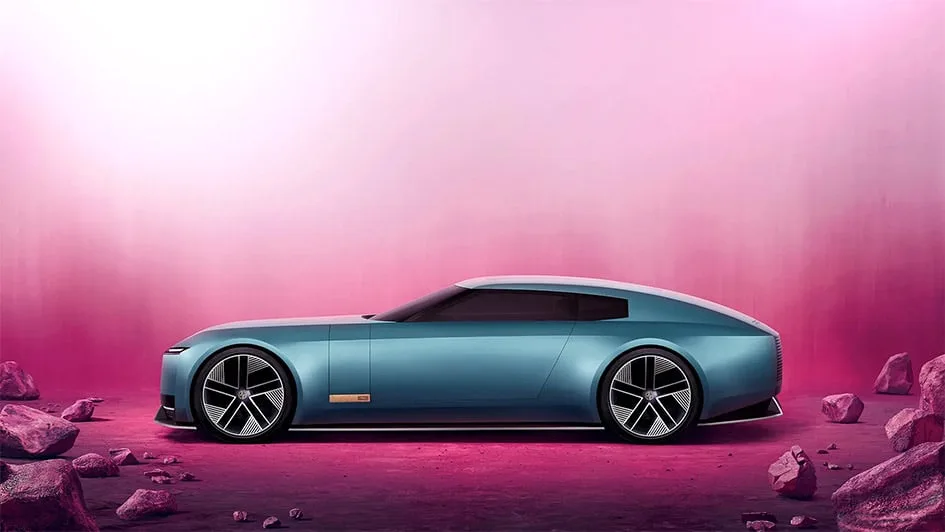
Jaguar emerged from its classic car chrysalis in an explosion of colour and virality – the unveiling of its Type 00 road car in Miami attracting international headlines as part of a rebrand that included a new logo, new identity and new slogan: ‘Copy Nothing. Delete Ordinary.’
For Jaguar TCS Racing’s Team Principal James Barclay, that sentiment has suffused his approach to Formula E for the past 10 years. It was Barclay who first persuaded the company’s leadership that Jaguar needed to re-enter the world of motorsport after many years in the doldrums.
“I would see all these photos of Jaguar’s former glories in the fifties, sixties and seventies but they were becoming increasingly grainy,” Barclay tells Esquire Middle East, fittingly surrounded by motorsport memorabilia from a bygone age at the Caffeine & Machine cafe.
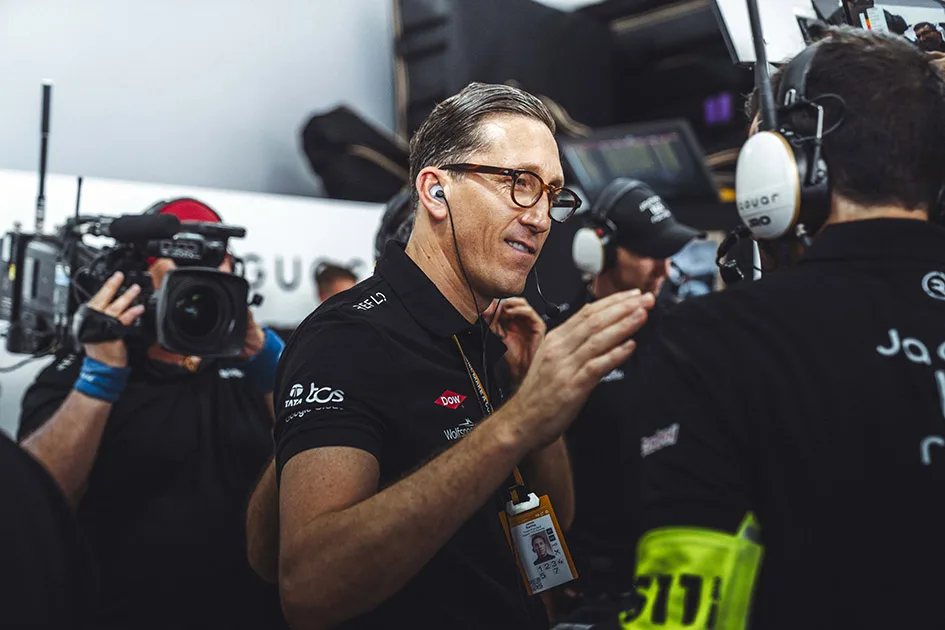
“Our objective was to write the next chapter. We could see our electric future was coming, with regulation changes and the climate crisis becoming a bigger issue. Formula E felt like a bullseye for us.”
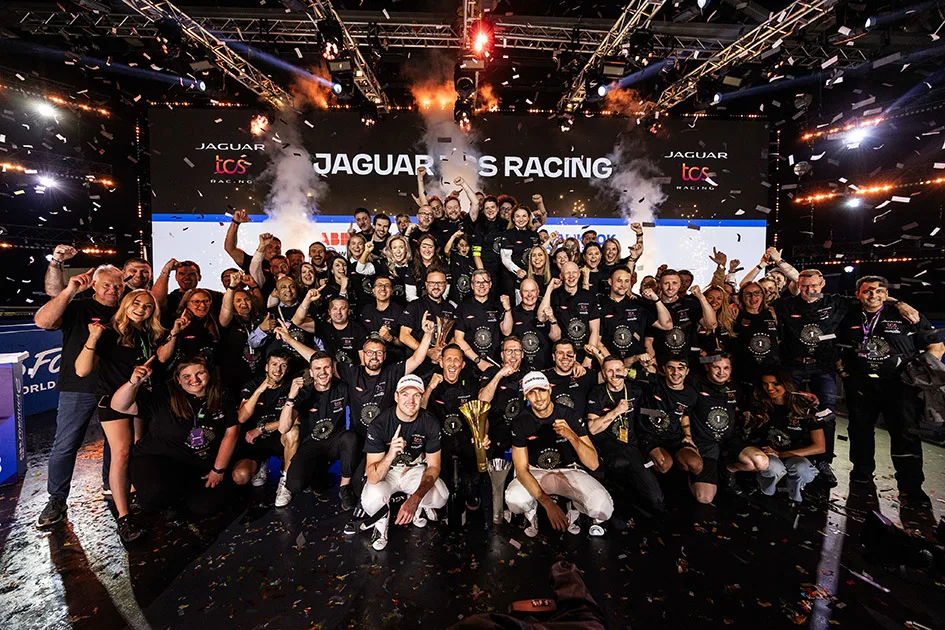
It has been a long journey back to the top of motorsport but after eight years and several near misses, Jaguar won its maiden Formula E Teams’ World Championship in 2024. Now there are many new photographs on the walls of Jaguar HQ, most notably an enormous floor-to-ceiling picture of the trophy celebration after last July’s London E-Prix.
“We managed to get Jaguar back on top of the world,” Barclay says, beaming as he remembers the moment the team’s victory was confirmed. “I’m really proud as I felt a big responsibility coming into the job because I love Jaguar – as a brand it is iconic.”
Barclay was on the ground at Miami Art Week to witness the latest evolution of the Jaguar brand – and the polarized reaction that greeted it. He feels that being the most talked about car manufacturer in the world, even though some of the publicity was negative – is something to celebrate.
“We always knew that the campaign was about being disruptive,” Barclay says. “But I think actually the values of Jaguar haven’t changed.
“Maybe people are now just seeing what we at Jaguar have known, and lived by, for a long time: our heritage is about innovating.”
Jaguar’s ability to adapt and develop is being tested significantly this year. As the reigning Formula E champions, expectations have never been higher and Barclay is the man ultimately responsible for the team’s attempts to successfully defend its title.
“Sport is about pressure – it comes to the territory and it’s normal,” Barclay says. “The difficulty is that when you win you become the reference point. When that happens, everyone uses you to improve and it is up to us to find ways to stay at the top.”
While Barclay and his team have worked furiously behind the scenes on developing a championship-winning car, driver Mitch Evans has been the one pushing it to its limits on the track. The New Zealander is a fellow Jaguar stalwart, joining the team at the start of its Formula E journey in 2016.
Evans has seen five team-mates come and go over 10 seasons and is currently racing alongside compatriot Nick Cassidy. No-one in Formula E has won more races than Evans’ 13, but thus far the Drivers’ Championship crown has proved elusive.
“To get any race win in this category is incredibly hard so the record is something to be really proud of,” explains Evans, fresh from a morning racing around Jeddah’s Corniche Circuit – from the confines of the Jaguar simulator.
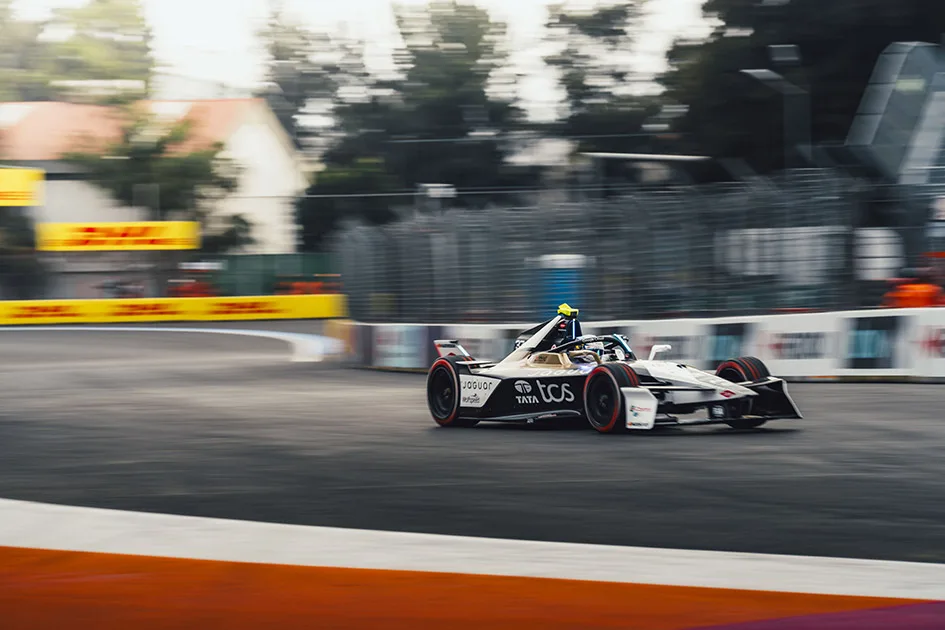
“But I’m still equal with some other guys and I guess sometimes I’m never really satisfied. Race wins are great, but ultimately I’m here to win championships. I’ll keep trying to add to that race tally, but the big zero is still there and I need to change that.”
Evans is a smiling, amiable presence in both the Formula E paddock and here at Jaguar HQ, but it is clear from the – sometimes brutal – honesty of his responses that this sunny disposition belies deep frustration.
He has come painfully close to winning his first Drivers’ Championship in recent years – finishing as runner-up in two of the past three seasons. As Jaguar celebrated winning the Teams’ Championship, Evans was simultaneously trying to come to terms with falling short again.
“Honestly it has been a really difficult period because every year for four years it has been like ‘ah, it’s a shame, maybe next year’,” Evans says.
“It’s been really tough for me personally, but then the team that I’ve been with since the start won our first championship. The feelings and conflicting emotions that I’ve been dealing with are difficult to explain.
“I’m employed by a huge brand in Jaguar with all these amazing talented people that are building a car for me. But I’m a racing driver and we are selfish people because it is us out there on the track.”
It is now more than 12 years since Evans won a championship in any racing series and it is clearly an albatross around the neck of a driver who spent his childhood and teenage years relentlessly winning.
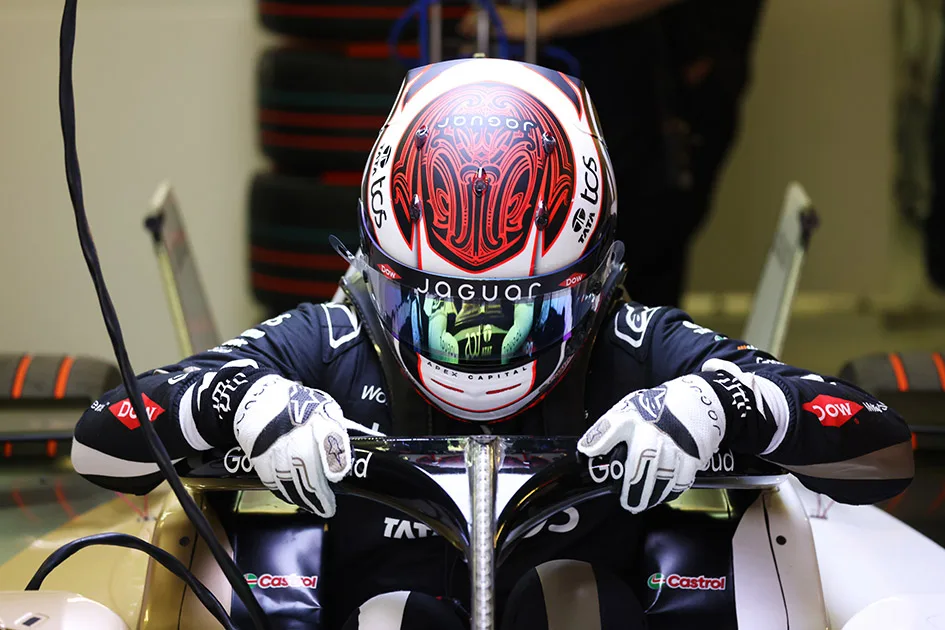
“It sucks,” Evans says of his drought, matter-of-factly. “It is not easy, but I have to find ways to cope because if I didn’t, that bad energy or negative feelings would make me unhappy and I wouldn’t perform well.”
Moving to Europe aged 16 with the belief that he could make it all the way to Formula One, Evans’ confidence was not misplaced. He had been taken under the wing of Australian F1 star Mark Webber after a chance meeting at the Australian Grand Prix; the
Red Bull driver gave his fellow Antipodean both a place to live and a seat in his MW Arden racing team. Webber described Evans as an “exceptional talent”.
He won the GP3 title in his second season in 2012 and was promoted to GP2. Formula One was tantalisingly close but Evans faced the same financial obstacles that have prevented many talented drivers from making the final step to F1.
“It looked like things were opening up but then it turned out to be the wrong place, wrong time, wrong team,” Evans recalls. “There are a lot of politics in F1 and timing is everything. It didn’t work out and it took me a long time to accept it. I think I’m still trying to accept it.”
Jaguar came calling in 2016 when Evans was at a low ebb and he’s found a permanence with the team that is rare in motorsport. He has consistently fought for titles and produced arguably the finest performance seen in a Formula E car in December. Evans won the São Paulo E-Prix from 22nd (last place) on the grid – becoming the first driver to ever do so in Formula E.
It was certainly the performance of a champion, so could this be the season that he finally secures the prize that has eluded him.
“Ask me again in August,” Evans smiles. “We have a great opportunity but we need to keep working just because our competition is relentless.
“Formula E is a great place to be right now – the car is getting faster, the technology’s getting more exciting and advanced. I really love what we’ve been doing at Jaguar and I hope we continue on the same growth pathway.”
While Evans is both the past and present of the Jaguar TCS team, the 2025 Jeddah E-Prix will provide a glimpse of the future of Formula E. The ‘Rookie Free Practice session takes place around selected races and gives those who haven’t previously raced in Formula E the chance to put the cars through their pieces.
On Jaguar’s roster in Jeddah will be Jamie Chadwick, the 26-year-old British racing driver who has become a flagbearer for females in motorsport.
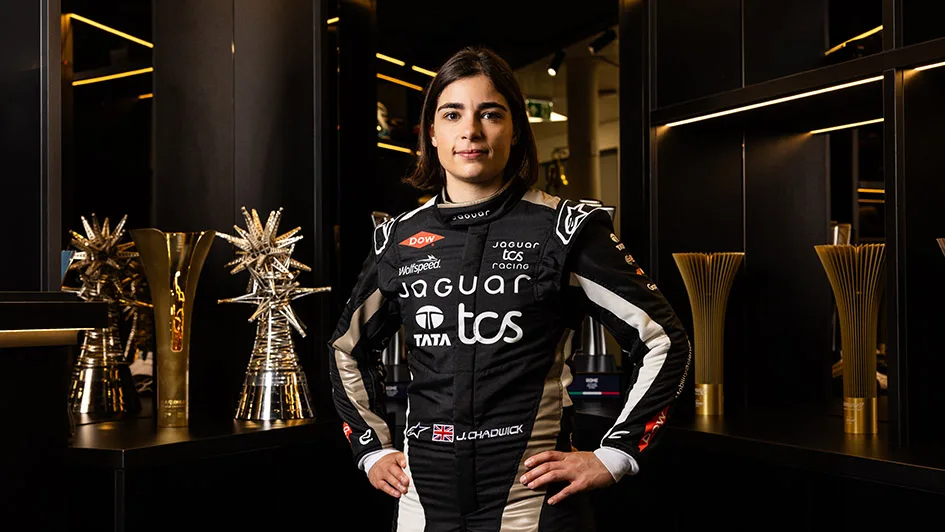
Chadwick is a three-time winner of the all-female W Series, which paved the way for the current, Formula One-supported, F1 Academy. And last year she became the first woman in the history of the Indy NXT series history to claim a road course pole and road course win.
“Jaguar has a huge history in motorsport and they have been at the forefront of Formula E for so long,” Chadwick tells Esquire Middle East. “They’re a super competitive racing team that is driven by performance both with the Jaguar road car brand and the race team, there is a big focus on the future.”
That future could include Chadwick, or other female drivers, taking a seat on the Formula E grid. When the series debuted in 2015, there were three women – Katherine Legge, Simona de Silvestro and Michela Cerruti – among the field. Only De Silvestro managed more than one season and not since 2017 has there been a female driver competing.
But in November 2024, Formula E hosted its inaugural Women’s Test in Madrid – a signal that it is looking to actively level the playing field. Chadwick drove for Jaguar in Spain and hopes the test could indicate a turning point.
“It was really important,” she says. “Obviously in the first year of Formula E we saw a few [female] names in there, but it’s been a long time. Formula E has become so competitive – it’s very hard to break into.
“But Madrid was a great opportunity for all of us to get time in the car and develop relationships with teams. It’s about visibility and I think four or five years ago, we couldn’t have put that many female drivers together; it shows how far we’ve come in the sport.”
Chadwick is set to tick off another motorsport first this year when she competes in the legendary Le Mans racing series but a future tilt at Formula E is also firmly on her radar.
“It’s absolutely something I would love to be involved in,” Chadwick says of Formula E. “It’s something that I’ve always had an eye on but a race seat is still a big step. I’m in Jeddah with Jaguar again and hopefully there will be more opportunities for me to prove myself.”
Back at Jaguar HQ in Kidlington, the team is ramping up its preparations for the Jeddah E-Prix. Last time out in Mexico City at the start of January, Jaguar had a rare off-day – failing to score any points in a race weekend for the first time in almost three years.
In a whitewashed basement garage, the Formula E car’s chassis sits uncovered – like a body waiting to undergo surgery. Jaguar’s engineers stand huddled around it, deep in discussions about what tweaks could help out-gun their opponents in Saudi Arabia.
Just a few metres away is the simulator, in which Kiwis Evans and Cassidy can familiarize themselves with the track in Jeddah. It has replaced Diriyah as the home of Saudi Arabia’s E-Prix after six years in the Kingdom’s capital.
As the drivers tackle the sim, the data they produce is voraciously consumed in a control centre that could pass for a NASA launch hub. Analysing this minutiae can help uncover the micro gains that may be the difference between success and failure in the next race.
“In Diriyah we had an incredible location and challenging racetrack,” says Team Principal Barclay. “But we are looking forward to Jeddah because there is a commitment in Saudi Arabia to put on a great show. This is a country where sport is helping inspire change.”
Jaguar’s own transformation – from racing relic to Formula E champion – was completed in 2024. But current custodians of the brand like Barclay, Evans and Chadwick are now aiming for a future in which prestige and podiums continue to go hand in hand.