
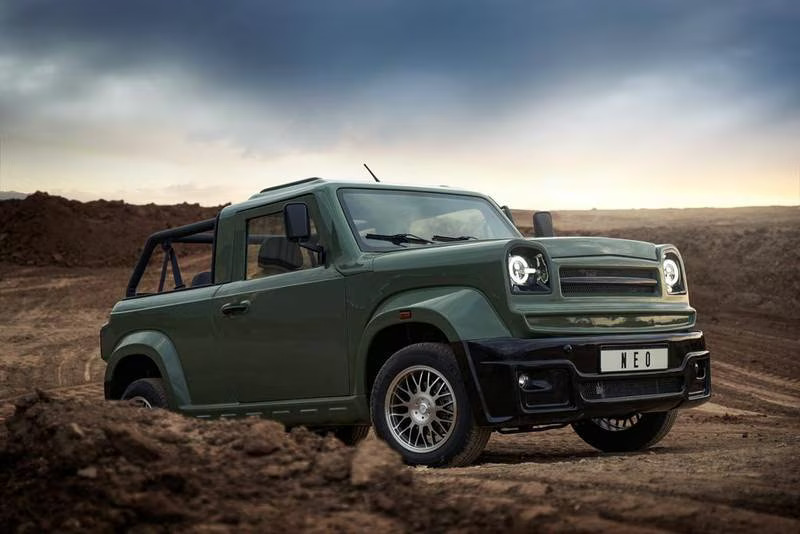
Stealing the spotlight on Morocco’s asphalt arteries for the very first time, the nation’s inaugural domestic vehicular creation made its dazzling debut at Gitex Africa, the continent’s prominent technology showcase where investors and up-and-coming digital ventures cross paths, and just made its first public appearance on the streets of Rabat.
For the moment, the count of these prototype marvels can be toted up on one hand, but Morocco is gearing up to fuel the production furnace.
A $15 million state-of-the-art manufacturing plant, standing tall in the heart of the capital, is primed to churn out approximately 7,000 of these coveted machines, projected to grace Moroccan highways this year.
Morocco, of course, is no stranger to the car game. Already holding the mantle as Africa’s premier vehicle exporter, producing the Renault Kangoo, Dacia Logan and Dacia Sandero, Morocco is revving its engines to secure the pole position in the automobile sector for itself, having produced cars for Renault since 1959.
The kingdom is steering towards launching a suite of its fibreglass vehicles, setting sights not only on its local terrain but also looking to navigate across the Mediterranean into European markets.
Neo Maroc: A full look


As soon as July, the assembly line in Ain Aouda will begin to breathe life into these mechanical beasts, offering them to consumers at a range between $15,000 and $20,000, varying based on the specifications.
The Neo, a stylistic nod to the iconic American military jeeps of the 1940s, may guzzle conventional fuel, but its environmental footprint is softened by its complete recyclability. Despite lacking a set net-zero target, Morocco’s national green initiatives focus on an aggressive renewable energy goal, looking to greenify 52 per cent of its electricity mix by 2030.
Nestled in these ecologically forward plans, the launch of another ground-breaking Moroccan vehicle is slated for 2025, when the nation’s first hydrogen-powered car, developed by NamX, takes its first bow. The NamX Hydrogen Utility Vehicle (HUV), another prototype born and bred in Morocco, boasts a central hydrogen fuel tank.
This trailblazing automobile carries six removable capsules, providing an impressive driving range and lightning-fast refuelling times. Hydrogen-powered fuel cell electric vehicles like the HUV significantly outpace traditional combustion engines in terms of efficiency, and only exhale warm air and water vapour, rendering them a clean, green driving machine.