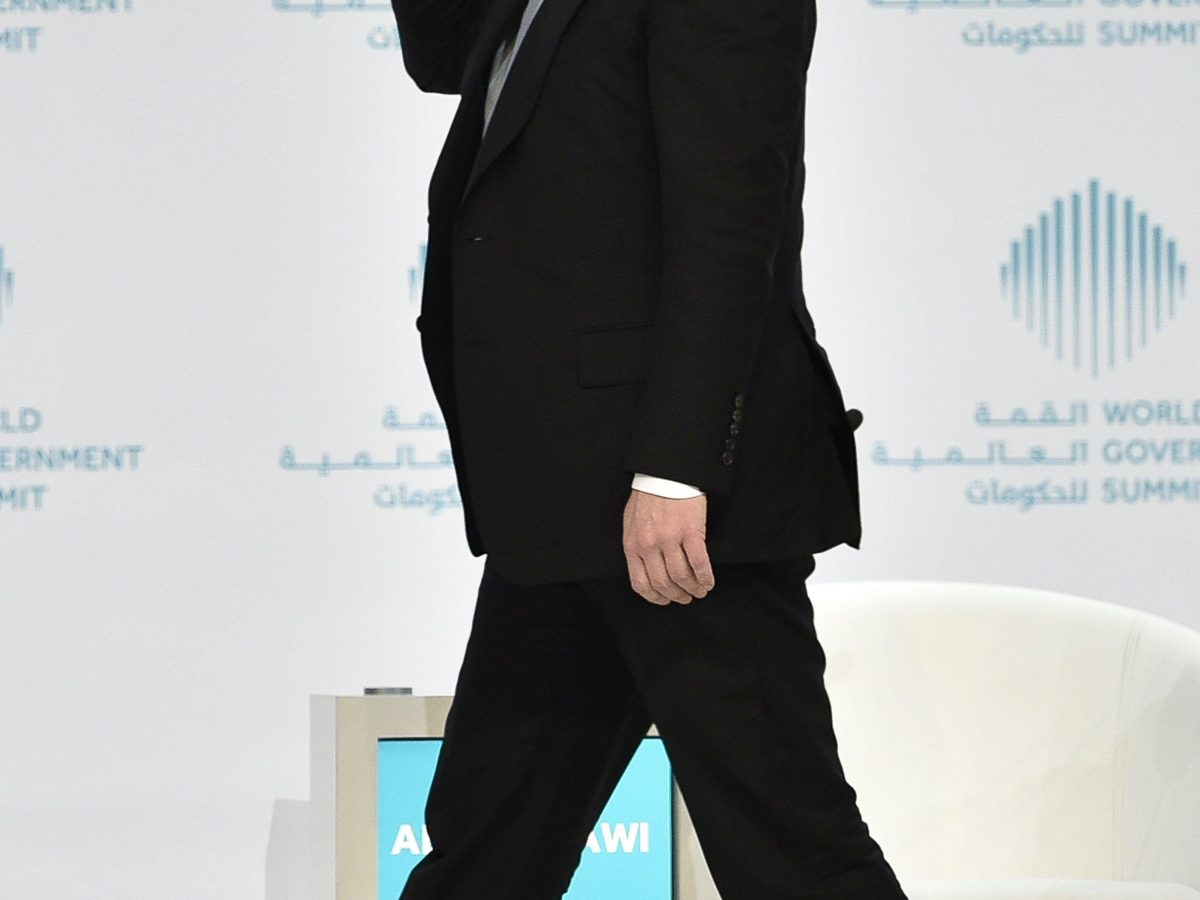
Tesla’s official launch earlier this year attracted the sort of attention usually reserved for a new Apple product, and the appearance of CEO and chairman Elon Musk at the launch event at the Armani, Burj Khalifa, made it a must-attend party. There, he announced that Tesla would be opening its first ever Middle East showroom in Dubai — and that charging infrastructure for owners was already well in hand.
The Tesla Model S has generated a lot of interest since its launch in 2015, and continual updates in both the battery packs and the software that controls the powertrain and car systems have produced a deeply impressive machine. It’s won dozens of awards and even Top Gear, which was taken to court in 2011 by Tesla over comments made about the Roadster, stated the Model S was a big step forward for electric vehicles.

The Model S we’re testing is a 90D, a slightly lower-output version of the ones that will go on sale in the Middle East later this year. In Tesla-speak, the ‘90’ indicates the car is fitted with a 90-kWh battery that, when fully charged, should give the car a range of over 470 kilometres (110kph average at 40C). Of course, that depends on how heavy you are with your right foot, the temperature and humidity at the time, and how hard you’ve got the AC working.
Musk told reporters at the launch event that the Model S had emerged from extreme heat weather testing in Death Valley at the height of summer with flying colours, but that Hawaii and Florida tests, where testers had the air-conditioning on constantly, had seen range dip by 10 to 15 percent. The 100D and P100D models, which will arrive in the UAE later this year, have more capacity, and therefore greater range and power (550km and 529km, respectively).
The Tesla’s party trick is its punchy acceleration. With no turbos to spool, sweet spot in its engine range to hit, or gears to change, the Tesla is able to tap its full bank of torque from standstill. The 90D — the D tells you it’s fitted with two motors, making it all-wheel-drive — will hit the magic 100 kph from standing in 4.4 seconds. Performance models are even faster: it’s claimed the P100D equipped with Ludicrous mode will do it in a supercar-embarrassing 2.4 seconds. For the car-bores out there, that’s 1.2g acceleration, or enough force to ensure that, if you were to hold your phone against the passenger headrest, mash the accelerator to the floor and take your hand away, the phone would stay there.
You could write books on the features the Model S comes crammed with. While the infrastructure isn’t quite there yet globally, all models come equipped with hardware needed for autonomous driving. The car ‘sees’ its environment through eight cameras that have a range of 250 metres. It also uses 12 ultrasonic sensors that detect hard and soft objects, and a forward-facing radar that uses a wavelength impervious to rain, fog, dust and even cars ahead of you. You don’t need to opt in; the car comes with it.

And while self-driving itself is dependent upon extensive software validation and regulatory approval, owners at least know that they’re ready for the switch, when and if it comes.
Even if you’re uncomfortable using autonomous driving on the motorway, there are some cool features that you’re able to call on by using the car’s app while you’re at home or out. Smart Summon is probably one of the best; you can have the car navigate to you from its parking space at the press of a button. Another function allows you to roll the car forward or backwards into a tight spot via your phone.
One thing current owners benefit from are over-the-air updates. Tesla constantly alerts owners to new features and updates that add safety and functionality to the car without the need to visit a dealership or service centre. Last December, four new functions were sent out to owners that included automatic emergency braking, side collision warning, front collision warning and auto high beam function for the adaptive headlights.
There’s no doubt that driving a car powered solely by electricity forces you to rewire your brain. There are no gear changes or slight dips in acceleration as the transmission selects the next cog. There’s no noise from the exhaust, or roar from the front-end of the car. There’s no real indication that you’ve even started the car or that it’s on. But push that pedal to the firewall, and the acceleration is as relentless as it is silent. There’s a slight whine from the electric motors, and the rising sound of wind and tyre noise, but that’s about it.
Of course, you can’t talk about electric cars without addressing the issue of range anxiety. It may have been a concern with earlier models, but it’s much less so now that the Tesla is capable of the kind of range you’d expect from a tank of petrol, and the growth of charging points around the region should help alleviate that somewhat. Tesla has already opened two supercharging locations at The Last Exit in Jebel Ali and in Masdar City, allowing drivers to recharge their vehicles in minutes rather than hours. By the end of the year there will be five more. There are already 26 destination charging spots at hotels and supermarkets in the UAE, and this number will double by the end of the year. Most owners will opt for a home charging system as well.

The real question for potential owners is whether the Model S offers a truly workable alternative to its petrol-powered rivals. In terms of performance, luxury and practicality, it absolutely ticks all the right boxes.
Tesla will open its Dubai showroom in July. Prices start from Dhs275,000 for Model S and Dhs344,000 for Model X. tesla.com