
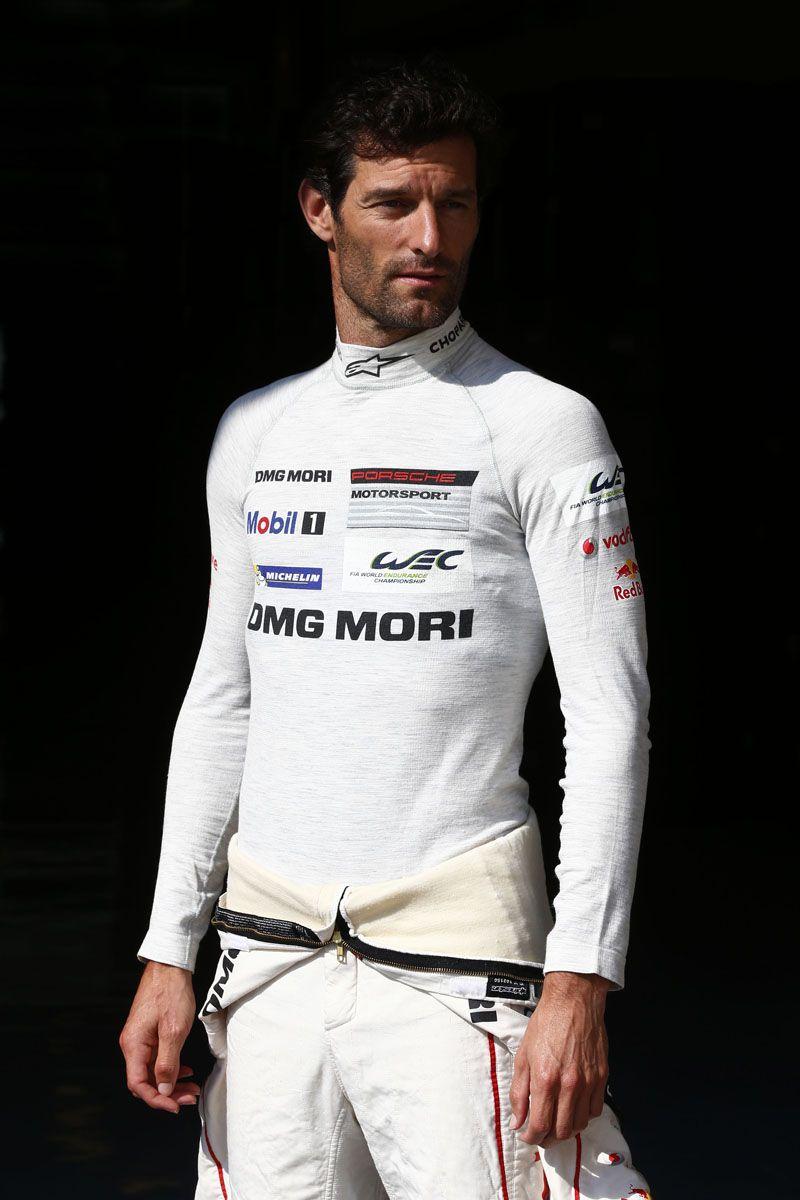

Since leaving Formula One for endurance racing, Mark Webber hasn’t looked back. Going into the new season, the defending world champion talks to Esquire Middle East about his switch
***
ESQUIRE: After winning the World Endurance Championship last year with Porsche, what is this season’s motivation?
MARK WEBBER: Motivation is never really an issue for me. When you see the team working as hard as they do, you push to work to the same level. It’s not uncommon for me to drive 200 laps over a testing weekend. In fact, I lost three kilos in the last two days!
What‘s this year’s target for the team?
We won the most races last year and deserved the Championship. Now we have to do the same thing again. The race in Le Mans is a big target this year. It’s a hard one, but we’re ready.
What are the technical differences of endurance racing compared to your previous racing experiences?
One of the main ones is that in endurance racing you drive in all conditions. The track temperatures vary so much that we can experience 10 degrees and 35 degrees on the same day. That might not sound like much, but in terms of motor racing, it is a very challenging thing to get right.
Another difference is driving at night, because you get traffic. In Formula One you are rarely in traffic. At night the speeds are very high and visibility is poor, so you have to react fast.
What’s the biggest change to the sport you’ve seen in your career?
I’ve been racing since 1997, and over 20 years a lot has changed, especially in F1. Yes, drivers still need to push the car to the limit, but it’s a little less involved for the driver now. I know some young drivers coming through that don’t know how to ‘heel and toe’ [simultaneously operating the brake and accelerator pedals with the same foot in manual-transmission cars] because they don’t need to! That’s just how these things work.
Has racing in Formula One helped you in endurance racing?
In F1 you have so many regulations, and every two years they change! So part of the driver’s skillset is to be able to adapt.
Speed is important in F1, but as a professional you have to be able to deal with the resources. There are so many gifted young drivers who do not know how to work with the resources they’ve got. That’s what propels the great drivers to another level. When you talk to people who have worked with Senna or with Schumacher, they tell you how good they are at getting the team together to work the right way for them — it is a phenomenal skill.
What is it like having to share driving duties with a driving team?
Making sure my teammates are happy is a big priority. When you set the car up, you have to be open-minded about the changes that are being made and what your teammates will think. When you’re on your own you don’t have to worry about that. At the end of last year we managed to get the three of us very close together, and I think it showed in the races. You have to make it so that the car doesn’t know who
is driving.
Would you ever return to Formula One?
I had a sensational experience at that level. Being able to race week-in and week-out against those guys was a dream, but nothing is forever and you have to start looking to what’s next. At 40 years-old, I felt that F1 was no longer for me. I’m very happy with my move to Porsche. If you asked Fernando Alonso or Sebastian Vettel, I’m sure they are happy where they are now, but, for me, the WEC is absolutely the best thing for now. It’s a very different situation and when you become a part of this global brand you realise just how big and great it is.
– – –
The World Endurance Championship series begins April 17, in Silverstone, UK.


