

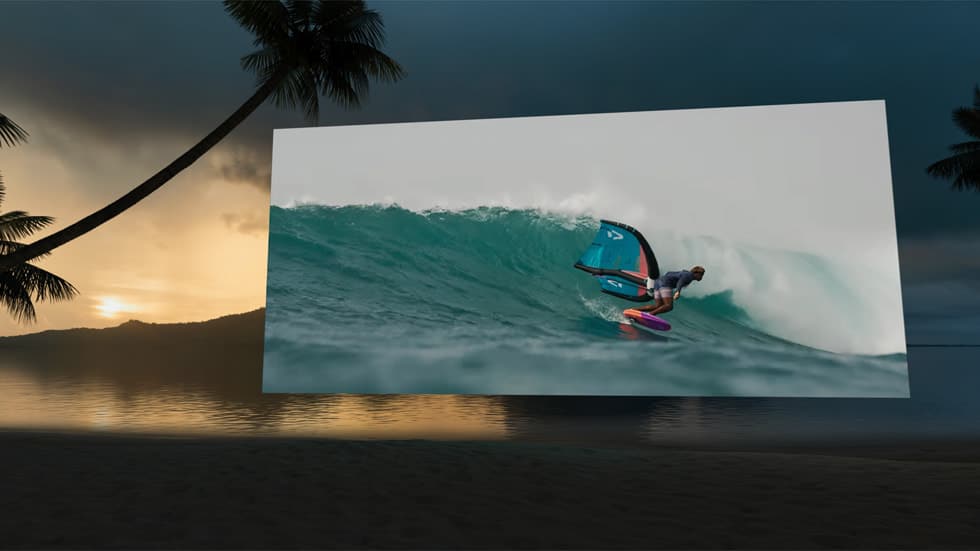
Imagine sitting at your desk, only there isn’t a desk, and there isn’t a wall behind it. Instead, there’s a sweeping panel of screens – massive, looming, impossibly clear – drifting around your head like an obedient constellation.
Each one floats independently, perfectly scaled, hovering at a glance: your email up to the left, your music just above, and a 50-inch desktop with Safari, Apple Music, and a generous splash of Excel, Word and Outlook, all waiting in midair. This is the Apple Vision Pro – a device that’s technically the size of a pair of overbuilt dive goggles but promises the computing power of an entire office and the display real estate of a dozen high-end monitors, all affixed right to your forehead.
But this isn’t just a screen. No, to call the Vision Pro “a screen” is like calling the Colosseum “a bit of a stadium.” This is a full-fledged “spatial computer,” Apple’s vaunted title for a gadget that will take everything we’ve learned from flat screens and mouse pointers and throw it, gleefully, into a three-dimensional space.
So, picture it: a computer strapped to your face, as personal as a diary and as isolating as a private movie theater. You don’t “turn it on” so much as you put it on, and when you do, the world dissolves, replaced by a shimmering, semi-real sphere of information.
Yet this sleek interface doesn’t come without tradeoffs. Let’s start with the obvious: the thing sits on your face like a scuba mask, and no matter how well-designed, there’s no hiding its weight or bulk. In Apple’s future, your everyday “device” is not a slim laptop in a bag, but a contraption tethered by a cable to a chunky battery, pulling slightly at your brow. One wonders if in this digital future, we all walk around with permanent divots where our “computers” once sat.
Hardware: Heavy Headgear with Precision Displays
Once inside, you can arrange app windows as you please – glance at one, tap your fingers, and it enlarges, or move it with a sweep of your eyes. This is computing as choreography, digital ballet for the retinas and fingertips. Apple wants you to work here, write here, maybe even live here, casually replacing those fussy old “physical” monitors with acres of floating, adjustable digital space. And make no mistake, for all its eerie resemblance to a sci-fi movie prop, the Vision Pro is stunningly well-engineered. At $3,500 (AED 14,000), it’s the Rolls Royce of headgear, featuring hand and eye tracking so intuitive it practically anticipates your thoughts and displays so sharp you’ll believe you could see atoms on the page.
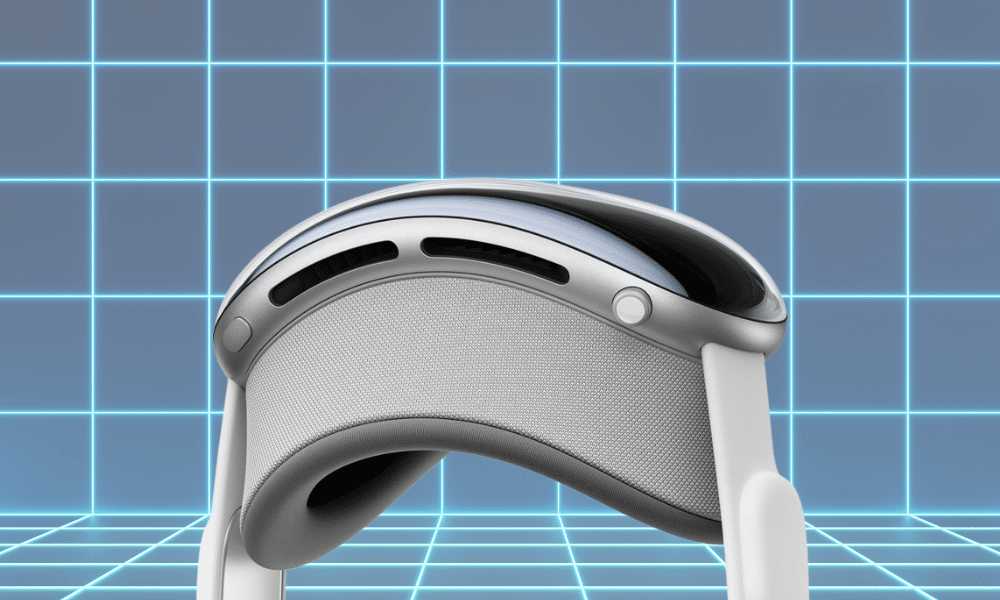
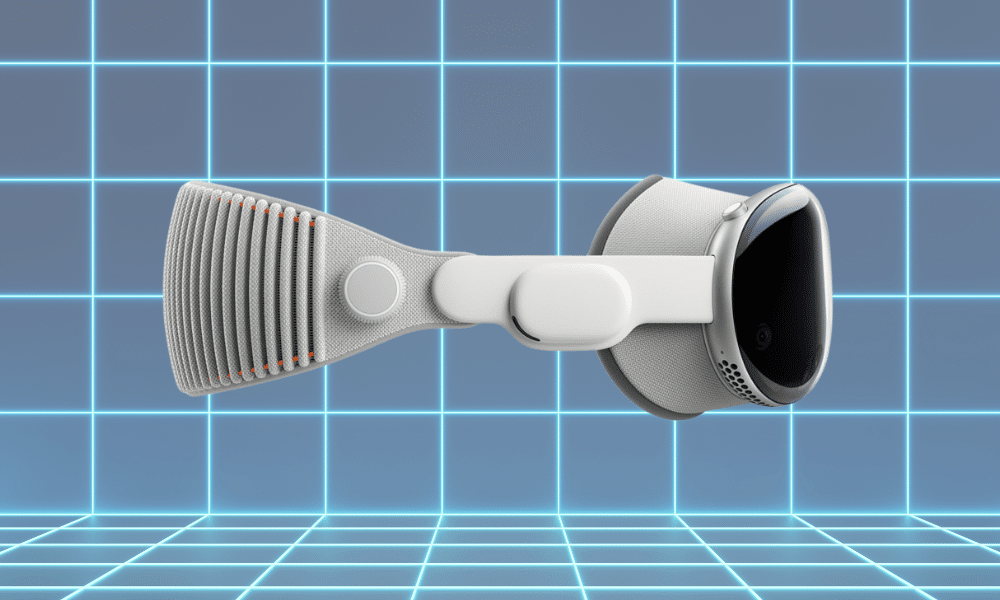
While the Vision Pro’s floating-screen extravaganza may steal the spotlight, it’s the specs that deliver the punchline – and not always in the way you’d expect for a “future of computing” device. To start, this headset is a heavy hitter, literally. It weighs between 600 and 650 grams, a fact that’s hard to ignore once it’s latched onto your face. Apple, in its usual flair for minimalist elegance, has dressed the Vision Pro in an aluminum and carbon-fiber suit, the polished exterior resembling an accessory from a Bond film.
Under that sleek, futuristic casing is a dizzying array of cameras, sensors, and processors. The Vision Pro boasts dual MicroOLED displays with an astonishing 23 million pixels (that’s seven times the density of a 4K TV), which are small enough to rival red blood cells in size. Apple, in its proudest moments, calls these “virtual 4K” displays, which are as impressive as they are slightly disorienting. In normal light, the display’s sharpness is nothing short of breathtaking: text is crisp, colors are vivid, and every app window you pull into existence shines with pristine detail. But in low light, the illusion of “seeing through” the device reveals its limits. The passthrough video, for all its high-resolution promises, is still subject to blurriness and lag, occasionally turning your kitchen or workspace into an impressionist painting.
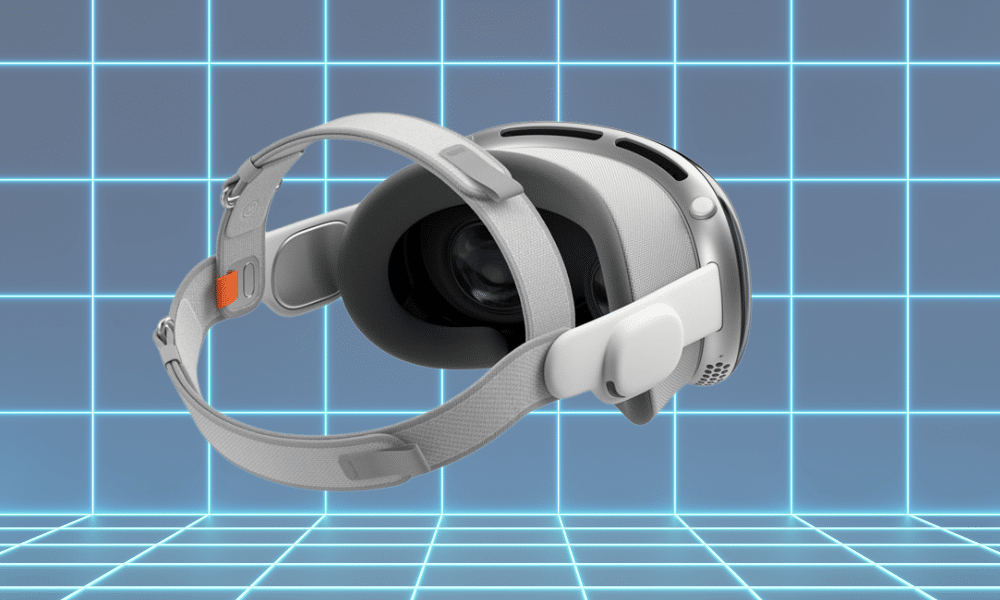
Then there’s the battery – a modest silver brick tethered to the headset by a braided cable. Apple claims the battery’s placement is an intentional design choice to reduce the headset’s weight, but this isn’t exactly a featherweight solution. The battery pack itself is another 350 grams of tech, which you’re expected to carry in your pocket (or perhaps discreetly place on a table if you’d prefer not to drag yourself along like a power-corded astronaut).
With just two and a half hours of runtime, it doesn’t take much time in your virtual workspace before you’re either tethered to a wall or feeling the weight of this “mobile” device creeping up your neck.
Controls: The Dance of Eyes, Hands, and a Pinch of Patience
As for controls, the Vision Pro is an exercise in ambitious engineering and exasperating reality. Apple’s grand idea for hands-free computing relies on advanced eye and hand tracking. In theory, it’s brilliant: glance at a button, give a little pinch, and voilà – you’re navigating your apps with a flick of the wrist and a blink.
The Vision Pro’s cameras track your eye movements with remarkable accuracy, while your hands perform as the mouse and keyboard. No need to reach out and touch a screen—you simply look, pinch, and the interface follows along.
However, in practice, this “superpower” quickly shows its quirks. The entire experience is as if your eyes are the mouse cursor, and your fingers are the mouse button, which means every time you want to click, you need to stare directly at what you want and make a little hand gesture. It’s amusingly surreal at first and then becomes a peculiar game of visual target practice, particularly when app icons or interface buttons are close together. A slight misalignment, an accidental glance, and suddenly your browser window is shrinking, or worse, you’ve opened your inbox instead of the music app floating overhead.
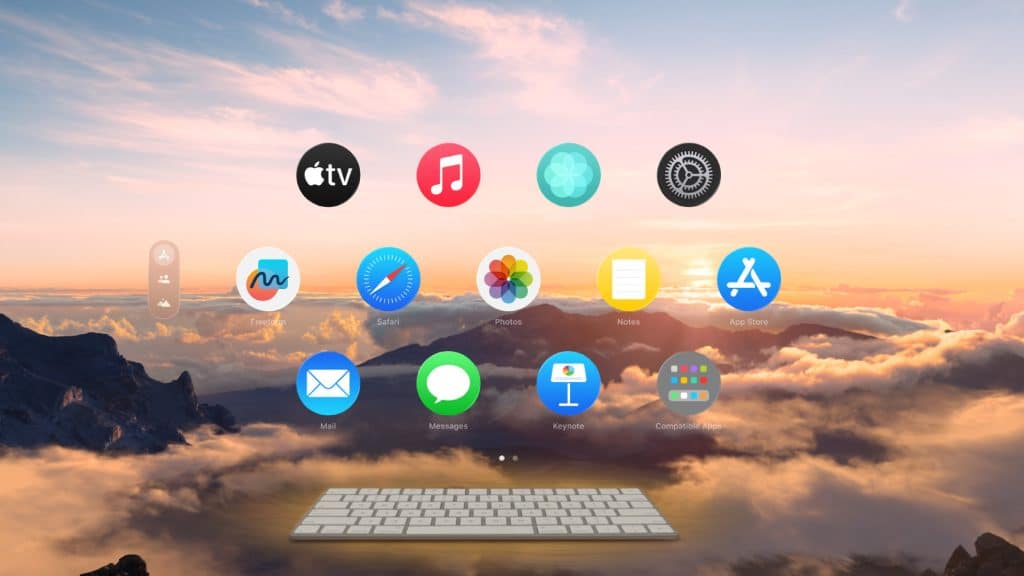
And then there’s the on-screen keyboard, an unintentionally comedic piece of tech that lets you stare at individual letters and click them with a pinch, henpecking words out like a slow-motion Morse code. For anything more than a password, you’ll want to switch to dictation or, better yet, pair a Bluetooth keyboard. The best-in-class hand tracking is impressive, but when it struggles to find your hands resting in your lap or angled just outside the field of vision, it’s maddening.
When it works, it’s dazzling. When it doesn’t, it’s a reminder that the real world, with its laptops, mice, and well-oiled keyboards, still has a place in the future of computing.
Isolated in the Virtual Office
The Vision Pro is undeniably a marvel. But it’s a marvel you experience alone. Sure, Apple’s designers made a noble attempt to keep you from looking like you’re trapped in a digital fishbowl: there’s a screen on the front that displays a video of your eyes so others can “see” you. But in practice, it’s a ghostly, dim representation that can’t keep pace with real eye contact.
Then there’s the existential twist. You’re in this thing – no one else can see your screens, share in the digital collage you’ve constructed, or even tell where exactly your attention lies behind the spectral display of your ghostly projected eyes. The Vision Pro is everything you need for work, entertainment, perhaps even a new way of “living” within a screen. But here’s the rub: for all the marvel of its spatial computing, it’s a lonely, exquisitely engineered little bubble.
This is a headset that embodies Apple’s vision of a future workspace, a future in which you don’t compute “at” a device but find yourself fully immersed in it. Now, let’s be clear: the Vision Pro itself may not be the future. It’s bulky, weighs on your face like an iPad stuck to a pair of ski goggles, and bears all the hallmarks of ambitious first-generation tech (overengineered but not quite refined). But for all that, the Vision Pro is a thrilling glimpse of where things are headed.
When you strap it on, you get the clearest view yet of what the future might look like – a horizon filled with untethered screens, limitless workspaces, and a way of engaging with technology that’s as enveloping as it is awe-inspiring.
It may not be the future we’ll all be ready for tomorrow, but as a taste of what’s to come? It’s simply astonishing.
For those curious, the futuristic headgear is available in UAE Apple Stores now, with a “try before you buy” demo that’s definitely worth booking. You’ll want to see if this brave new world is really worth strapping on.