
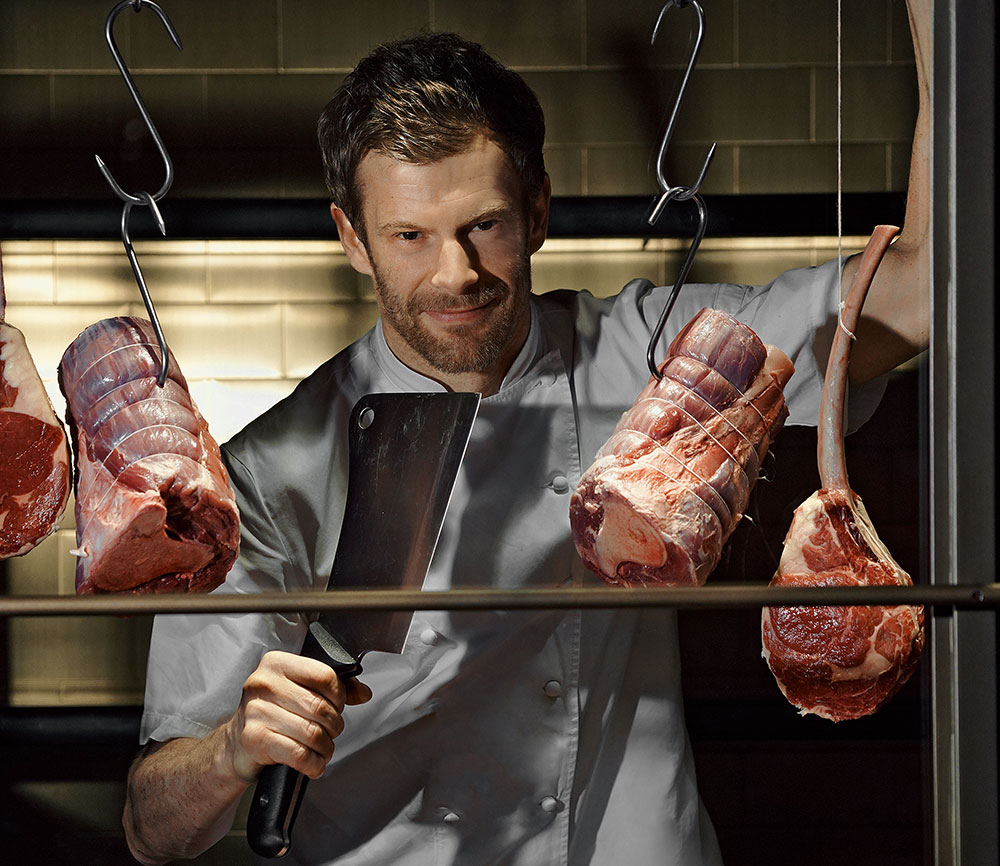
- According to Michelin-starred chef Tom Aikens, the world of fine dining is on the way out
- He says that more relaxed, casual eateries are bang of culinary trend for 2019
- Aikens became famous when at 26 he won his second Michelin star (making him the youngest British chef to do so)
- He currently has Five restaurants in the UAE: Three at the Abu Dhabi Edition Hotel (Market at Edition, Oak Room and Alba Terrace, as well as Pots, Pans and Boards plus Tom’s Kitchen in Dubai
Tom Aikens – the youngest ever British chef to have two Michelin stars to his name – has said his latest restaurant at the Abu Dhabi Edition breaks the rules of fine dining and the rigid nation of luxury.
Instead, the restaurant focusses on good food and easy-cooking, but with a Michelin-starred twist – something he says is now bang on trend for 2019.
The chef was born in London, but has a flare for French gastronomy that he credits to his father and grandfather. Both were produce merchants, and he and his family would often stay in their barn house in Auvergne for long periods of time tracking down some of the French finest ingredients.

The Oak Room at the Abu Dhabi Edition Hotel
Aikens took that passion for French food home with him to the UK, and after training under the likes of Pierre Koffman and Joel Robuchon, opened up his own eponymous restaurant in Chelsea, ‘Tom Aikens Restaurant’. He soon opened up Tom’s Kitchen, his restaurant’s more laid-back alternative and eventually exported the concept to Dubai in 2016.
Now he’s back in the UAE – this time in the capital– with brand new restaurant The Oak Room in the Abu Dhabi Edition Hotel. We caught up with the fiery young chef to find out what, among a slew of steak restaurants, makes his unique.
***
You really like putting your name on restaurants. Why is that?
Well, with Tom’s Kitchen I really wanted to create a place where people could relax and chill, and think they were just hanging out in their kitchen. So I thought ‘okay, well if they’re in their kitchen, why don’t they be in my kitchen?’ I wanted people to feel they could be in this open plan kitchen environment – and that was then 2006, so there wasn’t really anything like that concept at the time. It was new back then.
Now those type of restaurants are commonplace and fine dining seems to be seen as old and stale. Why do you think that is?
I think with fine dining, there has been a definite change over the last five-to-ten years. It used to be all very formal; you had a tablecloth, you had your penguin-tailed waiters, but the experience has changed, the formality has dropped away. People still want to have an experience with food, but one that’s fun and relaxed. One where the waiters are kind of chilled, they’re happy. Obviously that’s all still evolving, but atmosphere is huge these days.
Does that mean you think Michelin is outdated?
First and foremost they look at the food. Some people do knock them for their formality, but in a strange way it makes chefs strive to be the best. Getting one, two or three stars is warrants massive recognition. The focus and attention to detail you need to have comes down to minutia, especially in terms of the thought process behind each dish.
So you need to know the culinary rules of fine dining before you can break them?
Kind of. I obviously love doing fine dining, crafting meticulous dishes together and all that. But I also love doing casual and informal style food and restaurants. Coming to the Middle East, I think it’s apparent that relaxed restaurants are very much the way to go.


.jpg)