
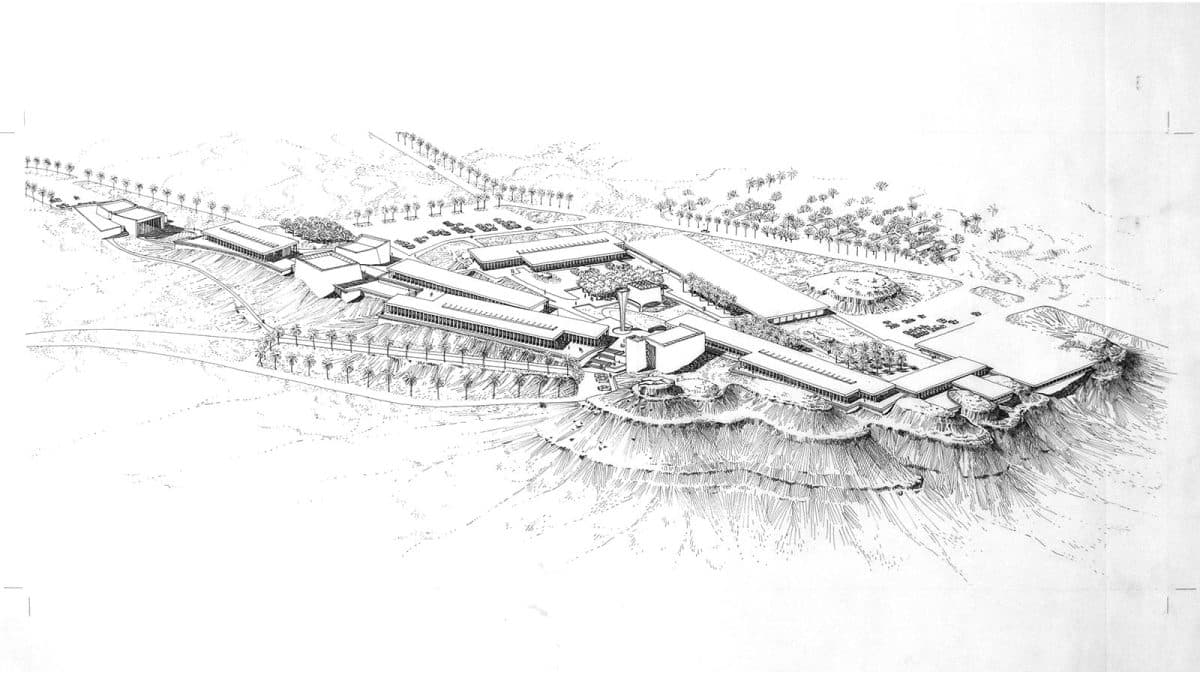
The rapid modernisation of Saudi Arabia’s structural landscape is a sight to behold. To the regeneration of urban development around Riyadh’s historic Diriyah area to mind-bending giga-projects being envisioned in NEOM and Qiddiya—it is something that very few people saw coming a little under a decade ago.
While the scale of today’s modernization is unprecedented, it is easy to draw historical comparison to another prosperous moment in Saudi history—the late 1960s and early 1970s. The Kingdom in the 1970s was a canvas of change and development. The regional oil boom had welcomed in substantial levels of wealth to the country and, with it, an opportunity to capitalize on a push forward the nation-building development of it. Increased communications and accessibility via long-haul air travel, were just some of the factors that helped peak a global interest in the Kingdom with regards to investment and development.
One artist who played a role in depicting what this modernizing version of Saudi would look like was Carlos Diniz. A talented American architectural illustrator, he had built a stellar reputation in the US with remarkably detailed drawings, giving substance and character to established architectural designs. Following a series of commissions from influential parties in the Kingdom, Diniz would produce around 40 hand-drawn sketches that depicted what the urban structures of Saudi Arabia could have looked like at the time.
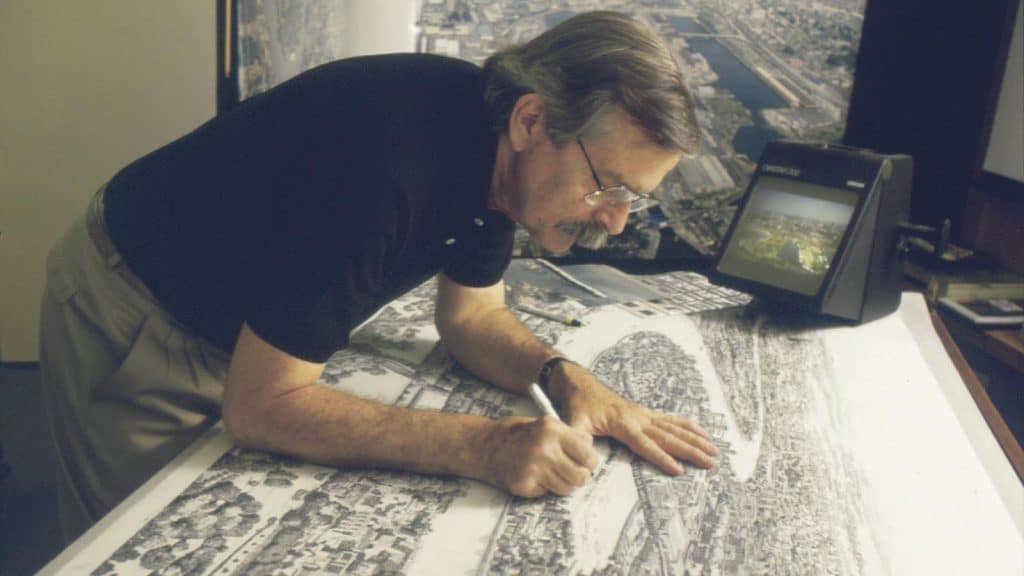
“What Carlos [Diniz] was doing back then was these immensely detailed sketches that really brought a sense of 3D realism to architectural ideas,” explains Ian Espinoza. “Essentially, he was creating 3D sketches before there were computers and graphic designers and certainly A.I. models. They were really impressive and extremely detailed for the time.”
Espinoza is speaking to Esquire Middle East as not only one of the managers of the late Diniz’s estate, but also as his stepson who also spent some time working with him during his career. “What is great about these pieces of Carlos’ work was that they provided a visual guide for Saudi Arabia’s plans of urban expansion, significantly influencing the design and scale of how things could be.”
Together with Diniz’s daughter-in-law, Carol Espinoza, the two are working to both spread awareness of Diniz’s work, and also draw attention to the historical importance of the illustrations for potential institutions or private collectors. Today, several of Diniz’s drawings have been donated to public organizations, including the Smithsonian Institution and Museum of Modern Art (MoMA). “We want his work to be more broadly out there, to help establish him the way that he should have been,” explains Ian Espinoza.
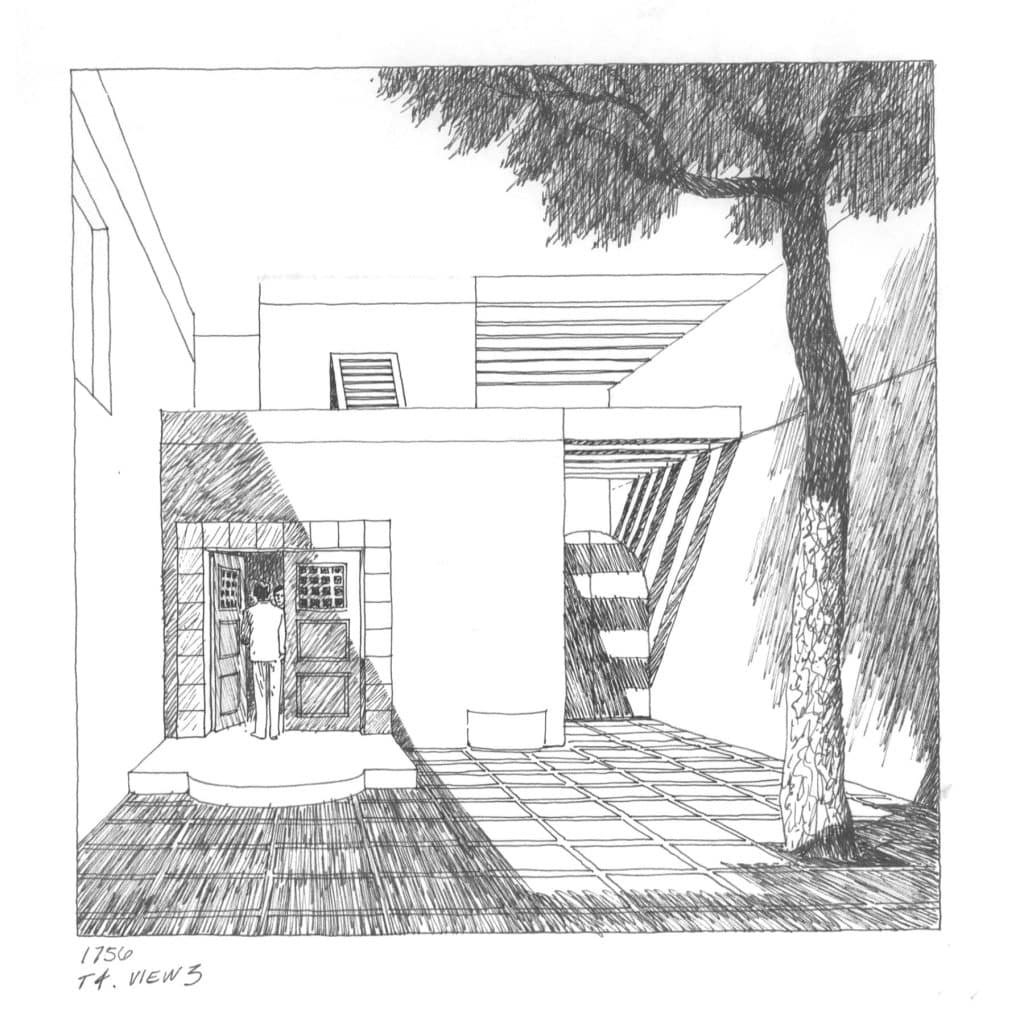
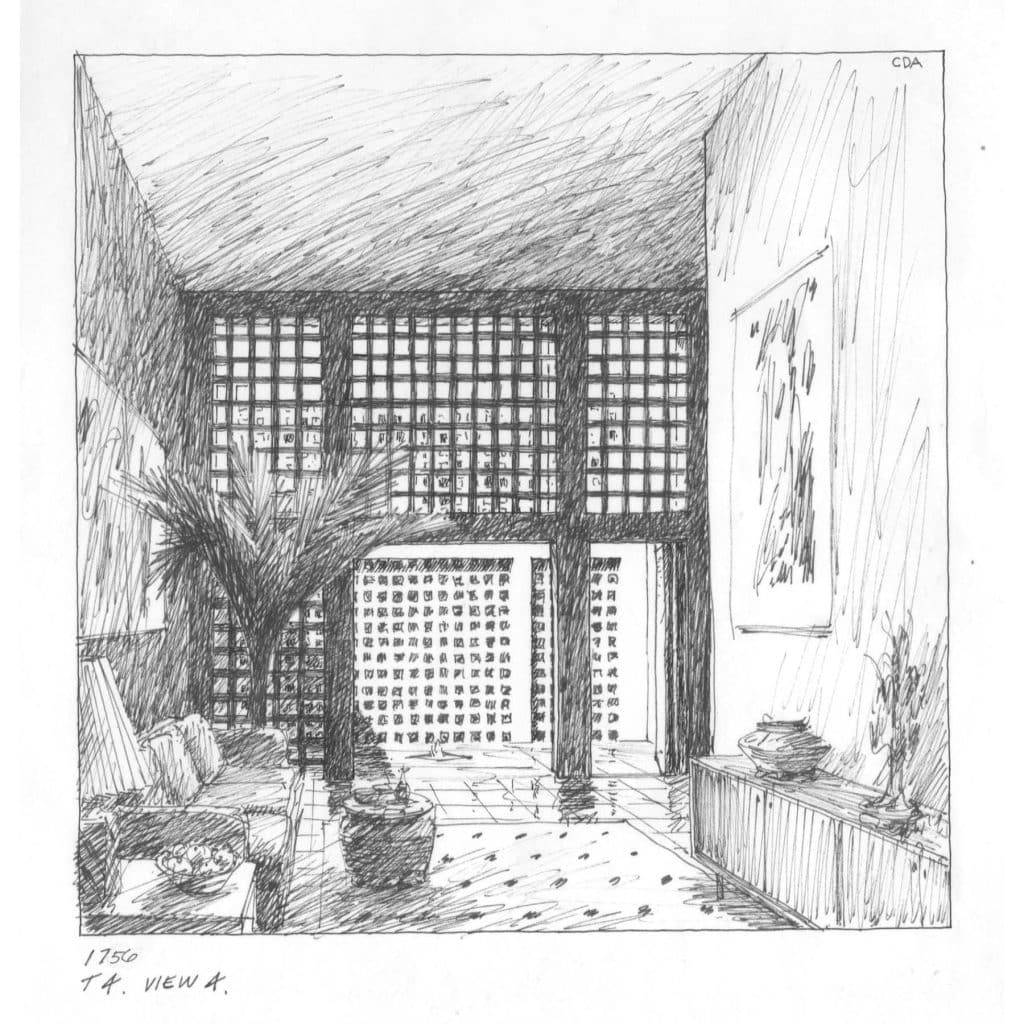
Remarkably, despite his proficiency in his Saudi-focused designs, Diniz never set foot in the Kingdom itself, but that didn’t stop his meticulous drawings imagining some of the most ambitious architectural tenders undertaken by Saudi Arabia at that time. As shared by his estate, Diniz’s drawings represented many projects ranging in scope and size, from the
exterior of the Riyad Bank head office in the capital, to a tent for the coronation tent of Saudi’s King Khalid.
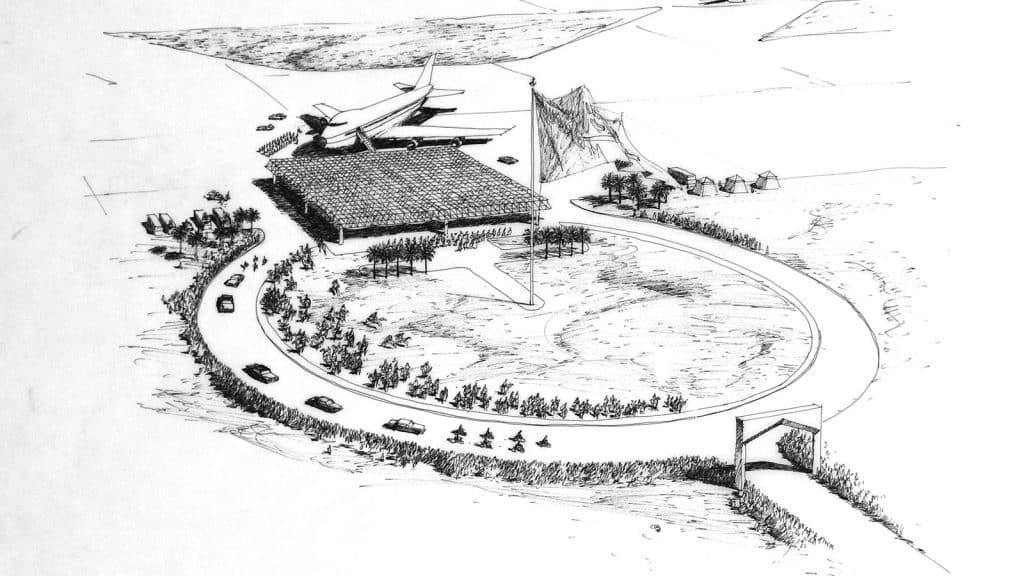
Some of his most notable illustrations are of a sprawling Jeddah International Airport, and the fantastic detailing within the King Abdulaziz University that depict courtyards
and classrooms populated by students and teachers.
While many of the projects proposed in Diniz’s drawings never actually came to fruition, much of his work offers a great insight into Saudi society at the time, via the medium of his imagination—his illustrations becoming a bridge between vision and reality, making the ideas of architects and urban planners tangible and understandable.
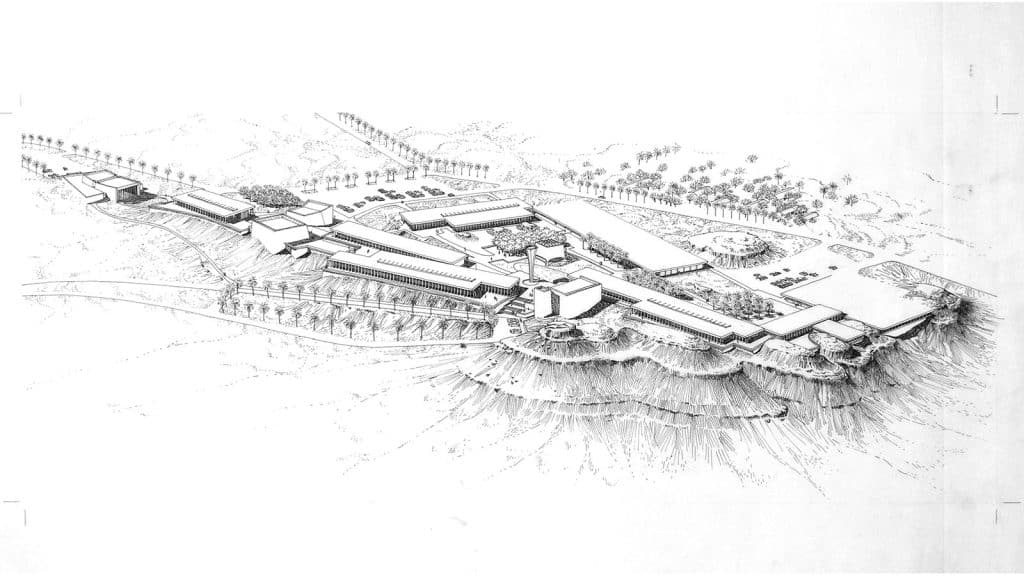
In many of his illustrations, Diniz meticulously recreated scenes of everyday life in Saudi Arabia, offering a glimpse into the social fabric of the nation, capturing the essence of a specific place or time. A classroom at King Abdulaziz University, bustling with students eager to acquire knowledge, comes alive in his detailed sketches. “Due to his commitment for detail, Carlos’ illustrations often extended far beyond just the architectural designs of the buildings,” says Espinoza. “It was important to him that his drawings weren’t only aesthetically pleasing, but also culturally accurate.” His keen eye for cultural details is evident in his portrayal of traditional dress, local markets, and the surrounding landscapes.
For Espinoza and other advocates of historical architectural illustration, the preservation of Diniz’s legacy is of paramount importance. For them, his work not only serves as a valuable window into the creative process of a talented architectural illustrator, but also a historical record of a pivotal period in Saudi Arabia’s development.
“As Saudi Arabia has such groundbreaking plans in the art and general tourism industries, it’s important to provide visitors with culturally authentic experiences,” says Fraser Scott, Director of A Gallery. “These drawings provide a direct look into such a fascinating time of development and change in the Kingdom—King Khalid’s reign, so they need to be properly preserved and the public given access to them to inspire future generations of Middle East creatives.”
Diniz’s story is a fascinating example of how art can transcend geographical boundaries and cultural differences. His work serves as a bridge between the United States and Saudi Arabia, capturing a specific moment in time when the two nations were collaborating on ambitious development projects. More importantly, his illustrations offer a timeless reminder of the power of art to document history, preserve culture, and inspire future generations.
Through Ian and Carol Espinoza preservation of Carlos Diniz’s drawings, their hope is that his illustrations will continue to inspire and educate future generations, and considering Saudi’s current development boom, it’s not hard to believe that it already has.