
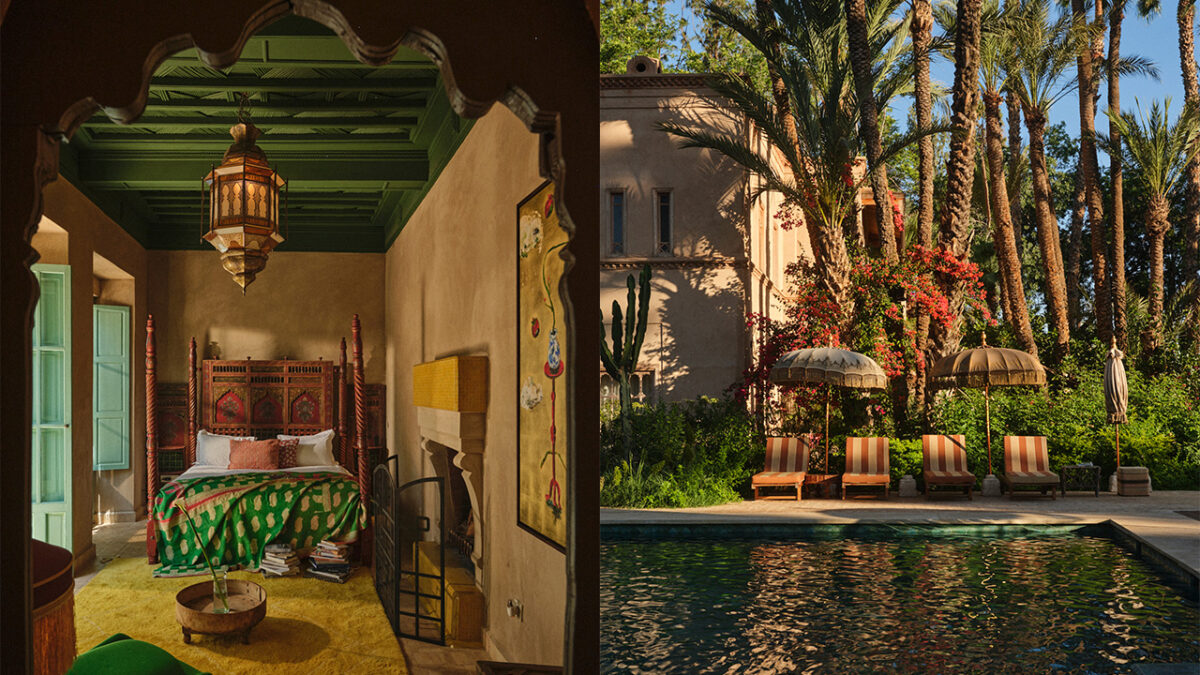
Marrakech is an improbable garden city. Its medina, a dense jigsaw of riad courtyards and cloistered gardens, reflects centuries of Islamic belief about water, light and the art of living in harmony with the natural world. Jnane Rumi sits squarely within this tradition yet seemingly manages to surpass it.
Tucked into the Palmeraie, the historic palm grove north of the city, the property was originally designed by Tunisian architect Charles Boccara. Since then, it has been transformed by an unlikely pair: Gert-Jan van den Bergh, an art restitution lawyer, and his wife Corinne, a somatic therapist and sculptor. Together, they have turned a private villa into something closer to a cultural institution, one that platforms contemporary Moroccan artists and designers, whilst facilitating a dialogue between Morocco, Europe and North Africa. The property takes its name from the tradition it inhabits: jnane, meaning garden in Arabic, and rumi, a nod to both the Sufi poet and the Arabic word for Roman.
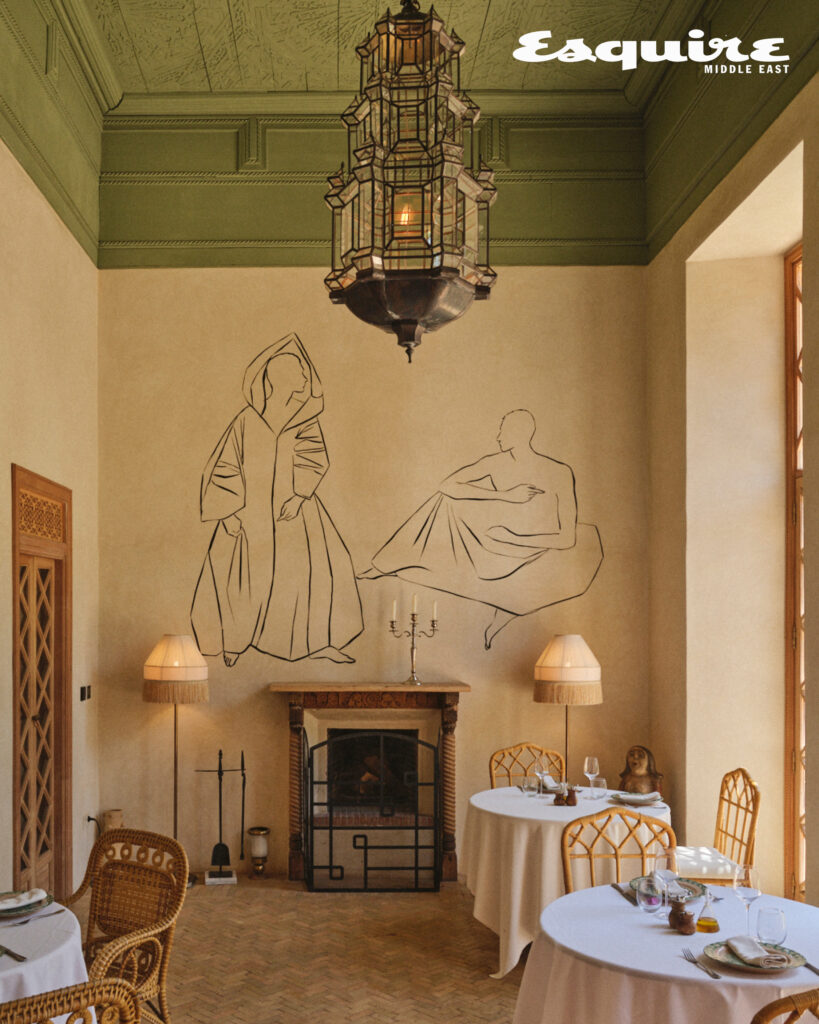
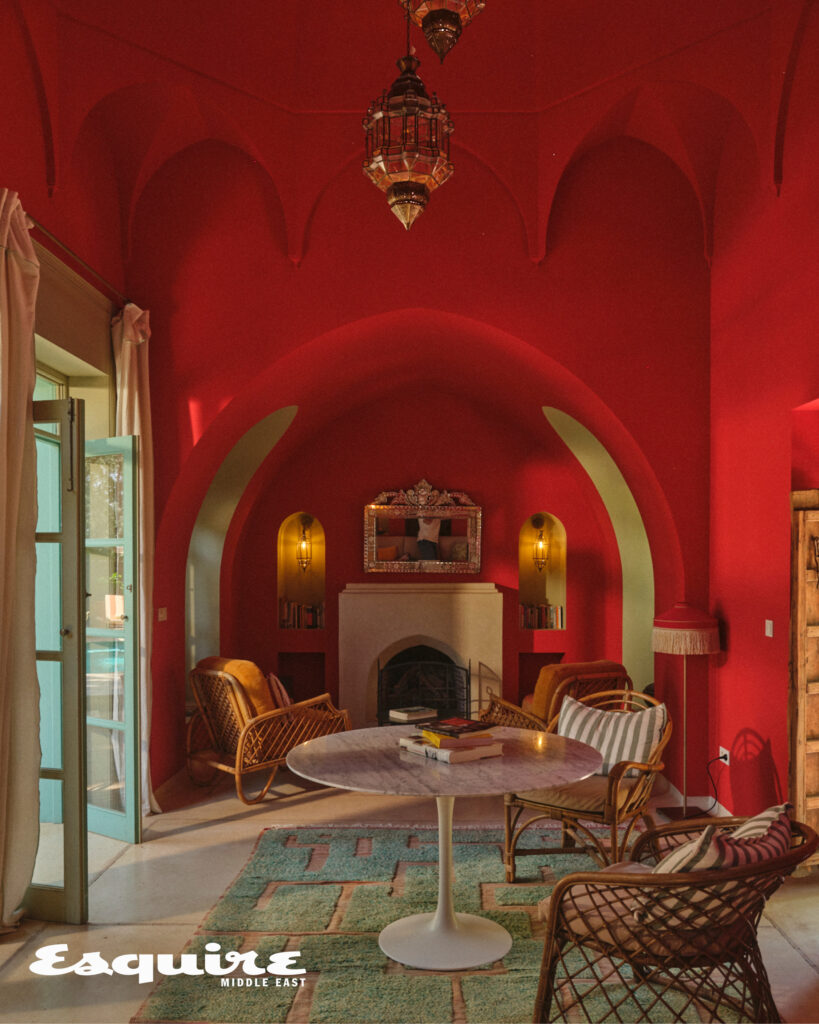
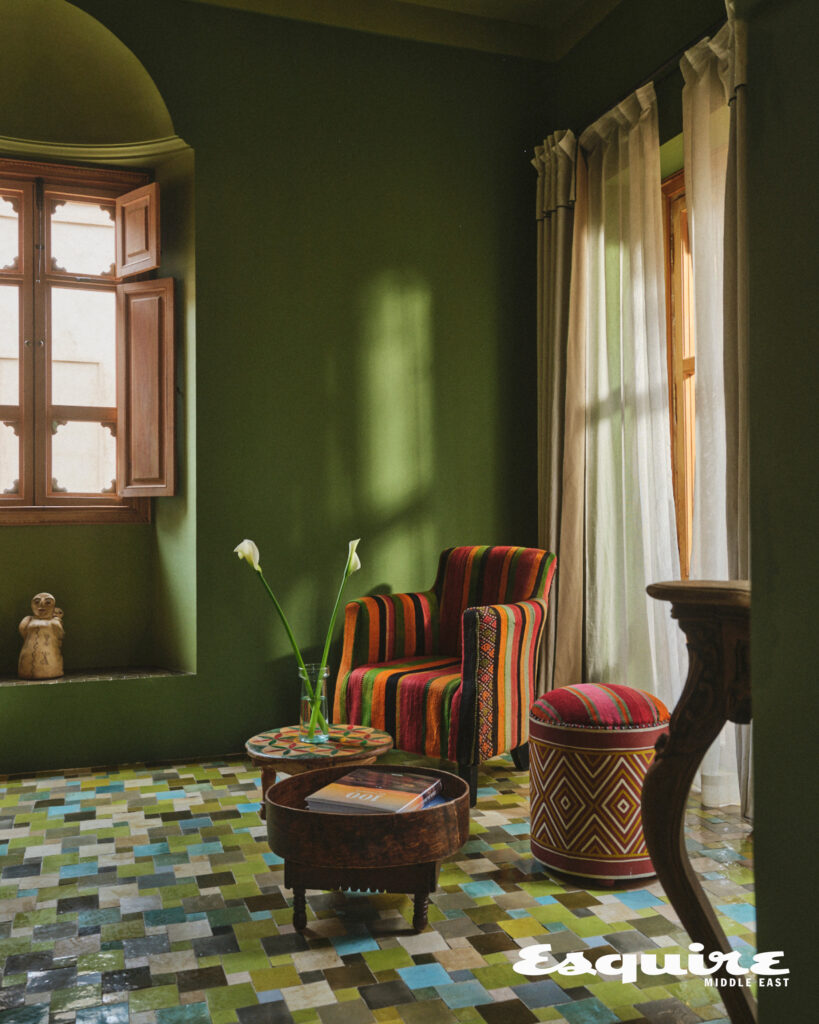
The interiors reflect that mission precisely. Custom rugs by Mina Abouzahra, rattan furniture from Rotin Ameublement, embroidered works by Margaux Derhy, frescoes by Roberto Ruspoli, and paintings by Mous Lamrabat and Amina Rezki fill the eleven suites and pavilions without crowding them. Tadelakt walls, hand-carved wood, naturally mullioned arches and domes – it’s a place where the architecture does the heavy lifting and the art enhances it.
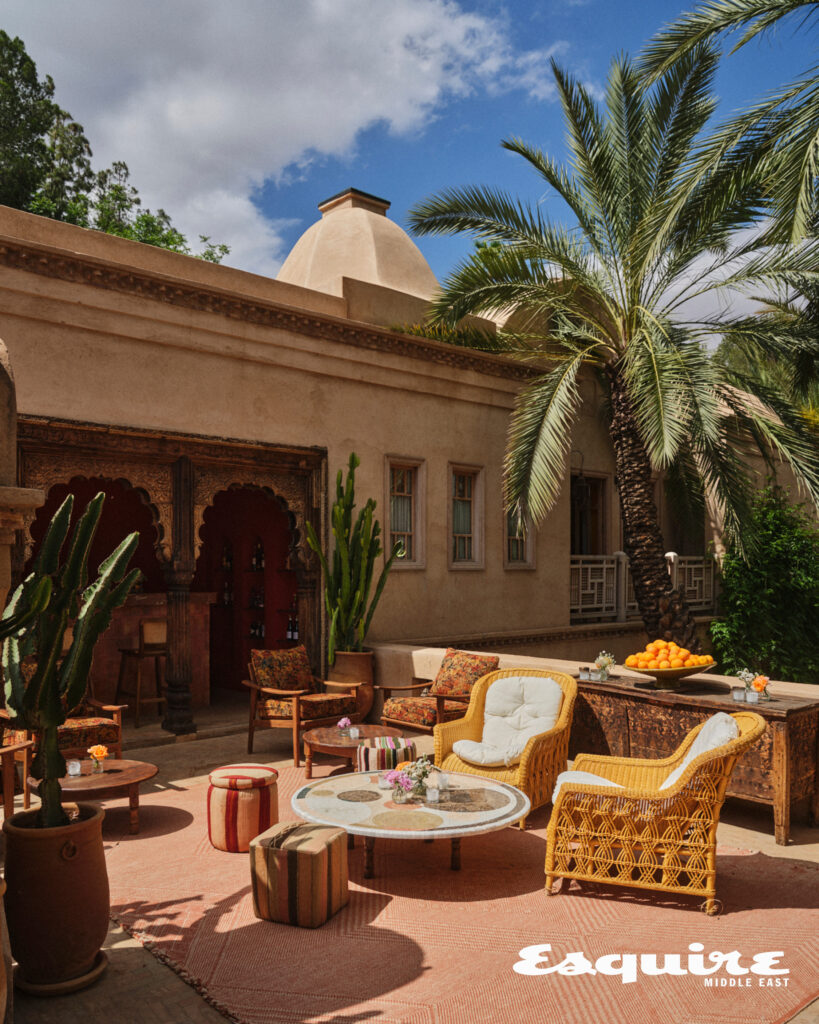
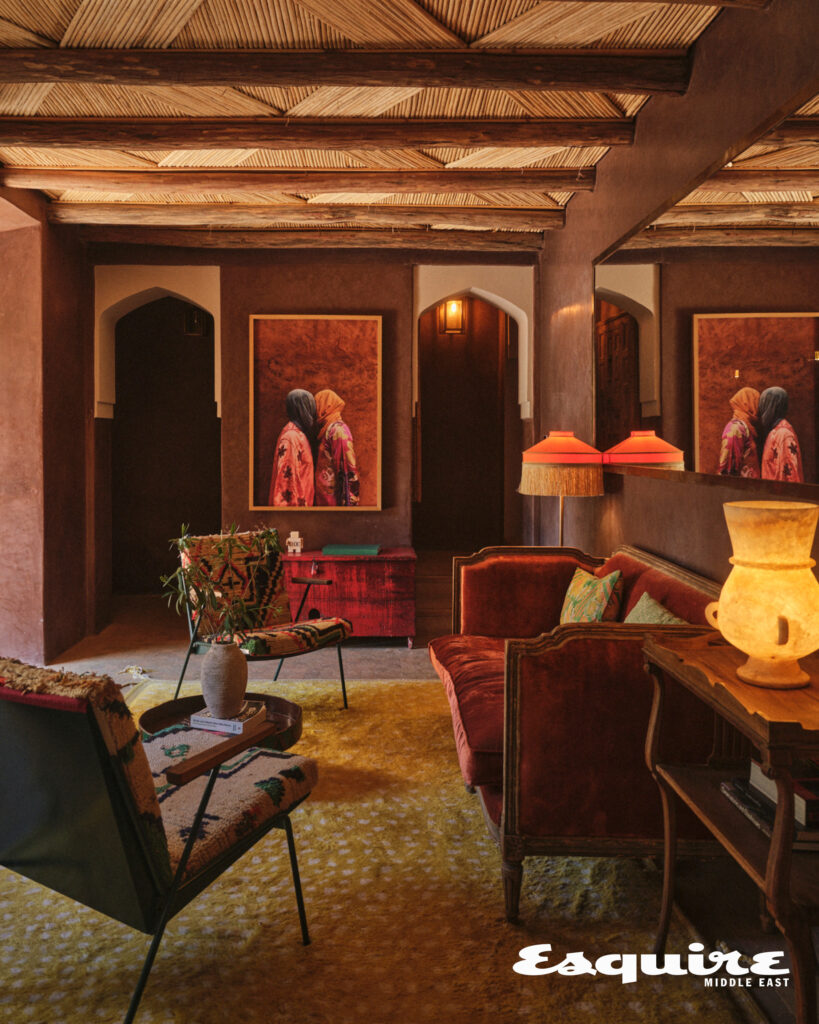
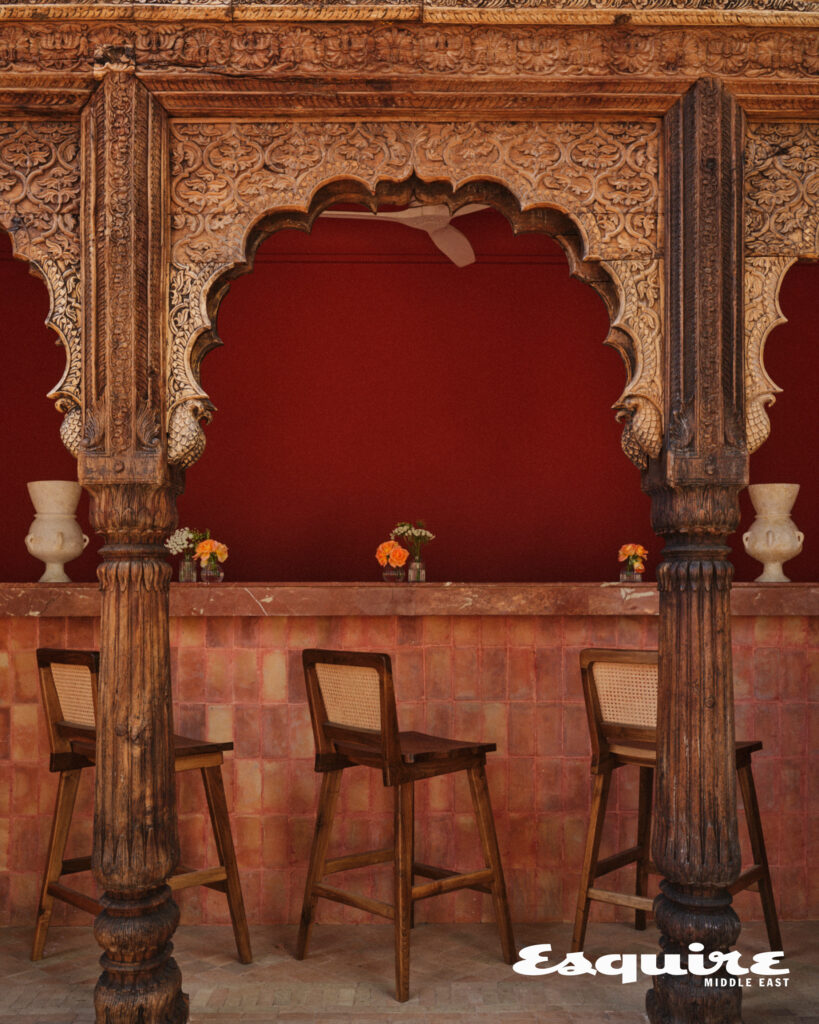
The Rumi Bar, pink-walled and anchored by a brass chandelier, is where the evenings unwind. The kitchen, led by chef Karin Gaasterland, pulls Moroccan and European influences into something seasonal, served in the gardens or across the terraces depending on the hour. The garden itself, shaded by palms and pistachio trees more than a century old, hosts regular cultural events and creative retreats, drawing artists and designers into the house. Each of them brings a unique feel, which shifts depending on the guests in residence.
That is Jnane Rumi’s particular achievement. In a city where luxury hotels have become their own genre, complete with art directed riads and tagines with foam, this is a place that resists the performance of Moroccan culture in favour of the thing itself. It is seductive precisely because it is not trying to be. A shuttle to the Medina runs for those who want it. Most guests, it turns out, do not.