
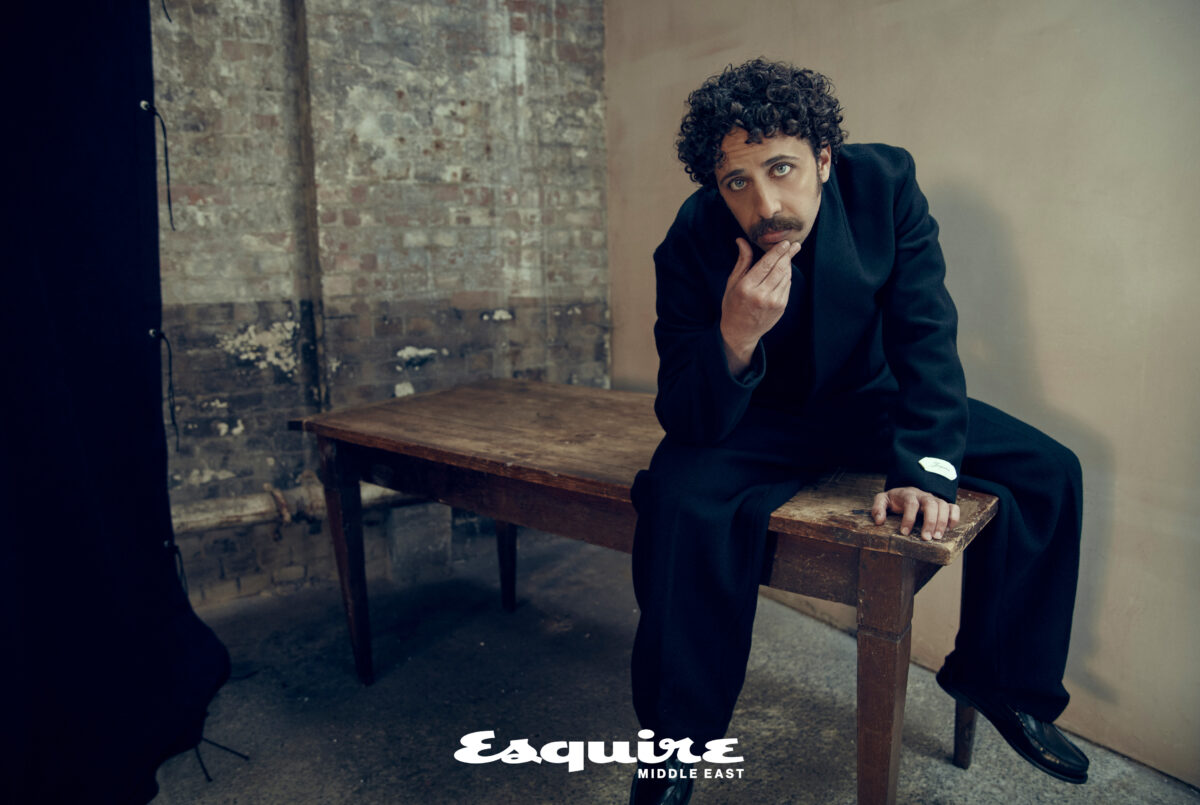

Last month at the 98th Academy Awards in Los Angeles in March, the air in the Dolby Theater was thick with the scent of expensive oud and the frantic energy of a thousand publicists. The world’s cameras trained on a red carpet that has long-represented the pinnacle of global cultural validation.
But five thousand miles away, in a quiet flat in Hackney, East London, the man whose face had become an emotional anchor of one of the year’s most discussed films was far removed from the tuxedoed fray.
“I was sitting on my sofa in a tank top and some shorts, drinking tea and watching with a couple of friends,” Motaz Malhees recalls, leaning back in a chair that has seen better days. There is no bitterness in his voice, only a weary, grounded acceptance.
The 33-year-old actor’s latest film, The Voice of Hind Rajab, was a frontrunner for Best International Feature Film. The official Tunisian submission to the category, the Kaouther Ben Hania directed film was already a staggering achievement — having won the Grand Jury Prize at the Venice Film Festival, and receiving a 23-minute standing ovation. The visceral, heart-stopping docudrama-hybrid told from the perspective of the Palestinian Red Crescent Society’s first responders in the hours leading up to the death of Hind Rami Iyad Rajab. Malhees plays Omar Alqam, the emergency operator who answered Hind’s call.
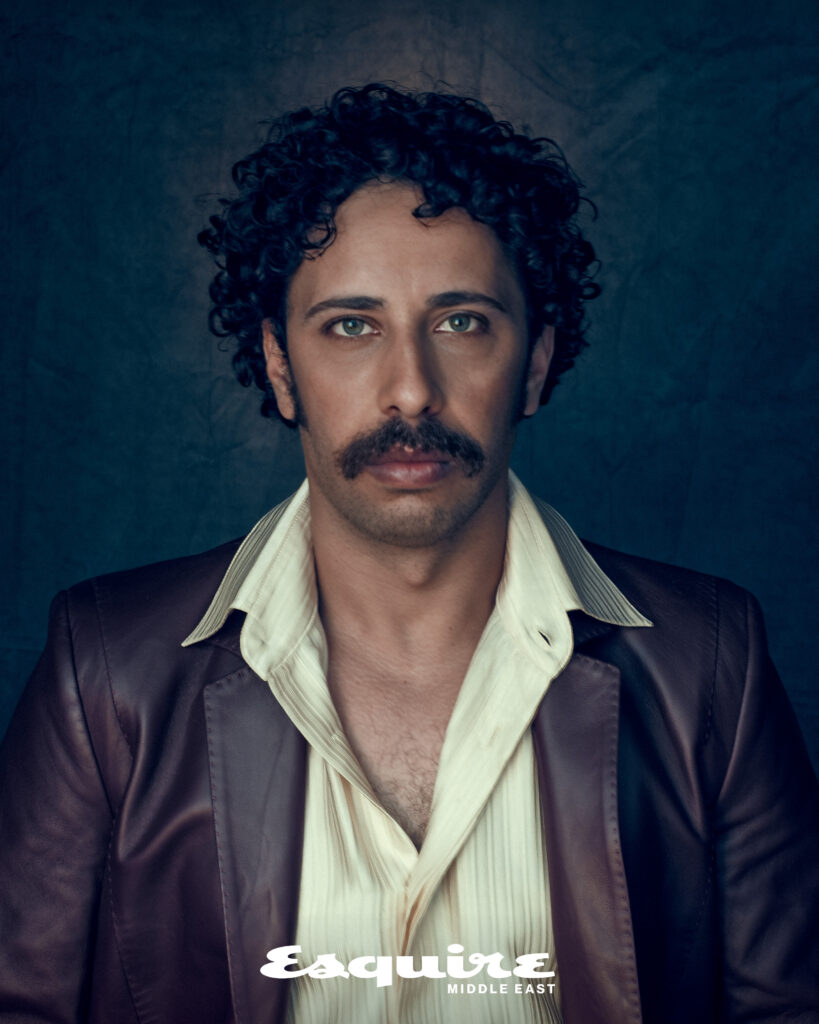
But while Hollywood celebrated his performance, Malhees remained in London watching through a television screen, due to a travel ban on Palestinian passport holders from entering the United States.
The irony of Malhees’ absence was not lost on the critics who had spent months hailing his portrayal of the real-life emergency dispatcher who spent hours on the phone with six-year-old Hind Rajab as she was trapped under fire in Gaza. In the film, Malhees’ performance is pure static tension—a man confined to a headset, navigating a tragedy he cannot physically reach. On the night of the Oscars, there was a sense of life mirroring art with a cruel, literal precision.
“I will admit, it did hurt a bit—it is most actors’ dream to be nominated for an Oscar, so when that happens to a film you are in and you are told that you can’t attend, it hurts,” Malhees admits. He pauses, rolling a cigarette with steady hands. “But it’s not like I’m dying. Growing up in Palestine, I’ve been through plenty worse things in my life than not going to the Oscars.”
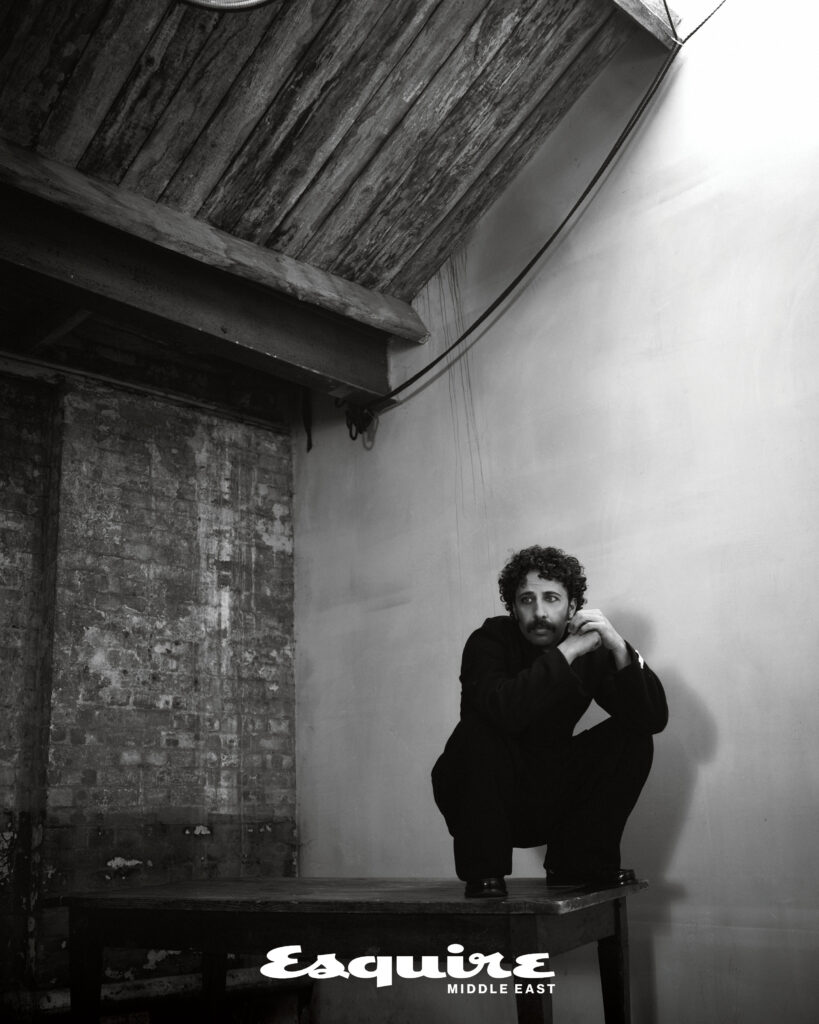
For Malhees, his physical presence at a ceremony is secondary to the survival of the narrative he helped craft. He views his absence not as a personal failure, but as a testament to the power of the medium. “What matters for me was that Hind’s voice was there, and my art was there,” he says firmly. “I wanted to help tell the story of what happened to her and thousands of children in Gaza. Sure, you can stop me physically, but you can’t stop the message from being seen.”
It’s clear that when talking to Malhees this isn’t rhetoric.
The isolation of being a Palestinian artist in the diaspora only compounded the weight. He describes the experience of making art in Palestine as “extremely isolating,” a feeling of being cut off not just from the West, but often from the broader Arab world.
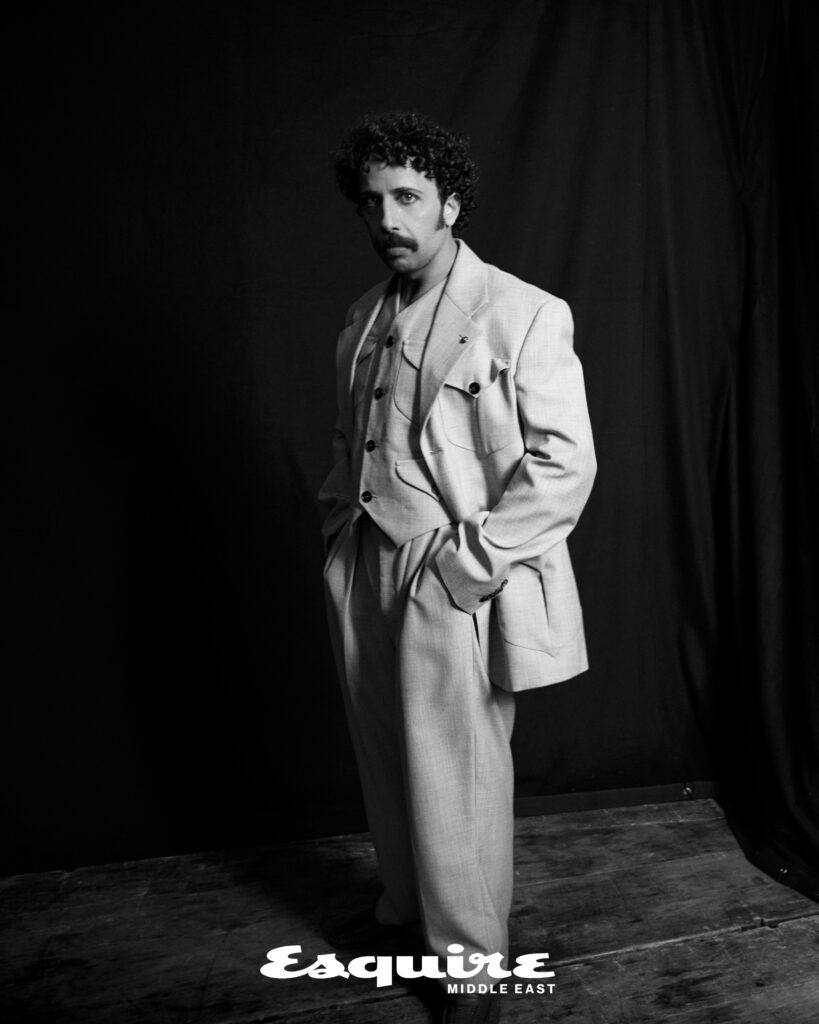
This was something that took its toll following the filming of The Voice of Hind Rajab where inhabiting that level of trauma came with a significant psychological price. After filming wrapped at the end of 2024 and he returned to his home in London, Malhees found himself descending into a profound malaise. “I was in a really dark place,” he admits. “The story just took so much out of me. I was so heartbroken and depressed, because it fills you. Yes, we are actors and that is the job—but I am human and I have emotions”.
His path back from that darkness didn’t lead through a therapist’s office, but through the grass of London Fields. He joined a local fitness community called the Broadway Movement, and it was there that he finally began to feel at home in a city that can be unforgiving.
“I was struggling, and so decided that I would start working out,” he says. “I found a community and built relationships with people that really helped me get over the depression and anxiety that I was experiencing”. For Malhees, physical discipline was a necessary anchor. In a profession that often rewards vanity and self-indulgence, he chose a different route. “It’s too easy in times when you are feeling low to turn to bad vices, but instead I focus on trying to lead a healthy lifestyle,” he notes. “Because ultimately, if I’m not healthy, then I won’t be able to help myself, or others in my community”.
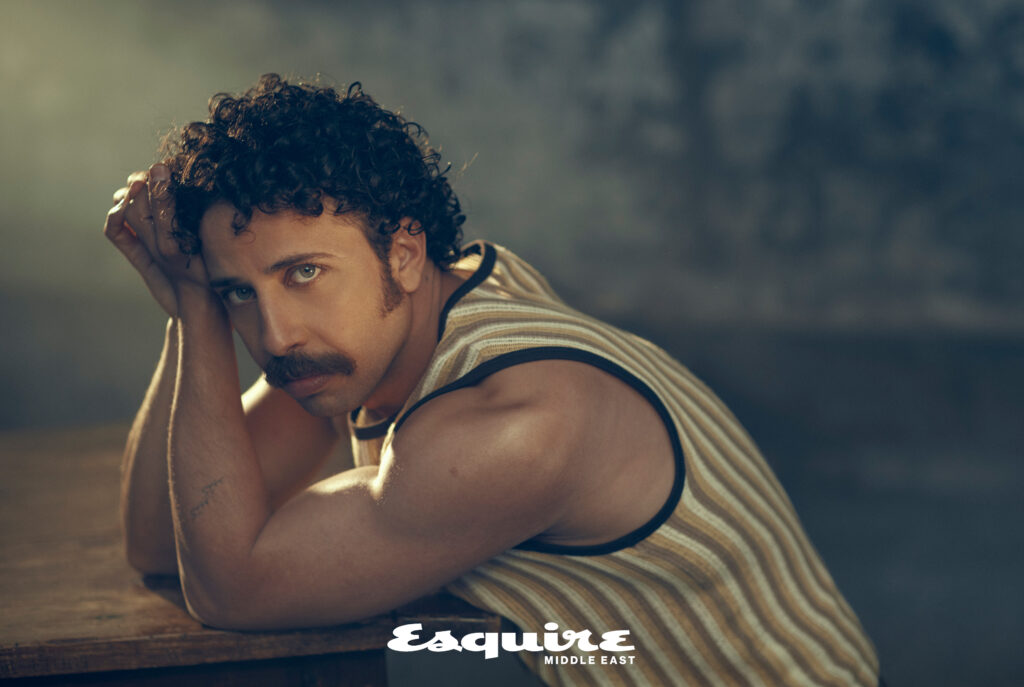
This community-centric worldview can be directly traced back to his theatre training at The Freedom Theatre in Jenin. It is an institution, established by Juliano Mer-Khamis, and famous for its hardcore approach to art as resistance. “The first thing they did at the school, was break your ego,” Malhees recalls with a laugh. “Yeah, in the first few months, you basically only learnt how to clean the theatre. And you slowly build from there. I still appreciate that nowadays, 17 years later, the work ethic and community focus still stays with me.”
That humility has become his north star on set. He views acting as a collaborative, egalitarian endeavor rather than a solitary pursuit of glory. “Acting can be seen as quite a self-absorbed job, but it really is just one small part of a wider production,” he says. “You’re not more important than anyone. For me, if we are not all equal, then there is something that doesn’t work in my head. Without the collective, there is no result on the screen”.
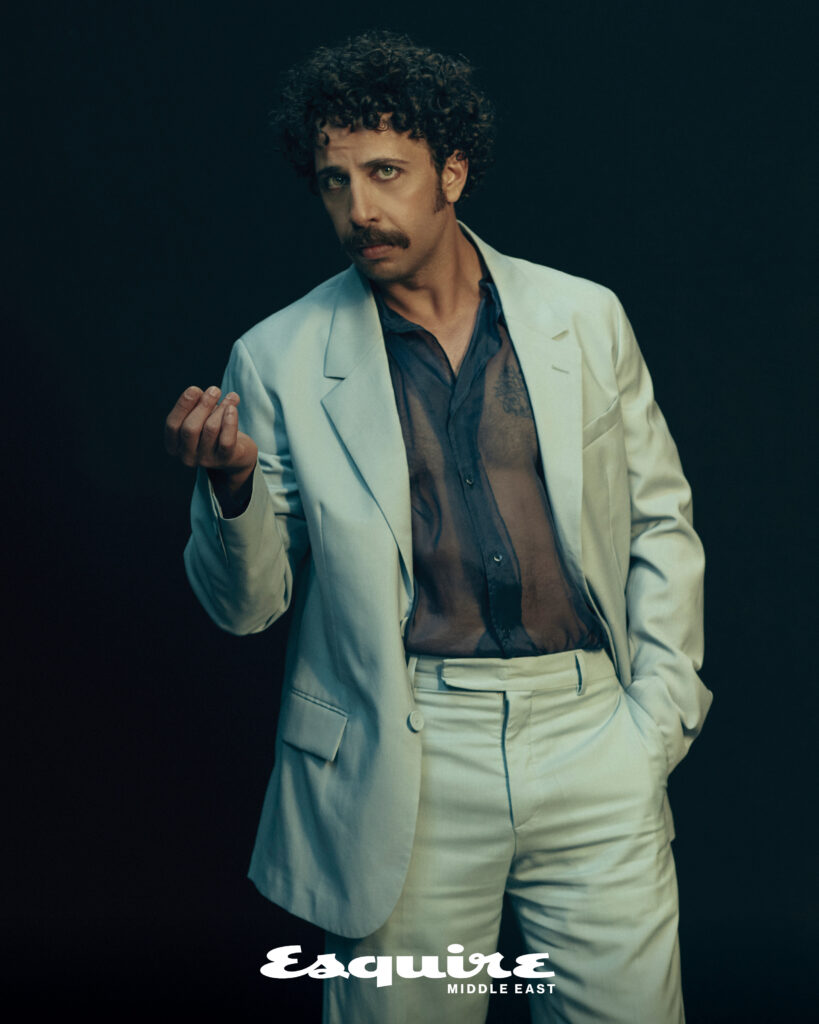
by PRADA
Motaz Malhees is now bringing this grounded intensity to a new, major project: The Siege. Joining high-profile co-stars David Morrissey (Sherwood) and Danny Dyer (Rivals), the six-part TV series, written by three-time Emmy winner Will Smith (Slow Horses), explores the 1980 Iranian Embassy siege in London. For years, Malhees turned down roles that painted Arabs as nameless, one-dimensional villains. This time, however, the script offered something different.
“I have always turned away from these kinds of roles—of Arabs portrayed as nameless terrorists, however, this role was different,” he explains. He plays ‘Salim’ (real name Towfiq Ibrahim al-Rashidi), an Arab Iranian gunman. “The script… actually explores the background and motivation of the character and explanation of why they did what they did. It was not a one-dimensional ‘angry Arab’ stereotype, it had depth and it had humanity”.
This choice aligns with his broader artistic manifesto. He has little interest in the escapism of modern blockbusters. “Fiction is beautiful and entertaining, but it isn’t going to change the world,” he says bluntly. “I want to work on projects that challenge people, and that can have an effect on the way people understand things. Art without a purpose is not art for me. It is great to make films about vampires or superheroes, but what matters to me more is to tell the stories from our real, lived experiences”.
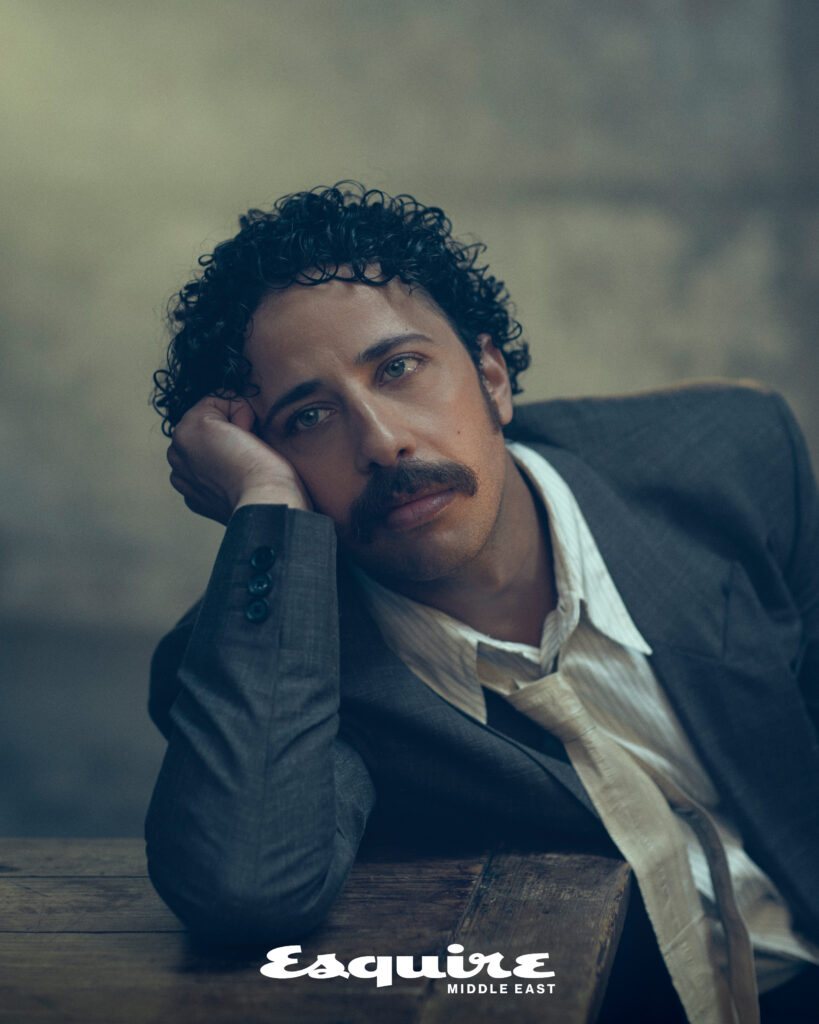
As the dust settles on the 2026 awards season, Malhees is looking toward a future where he is no longer defined by his inability to cross a border. He notes the irony that before the current Trump administration’s restrictions, he had visited the US four times. The nature of his passport often comes with personal and professional heartbreak, especially when it costs him roles that require fast travel.
“Many times I have lost movie roles because they need you to travel in two or three weeks, but my visa applications can take a month or more,” he explains. “It is really painful and it breaks my heart at times because as a Palestinian artist you have to do so much more just to be treated like everyone else”.
But Malhees’ politics are not fueled by personal grievance; they are fueled by a radical empathy for “the people.” “I am always with the people, and never with the governments,” he states. “Oppressed people will never be set free through bombings and missiles—because the real intention of those missiles is always about money and power, it is never about helping the people.”
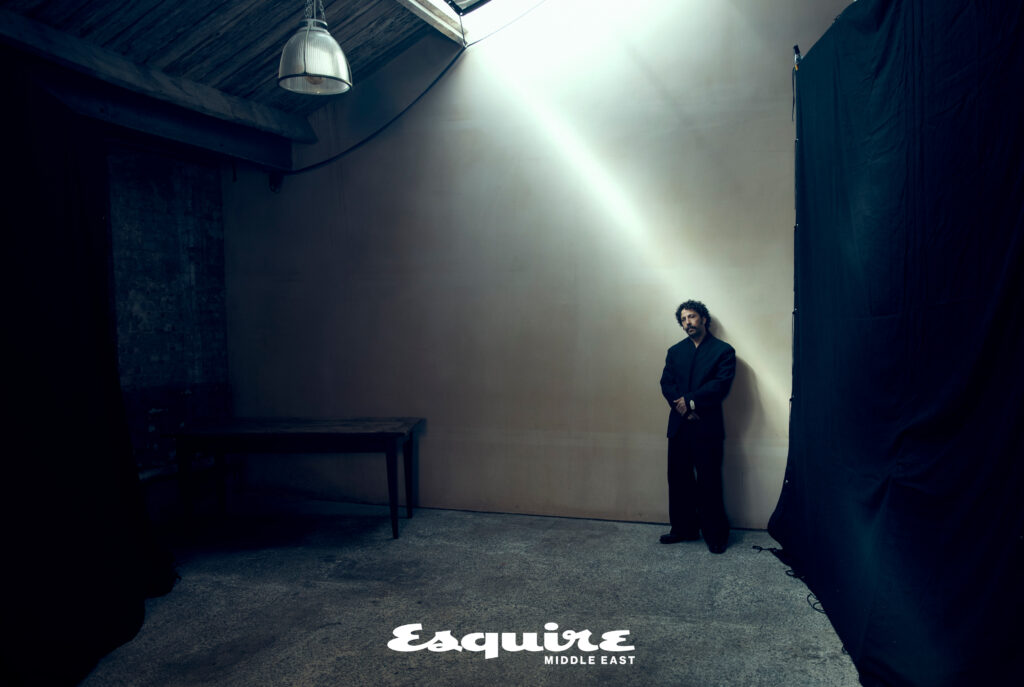
He sees his current success not as an individual victory, but as a “bridge” for those coming after him. The recognition from The Voice of Hind Rajab has given him the industry connections he lacked four years ago, and he intends to spend that capital on others. “I don’t just think about myself. I really think about the next generation, and my biggest hope is to keep bringing the art from my country to the world. And if I succeed in doing that, that’s all I need”.
Back in east london, the tea has gone cold, and the shadows are lengthening across London Fields. Motaz Malhees is a man who has learned to find peace in the collective. He knows that, like the rest of us, as he was sitting and watching this year’s Academy Awards, his performance was haunting the voters in Los Angeles, forcing them to confront a reality that no travel ban could hide.
“The thing with art is, it can travel through walls and checkpoints,” he says with a quiet finality. The Oscars may have missed out on his presence, but the world has already captured his soul, and he is certain it won’t be his last nomination.
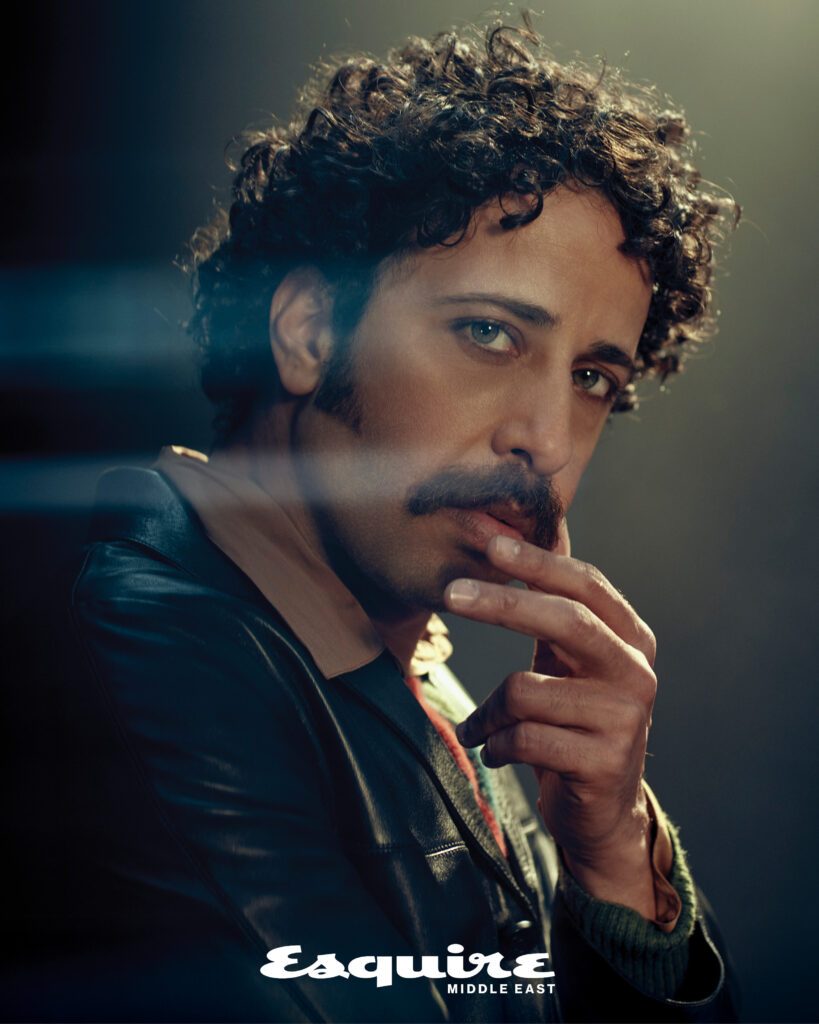
all by GUCCI
“I never lose hope,” he says. “If I lost hope, I would have stopped long ago. This film displays our love for our country. And next nomination? The next nomination will happen and I’ll be there. I believe it 100 per cent.”
But ultimately, for Malhees, it has never been about the red carpet; it’s about the next story that needs to be told, the next brick to be laid on the bridge, and the next wall that needs to be breached by the simple, radical act of being human.
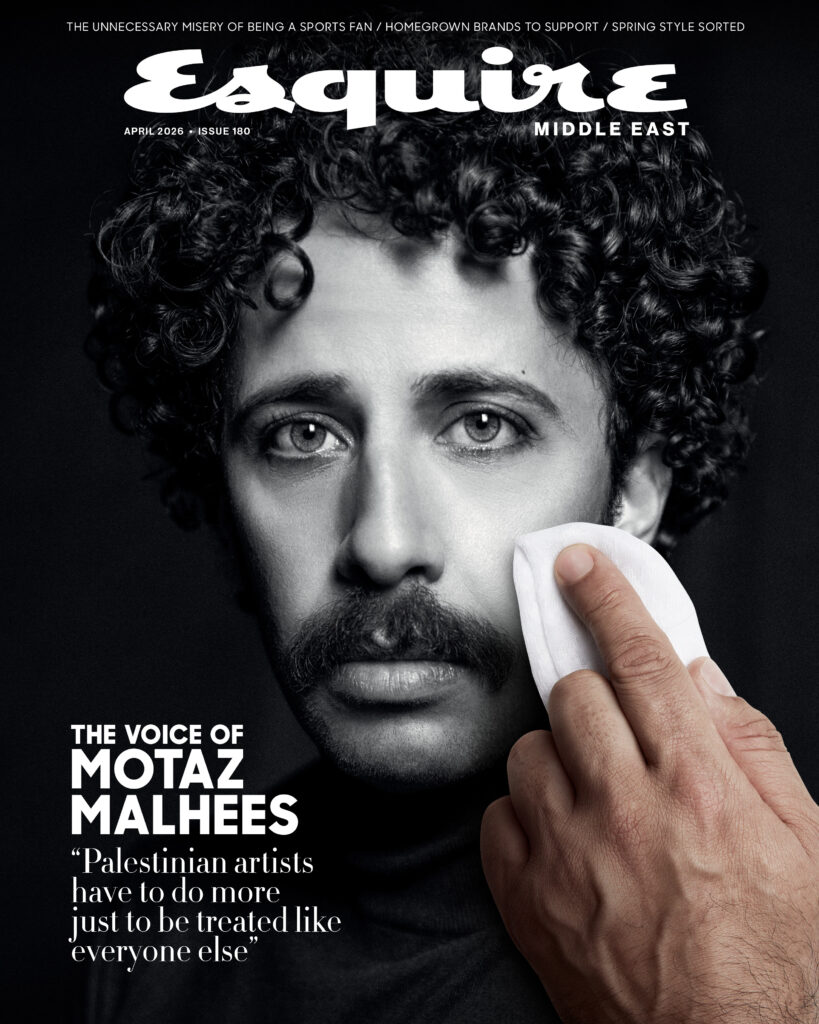
Photography by Lee Malone / Styling by Charlotte Marsh-Williams / Grooming by Mira Husseini (using Megi Wellness) / Executive Producer: Steff Hawker / Digi Tech: Damian Flack / 1st Lighting Assistant: Jack Milsom / 2nd Lighting Assistant: Lui Carrasco / Talent Agency: August Agency / Casting: Affa Osman