
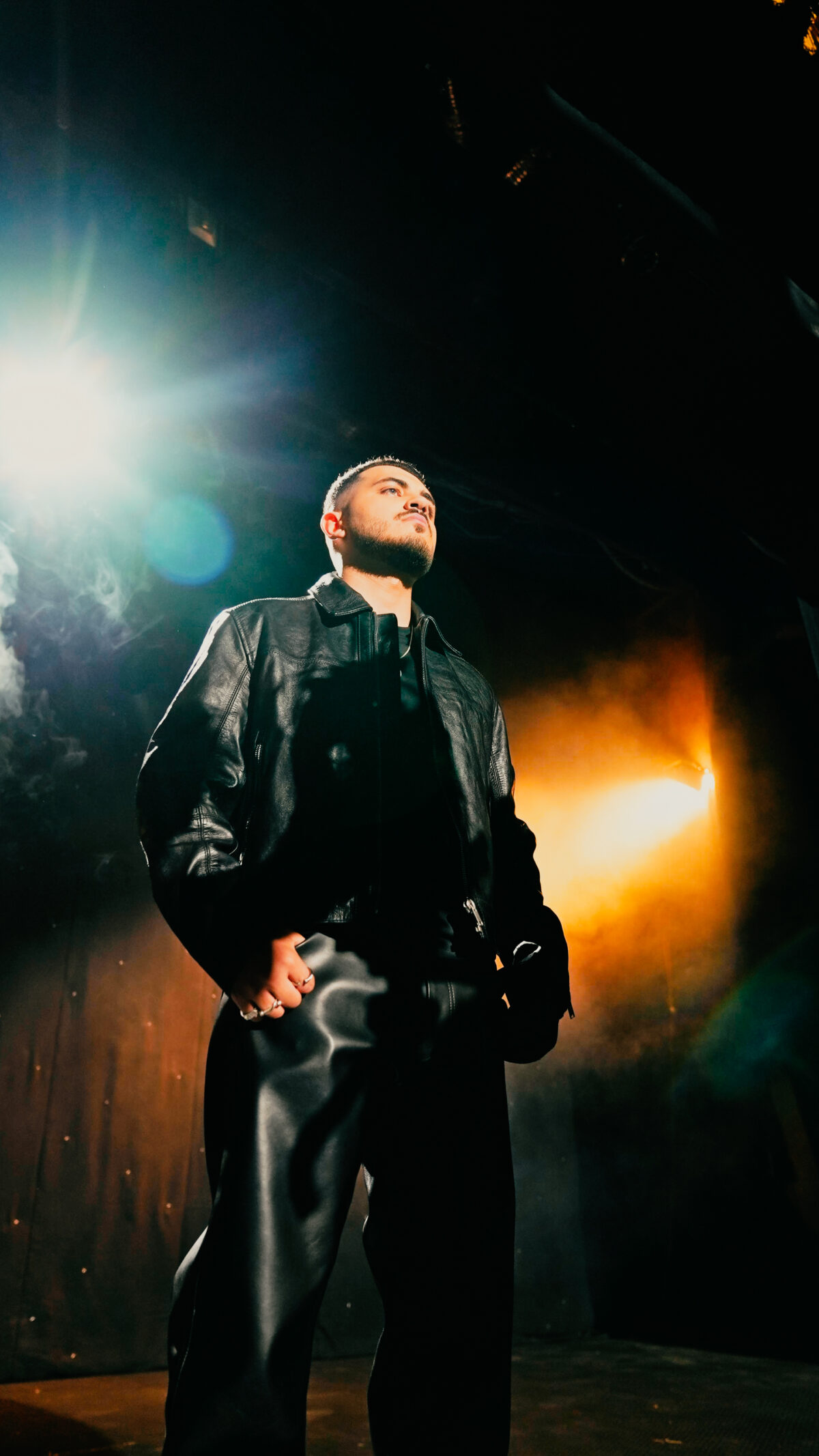

Issam Alnajjar is one of the major voices of a new generation of Arab artists who are exploring the region’s musical heritage to create something new. In this Esquire Middle East interview, the Palestinian-Jordanian singer opens up about his latest album, Night in Cairo, a deeply personal record that marks a return to his roots after two years of creative exploration.
From blending Arabic melodies with global pop influences to revisiting the room where his musical journey began, Alnajjar reflects on identity, authenticity, and the search for meaning beyond viral moments. As he prepares to perform at Beat The Heat DXB, he reveals the story behind the album, the artists who shaped him, and why the future of Arabic music has never felt more global.
Esquire Middle East: You describe Night in Cairo as a return to your “why” after two years and more than 50 songs. What was the version of yourself you had to lose in order to arrive at this album?
Issam Alnajjar: I think I had to let go of the version of myself that was chasing expectations. After Hadal Ahbek, there was always pressure to recreate that moment or follow what people thought I should sound like. This album came together when I stopped trying to impress anyone and focused on making music that felt honest. Going back to where it all started reminded me why I fell in love with music in the first place.
Esquire Middle East: Where do your roots sit within this project? What were the biggest influences and inspirations behind the album?
Issam Alnajjar: My roots are the heart of this album. I grew up listening to Arabic music at home, and those melodies have always stayed with me. At the same time, I’ve always loved global pop production. Night in Cairo is where those two worlds meet naturally. The inspiration came from the music I grew up with, the people around me, and the feeling of wanting to celebrate where I come from in a modern way.
Esquire Middle East: Cairo feels both symbolic and emotional throughout this project. What does “a night in Cairo” represent for you, both as an album and as a message you want to convey?
Issam Alnajjar: For me, Cairo represents life. It’s a city full of emotion, culture, music, and people coming together. A night in Cairo is that feeling of staying out until sunrise, surrounded by people you love, and forgetting everything else for a while. I wanted the album to capture that atmosphere: the joy, the nostalgia, and the sense of belonging that music can create.

Esquire Middle East: You’re blending Arabic melodies with global pop production. Where do you draw the line between cultural authenticity and modern influence?
Issam Alnajjar: I don’t really see them as opposites. Authenticity comes from being honest about who you are. The production can be modern, but if the melodies, emotions, and storytelling come from my culture, then it still feels authentic. My goal isn’t to make Arabic music sound Western. It’s to show that our music naturally belongs on a global stage.
Esquire Middle East: Sampling isn’t very common in the region, yet you sampled “Ya Sidi” from Ihab Tawfiq’s “Allah 3alek.” Can you tell us more about that choice?
Issam Alnajjar: I’ve always loved that song. It’s one of those records that never really gets old, and I think that says a lot. Sampling it felt natural because I wanted to take something people already have a connection with and look at it from a different angle, while also introducing it to a new generation. We kept the spirit of the original but made it feel like something you could hear today.

Esquire Middle East: What are your favourite tracks from the album?
Issam Alnajjar: It’s difficult to choose because every song represents a different moment over the last two years. “Hayati” is very special because it introduced this new chapter. “Ya Sidi” was one of the most exciting songs to create because of the sample, and the title track, “Night in Cairo,” really represents the spirit of the entire album. Each song tells a different part of the story.
Esquire Middle East: You went back to your old house and the room where music first made sense to you. What did that moment unlock about your relationship with success, identity, and the artist you’re becoming?
Issam Alnajjar: It reminded me that success isn’t about numbers or recognition. Before any of that, there was just a kid making music because it made him feel better. Going back there helped me reconnect with that feeling. It made me realize that if I stay true to that kid, everything else will follow naturally.
Esquire Middle East: You came up in a TikTok-driven music era, but Night in Cairo feels like a more complete, full-body album. How do you balance viral moments with building a lasting legacy?
Issam Alnajjar: Social media has been a big part of my journey, and I’m grateful for the way it helped my music reach people around the world. But for me, the most important thing has always been the music itself. A viral moment can introduce people to a song, but what makes them stay is the emotion and the story behind it. With Night in Cairo, I wanted to create something people can connect with beyond a trend, something they can return to and feel the same emotions years later.
Esquire Middle East: How do you see the Arabic music scene today?
Issam Alnajjar: I feel like Arabic music is in a really exciting place right now. More artists are creating without feeling like they have to fit into one style, and that’s making the scene more honest and more interesting. At the same time, we’re staying connected to who we are and where we come from. It’s amazing to see people from different parts of the world connecting with Arabic songs, even if they don’t speak the language. Music has its own way of crossing borders, and I think we’re only beginning to see how far it can go.
Issam Alnajjar will perform at Beat The Heat DXB in Dubai on July 18.