
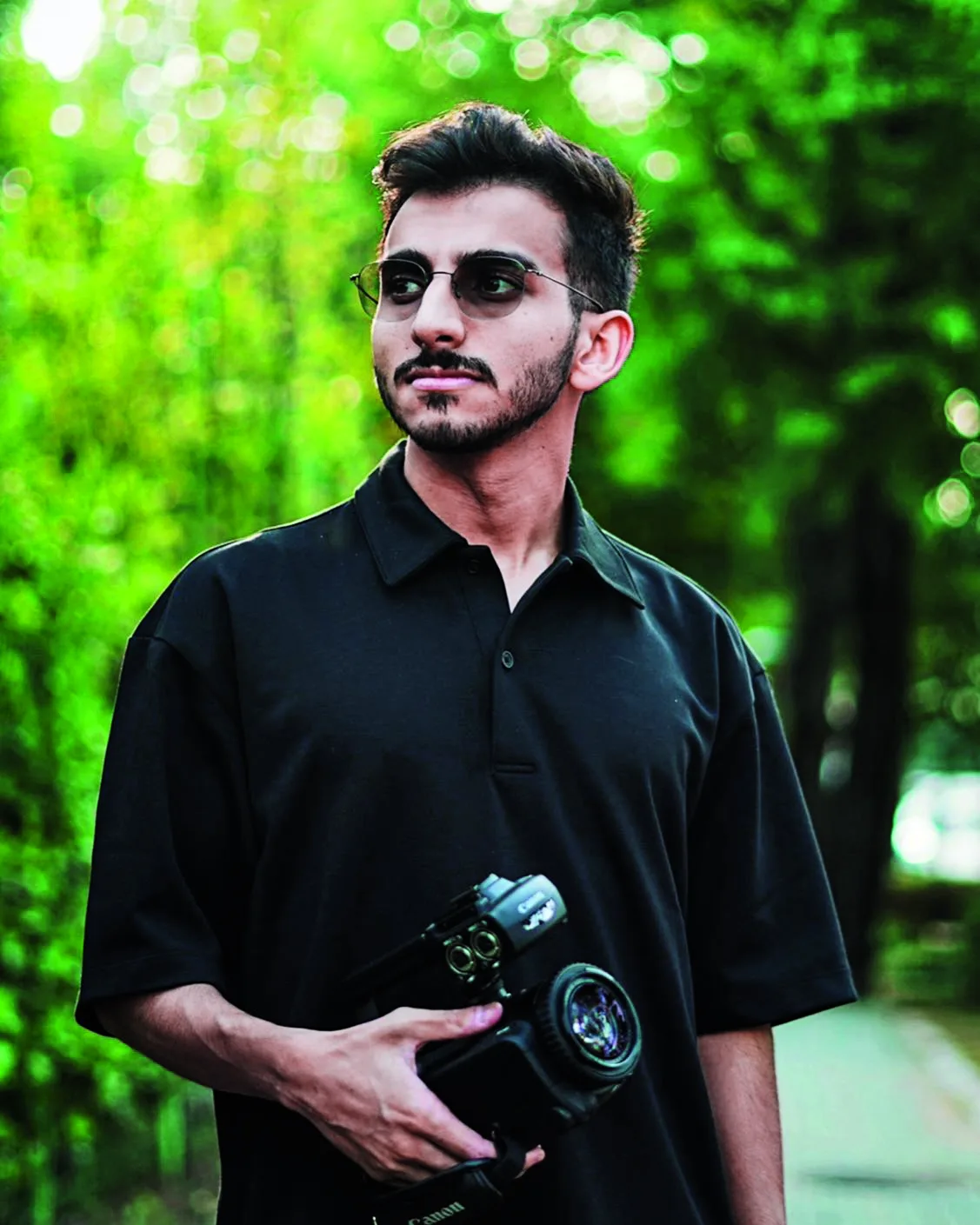

(By: Mariya Bint Rehan)
In his new retrospective documentary Fog of Gunpowder, Saudi filmmaker Saad Tahaitah pays homage to the traditional Al-Midqal celebration of dancing and rifle fire.
There is a languid, dream-like quality to Saad Tahaitah’s filmmaking. Central to the Saudi director’s work is the feeling of connection and belonging that is increasingly rare in today’s digitally nomadic era. Tahaitah attempts to cut through that, creating documentary works aimed to capture elements of culture which might now seem alien to us, but from which we cannot turn our eyes.
Born and raised in the Asir region in the southwest of Saudi Arabia, Tahaitah describes a deep love for the art of documentary making and its unique ability to create an unfiltered cultural legacy. “Documentaries are rich and leave a stronger imprint,” he says of the art form he was initially self-taught in, and which he has revelled in since the age of ten when he would sit before National Geographic in wonder. Tahaitah’s work is an important part of a nascent but growing canon of cultural archiving, and his unassuming subject matter is a compelling contribution to an unfolding conversation regarding heritage.

His first project, Day in my Village, began as a personal farewell project as he left his home for university, subsequently airing at the 2019 Saudi Film Festival to much accolade.
His latest short film, Fog of Gunpowder, makes its much-awaited debut seven years later, having been officially selected for the documentary competition taking place in Dhahran this month. The film is a moving account of the revival of the Al-Midqal tradition, last performed by his tribe, Balhusain, in 1996 in their home region of Al Namas. It documents a sentiment that is the antithesis of the digital “fauxstalgia” currently dominating the web. The restaging of the dance is locally anchored, and its origins trace back to the material world that social media-spurred nostalgia appears to have bypassed in favour of the generic and globalized. Rather than an amorphous digital yearning, Tahaitah’s film shows community rebuilding in action, using the actual fabric of the past and intergenerational connection to build something anew.
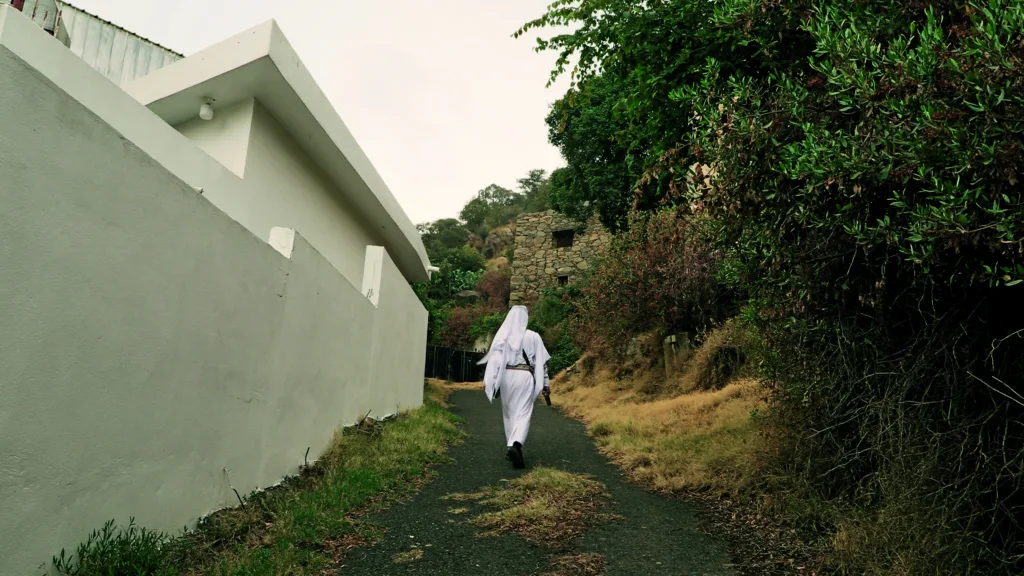
“This film is very personal to me – it is my story, and features my childhood, my dad, my family,” Tahaitah explains. “I wanted to keep this element of the personal and I wanted the viewer to understand this tradition and its unique place in time.”
Speaking of the main event which the film centres upon, Tahaitah describes his role as both an observer and a child of the tribe. “The tribe decided themselves they wanted to revive the tradition,” he notes. “If I didn’t make the film, the event would be recollected through individual phones capturing fragmented moments.” The film assumes a beautiful, timeless quality by mixing old analogue media with new forms of storytelling to preserve time-honored traditions. By effortlessly juxtaposing his uncle’s grainy footage of bygone Al-Midqal performances with his own contemporary documentation, Tahaitah creates an uninterrupted narrative thread. The billowing fog that rises above the leafy treetops of Asir becomes symbolic of the broader cultural implications of joining the past and present.
Tahaitah is intentional with his use of emotion as a vehicle for storytelling. “Through the film, I don’t talk about the tradition itself — my whole perspective of the film is how the two generations get together after twenty years and try to understand each other — old people training the young — it’s a magical thing, to add mechanics would kill the emotion.” He is equally purposeful with the form of his craft. “I think that documentaries work best in short form. I want to make films that leave the audience wanting more. I don’t like to give all the answers—I love films that leave me wondering.”
Tahaitah conveys the quaint and local without the anthropological overtones that documentary making often harbours. “There is something between me and my people—a bond I reflect in the camera. I don’t like it when people approach Assir like it is strange.” As a result, his filmmaking foregrounds the universal without sacrificing the richness of tradition. Tahaitah’s narration exhibits a masculinity rooted in duty, community, and brotherhood, inviting the viewer to imagine masculinity through a local lens rather than the superficial considerations of the digital manosphere.
Beyond Fog of Gunpowder, Tahaitah has been working on other projects documenting the richness of Saudi culture, including his upcoming Al Ula Memory. Driven by the impulse to tell human stories, he shares: “What inspires me is to tell the untold stories of my country. The point is to make something really good that can last forever.”
‘Fog of Gunpowder’ will be screened at Saudi Film Festival, June 25 to July 1, 2026, at the King Abdulaziz Center for World Culture (Ithra) in Dhahran.