


Few images are as etched into my psyche as that of Mr Bean unsuccessfully shooting a bow and arrow at his baby pram as it ascends toward the heavens due to the helium balloons tied around it. I asked my mother for help to rewind the VHS tape (boy, that feels ancient) before hastily shoving it back into the machine to watch it all over again.
And now, 30 years after the live-action, and 19 years after the animated series both concluded respectively, Rowan Atkinson is returning to our screens for the fourth season of Mr Bean: The Animated Series. The series premieres on May 5, 2025, and will be available on HBO Max on OSN+ in the Middle East.
Rowan Atkinson calls me via Zoom, and a large, animated Mr Bean cutout is raised behind him as his familiar face, clothed in the customary brown jacket and red tie, flashes across my screen.
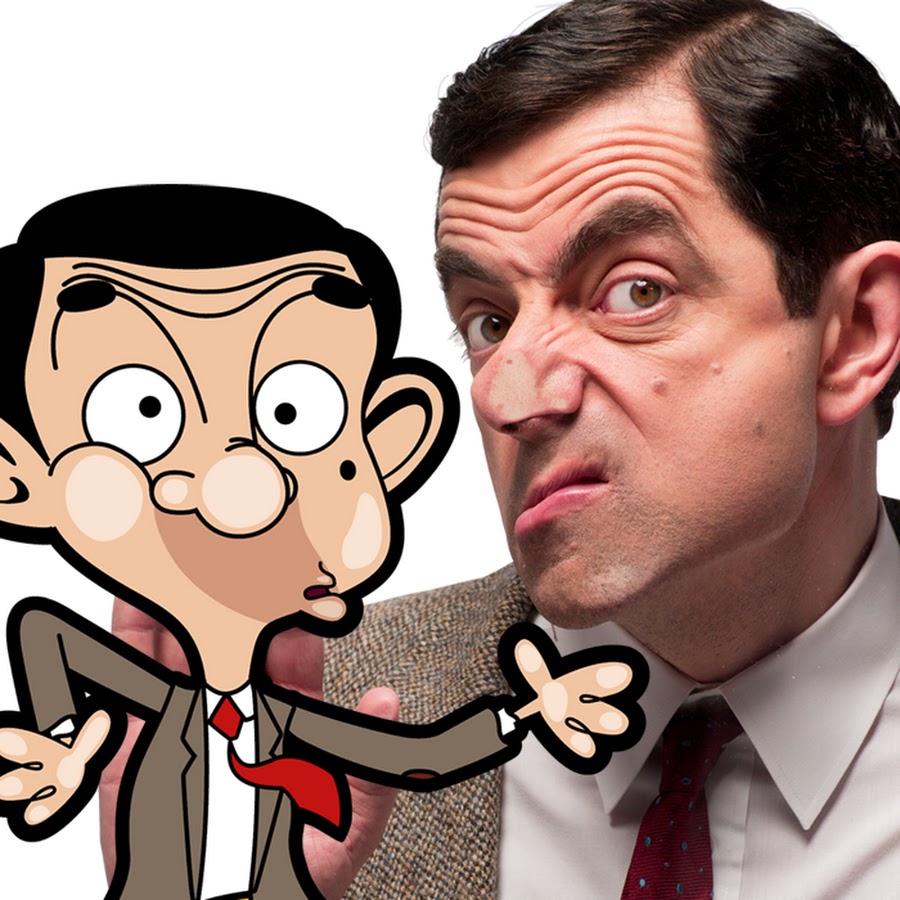
“Mr Bean was a massive success in Canada,” Atkinson tells me, “Although he never quite made it to America. Only until the Johnny English films came out did people start to recognise me in the States.”
I remind him of the comedy film Rat Race (2001), which, in my memory, is what solidified his reputation for my American friends and me.
“Oh, yes, of course,” he smiles, as if he’d forgotten about that film. “I did a project with Netflix a few years ago, Man vs. Bee (2022), which did very well in the US, and that opened up American audiences to Mr Bean a bit more.”
“People think comedy is about speed, whereas I think it’s really about rhythm, and that rhythm can be quite slow. Mr Bean can really take his time.”
Rowan Atkinson
But what made Mr Bean stand out from every other sitcom or comedy act of its time was the fact that he was completely mute, and I couldn’t help but wonder if Atkinson faced any resistance when he first pitched that idea to networks. After all, even the most physical of comedians, such as Chris Farley, still spoke quite a bit, even if a majority of the laughs produced came from him crashing through tables and windows.
Rowan Atkinson: “Absolutely, there was resistance in the early days. There was a lot of skepticism about what success, if any, a completely mute character would have on TV. We did the half-hour pilot back in 1989—wow, that’s a long time ago—for ITV, which was, and still is, a major network in the UK. It was very difficult to find a spot for us in the timetable, but they managed to fit us in as one show ended and before another began. Coincidentally, it was on 8 pm on a Wednesday, immediately after Coronation Street, which is one of the most popular soap operas in the UK. And so we got this 30-minute slot for our strange little show about a man who was almost entirely nonverbal, and amazingly, it found its own audience. People identified with it despite it being very slow-paced. People think comedy is all about speed, whereas I think it’s really about rhythm, and that rhythm can be quite slow. Mr Bean can really take his time, particularly in live action but also in animated form. It takes time for situations to develop.”
Esquire: Can you elaborate more on the speed versus rhythm in comedy?
RA: “I just think people are worried. When it comes to TV scheduling, they’re worried about attention spans, you know? Especially for children and younger audiences. Mr Bean doesn’t have any accompanying fast-paced music. But I also think this is exactly why people identified with the character so clearly. He’s this sort of weird child trapped inside a man’s body, and you’re so fascinated over what he’s going to do next because you know that whatever he does, it’s going to go wrong. And because of that, you’re prepared to stay with the character at whatever pace he chooses.”
Esquire: And how do you feel about reviving the animated series for a modern audience, especially for a character that has such a long and dedicated fan base?
RA: “I try not to think about fame or notoriety so much. It’s flattering and satisfying, but I just try to get on with the next job. If the last job you did worked well with audiences, then people are prepared to put money in for your next job. And then you can keep on playing with the characters you want to play with.”
Esquire: From what comedic characters did you find inspiration, and whom did you admire?
RA: “Oh, I loved Austin Powers. John Cleese and the Monty Python team, of course. And an Australian performer called Barry Humphries who had a character called Dame Edna, who was just terrifically funny. And Robin Williams was always great. But the French filmmaker, Jacques Tati had a film called Monsieur Hulot’s Holiday (1953) that I saw when I was 17 years old, and that is arguably the biggest inspiration for Mr Bean.”
Mark your calendars for May 5, as everyone’s favourite nonverbal, lovable buffoon returns to the animated screen.
