

This year, Ramadan caught me off guard. Which makes no sense. It literally comes every year. But I was in Canada for the birth of our second baby, completely out of my usual rhythm, and suddenly Ramadan was here and I had to catch up, fast. After all, people rely on my platform (Nad’s Reviews) to know what to watch next and what’s just not worth their time. But I was severely overwhelmed, and then I realized… that’s exactly how these shows feel.
Every year.
We all pretend Ramadan TV is this big, polished, premium moment for the industry. But if you look closely, it’s a mess. Everyone is rushing to meet deadlines and, for some reason, they’re still filming days before the finale airs. Imagine a Marvel movie still filming its final act while it’s already in theaters. It would be a disaster. But here, it’s the standard.
And you can feel it on screen.
Bil Haram was a big one for me. Maguy Bou Ghosn has been the star of some awesome shows over the past few years, including Lil Mawt, 3a 2amal, and Bil Dam. But Bil Haram? This show was an absolute waste of potential.

There’s a solid idea at its core, about a sex trafficking ring and a circus troupe that finds itself caught in the middle, but nothing is truly paid off by the end of the season. The cast is phenomenal, featuring brilliant performances from beloved Lebanese stars like Randa Kaady, Carole Abboud, and Bassem Moughnieh. However, the characterization makes zero sense with illogical motivations and actions at every turn. Moreover, the show seems focused on cramming in endless subplots and social issues (drugs, suicide, Alzheimer’s, and breast cancer to name a dozen) without truly committing to its core message. The finale in particular is a disaster; it’s plagued with ridiculous moments and rushed storylines that made me feel like I was suddenly watching a comedy. Thankfully, the cast kept it all afloat.
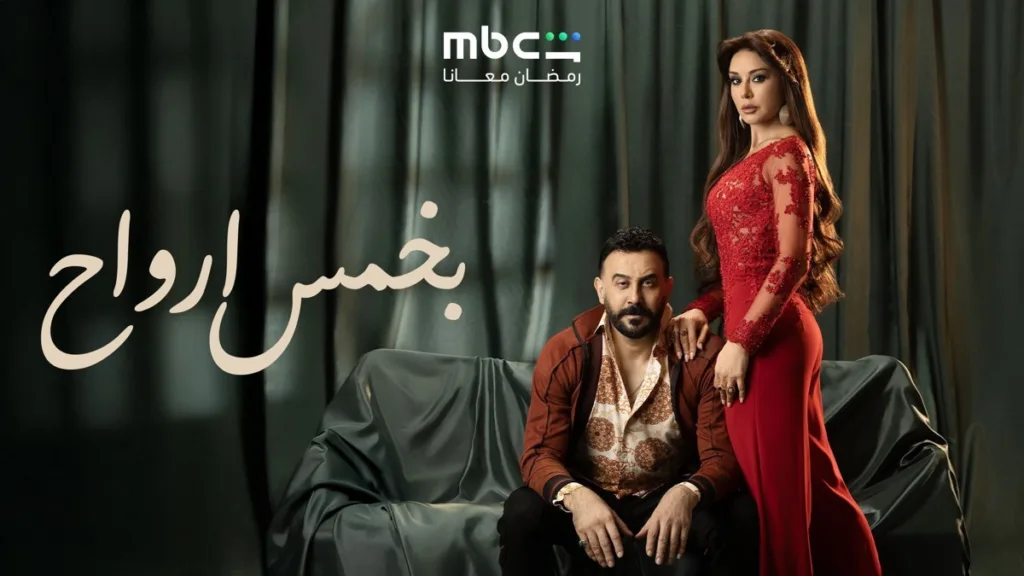
Then we have Bi Khams Arweh. This charming Syrian-Lebanese drama began with real promise. It’s the story of a down-on-his-luck guy who suddenly finds himself the heir to a billion-dollar tycoon. Kosai Khaulii is spectacular, bringing both vulnerability and strength to the character, and his chemistry with Karess Bashar, who is outstanding as a nightclub singer and performs live, is so addictive to watch.
Unfortunately, the final ten episodes are disappointingly dull and random. Characters come and go, the storytelling feels lazy, and even Karess disappears for long stretches at a time. For some reason, the show forgets that Kosai and Karess’ chemistry is its secret weapon. The finale is a particular misfire. The emotional arcs fall flat, scenes look like they were shot yesterday, and the dialogue sounds like it was rewritten overnight. It literally feels like someone just screamed “khalas, wrap it up.”
Finally, we have Mawlana, arguably the best-written of the three. It stars Taim Hassan as a man on the run who ends up in a small Syrian village, assumes another man’s identity, and slowly becomes a sort of messiah figure.
The cast is phenomenal here as well, with Nour Ali, Nancy Khoury, and Fares Helou delivering layered and nuanced performances. Taim Hassan of course plays the role to perfection. His character doesn’t have much dialogue, but his body language and facial expressions tell us everything we need to know. However, even here, the last few episodes have issues. They feel rushed, not as badly as the others, but enough to feel jarring.
Notice a pattern?
All three shows clearly weren’t fully written before filming began. And all three struggled to cross the finish line properly. Mawlana managed to escape moderately unscathed, but the other two lost a lot of goodwill with their finales. And this is the part that annoys me. Why are we still surprised? Every single year we have the same conversation. “The ending felt rushed.” “The writing faltered.” “The second half wasn’t as strong.” It’s painfully predictable at this point.
And going back to my Canada situation, I get the pressure. When you’re behind, you’re not thinking long-term. You’re thinking what needs to be done today to survive and deliver (pardon the pun) the product.
But Ramadan isn’t a surprise; it’s one of the most predictable windows in the calendar. The expectations are clear. The audience is locked in daily (I still believe 15 instead of 30 episodes would improve these shows but that’s a conversation for another article). So why are we still acting like Ramadan snuck up on us? Why aren’t scripts locked months in advance? Why aren’t finales written before episode one even airs?
Because we’ve normalized it. We expect strong starts, messy middles, and rushed endings. The talent is there. The audience is there. What’s missing is discipline.
And until that changes, we’re not watching finished shows. We’re watching deadlines.