

Since its founding in 1955, Chalhoub Group has grown alongside the Middle East’s evolving relationship with luxury. What began as a family-run business is now one of the region’s most influential luxury retail and brand ecosystems, spanning fashion, beauty, jewellery, eyewear, and experiential retail.
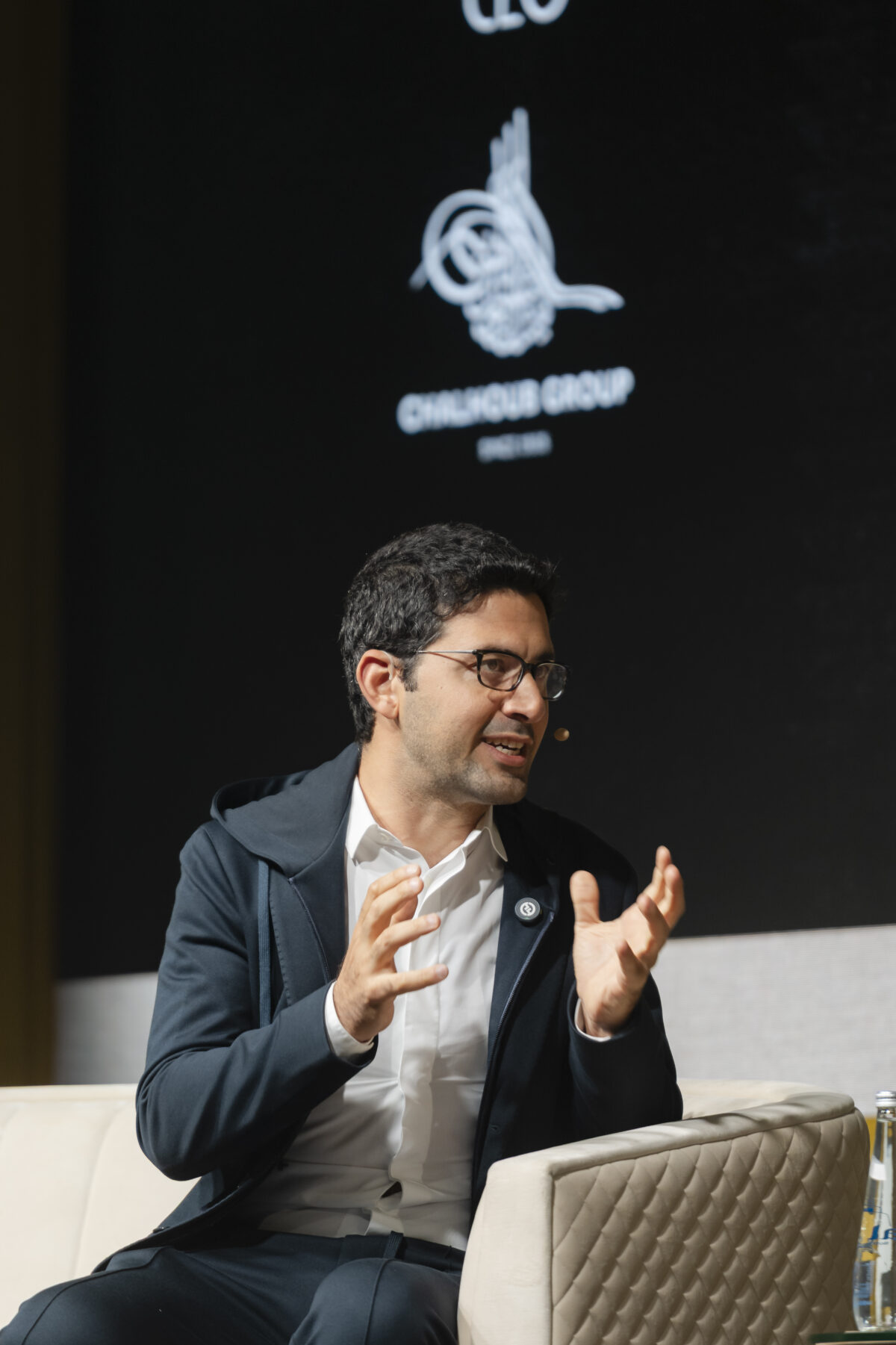
A little over a year into his role as Chief Executive Officer, Michael Chalhoub is navigating the delicate balance between legacy and transformation. He is steering the group through global uncertainty while embracing the region’s growing confidence as a luxury hub in its own right.
The idea of the Middle East as a “luxury bubble” often comes up, framed through comparisons with Europe or the United States. Chalhoub does not dismiss the perception but is focused on what is happening locally.
Shoptalk Luxe maps the future of luxury in the Middle East
“Luxury in the Middle East is evolving very positively. We are seeing demand grow by six percent in fashion and twelve percent in beauty. But beyond growth, what is really changing is the experience.”
That shift is visible in new retail destinations across the region. In Riyadh, recently opened malls bring a level of sophistication and service previously associated with Europe. Abu Dhabi and Jeddah are also seeing new developments that encourage customers to spend locally rather than abroad. “For years, our customers travelled overseas for luxury experiences. Now they are finding them at home, and in some cases, the experience is even better,” he explains.
Central to this evolution is a deep understanding of the Middle Eastern consumer. “It is a combination of knowing our customers and offering a complete range of products and experiences. We have expanded from fashion and beauty into jewellery, eyewear, and service-led luxury experiences. The goal is to make our customers feel completely comfortable spending locally.”
The past year brought significant challenges, including geopolitical uncertainty. For Chalhoub, leadership during difficult times starts with care for people. “Our first concern is always our people. Ensuring they are safe and supported comes before everything else.”
Despite the challenges, the year proved strategically important. Chalhoub Group refined its product mix, focused on local relevance, and strengthened its experiential offerings.
Technology plays an increasing role in that evolution. Artificial intelligence is a core enabler of the group’s 2033 vision. AI functions as a strategic amplifier, turning the group’s vision from aspirational goals into actionable initiatives that deliver growth, innovation, and cultural resonance. The group launched ten AI-driven initiatives over the past year, including internal tools and customer-facing platforms.
One example is ALIA, Chalhoub Group’s internal AI-powered assistant, enhancing workflows and knowledge sharing. “It has been adopted by more than 43 percent of our staff, which is fantastic, and expect to reach 50% soon,” Chalhoub says.
On the consumer side, Layla, an AI beauty coach on Faces.com, guides customers through conversational recommendations rather than clicks. Layla is the world’s first at-scale generative AI-powered beauty coach delivering personalized guidance grounded in 70 years of expertise. “We have seen higher engagement, increased time on site, and a conversion uplift. Layla has been a real success story.”
As global luxury recalibrates, Chalhoub Group balances international powerhouses with emerging regional brands. The approach is deliberate. “Our role is to bring the right mix to our customers. That includes global brands from the West, brands from the East, including Korea, and increasingly, brands from the region itself.”
Through initiatives such as The Greenhouse, the group incubates emerging fashion and beauty labels, introducing the most promising ones to its retail network and helping them expand internationally. “It is not just about global brands entering the Middle East. It is about Middle Eastern brands entering the world.”
Chalhoub emphasizes that the Middle Eastern consumer is highly demanding and knowledgeable. “The Middle Eastern consumer knows what they want and how they want to feel. It is not just about the product; it is about the experience from the first interaction to after-sales service.”
Looking ahead to 2026, the group plans to introduce new brands and expand existing concepts. One of the most ambitious projects is Level Shoes, the world’s largest luxury footwear destination, which will open a flagship store in Miami’s Bal Harbour in 2027.
“Retail did not fail because people stopped shopping. It failed because experiences stopped being relevant. Level Shoes succeeds because it combines community, curation, service, and storytelling. It offers something different from traditional department stores.”
The store will occupy 600 square meters, a significant investment reflecting Chalhoub Group’s confidence in creating unique, experiential retail spaces.
For retail leaders watching closely, Chalhoub believes the next 12 to 18 months will demand clarity and a focus on customer value.
At Chalhoub Group, consumer centricity is a strategic choice, not a slogan. The consumer is the starting point of every decision: products, services, retail concepts, and even partnerships. “Consumers are sensitive to value. They are willing to pay, but only when the experience justifies the price. What is often underestimated is how quickly they notice when that balance is off,” added Chalhoub.
Finally, when asked to define luxury today, Chalhoub frames it in human terms.
“For me, luxury is about how good you can make someone feel in their own skin. Fashion, beauty, wellness, service; it all contributes. Luxury is no longer a product alone. It is a 360-degree experience, and when you get that right, everything else follows.”