
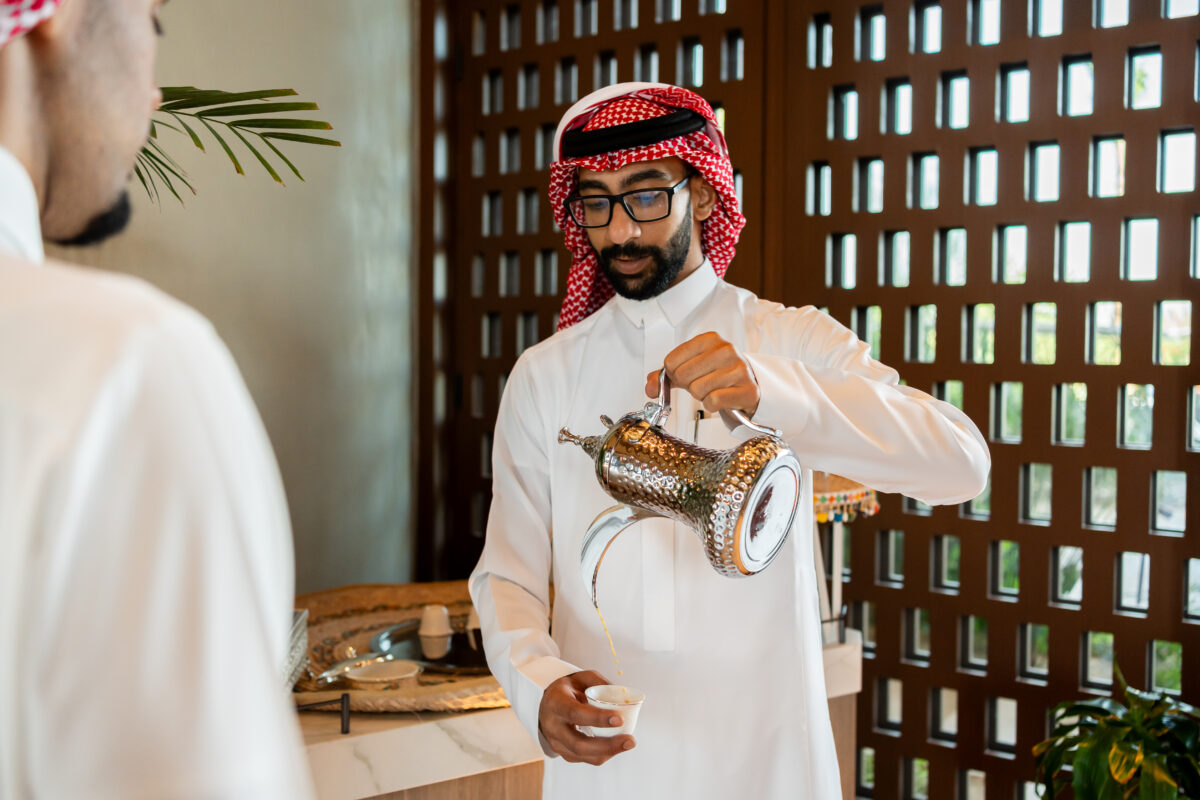

Abdulrahman Shawoosh was around 10 when he first began pouring Saudi coffee at family gatherings in Jeddah, following a ritual he learned from his father. Today, that childhood tradition has become his profession.
As Saudi Coffee Sommelier at Four Seasons Resort and Residences Red Sea at Shura Island, Shawoosh is developing a programme that explores the Kingdom through its regional flavours and traditions, from the saffron and cardamom-infused coffee of Jazan to the lighter, milk-served style of Shaqra.
A new generation of Saudi hospitality professionals is helping shape the Kingdom’s growing tourism industry, and Shawoosh is part of it. We caught up with him to talk about the stories behind Saudi coffee, the traditions he learned from his family and how a small cup can open up a much bigger conversation.
ESQUIRE: Saudi hospitality is increasingly introducing visitors to the Kingdom’s culture. What role does coffee play in that?
ABDULRAHMAN SHAWOOSH: Saudi hospitality has always been about welcoming people, and today we have the opportunity to share that warmth with an international audience. Coffee creates a relaxed environment where people can connect and learn about the Kingdom through something that has been part of our heritage for generations.
ESQ: You’re developing a Saudi coffee programme at Four Seasons. How did you decide what to include?
AS: I wanted to create a programme that reflects the diversity of the Kingdom rather than simply offering different flavours. Our regions each have their own traditions and stories, and I wanted guests to discover those differences through coffee.
Take Jazan, in the south. It is a mountainous coffee-growing region where coffee is traditionally enhanced with saffron and cardamom. In Shaqra, in the north, people commonly drink coffee with milk. Even the name Shaqra means “blonde” in Arabic, reflecting the lighter colour of the coffee there.
These details show how climate, landscape and local traditions shape what ends up in the cup.
ESQ: Which coffee-growing regions are you most excited to introduce to visitors?
AS: The southwest is particularly interesting because many people are surprised to learn that Saudi Arabia produces its own coffee. Asir, Jazan and Al-Baha are home to coffee farms, with beans cultivated at high altitudes.
Asir is especially fascinating. Its seasonal rainfall and fog create a distinctive environment for growing Arabica beans. I enjoy showing guests that Saudi coffee is connected to real landscapes, farmers and communities, rather than simply being something served at the table.
ESQ: The way Saudi coffee is served has its own rituals. What might surprise a first-time visitor?
AS: The first thing they notice is probably the small serving size. But the focus is hospitality and conversation, not quantity.
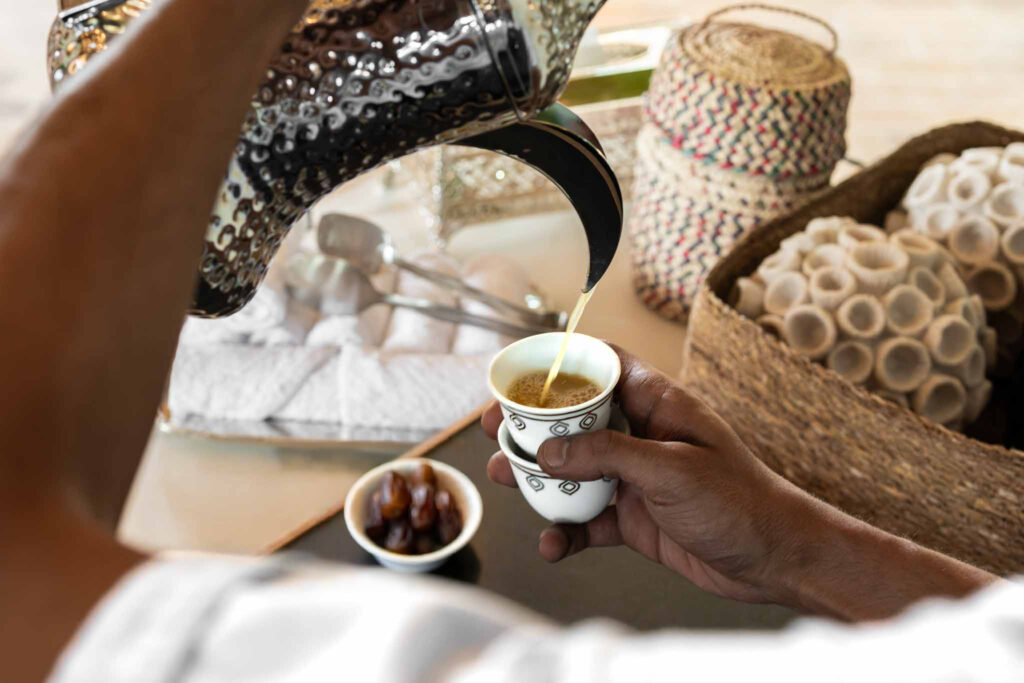
You serve with your right hand and pour about a quarter of the cup, then continue watching your guest and offer more. If you’ve had enough, you shake the cup with two fingers on top. If you want more, you shake it without placing your fingers on top. These gestures allow the host and guest to communicate without interrupting the conversation.
I learned this from my father, who learned it from his father. I started pouring coffee at family gatherings when I was around 10. At weddings, everyone is assigned a role in hosting, and I was 18 when I first performed the ritual at a family wedding. I didn’t know then that I would one day do this professionally, but I always enjoyed making people happy with a dose of caffeine.
ESQ: What do guests usually become curious about once that conversation starts?
AS: They often start with the coffee itself: where it comes from, why it tastes a certain way or how it is prepared. Then the conversation moves towards the region, its landscape and its people.
For me, that is the most rewarding part. Coffee becomes a starting point for a much deeper conversation about Saudi Arabia.
ESQ: You’re part of a new generation of Saudi hospitality professionals. How has the industry changed for young Saudis?
AS: There is a real sense of pride among young Saudis in sharing our heritage, and hospitality is becoming a much more attractive career.
When I was growing up, many young people didn’t consider hospitality an option. Today, with the growth of tourism and the opportunities created through Vision 2030, more young Saudis are entering the industry and finding ways to connect with visitors.
What’s exciting is that we can combine international hospitality standards with authentic local experiences. We’re not simply providing a service; we’re representing our country and sharing its stories.
ESQ: What do you hope visitors take away from experiencing Saudi coffee culture?
AS: I hope they leave with a greater appreciation for the warmth and generosity of Saudi hospitality, and a curiosity to discover more about the country.
Behind every cup there is a story, a tradition and a genuine desire to welcome people. If a guest leaves feeling connected to Saudi Arabia and wanting to learn more about its people and culture, then we’ve achieved something meaningful.