
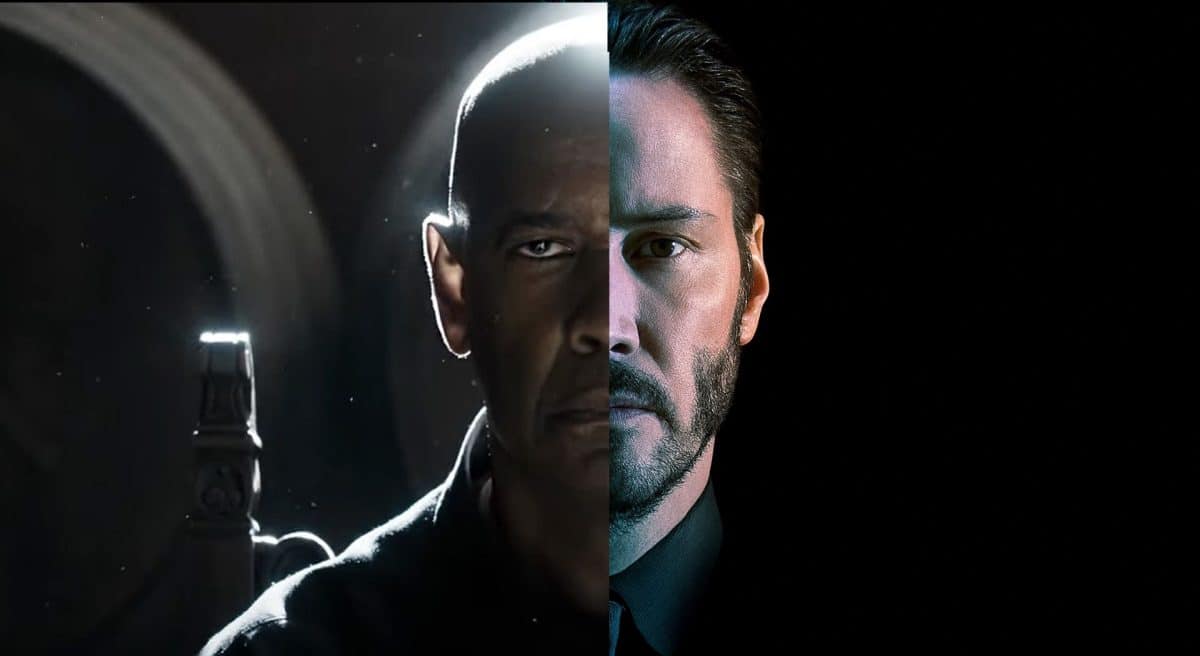

John Wick 4 and The Equalizer 3 both released this year, and both films are the closest thing this generation will ever come to getting to their own version of a John Rambo or a John McClane (or you could even argue for a Jason Bourne, but his backstory is too dramatic, too fleshed out, so he sits this one out). Where many modern action movies fail – inclusions of an unnecessary love interests, some injection of moral politics, or misplaced humour which, upon a second viewing, ages like milk in the sun – John Wick and The Equalizer both got the formula right, the evidence being in the continued sequels which, in an age of unrequested sequels and remakes, actually improve.
The early 2000s saw Ethan Hunt (Tom Cruise in the Mission: Impossible series) and Jason Bourne (Matt Damon in the Bourne series) dominate bad guys and the box office. Damon, however, has retired from lightning speed fisticuffs because he’s old, but Cruise is still going because, well, he’s Tom Cruise, and he’s not human. Despite Mission: Impossible still going (and getting better), most actors aren’t built like Tom Cruise, so Hollywood gave us two new vigilantes to root for: John Wick and Robert McCall, both of whom, which is a first for this kind of genre, are played by actors way past their physical prime (honourable mention is Liam Neeson in Taken, but Taken 2 and 3 sucked, hence their exclusion…sorry Liam, please don’t use your particular set of skills to find and kill us).
But what is it about these two films that seduced audiences and critics, not just with their lead characters, but by the films themselves which, let’s be honest, consists of nothing but pure violence?
Keanu Reeves is an odd actor. Boasting the emotional range of a toothbrush, the only actor whose terrible delivery can mirror Reeves is Richard Gere (but, like Keanu, he’s nice to look at, and there’s nothing wrong with that). The ’90s saw Keanu begin the decade with My Own Private Idaho (1991) and Point Break (1991), which segued into the action classic Speed (1995) (which was pitched as “Die Hard on a bus”), concluding with The Matrix (1999). But the 2000s saw a bit of a slump for our favourite bullet-dodger. Constantine (2005), The Day the Earth Stood Still (2008), Street Kings (2008), and the Matrix sequels, Reloaded and Revolutions (2003 and a big yawn for both).
The vacant movie star struggled to find his footing in an age of emotional depth exhibited by Heath Ledger, Christian Bale, and Philip Seymour Hoffman, and understandably so. But then John Wick came along with a formula where, had it been pitched to the three previously mentioned actors, would’ve been a disaster, but for the silent, remote mannikin in Keanu Reeves, proved great.
John Wick now has four films, all because some Russian twit killed his puppy, and audiences are still onboard, with each film seeing less and less dialogue, and more and more violence. (Warning: Spoiler ahead) But as with all great stories, after nearly three hours of run time, John Wick died in the fourth installment released earlier this year, and rightfully so. Studios figured out a winning formula, but they also knew when to stop (just kidding, a fifth installment has been confirmed, so I guess they don’t know when to stop).
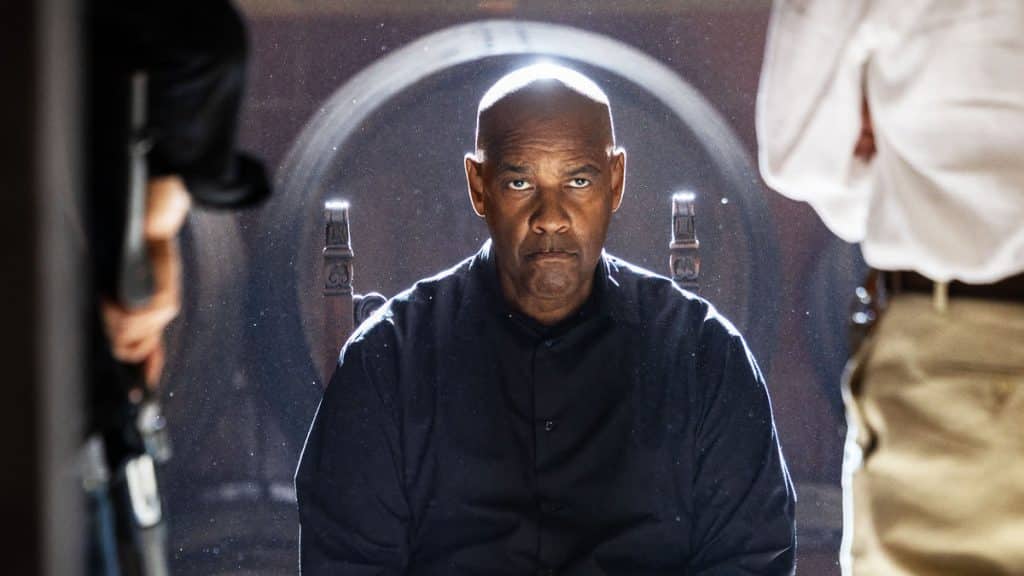
Denzel Washington, however, is anything but a pretty, vacant face on a screen. Handsome? Extremely. But he’s also considered one of the best actors who’s ever lived, and he has two Oscars to show for it. So what triggered him to take on a role that, unlike his previous, requires no emotional range, and is just some old bald guy brutally executing people on screen for a few hours.
For one, The Equalizer franchise is directed by Antoine Fuqua, the director behind Training Day (2001), which gave Denzel his second Oscar. Secondly, like many actors who take on a Marvel project, perhaps Denzel just wanted a quick and easy paycheck. But, in my opinion, The Equalizer delivers more than just three films of senseless killing. It shows an old man proving his merit against adolescent arrogance, all men who, across the three films, traffic young women – whether you’re a Wall Street yuppie or the entire Russian mob, McCall is coming for that ass.
Like John Wick, McCall’s ability to kill is not only efficiently silent, but rather a chess match of perfection, all while timing it on his stopwatch, like a sprinter trying to beat his own time. And in the latest installment, The Equalizer 3, we see McCall get shot by a kid, nearly killing him, before being rejuvenated by a kind spirited Sicilian. So, when the mafia infiltrate Palermo…well…if they’d seen The Equalizer 1 and 2, they’d know that was a bad idea.
Both Wick and McCall represent the older generation’s response to a flooding of TikTok warriors typing “Okay, boomer.” It’s a ‘cancel me if you want, but I’ll kick your ass’ mentality, which may not be a positive response, but a response it certainly is.
Watch closely, and you’ll notice that rarely do either one of them take out anyone seemingly above the age of 35.
So why do we love them?
Robert McCall and John Wick embody the strong, silent type, something Tony Soprano frequently muses over, “Nowadays, everybody’s gotta go to shrinks, and counselors and talk about their problems. What happened to Gary Cooper? The strong, silent type. That was an American. He wasn’t in touch with his feelings. He just did what he had to do.”
In an age where words seemingly matter more than action, and voicing your opinion on every topic is of vital importance, there is something to be said for keeping your head down and doing what needs to be done. No complaining. No tweeting. No HR meeting. This could have been the intention of casting aging actors in physically demanding roles. To show that the older generation did it better, and that Wick and McCall do what needs to be done, no matter how many microaggressions are thrown at them.
I once asked my friend’s dad – father of five, married thrice, highly successful and disagreeable – why he loved Taken, and he said, “Because there’s no bullshit. No lawyers. No emails. He just takes out the bad guys, and that’s it.”
David Fincher’s recent vehicle, The Killer, depicts Michael Fassbender as the epitome of the strong, silent type. But he’s a hitman, and though such an anti-hero does hold an attraction, at the end of the day, he’s an unscrupulous drone who kills for money. Ryan Gosling in Drive (2011) falls somewhere in the middle, but is he a strong, silent type? You bet. Walter White and Don Draper? Again, morally conflicted, but they do what needs to be done. No complaining. No bullshit.
There is no question American cinema has glorified violence for far too long, and the argument can be made that the actors taking on such roles should take some responsibility for the averse effect they have on fragile, unfledged minds. But in John Wick and Robert McCall’s case, their respective characters are used to paint a very black and white picture of reality: violence is inevitable, so at least make sure you use it better than the bad guys.
In 1994’s Léon: The Professional, before every kill, the eponymous hitman whispers, “No women, no kids.” A violent movie, no doubt, but perhaps such a quote was utilised to instill some ethics in a film where bloodshed is rife.
George Orwell said, “The mistake you make, is in thinking one can live in a corrupt society without being corrupt oneself.” We have become far too numb to violence – just turn on the news and see if you even flinch anymore – especially in cinema, so perhaps the best thing Hollywood can do is give those doing all the killing some sort of moral code. After all, not everybody can be Batman.
