

Assume we’re aliens…explain polo in a nutshell.
Basically, there’s four players a team, six periods in a match – seven and a half minutes each. One striker, one attacking midfielder, one general and one defensive. Like football, you score a goal by knocking the ball between the posts and the most goals win. Unlike football, the spectators usually spend more time watching each other than watching the game. Which we want to try and change…
What makes a good polo player? Apart from the ability to ride a horse of course…
Well that’s the hardest thing! Its 80% horse, 20% us, so riding is crucial. That has to come first, and you’ve got to have dedication. Be committed. The best example is a player who took up the game late in life, used to be a professional football player, made it halfway up the professional ranking from scratch and he decided to dedicate hours a day to riding. He would go in the morning and ride with the grooms, go to work, come back in the evening and ride. With a naturally strong sporting ability and dedication he made it quite a long way in the professional circuit.
So how did you get into the game?
Age 11 through the pony club system and through riding schools. Around the UK you have youth riding camps – I had ridden all my life, ran out of things to do, played cricket, tennis, golf, whatever – then someone said “have a go at this.” It was a combination of all sports for me. Good to get girls, good for what we enjoyed doing, teammates, being outside, riding, hitting balls – it was the encapsulation of all the sports I loved.
How much has the polo scene changed since you started playing?
A lot! It used to be acceptable to be a ‘Champagne Charlie’ and live that lifestyle – now it’s not. The game, for better or worse, has become more professional. It’s a complicated sport and now with the demand for results, if you’re not in the top 10% you won’t cut it. To get there and stay there you need to be living it 24/7.
How do you maintain your health and fitness?
A lot of training – riding and working on yourself. Tragically, as we get older the balance has to get more. Young guys these days start out thinking they need no training at all, and here we are on the other end of the spectrum at my age, where we make a real effort to keep in shape. We play 11 and a half months a year during the season so don’t have much of an off-season to lose fitness, you do maintenance and keep yourself going all year round.
Has that always been the way? Or as it’s become a bigger sport has it become less seasonal?
As it’s become bigger, the tour – much like golf – moves 12 months a year. We might get two or three weeks off at Christmas, but as I say, we’re now 11 and a half months a year. Polo’s background, a lot of it is farmer culture; something to do between harvests, especially in the southern hemisphere, for example in Argentina. The attitude was “that’s all dealt with now we can have some fun before we go back to work,” now that’s not the case. Professional tour – you’re on the bandwagon or you’re not on it all.
Argentina are widely accepted as the strongest international polo side, what makes them so good?
Purely by the resources they have. The ground is pan flat, so when polo was exported there around 1880 they only had to cut the grass and were good to go. There was a big cattle industry, all done by horses, so if you’re working with cattle you’re riding with one hand and using a whip or prod with the other, all those moves are identical to polo. There was even an inbred training system for the horses. So the time, resources and environment in Argentina, coupled with the fact they had excellent army officers who taught locals how to play, that’s where the growth came from.
What do you think of the polo scene here in the UAE?
It’s growing. I think the UAE is going to become a significant player in the next 10 years, with everything that’s happening here. If you’re not here, you’re missing out. There’s already been a big boom in the sport and the last three or four years has seen a big step forward. I envisage them being a big competitor for the January, February and March season which is usually in Florida.
In which areas can the sport improve in the region?
Accessibility. Keep investing in infrastructure and try and teach one person at a time. The more people you give lessons to the more chance one person will become a franchise owner, and therefore build his own team, hopefully attracting professionals which will, in turn, raise the level.
Is the sport’s labeling as inherently exclusive or posh, fair?
It’s entirely justifiable if you look at the brands associated with polo. Inevitably it’s a high end brand; the audience for polo is exclusively A1. What we want to do is open it up. What we’ve been doing with city events, and polo events around the world is to try and export polo – Royal Saluté plays in over 14 countries on a year on year basis – so we try and take polo back to audiences who’ve lost it, or take it to new audiences. It’s no longer prohibitively expensive. Today a polo lesson is the same price as a golf lesson, so it’s a question of breaking down people perceptions. We do a lot of clinics trying to teach media and guests how to play to help understand the game better.
Do you take your horses round the world?
No. Depends on your main market. As a pro you choose your main market and you have a string of horses there. I have a string of horses in Argentina that I am breeding, using the location as a training environment. Then I have my main professional string, my playing horses in Europe. If I get a contract in America, I can fly some from each place and meet in America. But no I won’t take the horses from England to Spain, America, Argentina etc. It’s too expensive, and not economically viable.
Does it make much difference riding the horses you’re familiar with to those you aren’t?
The general instructions for riding a polo pony are like driving a car. Brake accelerator, left, right. Stop, go. The manual is the same for every horse. One horse might turn right better than it turns left, one might stop better than it runs. What you have to do very quickly when you get on a horse you don’t know, is learn what it does well and adjust your game accordingly. That comes with the experience of being a professional.
What’s your take on ‘polo-influenced’ clothing’s in the menswear sphere? It’s had some good and bad associations over the last decade…
Well it’s similar to the way that Burberry went from classy to trashy and back again, but that’s more the fashion market really as opposed to a polo related thing. I love the fact that here there are brands like La Martina, authentic names that support polo that make our gear to play matches in, but also have a genuine fashion area. I would buy that by choice because it’s to do with my sport, I’m not going to go and buy a shirt that just has a horse on it. People always associate Ralph Lauren with polo, but he just owns and dominates the name, the company has actually has done very little to help the sport. But I like that fact that there are authentic brands involved still. La Martina started off making our boots and now they make shirts, and they’re actually quite cool.
Tell us your thoughts on the beach polo game that’s been brought to Dubai in the last few years…
I think it’s great. I’m in favour of every version of polo, of which there are multiples now. 20/20 is to test match cricket is what beach polo is to what we play. It’s a popular version of the game and it’s great. More people watch cricket due to 20/20, as with polo. Some people initially wondered about the safety aspect of horses playing on sand, but we play on the snow in St.Moritz, and the beach in Miami, so the horses are very capable of playing on each surface. This kind of stuff increases the audience and eyes on the game. And the more eyes we have on polo, the more people will try it and hopefully end up playing it. Which suits us from a brand perspective and a personal playing one.
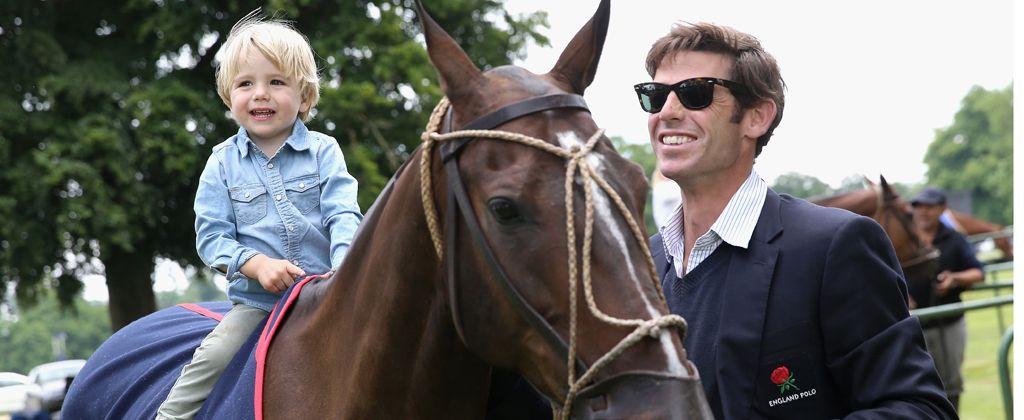
Malcolm Borwick is one of England’s leading professional polo players, as well as being a Royal Salute World Polo Ambassador. A firm favourite of the England selectors, he recently captained Prince Harry’s team to victory at the Sentable Polo Cup in Ghantoot Racing and Polo Club. He has over 30 caps for the Audi England team to his name, as well as contracts for teams in the UK, Spain, France, USA, South Africa and Argentina. Now, at home in both England and Argentina.
Malcolm will be appearing in the Royal Salute UAE Nations Cup 2015 hosted at the Desert Palm Retreat between 26-30 January 2015. Call desertpalm.peraquum.com for more information.