
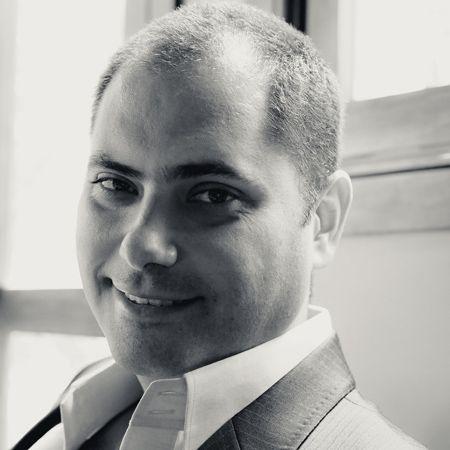

You may not know his face, but if you’re a young socialite in the region we’d wager a considerable amount you’ve been to one of of his venues.
CEO of the Crystal Group Mazen El Zein on fighting for creativity, what to look for in a bar and why the current local nightlife competition isn’t healthy at all…
How was the Crystal Group started?
It was founded in 2003, but before it became the Crystal group, we had the Crystal Club in Beirut. That became something of a mythical place, not only for clients in Beirut but the whole Middle East. At the time it was the golden age in Beirut, and we were just a group of friends who opened a club. Fortunately it became very successful and we opened a second one. The success story continued with the second outlet, and we then decided to create a management group, so the group came after the club.
Since then we have been developing a portfolio of hospitality products, bars, clubs, beach clubs, restaurants, not only in Lebanon but expanding into three other countries. The first global expansion was to Dubai with the C-Bar in Murooj Rotana in 2005, and the second international location was in London – which was a great success. From there, we opened the Beach Club in St. Tropez from 2007-10 and a partnership with Chopard during the Cannes film festival, where we basically did a pop up during the 15 days. The political situation in Lebanon however forced us to move our headquarters from Lebanon to Dubai though…
When did you decide that?
In 2011. It happened one year after the opening of People by Crystal in raffles. We moved here and decided that most of our expansion would be in the UAE, and since then we have developed our local portfolio hugely – 40 Kong in the H Dubai, the Eden Beach Club at Rixos on the Palm and most recently Em Sherif – our Lebanese restaurant at the Address Downtown.
How do your bars differ when catering for a Beirut crowd – where there are more locals – to a Dubai one that’s very international?
As you say, in Beirut basically you need to focus on the local crowd who make up a big chunk of your clients. During the peak seasons – Eid, Christmas, summer and so on, lots of tourists come, mainly from the GCC and other Arab countries, as well as Turkey, Greece and Egypt. It’s luxurious tourism, not mass tourism in Beirut. While here in Dubai – the demographics are different, there is a sense that it’s a very small focused party crowd, catering for different nationalities. One of the things at the heart of our business strategy is not to present ourselves as Lebanese, but as a Dubai group. This filters down throughout the staff, a workforce made up of several nationalities with experience from all over the world. That’s what you see with the Crystal Group, from the managers and directors to the front of house staff; we come from all over – France, America, Spain, you name it.
“Unfortunately, we have reached a point where this competition actually isn’t that healthy. No matter how creative or good you are, there are so many things coming into town in a short time that it doesn’t leave room for healthy competition”
How do you know when a market is ready for you?
We rely on our core group of core clients – the people in the Middle East. This is why we went to London and St. Tropez, back when we were Beirut based. Now the circle is wider, now I can say my brands are not only known here but also among the Indians, Russians and Europeans. This is why our horizon is now bigger when we’re considering things like expansion. Were thinking about South East Asia, Turkey, Greece or maybe going back to London and the South of France.
What do you make of the criticism that Dubai’s venues just fly in a big name for big money and call it a party?
I agree with that – but were not in the business of bringing in brands. We create our own brands, develop our own concepts and focus on every detail. In our mission statement you can see clearly that we consider hospitality first and foremost, everything is in the detail. I think there are a lot of important concepts that just come over for the name, and that’s why you see a lot of failure. The international brands that have succeeded have strong operators and really understand the market.
What kind of market do you think suits your company best?
Dubai and London definitely. In New York also, to a certain extent, I lived there and know the dynamics – but it’s far!
What are the strengths of UAE’s nightlife scene?
It’s very competitive – it pushes you to think outside the box, to always be on top and to always find and create new ideas. Unfortunately, we have reached a point where this competition actually isn’t that healthy. No matter how creative or good you are, there are so many things coming into town in a short time that it doesn’t leave room for healthy competition. Were in a bit of a bubble today and that’s another reason there are a lot of failures. Even strong organisations see their profits drop, because you have less experienced organisations coming into the market, overpaying on staff, rent and DJs, making their way while overpaying everything, and this spoils the market. Because the next time you bring back that DJ, or hire new staff, they expect too much. This is at every level and it really erodes your margins.
How creative are you with the design concepts at your venues?
We focus a lot on design – but more the layout. It’s the layout that enables you to do crazy ideas. If you look at our venues, the layouts have been very well studied. The design you get used to it after the first, second or the sixth time and you don’t pay attention to the walls or the chandelier, but the layout enables you to hold a great party or event. Creativity can be kind of limited in this region however. If you want to succeed in hospitality, location is incredibly important. To access prime locations in Dubai, there isn’t much room left for creativity. While we have a proven track record so get a chance to present a local concept, it’s still a bit limited, I have this concept of a design based on all recycled items. Amazingly nice items and a green project. It’s a full circle that follows this idea –but I’m not able to find anyone to accept this at the moment!
So Dubai tends to only embrace what it knows?
Yes, the landlords are very conservative. If you present a crazy idea they try and avoid it.
What do you look for when you yourself go out to a bar?
I have several factors, I have a critic’s eye. I look at a sequence of things, starting from the way you’re greeted to when you’re leaving via the valet. Everything is a sequence, and people are looking for experiences. It’s not just about good food or music, I think that people today are much more sophisticated than this. Successful places are places that can offer the complete experience that will become unforgettable. Sometimes you find in very successful places an arrogant attitude, they make you wait and others come and are seated. They smile and say ‘it’s nearly ready’ then it takes 40 minutes! After that, it’s the waiter, his knowledge of food and wine, then how long it takes, the actual taste of the food, the music, the quality of the people – everything. I think that places that pay attention to every department makes it a great souvenir for the client.
Where does your inspiration for your bars come from?
Travel. And research. We brainstorm here at HQ and take everyone’s opinion, ‘I saw this in Italy/new York/London’ etc. then try not to copy, we create out own stuff around it.
Have you got another venture planned soon?
Were in a consolidation phase now, there’s no rush to open anything new. In terms of this region, I think our next spot will be in Abu Dhabi. Other than that? We’re looking outside Dubai and mainly focusing on opening something in Europe again…