


For Esquire Weekend’s latest cover story, we speak to Letitia Wright about the raw emotions that powered her performance in Black Panther: Wakanda Forever, in cinemas now across the Middle East
At the Black Panther wrap party in 2017, Chadwick Boseman presented his co-star Letitia Wright with a letter.
While Boseman was revered by each of his co-stars, the actor, who starred in the film’s titular role, had developed a particular affection for his young co-star Wright, who played Shuri, the younger sister of his own King T’Challa. While the film wouldn’t become a global phenomenon for a year to come, they knew they had made something special, and Boseman, already an elder stateman on set, was beaming with pride for how much he’d seen Wright grow.
Writing in that card, Boseman wanted Wright to know not only what she meant to him, but of the potential he saw in her.
“’He said he’s proud of the woman that I am becoming,” Wright tells Esquire Middle East.
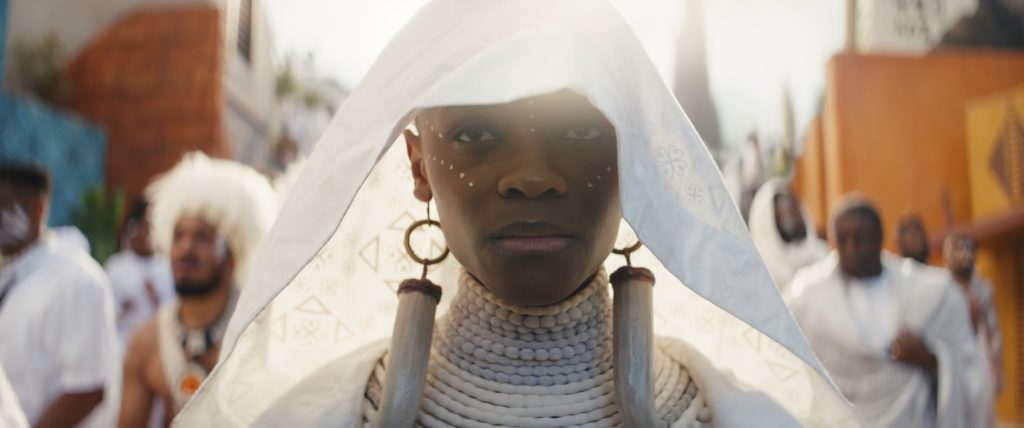
Little did he know what those words would one day help her through.
On August 28, 2020, the world lost Chadwick Boseman. The actor, who had already won a Golden Globe, an Emmy and been nominated for an Academy Award, was 43 when he passed away from cancer without any public warning, after a years-long private battle with the disease. It was a battle that took place throughout the busiest period in his life, a period in which he’d finally achieved the top-tier embrace he’d long deserved.
It was a day that none of them had been prepared for. Marvel didn’t know, director Ryan Coogler didn’t know, and Letitia Wright didn’t know. Black Panther 2 was already well on its way. Coogler had just turned in the script’s first draft just as Boseman was preparing to get back into shape ahead of filming.
Without him, no one knew how to proceed—forcing many difficult decisions, and the existing cast and crew banding together to create something that both moved things forward and honoured the memory of their fallen leader.
Black Panther: Wakanda Forever, which is now in cinemas cross the Middle East and the broader world, is a rare beast. It’s a film about a fictional loss, with the stark reality of that pain weighing on every scene.
Movie deaths rarely happen like they do in real life. In movies, a hero’s death completes a story, usually in the height of battle, a noble sacrifice for the ones around them. In life, things are rarely so neat. Death comes randomly and without reason, forcing those left behind to grapple with a way forward that they would never choose.

In the film, King T’Challa’s death feels all too real. It happens in the film’s opening scene off camera, with Letitia Wright’s Shuri scrambling to come up with a way to save her brother as he slips away from an unexpected illness in the other room. It’s heartbreaking to watch, a communion between us and the actors as we witness Wright and Angela Bassett reenact the traumatic moment they had struggled through just two years ago.
There’s a trick that Wright used to get through those scenes. She kept Boseman alive within her.
“I was sensitive to what he would say to me in those moments. I would think about our connection. I would think of the way he would always take my hands into his and put them on his heart. I would think of the way he would kiss my forehead, of his fine way of speaking without words. That allowed me to be at ease,” says Wright.
She would also think of the letter.
“On the days when I really miss my brother, in the scenes where I’m required to talk about him and was full of crazy emotions, I would just hold onto those words, hold on to those memories,” says Wright.
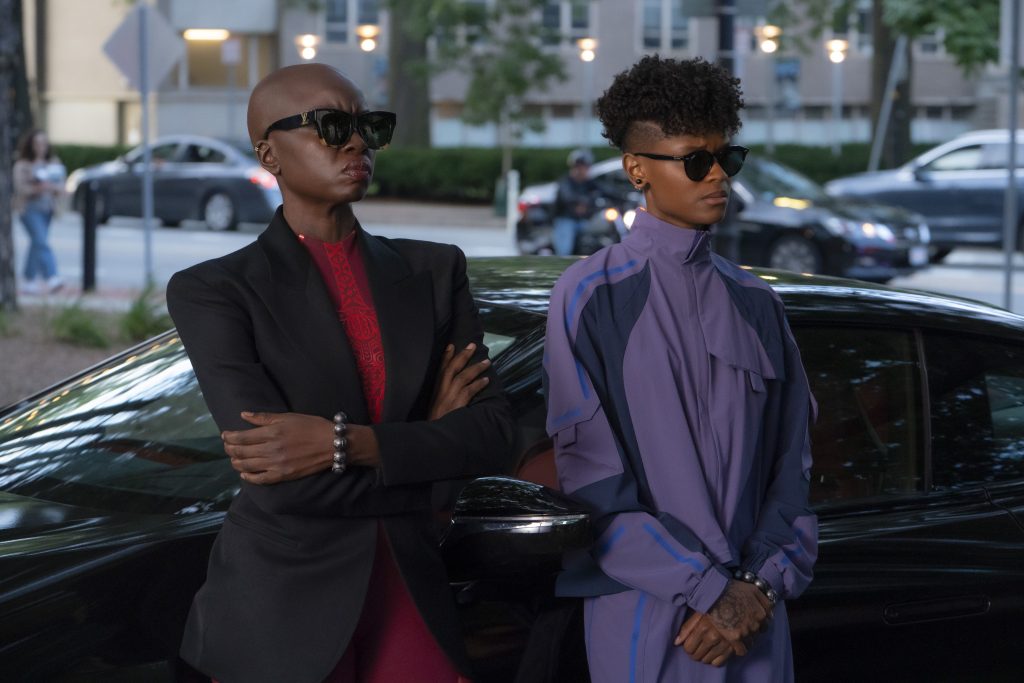
There’s no Wakanda Forever without Wright. While the film makes great use of its talented ensemble cast, much of the emotional heavy lifting falls on Wright, as her character Shuri goes from the punk little sister scientist into the heir to the throne, and potentially to the Black Panther mantle, contending with the darkness inside of her to find hope on the other side.
It’s an astounding performance, one that sets up Wright to be one of the centerpieces for the Marvel Cinematic Universe for years to come.
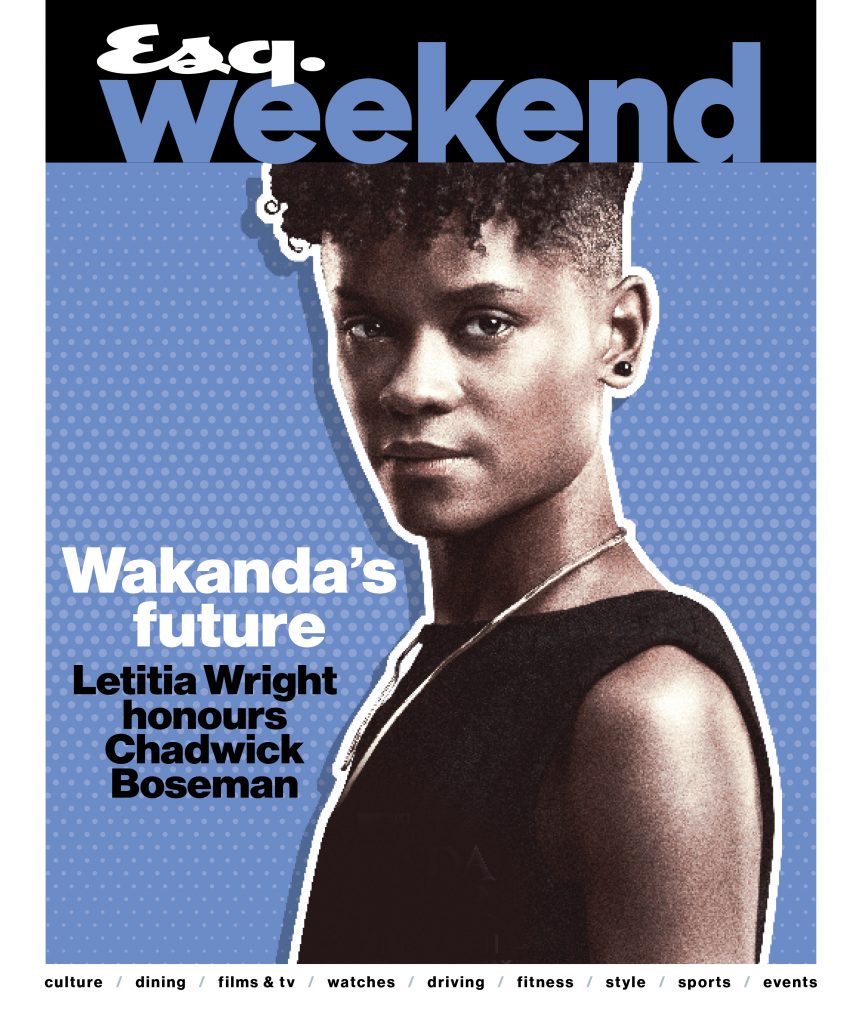
There was a time when she doubted herself, but that is gone. Wright now knows she can do it. She knows because Chadwick believed she could.
“Throughout the film, we see this young girl become a woman before our eyes. I remember what Chadwick said, and I apply it to her as much as I apply it to myself. He’s proud of the woman that I’m becoming. And I’m sure that T’Challa is proud of the woman that Shrui is becoming, just as Chadwick was proud of me,” says Wright.