
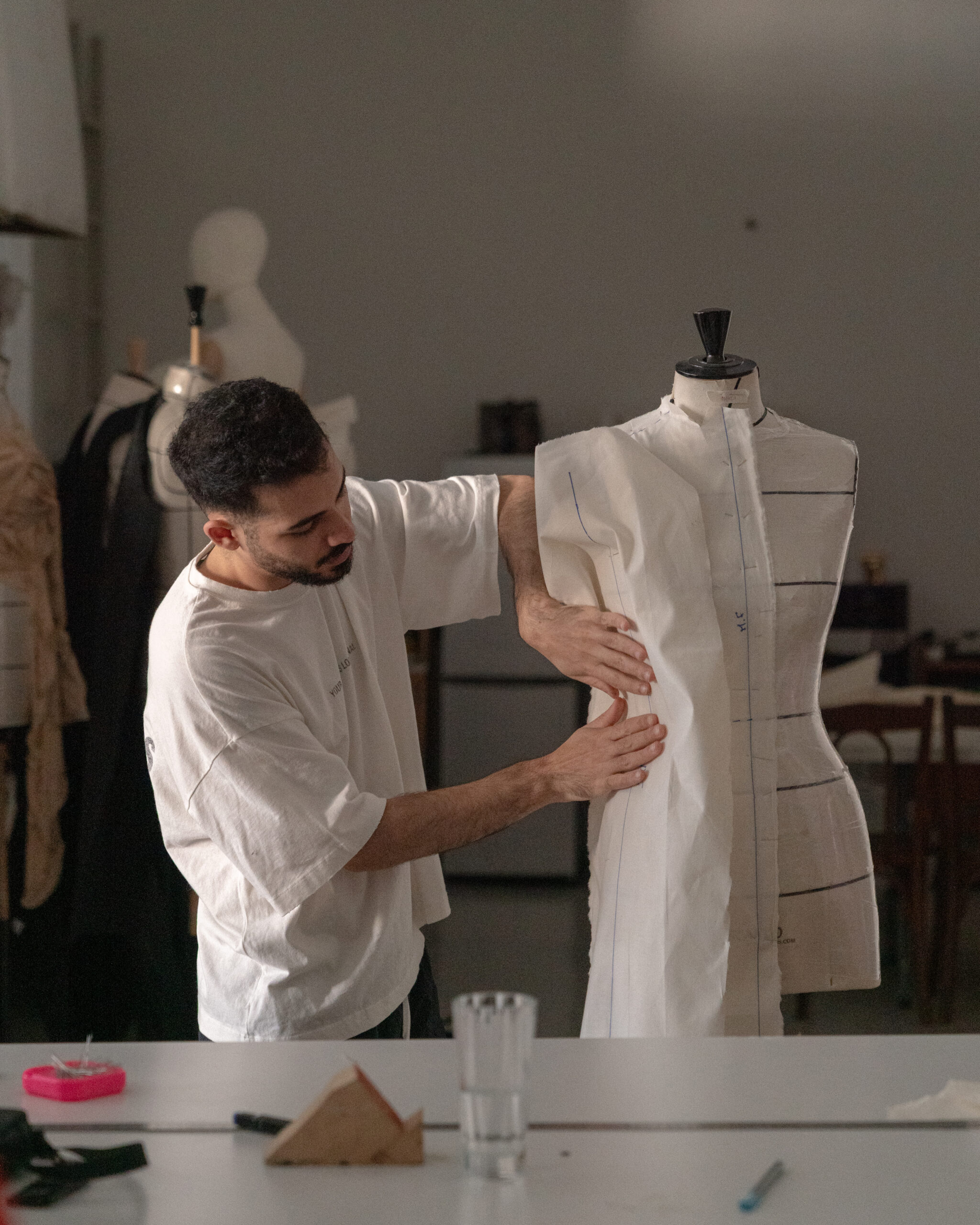

As Lebanon continues to face instability and displacement, Creative Space Beirut’s Executive Director Sarah Hermez reflects on how education, creativity, and community are being redefined in real time. From adapting a hands-on fashion curriculum to launching an emergency appeal, she speaks about resilience not as a concept, but as a daily practice for both students and educators.
ESQUIRE: How is the current situation in Lebanon affecting your students and the day-to-day operations of Creative Space Beirut?
Sarah Hermez: The current situation has deeply affected both our students and the day-to-day functioning of Creative Space Beirut. Many in our community have been dealing with displacement, unstable living conditions, financial strain, and the psychological toll of trying to continue daily life under ongoing uncertainty.
Operationally, we had to temporarily close the school to ensure everyone’s safety, while staying in close contact with students through regular check-ins and mentorship. We have now resumed in a limited hybrid format, but our model is fundamentally rooted in hands-on, in-person learning. Fashion education depends on access to space, equipment, materials, and direct guidance, so disruption has a very real effect on the quality and continuity of the learning experience.
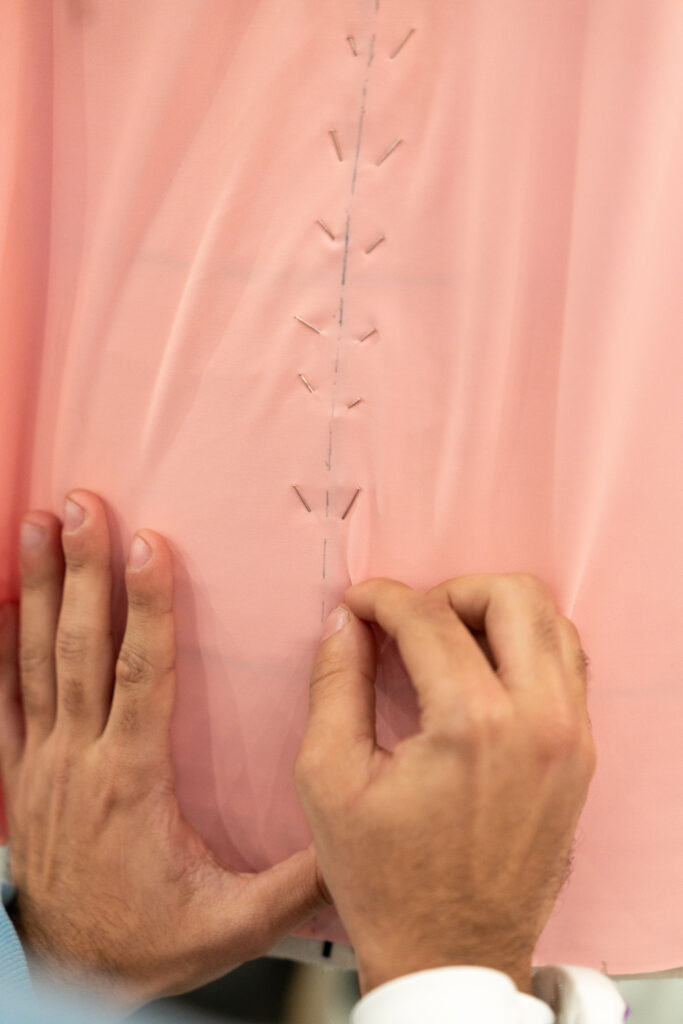
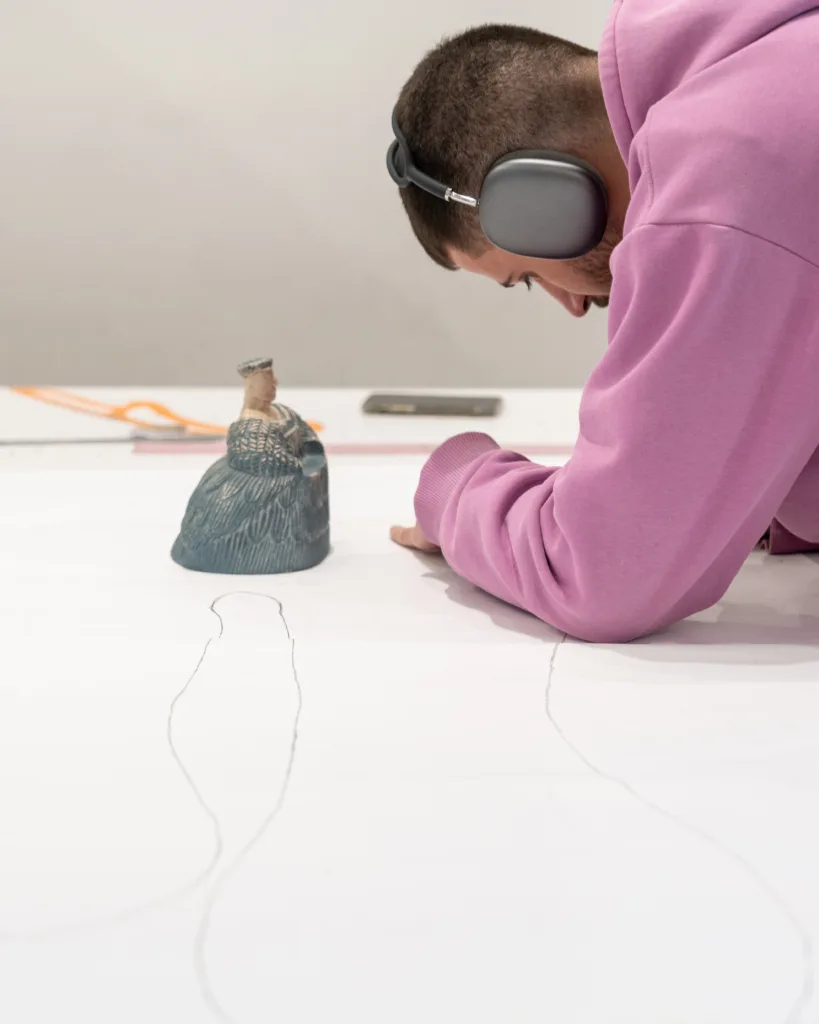
ESQUIRE: In a context of ongoing instability and displacement, how do you see creative work functioning as a form of resilience or resistance for young designers in Lebanon?
Sarah Hermez: In this context, creative work becomes much more than an academic exercise. It becomes a way for young people to hold on to their voice, their imagination, and their sense of agency at a time when so much around them feels unstable or out of their control.
For our students, continuing to design, make, research, and create is a way of insisting on a future. It is a refusal to be reduced to survival alone. It is also a way of preserving ways of seeing, making, and storytelling that are deeply tied to this region and its realities. In that sense, creativity can be both resilience and resistance: resilience because it helps people endure, and resistance because it asserts that their lives, perspectives, and cultural production still matter.
ESQUIRE: What role does Creative Space Beirut play in helping students continue their education and creative practice despite the limitations of a hybrid or disrupted environment?
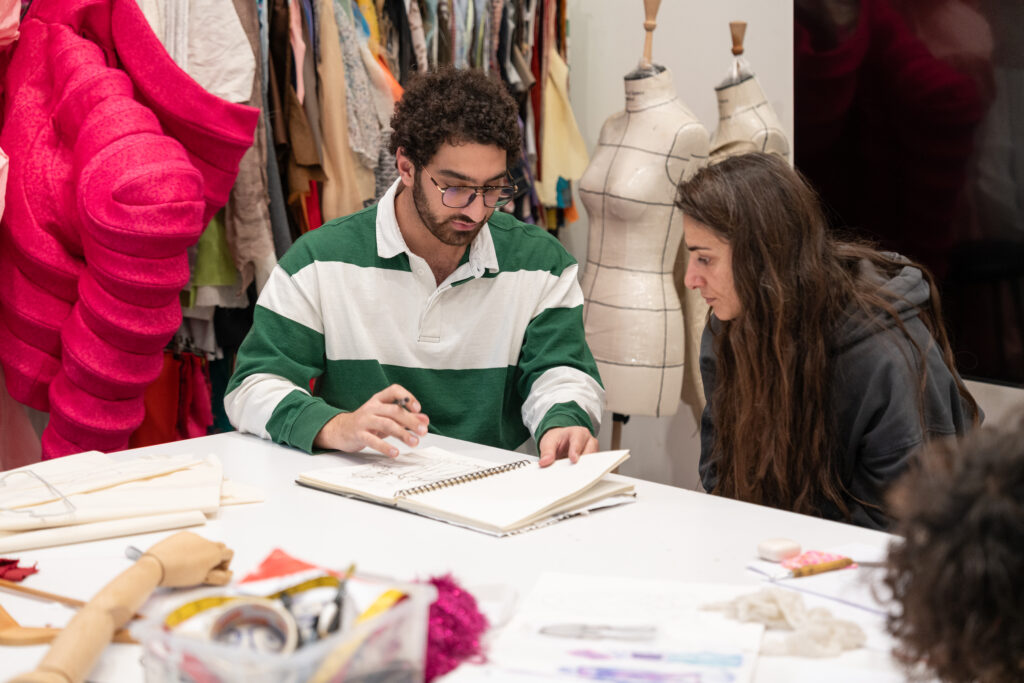
Sarah Hermez: Creative Space Beirut’s role is to hold that continuity, both practically and emotionally. On the practical level, we work to keep students connected to their education through hybrid teaching, mentorship, adapted schedules, and constant communication. On the human level, we try to preserve a sense of structure, purpose, and community at a time when all three can easily fall away.
CSB is not only a school; it is also a space where students are reminded that their development, ideas, and ambitions still matter. Especially in moments of disruption, that kind of continuity can be critical. It helps students keep building toward something beyond the present crisis, rather than feeling that their education and future have simply been suspended.
ESQUIRE: Can you share more about your emergency appeal and how the funds raised will directly support both immediate needs and long-term sustainability of the school?
Sarah Hermez: Our emergency appeal was launched in response to the immense pressure this period has placed on both our community and the school itself. In the immediate term, the funds will help us continue operating, support students whose lives have been directly affected by displacement and instability, and ensure that we can maintain continuity in our program during an extremely difficult time.
At the same time, this appeal is also about long-term sustainability. Creative Space Beirut is a free fashion school, and keeping it alive requires not only responding to emergencies as they arise, but building the kind of support that allows us to continue offering high-quality education to talented young people from underserved backgrounds over time.
A key part of that is our recurring donation model, launched through our fiscal sponsorship with Slow Factory, which allows U.S. donors to make tax-deductible contributions. For us, sustainability can look very simple: if 1,000 people committed to giving $50 a month or if 5,000 people committed to giving $10 a month, it would create the kind of steady support that could meaningfully help sustain the school. That is the broader vision behind this appeal, not only to respond to the present emergency, but to build a community of ongoing support around CSB’s future.