

The 93rd Academy Awards is finally happening tonight, and much like every year, there are some absolute greats that seemed poised to stand the test of time, as well as some confusing choices we’ll soon forget.
Here’s our full run down:
8. Mank

Maybe in an old movie house, with retracting red seats lined with frayed fabric, with sticky floors and a distant smell of popcorn, things would be different. But as it stands, Mank, a film made for streaming, is basically unwatchable at home.
For decades, David Fincher, director of Seven, Zodiac, and the Social Network, sat on a script written by his late father Jack Fincher about the golden era of Hollywood, following screenwriter Herman J Mankiewicz and the making of Citizen Kane, and all the corruption, chaos and intrigue that surrounded it and the broader industry of that era.
Fincher tried to do it while his father was still alive, after he made The Game in 1998, but no one would buy into his idea of doing it in black and white and fully as a throwback, as if it was a lost film of old Hollywood itself. Finally in 2019, a few years after he became the first A-list director to partner with Netflix, the streaming service returned the favour, and allowed him to indulge himself in his passion project.
Ironic, then, that there’s no worse place for a film like this than Netflix, where immediacy is everything, and any slight disturbance will cause its viewers spoiled for choice to click back and pick something else. Mank is a film that never gives its viewer much to cling onto, and after your ears readjust to the reverberated sound design, it becomes a meandering jumble of scenes that at best deliver a pleasant stream of well-delivered one liners and exquisitely crafted sentences that are worthy of a George Cukor or Billy Wilder film on their own, but without any of the clear eyed sense of character and storytelling that makes those films so worth rediscovering.
If this was meant to feel like a lost film, perhaps it should have stayed lost.
Rating: 2/10
7. Promising Young Woman

Let’s start off with some positives—Promising Young Woman is compelling from start to finish, and has a number of pretty good jokes.
The problem is that it isn’t the movie that it thinks it is. It feels on its face as if it’s a no-holds-barred, revenge-fuelled exploitation film full of wicked satire and pointed commentary. Instead it’s a confused film that doesn’t cut as deep as it should, full of one of the most bizarre protagonists in recent memory. It’s a Twitter thread come to life, as loud and as shallow as you could imagine.
Let’s have a full spoilers break down: The film follows Cassie Thomas, a barista and med school drop-out who has spent her every weekend for years going to a bar and acting under the influence until some ‘nice guy’ comes to help her, takes her home, and assaults her. As soon as they do, she snaps back to sobriety, gives them a stern talking to about their behaviour, and then goes home. This is, ostensibly, her only hobby.
She was driven to this because her closest friend and former classmate Nina was driven to ending her life after being assaulted in med school, and when she meets and begins dating one of her former classmates, she’s pulled back in to that case, living a double life between her budding romance and enacting revenge on each person involved in Nina’s assault. She can’t let go of what happened, even after Nina’s mother begs her to move on.
The female friend who didn’t believe them? She gets her to imbibe too much and then makes her think she too has been assaulted. The school’s dean who dismissed the case? She tricks her into thinking teenage daughter is being assaulted. And the man who assaulted her friend? She infiltrates his bachelor party, drugs each of the attendants, before isolating him, lecturing him on what he did, and decides to carve her late friend’s name into his chest.
She doesn’t succeed at the last one, however. Instead, the man smothers her with a pillow, disposing of her body in the wilderness. The big twist at the end is that she anticipated this may happen, sends a letter to a bad lawyer turned good, and gets him arrested for her murder.
Maybe there’s more that I’m not seeing, but all I can see is a film about a person seemingly pushed over the edge who also refuses to step over it, that pulls its best punches and leaves too many doors closed. It’s hard to know if the script went through one too many drafts, or one too few. Either way, not even a committed performance from Carey Mulligan can save it.
Rating: 3/10
6. Trial of the Chicago 7

There are great movies with Aaron Sorkin’s name attached to them, sure. Moneyball, The Social Network, A Few Good Men. The thing those movies have in common is they all had a director who offered a counterbalance to his worse impulses, and knew how to use his often sparkling words to service their own vision for the story.
Maybe without Aaron Sorkin there’s a great movie here, too, but it’s hard to imagine it. What keeps Trial of the Chicago 7 compelling is the amazing true story of seven people protesting the Vietnam War in the United States who were trapped in a political show trial that betrayed their country’s stated ideals, and of course, Eddie Redmayne’s face, which remains one of the most watchable faces in cinema today.
The problem is, other than Sorkin’s frenetic pacing that keeps things lively but stops them from fully clicking, is Sorkin’s need to moralize and shape everything through his stated beliefs, which undermine the most powerful moments in the film, forcing it all to descend into another opportunity for the characters to act as mouthpieces for Sorkin himself, and for his own political point of view, clearly made with the American elections of 2020 in mind, to be hammered home. Most annoyingly, it’s not even a very good or thoughtful lecture.
And don’t get me started on Sasha Baron Cohen, who delivers one of the most unlistenable attempts at a Boston accent ever put to screen, and made me hope that I never have to see him in another film.
Rating: 5/10
5. Nomadland
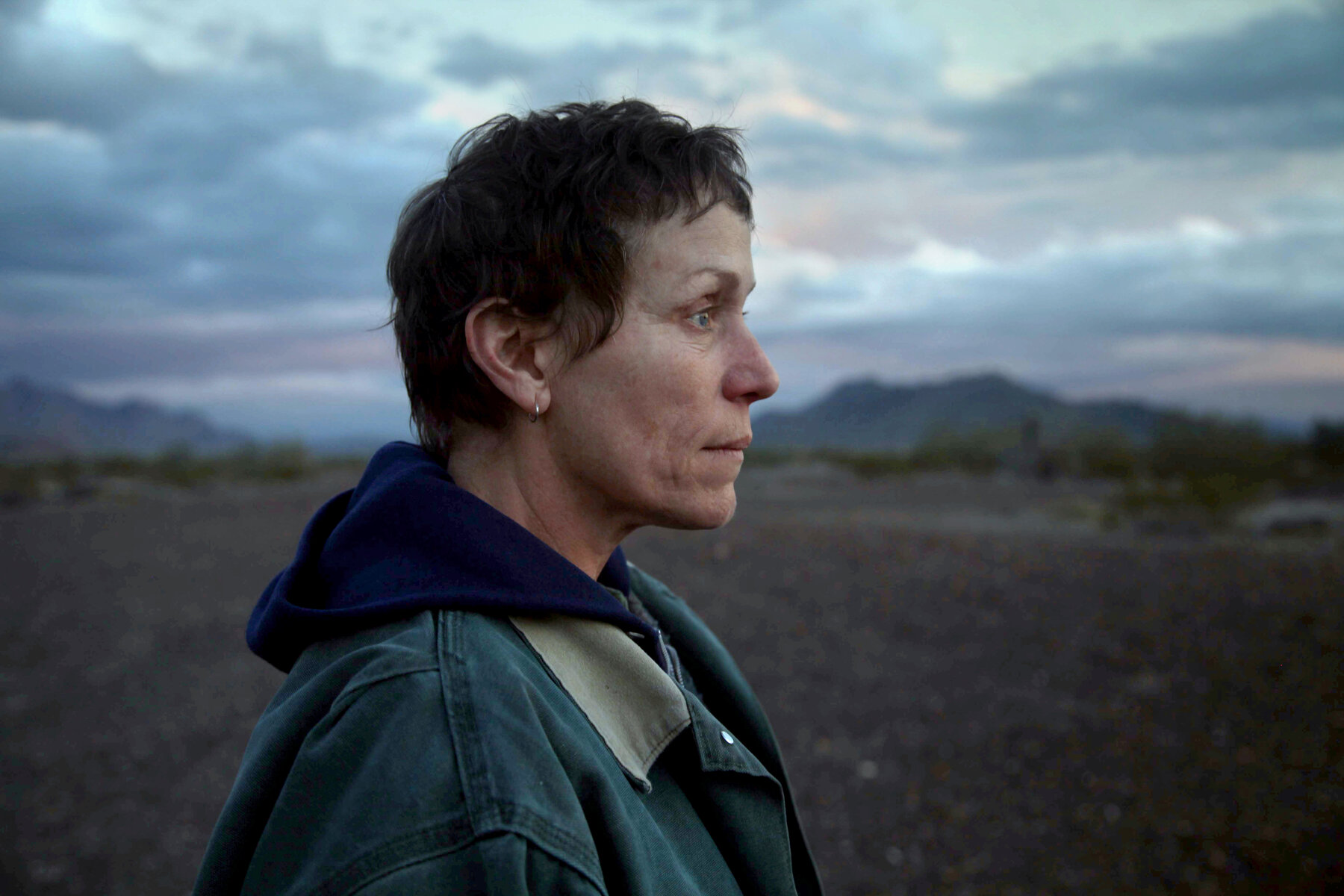
How many in the ‘land of the free’ are really free? That’s the question that Chloe Zhao’s Nomadland explores, following a woman named Fern (Frances McDormand) who, after her husband dies and the plant she had been working at closes for good during the Great Recession, can no longer bear to live a life of routine. When we meet her, she’s living in a van and travelling across the country, unable and unwilling to get attached to anywhere or anyone—not homeless, just houseless, as she explains.
The most affecting aspect of the film, however, is not Fern, even though it should be, especially with one of the all-time greats in the leading role. Instead, it’s the other nomads she meets along the way that linger most, predominantly non-actors who are playing themselves, who actually live the lives the film fictionalizes. There are three that we meet throughout the film, two women and a man, and when they tell their true stories, McDomand really just bears witness. Each of those scenes affectedly me deeply, and moved me to tears. The trouble is that McDormand and her journey never did.
It’s in those moments, the ones that make you cry, that you realize that there was a better movie to be made here, a documentary following each of these three people and the many others like them.
There is a great story and rich characters to be found in Nomadland. It’s the fiction that gets in the way.
Rating: 6/10
4. Judas and the Black Messiah

Judas and the Black Messiah is a history lesson, but it’s not just a lecture. Yes, it does it finally bring to the screen one of the most important figures in the American civil rights story, Chairman Fred Hampton of the Illinois chapter of the Black Panther Party (played masterfully by Daniel Kaluuya). Yes, it is a film that keenly evokes the context that story took place in, both in the American struggle for equality and the global one that happened beyond the country’s borders. But also—thankfully—it’s a movie that knows what makes good movies work.
This is a story about friendship and betrayal. We come to it by way of William O’Neal, in a career-best performance from LaKeith Stanfield, a carjacker who the FBI pressures into infiltrating Hampton’s group. O’Neal, an unwitting undercover agent, is at first is bemused by his role as a pretend activist before slowly becoming a believer in, and confidante of, Hampton himself. In the end, O’Neal is ultimately forced to choose—he can sacrifice his life and the reputation he’s built for his friend, or he can destroy everything to save himself.
Told with thunderous personality and pace from Shaka King, it’s not just a history lesson, it’s a compelling piece of filmmaking with a clarity of vision and layered performances from two of the best actors on earth finally able to play against and elevate each other.
Rating: 8/10
3. Sound of Metal

After years of struggling with addiction, Ruben Stone (Riz Ahmed) is finally where he needs to be. He’s in control, and he’s needed. He’s a fantastic drummer in a metal duo successfully touring across the country, and their lead singer is his beloved girlfriend Lou (Olivia Cooke), who he supports both on stage and off—getting up early, fixing her breakfast, organizing their life.
One day he wakes up, however, and he can no longer hear a thing. He assumes it will be a temporary problem, and goes to the doctor only to be told that his hearing will never be coming back. Worse still, he can’t play music, because the loud noises will cause what little hearing he has left to deteriorate further. He goes into denial, trying to play a show without telling anyone what he’s experiencing before being forced to flee the stage. Much to his protest, it becomes clear he has to go stay in a home for the deaf to learn how to be deaf, which he convinces himself is just a brief stopgap before he can get an expensive surgery and go back to the life he left.
While the most touching aspect of the film is Ruben’s time in the home for the deaf and the people that he meets there, all played by hard of hearing actors who offer an intimate and real look into the life of living with a disability and how a proper support system can make it not feel like a disability at all, it is still a film about Ruben.
We are trapped with him in his struggle for control and his inability to move on, as he rejects his newfound home at which he becomes loved and needed in ways he doesn’t find fulfilling, all the way down through his fixation on getting back to the life he left behind, under the delusion his girlfriend needs him as much as he needs her to need him which leads him to make what may be the worst choice of his life.
Of course, it doesn’t really end there, even though the film might. Sound of Metal is a hopeful film. Even when hardship makes you sink further, you are never too low to rise back up and save yourself. In the end, hearing doesn’t matter if you can finally see clearly.
Rating: 8/10
2. Minari

The easiest way to summarize Minari, a Korean-American family saga from director Lee Isaac Chung, is to pitch the father’s story—Jacob Yi (Steven Yuen), an immigrant who worked himself to the bone in a low-level high-pressure job in California in order to earn enough money to buy a farm in Arkansas and make something more of himself. To tell it that way, however, is to sell short the fact that Minari really has four leading characters whose stories are all equally important and rich.
There’s the mother, Jacob’s wife Monica (Han-Ye Ri), who is forced to contend with a new life far from the support system she had built for herself that her husband lied to her about—he said he wanted a garden, and really he was building a farm. He said they would have a big farm house, instead they have a glorified trailer, complete with wheels still attached to the bottom. While her loneliness and emotional isolation plague her, it is at the end of the day her children whose fate she cares about most, and her mother who she brings to live with them from Korea after years of guilt for having left her back there alone.
Enter Monica’ mother Soon-ja (Youn Yuh-jung) a grandmother with rougher edges than her grandchildren are expecting, who uses foul language, plays cards aggressively, steals from the collection plate at church and shows off her handiwork, and then screams at the television while watching pro wrestling, mountain dew in hand. She’s lived for more than a decade alone and lost her husband in the Korean War decades earlier, and in moving to America to live with her daughter’s family, she experiences the joys of unconditional love once again, and through her struggles learns to accept that she is loved and needed even when she feels most like a burden.
And then there’s David, played by 8-year-old Alan Kim, struggling with bedwetting and friend making, who has always been told he is too weak to do much of anything, who is learns through the help of his grandmother that he has strength that he didn’t now he had, and that he is worthy of love as a person and not just as a brother or son.
Minari is a film bursting of empathy, that shows compassion and understanding for each of its characters. It will make you laugh more than any film of the last year, and make you cry not at the film’s saddest moments, but at the moments that its heart opens up fully until the love within the film overwhelms you.
Families can so often be siloed, with each person dealing with things that the others do not understand, that they may not be able to speak about or struggle to articulate. Ultimately, this becomes a film about these people learning to open up to each other and think about each other ahead of themselves, the only way, quite literally in this case, that they can keep living.
Rating: 9/10
1. The Father

From afar, The Father looks like a pleasing bit of Oscar bait, an intimate family drama that allows a few of the best actors in the world to flex their muscles and nothing more, the sort of film you watch during Oscar season and never think of again once the show finishes.
Sit down and actually watch it, however, and you’ll find a genuine masterpiece, a psychological thriller disguised as drama that forces its viewer to live in the mind of a man with dementia and experience the same fear, confusion and despair that plagues those whose minds are failing them late in life.
As great as its performances are, featuring a deeply affecting turn from the great Anthony Hopkins, one of his best ever, and a matching one from Olivia Colman, it’s the direction and script from Florian Zeller that are the secret weapon of the film, never wasting single word along with an impressively visual sense of storytelling, turning an apartment into something of the Other, allowing you to get your bearings and then lose them again and again as the rooms subtly change in a Kubrickian trick to unnerve you in ways your unconscious clocks long before your conscious mind does.
Rating: 10/10

Esquire now has a newsletter – sign up to get it sent straight to your inbox.
Want up-to-the-minute entertainment news and features? Just hit 'Like' on our Esquire Facebook page and 'Follow' on our @esquiremiddleeast Instagram and Twitter account.