
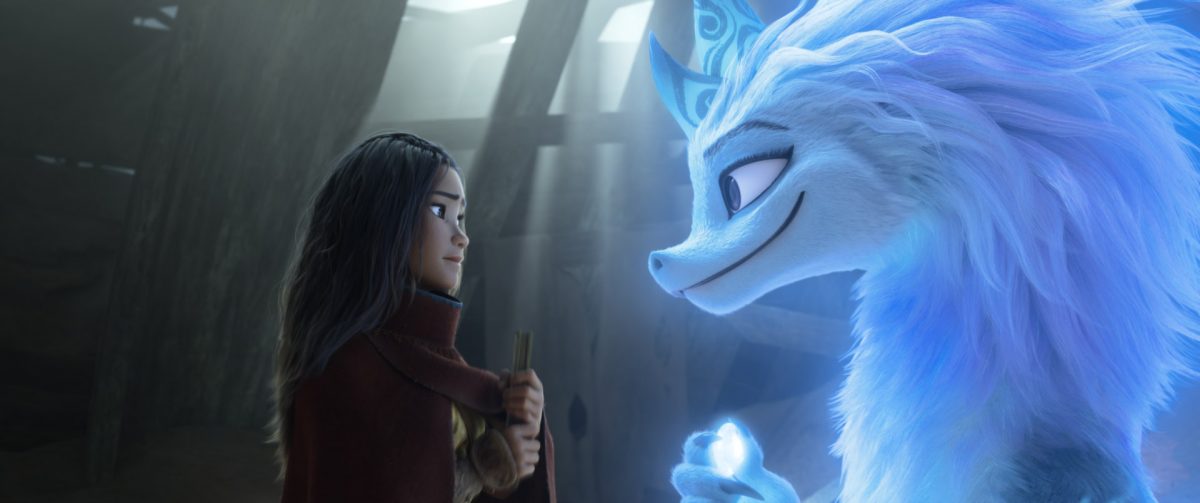

It was early into the production of Raya and the Last Dragon at Disney Animation Studios, and no one around the room could seem to agree on an answer—should Raya be a Disney Princess?
After all, Disney Princesses are a contentious subject. Though the tradition helped build the studio into the biggest family entertainment brand on earth, and the characters that have carried the mantle—Snow White, Sleeping Beauty, Mulan and Jasmine, to name a few—are the most iconic and beloved in the stable outside of Mickey and Donald, there have been many justified criticisms in recent years of the ways those characters were depicted.
Men and women raising young girls, for instance, have struggled with the examples those movies set, inadvertently teaching their kids lessons about a woman’s place in society that are often outmoded from modern thinking.
At the same time, however, Disney animation has created some of the most memorable female characters in all of cinema, all introduced in stories full of timeless wonder and animation as gorgeous as any ever drawn. It’s hard to throw out the good with the bad.
Adele Lim, the co-writer of Raya and the Last Dragon, who also co-wrote Crazy Rich Asians in 2018, had perhaps the strongest voice in the room that day, and she spoke with conviction—Raya should absolutely be a Disney Princess.

“I immediately said, ‘she has to be!’ That is what a female leader looks like to me.”
To Lim, that’s what a princess is, at the end of the day—a leader, someone who must guide a kingdom, and what matters most is how the movie makes use of that responsibility.
In recent years as well, Disney has also made a conscious effort to embrace the mantle while also moving it forward, making films such as Frozen in which women don’t need a man to save them, or pushing for a greater diversity of racial and cultural backgrounds for its characters.
All of this made Lim comfortable having the character join those ranks.
“I grew up with Disney Princesses. Disney’s Snow White was the very first movie I ever watched. I played her in the school play that my grandmother put up, and the most touching emotional part of it for me is that Disney really has been doing a great job of really amazing diverse storytelling and pulling from different cultures. This one personally though, I had a nine-year-old daughter when I started, she’s 11 now. That she’s going to be able to look at Raya and see a Disney Princess with her own face reflected in that,” Lim tells Esquire Middle East.
Raya and the Last Dragon, now playing only in cinemas across the Middle East, tells the story of a princess in the land of Kumandra, which draws heavily from the culture and lore of Southeast Asia, a fictional place where years ago humans and dragons lived side by side, but divisions between the kingdom’s people has caused the land to fall apart, and the dragons to turn into almost nothing but a legend. Raya, voiced by Kelly Marie Tran, goes on a search for the only dragon thought to still be alive in order to restore Kumandra to its former glory, and help its people trust one another and find unity once again.
“She’s got these cool pants that she can cartwheel and get into a sword fight with, and she’s also responsible for this entire land, like that to me looks like an amazing leader and is someone inspirational whether you’re a girl or a boy. To have her be introduced to the world in this time and place, it feels really sort of apt and a hero that we need right now,” says Lim.
For Producer Osnat Shurer, who also stewarded Disney’s Moana, the story of a princess from the Pacific Islands, the film is a reflection of the values of the hundreds of people who produce it, who are invested in creating characters that reflect their own values, guided by a worldview that has vastly developed since the early days of the studio.
“Disney Animation films are so much more personal than you think, because they are so big with such large crews, we’re putting our hearts on the screen. I think for me, having had the good fortune of working on Moana and now on Raya, I want to just see more of myself and the women I know, and my friends from all parts of the world and more cultures on the screen, and I think it’s happening because we’re all there,” says Shurer.
“The Disney Princesss is an aspirational character and what we aspire to today is quite different and I love that we get to put that on screen. No one’s stopping us. In fact, we’re being encouraged. In the future, I want to see more of what we’re doing, because we’re already doing it.
 Lim, who was born and raised in Malaysia, was with Raya able to reflect back that culture that she grew up with, a culture in which strong women who kick butt were not as rare as they traditionally have been in Hollywood.
“I grew up with all these Hong Kong action movies where these girls who were the hot girl, the mean girl, the villain, and they could still whip up a sword or a staff or a scarf and still beat your ass down. And that gave me so much joy as a kid. And I didn’t realize until I immigrated to this country that that kind of a character is rare in in Hollywood blockbuster movies. And when we looked at the comparisons of the strong female action protagonists, they tended to sort of fall into the same type, which was sort of physically perfect and doesn’t crack a smile and is super stoic and doesn’t really arc because she’s already awesome when she shows up, but not really the kind of person you grew up with. And it came from there,” says Lim.
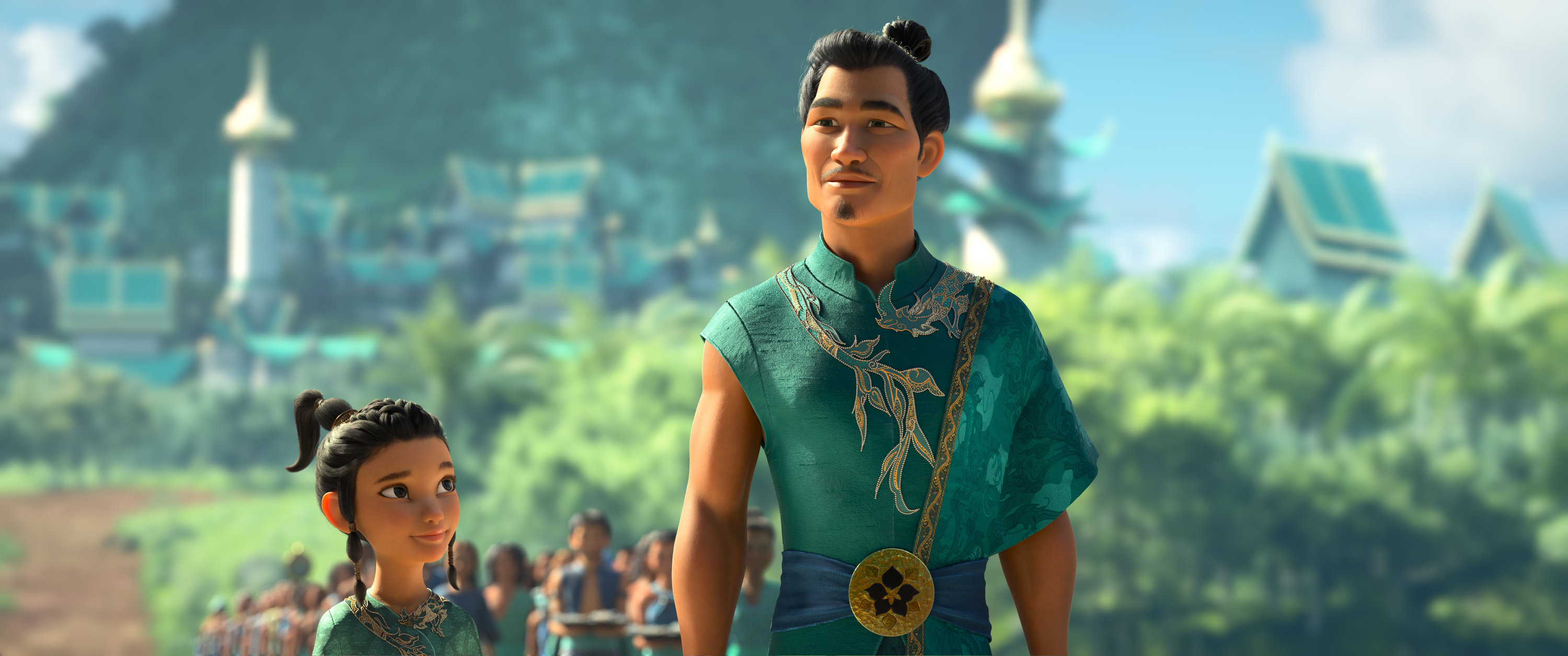
Important for Lim too was how the character’s close relationship with her father reflected Southeast Asian family culture, something that helped shaped Lim into the woman she is today.
“The element I really relate to and love that’s Raya’s relationship with her father Benja. It’s particularly Southeast Asian in terms of how close you feel with your parents, and where their dreams become your own. It’s also a very universal thing. I was very attached to my father. He had a huge, outsized influence in my life. In these relationships, you try to pour as much authentic emotion into the gestures, the speeches, even if it’s not a life that reflects your own, because the feeling comes through,” says Lim.
Ultimately, though, one key aspect that makes Raya a modern film is the way in which it reflects the world as it exists today, and offers hope to the generation that will fix the mistakes that the generations before are still making. That is the leadership that Raya offers, not just to the people of her kingdom, but to the young girls watching the film on International Women’s Day and beyond.
“What I’m most proud of, and I think all of us are most proud of, is that even though Kumandra is this fictional land, this epic journey that Raya goes on is fictional, but the things she faces are very real. And kids in the world today, they can look around, children understand we’re in a broken, divided world. The solutions that Raya has to enact are not easy, they’re not one off. She has to keep reaching out in faith in trust, even though she fails, even though she’s betrayed, even though she loses everything that’s dear to her, she has to keep reaching out, because it’s the only way we’re going to get through this together. There’s a lot of love that was put into this,” says Lim.
Raya and the Last Dragon is in cinemas now across the Middle East

Esquire now has a newsletter – sign up to get it sent straight to your inbox.
Want up-to-the-minute entertainment news and features? Just hit ‘Like’ on our Esquire Facebook page and ‘Follow’ on our @esquiremiddleeast Instagram and Twitter account.

