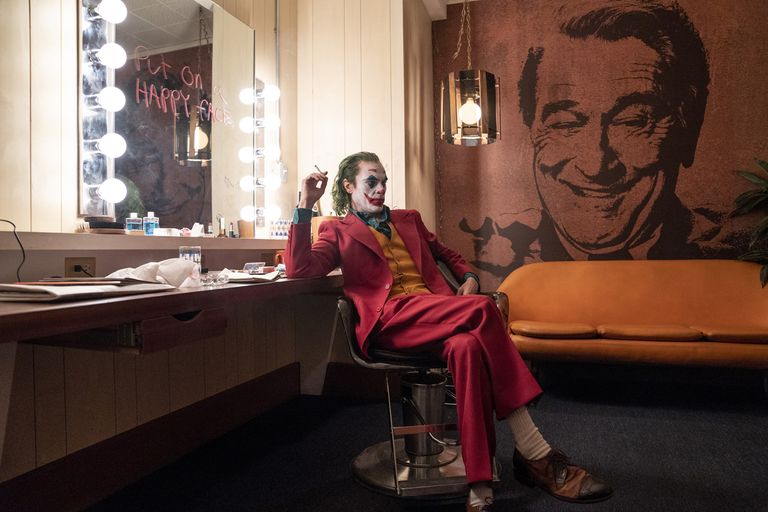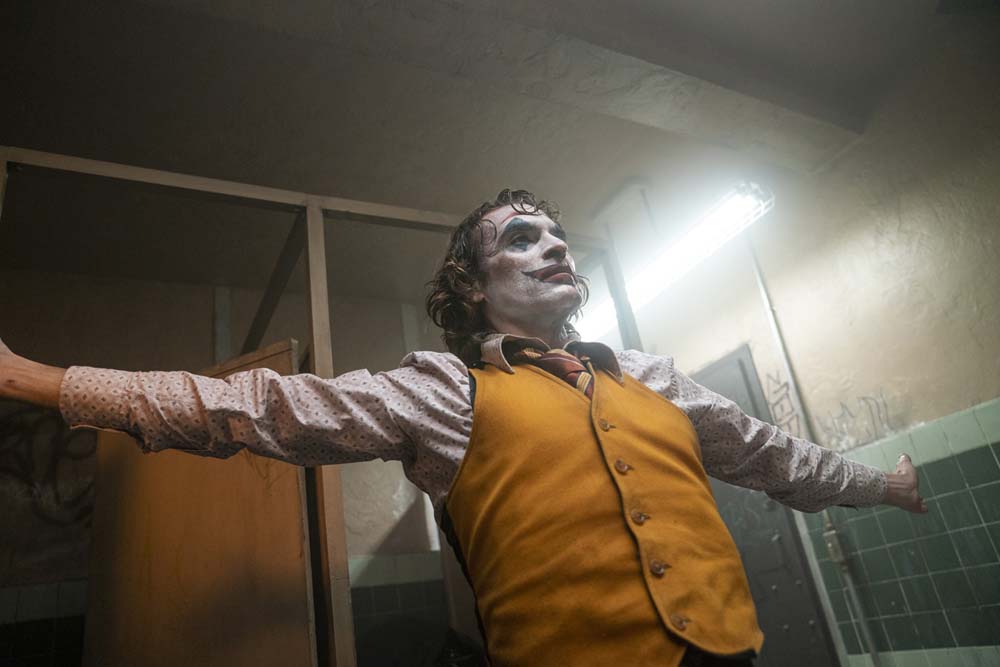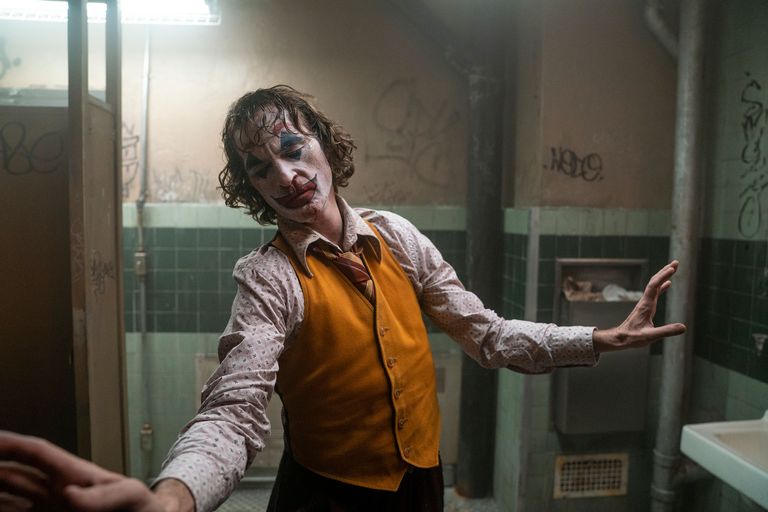
It’s been a while since a movie has created such a debate pre-release as standalone DC movie Joker has.
There’s been the positive talk about how it could be an Oscar contender, especially for Joaquin Phoenix‘s performance, following its well-received premiere at Venice Film Festival. But it didn’t take long for the negative to start overtaking that praise.
It’s been accused of being “dangerous”, with its violent content and focus on Joker prompting concerns of real-world violence as a result.
Co-writer and director Todd Phillips, Phoenix and even Warner Bros have defended the movie, although Phoenix briefly halted an interview after the subject was brought up.
Before weighing in on any wider issues surrounding it, shouldn’t the first point of concern be whether or not Joker is a good movie? If only we could give a straightforward answer to that, too.
Set in the 1980s when Gotham City is in a city-wide emergency over trash levels, Joker introduces us to Arthur Fleck (Phoenix) when he’s a jobbing clown, doing everything from children’s hospital visits to spinning signs for a closing-down store sale.
“Is it just me or is it getting crazier out there?” he tells his social worker, where we learn Arthur’s on a variety of medications and has a mental illness that means he has uncontrollable laughter outbursts.
Arthur’s dream is to become a stand-up comedian, but with an ailing mother (Frances Conroy) to care for, he’s pushed to his very limit by a society he believes doesn’t care for people like him. What will happen when Arthur finally snaps?
In case you didn’t gather from the trailers, Joker isn’t exactly the lightest of watches, but you might not be prepared for how bleak it is.
The camera rarely leaves Arthur, often framing him with intense close-ups, giving the movie an oppressive and uncomfortable feel. Even the lighter moments come with an edge, meaning you never get a sense of release.
A large part of why Phillips is so successful in crafting his uncompromising tone is the astonishing lead turn from Joaquin Phoenix.
Fully committed and exhaustive, Phoenix’s performance is extremely unsettling and often uneasy to watch, but masterful in its execution, especially in the subtle changes he makes when Arthur gets closer to the iconic DC villain we know. (Even if the movie itself largely steers clear of any DC connections.)
We wish we could say the rest of Joker was subtle in a similar way.
Phillips has spoken about how it’s “good” that movies like this could lead to discussions about violence, but it would have been nice for Joker to explore it more. It has one point to make, and makes it in slightly different ways throughout: the rich are terrible and society needs to do more to help people like Arthur.
That’s not to say that Joker turns Arthur into an anti-hero, at least not for the audience. It’s clear throughout that he’s a psychopath and is not someone to be celebrated.
This is symbolised in an a terrific early sequence where Arthur fights back against some attackers, killing them in cold blood when the danger has long gone. It’s a chilling sequence, and a showcase for Lawrence Sher’s excellent cinematography and Hildur Guðnadóttir’s ominous score.
There’s a mixed message from Phillips though, as shown in the trailers, Arthur unintentionally becomes a symbol for the downtrodden in Gotham City. We, the audience, might not see him as a hero, but Phillips shows how certain people in Gotham do.