
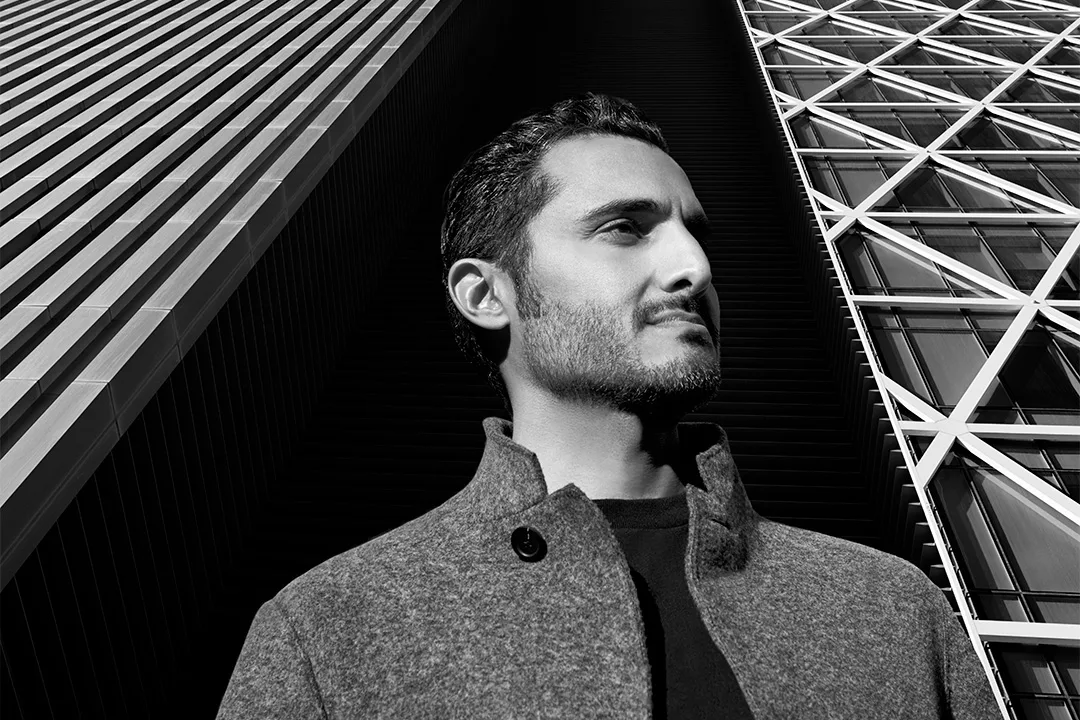
Impossible isn’t a word in Sheikh Mohammed bin Abdullah Al Thani’s vocabulary. Better known as Moe Al Thani, the Qatari entrepreneur, philanthropist, sportsman, mountaineer and adventurer believes that each of us has the power to unlock our potential and realise our dreams—regardless of how ambitious they may seem.
In 2013, Al Thani became the first Qatari to reach the summit of the highest mountain in the world and his love of adventure has seen him become one of a highly elite international group (less than 350 globally) to meet the ‘Seven Summits challenge’ —requiring mountaineers to reach the summits of the highest mountains of each of the seven continents. From the high-altitude and low-oxygen Himalayas, to the roof of Africa, to the polar glaciers of Antarctica, the Seven Summits is the most epic of challenges.
Al Thani’s determination and commitment was the subject of feature documentary The Seventh Summit, which follows a group of men and one woman in their attempt to make it to the top of Mount Denali in Alaska—the highest point in North America.
ESQUIRE: Where does your love of adventure come from?
Sheikh Mohammed bin Abdullah Al Thani: Since I was young, I have always had this thirst for adventure. I love travelling to remote places, getting lost and finding myself in new situations. One of those moments happened in Nepal in 2008. I was on a river-rafting trip and our guide was a sixty year-old local man. I asked him to tell me everything about Nepal and he told me great stories of mountain expeditions and Mount Everest. I told him that I wanted to climb it and he laughed at me, saying that he didn’t think that any Arab had ever climbed it. I thought to myself, ‘I’ll show you,’ and back at the airport, I bought all the books and movies I could find and came back and read and watched them all.
I discovered that four Arabs had in fact climbed Everest. I contacted all of them, introduced myself and told them that my goal was to climb Everest. One of them was based locally so we met for coffee and he gave me some important advice. He suggested I take it step by step, go to one of the Everest base camps and then come back and talk again. That’s exactly what I did—it was incredibly challenging and I couldn’t understand why anyone would willingly put themselves through it. But something stuck and I knew somehow it was the beginning of a new journey. The question after that became ‘what’s next?’
ESQ: Your next challenge was to climb Mount Kilimanjaro. What was that like?
Moe Al Thani: It was incredibly hard as at that point I was not fit, but I made it to the top. I was in tears, happy and crying, because it felt like such an accomplishment and such an honour to be able to raise the Qatari flag at the summit for the first time. As I was climbing down, I knew that this is what I wanted to do and, since then, it’s been one mountain after another. It took me five years to finally climb Mount Everest.
ESQ: There is often a philosophical element to a climb. What have they taught you?
Moe Al Thani: First of all, you learn to appreciate the little things in life. All of us living in Qatar are fortunate to have clean water, food, a place to sleep, healthcare and education.
When you travel to these places, people living there have nothing—some lack basic provisions like food and water and some have no technology—but you see the biggest smiles on their faces. I get frustrated now when I see someone leaving a half-empty bottle of water behind. You develop a real appreciation of people too. When you are in the mountains, the guy that saves your life expects nothing in return so when you come back and see how people fight over the smallest and most unnecessary things, it does get to you. There is a philosophical element in that the mountain is a microcosm of the world, and experiencing it changes you as a person. Many people see climbing a mountain as a challenge, a place to conquer, but most mountaineers are against this idea as you can never actuaslly conquer a mountain. If you stop paying attention for a single moment, you are gone. The mountain allows you to climb it and those attempting it should be humbled by its scale and power. In that sense, it also helps you to become a better person.
It’s interesting because I always find that people’s true colours come out during a climb. If you get on with someone you are climbing with, they will be your friend for life.
ESQ: What are the biggest challenges associated with the kinds of mountains that you have encountered?
Moe Al Thani: With any mountain, it’s the physical body that will take you there but mental strength that will keep you alive. For me, it’s also getting harder because my kids are getting older. When they were very young, I just used to go without them understanding what I was doing but now they are more aware of what I do and they worry. I have to try and stay focused during a climb, which can be hard as I am thinking about them. I’m also less likely now to take big risks because I know what is waiting for me when I come home. So the biggest challenge for me is mental, focusing on reaching my goal without getting distracted.
ESQ: Do you think that your love of adventure is something that your children will inherit?
Moe Al Thani: I think so, yes. I already take my eldest son with me on boys’ trips—hiking in Oman and obstacle races, and even my younger ones are excited about adventure. For me, it’s more about teaching them an appreciation of the values climbing instils. It’s about showing them the world. In this era of technology, it can be hard for kids to understand how other people are living. Even if you take them to India or Nepal for instance, you need to be able to live the experience, not just visit.
You need to carry your own bag, and stop depending on others so that you can grow as a person.
ESQ: Through your Rise to Success initiative you are actively involved in nurturing an infrastructure that helps future generations get involved in mountaineering. Tell us more…
Moe Al Thani: Rise to Success is all about pushing people to surpass their limits and showing that there is no such thing as ‘impossible’. When you are too comfortable, you don’t challenge yourself and I wanted to take people out of that comfort zone and show them that they have so much more that they can give. People who have heard my stories or seen my adventures often approach me—they might be Qatari or Middle Eastern or from anywhere in the world—and in order to select those that can take part in a climb, I send them a questionnaire. Based on their answers, I decide if they are ready to join or not. Physically, we can work on training in advance, but I need people of a similar level mentally and spiritually.
When I take groups climbing with me, it helps unlock each individual’s potential and teaches them that they can reach any physical or mental peak if they set their mind to it. When they return to normal life, you see a change. They come back stronger and more powerful. Some of them continue with their adventures and some move into academia or other professional careers, but it’s always amazing to see the effect on them, how the mountain has changed their lives. I feel so proud to know that I have played even the tiniest role in that evolution.
ESQ: How does that ethos translate into your other businesses?
Moe Al Thani: My purpose in life is to inspire others to achieve their dreams, and the way I do that is through my trips and my businesses. If someone comes to me with a business that will make me millions, but it is one that I don’t have an interest in or a passion for, I will not be a part of it because although it will be good for your pocket it will be very bad for your soul.
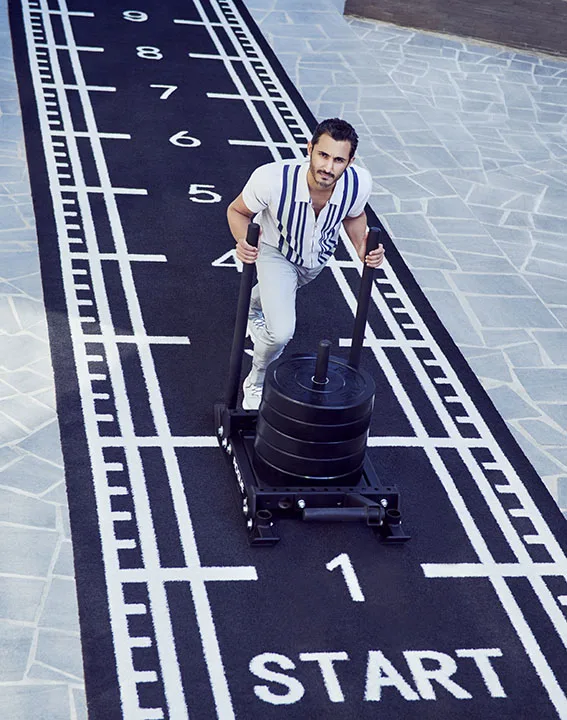
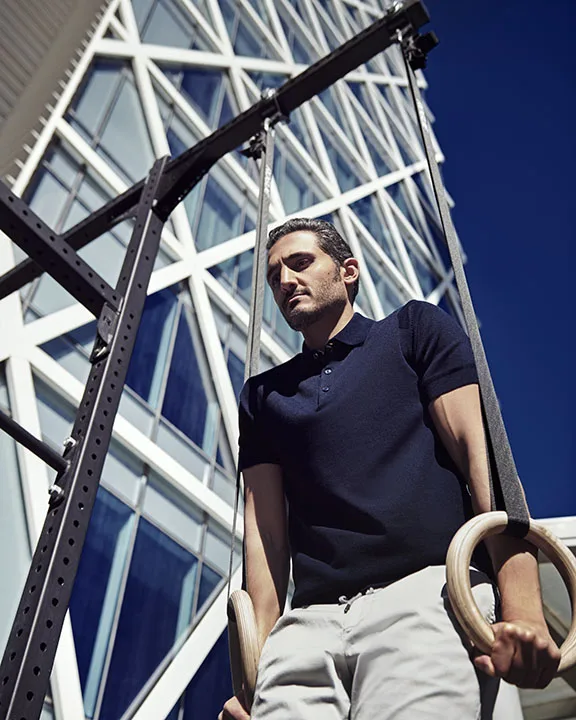
ESQ: You’ve also recently opened Altitude Elite, an innovative personal training studio, here in Lusail. How did that come about?
Moe Al Thani: Altitude Elite is designed as a place where people can come and meet their goals. Each of my trainers is highly-qualified and specialised in their own field. They have great personalities and they are all friends which guarantees a positive atmosphere in the studio. The clients that come to us want to transform their bodies, to be healthier, and to achieve something tangible. At first, the trainer will sit with you and define your goals—whether it’s running a marathon or something else—and the trainer’s number one purpose is to help you reach that goal. That’s how we evaluate our trainers. The aim here is not to attract a one-time gym user. I am targeting people who want to be part of a community and that are committed to making real change.
ESQ: What’s next for you?
Moe Al Thani: I will be going to the North Pole and by doing so, I’ll be finishing the ‘Explorer’s Grand Slam’ [an adventurer goal to reach the North Pole and South Pole, as well as climb the Seven Summits]. Up until now, only 50 people have completed it. I am really excited about this challenge as I have previously skied to the South Pole, but the North Pole is of course very different.
ESQ: What has been your career highlight to date?
Moe Al Thani: Meeting the Emir, His Highness Sheikh Tamim bin Hamad Al Thani after climbing Everest. He is a role model to all of us here in Qatar and he told me that the country was proud of me, the family was proud of me, and that he was proud of me. It made everything worthwhile.