


Christian Angermayer is an optimist.
“We should all be happy,” he says with a smile on his face, but also a sense of concern. “We are living in the most amazing time in the history of humanity, but a lot of what we read out there in the media is very negative. Looking beyond headlines and at the facts, people should be happy, but they are not, and mental health is the biggest healthcare issue out there. Hence, I have made it my mission to help shape and build a future for humanity that is much more positive, and progressive—a world that I want to live in.” By any metric, Christian Angermayer’s mission statement is a lofty one, but if anyone is capable of achieving it, he is.
Only 44 years old, the German entrepreneur and investor has already made significant contributions to the business world by not only starting three ‘unicorns’, but also being the lead investor in another four, and even two ‘decacorns’. He features on Forbes magazine’s World Billionaires list with a net worth of $1.2b. As the founder of Apeiron Investment Group—his family office and private investment firm—he is renowned for investing in biotech, fintech, and blockchain sectors, particularly in cutting-edge companies that push boundaries—including challenging the limits of human life expectancy.
He calls his roadmap to create a more positive future the ‘Next Human Agenda’, which has the goal of developing technologies to empower people to live longer, healthier, and happier lives. It is an agenda that underlines Apeiron—named for the Greek word meaning ‘unlimited’ or ‘infinite’—and inspires its two main focuses in the biotech sphere: mental health and longevity.
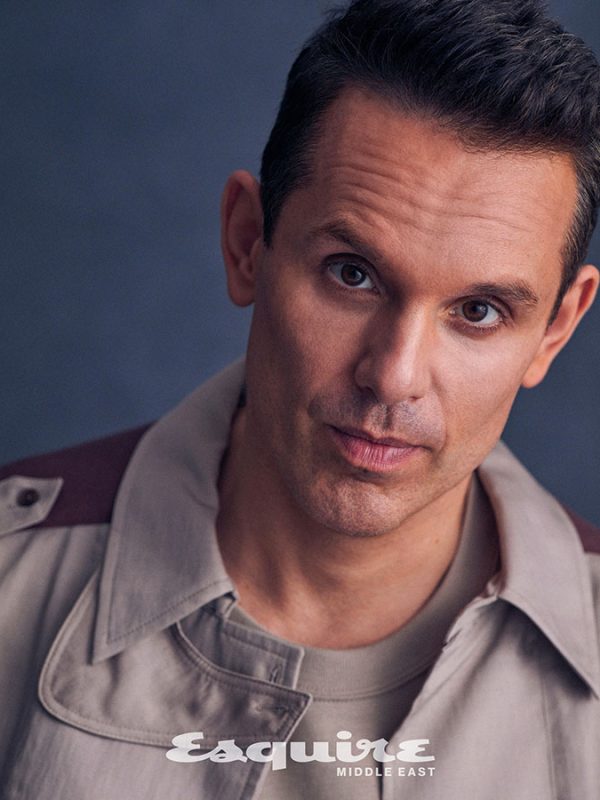
Two of Angermayer’s biotech companies—Rejuveron Life Sciences and Cambrian Biopharma—are developing medical drugs with the aim to significantly prolong the human life span – and, importantly, health spans to match. In fact, it was Angermayer who really kick-started the idea of ‘longevity biotech’, which has since started to develop on a global scale.
“I honestly believe that we are going to push the limits of human life expectancy up by several decades,” Angermayer tells Esquire Middle East on a Zoom call from his office in London. It’s the beginning of a busy workday and he looks relaxed, rested and eager to share his vision. “Granted, it isn’t something that is going to happen tomorrow or within a few years, but when you consider the amount of exponential progress the biotech industry is making at the moment, then I have no doubt that we can get there in 15 to 20 years,” he continues.
“Before we started Rejuveron, which was one of the first biotech companies globally to pioneer longevity research, people were saying that the idea of pushing life expectancy well into the 100s was crazy. But I always believed that once we understand more about why we age, we will also be able to slow down that process and possibly one day even reverse it,” he explains. One essential element to Angermayer’s ethos is not just to prolong life expectancy for the sake of it, but to ensure that his work tackles many of the issues that come with ageing. “We will be able to live well into our 100s, but ideally with the body and mind of a 30-year-old. There is no significant prolongation of life expectancy without parallel rejuvenation. Ageing well is as important as living long!”
Angermayer mentions that while several scientists and thinkers before him had previously highlighted the idea of treating ageing as a curable disease, nobody had properly committed to doing “the hard work” of medical innovation and proper drug development. This was largely because research and drug development are a costly exercise, and bringing just one single drug to market can easily cost more than 100 million dollars. “I was, like, hey, if no one else is going to do the hard work, then I am going to do it, because I felt my own clock ticking” says Angermayer.
According to Angermayer a big turning point was when his now-colleague, Professor Manuel Serrano, together with colleagues released the seminal scientific paper in 2013 defining for the first time what ageing actually really is. “What they did was to identify that ageing is not a singular disease, but rather nine different problems, which this year were extended to twelve and are now viewed by the scientific community as the constituent factors of ageing. They called those the ‘twelve hallmarks of ageing’,” he explains. That moment was somewhat of a launch pad for Angermayer as it established twelve concrete problems that could be tackled in a much more tangible way.
One of those ‘hallmarks’ for example is stem cell exhaustion. In simplified terms, we run out of pluripotent stem cells as we age, but some of them do remain in a dormant state in the body. Rejuveron is well on its way to showing that for retinitis pigmentosa, an age-related form of blindness, a novel compound it is currently testing in a Phase 1/2a study can literally reactivate those dormant stem cells and regenerate the eyes’ visual function, as if they were newly formed eyes. And once such an effect is proven for the eyes, the vision is to develop more similar compounds to rejuvenate other body parts by reactivating stem cells. If Rejuveron achieves this, that drug alone could be a multi-billion-dollar best-seller.
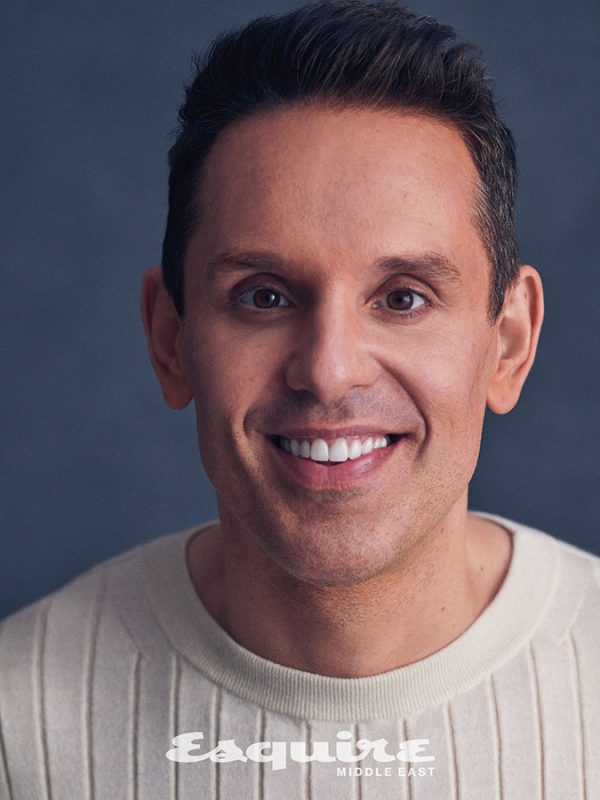
Christian Angermayer is realistic and doesn’t want to overpromise.
“There is nothing that you can currently do to ensure that you will live well into your 100s” he says openly, “but we will get there over the next 15 to 20 years. So, try not to die in the next 15 to 20 years. If you survive until then, you will potentially have the chance to add several healthy decades.”
Of course, that sounds easier said than done. But while there is nothing yet on the market to extend life expectancy, there are actually many things people can do now to ensure they increase the probability to get the most out of the current life expectancy of around 85 years, and to spend their last decades in a healthier state.
“85 years of average life expectancy does not mean everybody will make it to 85. Some die earlier, some live longer. There are many healthy principles one can adopt now to increase the odds to be on the older side of the curve. And at the same time, those principles will make sure one is in a healthier state for longer.”
While Angermayer is famous for taking around 40 supplements a day, he encourages people that it is not that complicated to live a healthy life and maximize one’s life and health span.
“It’s the famous 80-20 rule,” he explains, “80 percent of maximizing your current life expectancy is doing five simple things: sufficient sleep; an active family and social life; exercise; removal of things like alcohol, cigarettes and other harmful substances; and (preferably) a Mediterranean diet.”
From a regional perspective, it is fascinating that the key areas he mentions are all culturally compatible with Middle Eastern values. An active, intergenerational family life and the absence of harmful drugs and especially of alcohol are fundamental pillars of Arab society, while an increased education in the importance of sleep, exercise and diet have been core elements of the region’s leadership vision over the past decade. “I find the Middle East to be one of the most, if not the most, exciting regions in the world,” he says. “There is a built-in vision of optimism that fuels development in places like the UAE and Saudi Arabia that allows them to not only work for the advancement of their societies but for humanity as a whole. I do see the Middle East as playing an increasingly important role in the longevity sector going forward.”
Ultimately, for Angermayer, when it comes to longevity, you get out of it what you are willing to put in. “Today, there is no single pill, but if people commit to focusing on their health now, then they give themselves a huge advantage when it comes to living a longer, healthier life,” he says. “Just give me 15 to 20 years and we will start pushing life expectancy towards over 100.”
If it all seems a bit farfetched, Angermayer convincingly counters by explaining the thinking that upholds his roadmap: the idea of exponential growth.
“When it comes to longevity, what is important is the understanding of longevity escape velocity,” he offers. “Let’s assume we can give someone who is 40 years old today, and who already has a life expectancy of 85, an extra 15 years of life expectancy by the time that they are 85. That will take them to 100 years old. But say that during that additional 15 years of life, science develops to a point where it can give them another 20 years on top of that. And so on and so on. I believe at some point in the next 15-20 years we will have this one milestone year, in which we win more than one year of life expectancy, thereby outpacing the one calendar year we lost.”

Christian Angermayer is a technophile.
While many people are threatened by change, a persistent personality trait of Angermayer is his ability to embrace it. “I have always been a bit fearless, and had a bit of a ‘why not?’ attitude,” he says while telling the story of his university days, when as a 19 year old student, he befriended his two Biotech tutors and became so engrossed in genetics and the possibility of how the future could unfold, that he convinced them to start a company with him. He eventually took the company, Ribopharma, public by merging it with American biotech firm Alnylam Pharmaceuticals. The combined entity is valued at almost $25 billion today.
And in his vision, the best is yet to come: “If you look at the development of technology over the past 20 – 40 years, yes, there was innovation, but it really isn’t as disruptive as we may think,” says Angermayer. “For example, if you took a person out of the 1950s, and plonked them into the present day, they might need a couple of weeks to adjust, but ultimately they would, because more or less life today is still the same as it was back then. There has been some technical innovation, but it is not as groundbreaking as we perhaps expected. Peter Thiel said it best when he said: ‘we wanted flying cars, instead we got 140 characters (on Twitter).’ ”
“However, looking forward, because of the exponentiality of innovation, in the next 10, 20, 30 years the world will really change in a magnitude we can’t fully grasp today. I am very optimistic about it. Now, the real fun stuff is coming!”
It comes as little surprise that one of Angermayer’s great passions is film. In fact, over his career he has been credited as an Executive Producer on 26 feature films, including the critically acclaimed movies Filth (2013), Hector and the Search for Happiness (2014) and Zack Snyder’s hit Army of Thieves (2021). But he also criticizes Hollywood for promoting fear rather than optimism.
“If you look at the 1960s, and ’70s you had some great Sci-Fi films where the underlying ethos was optimism,” he says. “My favourite one was Star Trek, because it was ultimately about how humanity is thriving in the future and that via technology we are continuing to explore and push the boundaries of what humans can achieve. But then in the ’80s things took a turn for the negative in films like The Terminator where the future is depicted as very dystopian with technology constantly trying to enslave and kill us all. I know that those kinds of stories are perhaps more exciting, but I am constantly talking to my filmmaker friends about showcasing more stories where technology and innovation are seen in a more positive light.”
One criticism he faces is that with growing life expectancy, also the total world population will grow, most likely to more than 10 billion in the not-so-distant future. We already seem to have enough problems today feeding the current population, so even more people could further exhaust the planet. Angermayer’s answer is once more that “technology will not kill us but save us”. And he has the solution in his portfolio of more than 100 companies: One of his other areas of interest is novel food technology that has the goal to innovate how we can produce food on a kinder, more sustainable scale.
“Everything I see in our portfolio, from biotech to fintech, from novel foods to AI makes me very optimistic for the future. It is the responsibility of all leaders in the field to ensure that people can go into it with a more positively progressive mindset, and that we are all able to embrace the advancement of technology rather than be fearful of it,” concludes Angermayer shortly before signing off from the call.
One thing is certain, in the next 20 to 30 years we are going to be reimagining and redefining what it means to be human, and it is reassuring that people with a positive and ethical mindset like Christian Angermayer play a part in the process of driving positive creation and innovation.