

There is a nightclub in Berlin that is notoriously hard to get into. Built within the shell of a former East German power plant, Berghain, not only has a fearsome reputation as the world’s leading techno club, but arguably the world’s hardest door policy. Both A$AP Rocky and Britney Spears can tell you a thing or two about that.
The man who marshals the notoriously ruthless entrance line (and a squad of formidable hardmen) is head bouncer Sven Marquardt. Marquardt’s long white hair slicked back into a ponytail reveals his thorn-and-butterfly face tattoo as he looks me up and down. He looks like a cross between Karl Lagerfeld and a UFC cage fighter.
Feeling distinctly older than the rest of the partyready Berlin crowd—many of who I have seen turned away ahead of me—he looks at the pair of open toed Arizona Birkenstock sandals on my feet, pauses, and waves me in. It’s official, Birkenstocks are cool again. Having been slated for so long as the remedial shoes of an older, granola-chewing generation, the German shoemaker is now amid a fashion revival. While the menswear industry have recently seen a luxury hijack of streetwear culture and the stratospheric rise of shady social-media marketing, both of those cycles seem to be running out of steam.
What seems to been emerging in its place is a new millennial consumer with an aching desire for that all-too-rare quality—authenticity.
With an iron-clad mantra of quality, functionality and authenticity, it seems inevitable that Birkenstock would eventually make its way onto popular people’s feet once more. Affectionately referred to as ‘Birks’ by today’s cool kids, the 245-year-old company was given new life in 2013 by CEO Oliver Reichert, who sought to modernise the appeal of the brand, shaking off its older reputation and replacing with an ecologicallyfriendly brand for everybody. Something that sits very comfortably in the current menwear fashion mode that feeds off ’90s geek and ’70s hippy revival.
The move seems to have worked. In 2017, the brand presented 115 different styles at its first Paris Fashion Week show, and that same year Reichert told the Japan Times that the privately owned company’s estimated sales had rocketed from 10 million to more than 25 million during his tenure. Birkenstock’s recently collaborations with cooler-than-ice designers Rick Owens, Fendi and Valentino, is further evidence that this age-old brand is currently the belle of the ball—albeit one with noticeably flat feet.
Away from the Berlin’s booming fashion-savvy nightlife, there is an undeniable weight of history that surrounds the brand at its huge 30,000sqm factory just outside of the well-preserved fairy tale old town of Görlitz, in Saxony—located 100km east of Dresden.
Birkenstocks can trace its roots back to 1774, when a cobbler named Johann Adam Birkenstock who began designing fitness sandals to promote the natural gait, realising the importance of designing a standard sole with an anatomical mould that follows the shape of a healthy foot.
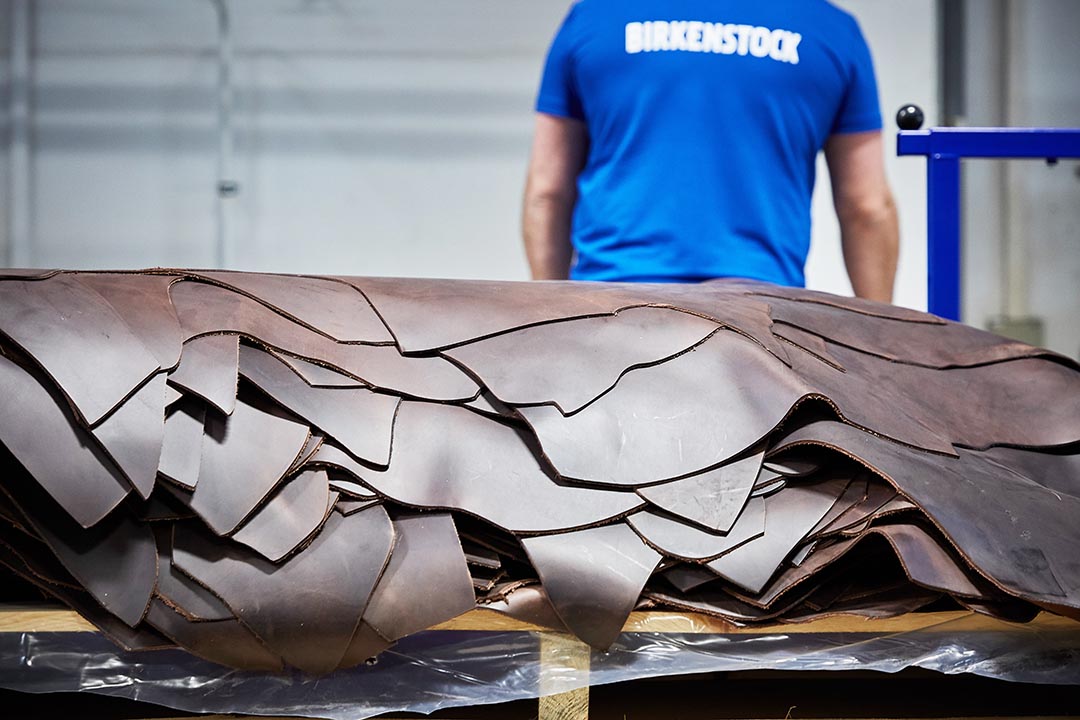
Key to his invention was to create a sole using a sustainable cork and latex core, which also included a raised edge, toe grip, suede lining, heel cup and multiple arch supports. The idea was that the cork-latex core would react to the shape of your feet and that’s why when wearing a Birkenstock sandal for the first time it takes at least a couple of weeks to adjust to. This breaking-in process is what it’s all about; the wait for the shoes to shape to your feet but when finished these shoes fit perfectly.
The brand claims to have coined the term “footbed” in the 1930s, and unlike anything that had come before it, the original footbed helped maintain already feet in good shape rather than treating deformed ones. By promoting healthier soles and toes, for example, the footbed supports healthier legs, joints and posture. Every single pair boasts a contoured, malleable bed for better comfort, all housed within a classic, easy-to-wear shape designed to improve the lifestyles of Birkenstock’s customers.

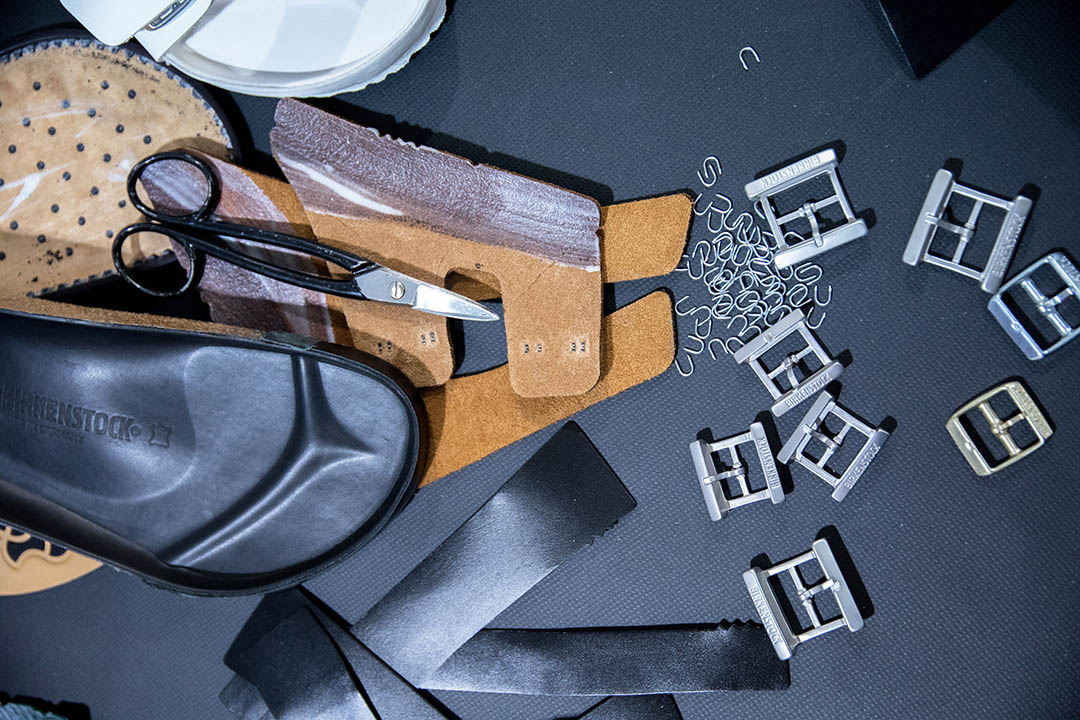
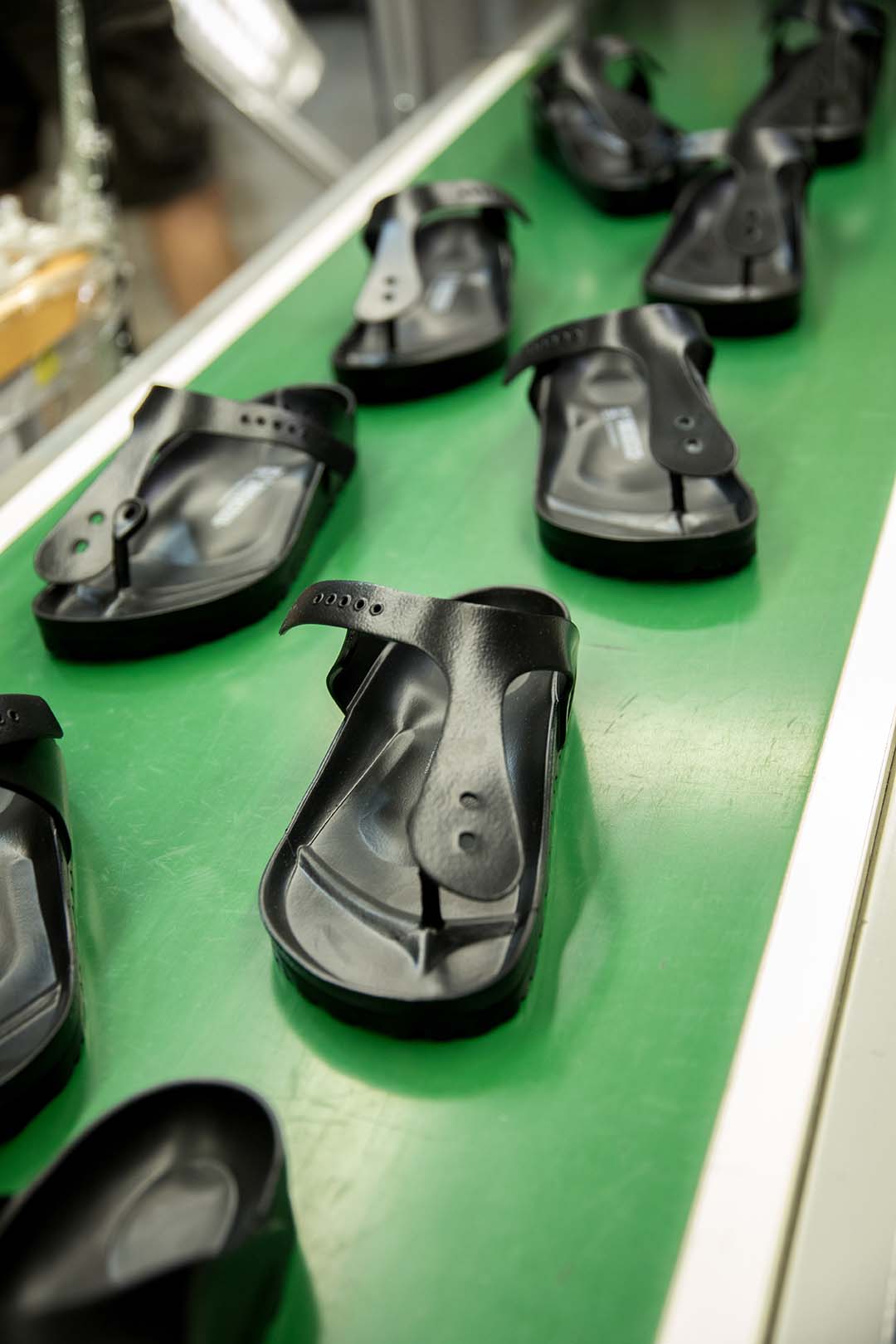
As part of our exclusive look within the inner workings of the shoemaker, we are not surprised by the typical Germanic efficiency of the warehouses’ 2,000 staff. The latex-cork proprietary formula is blended in one area while thin suede liners and the vulcanisation of dried tobacco leaves are made in another. Upstairs there are soles made of a liquid ethylene-vinyl acetate (known as EVA), that is then poured into footprintshaped molds on a carrousel to achieve the super lightweight foam, rubber and waterproof sandals that are the new kids on the Birks.
Birkenstock is very open about the fact that its sandals are an orthopaedicinspired product and its rich histor in United States proved this. When the first sandal, known as the Madrid model, launched in 1964, American shoe stores were tough to persuade and instead were introduced into health food stores where granola crunching liberals and neo-hippies lapped up the gender neutral footwear that prided itself on comfort and convenience. The hippie movement of the ’60s and ’70s was the first in a long line of subcultures that have embraced the infamous sandal company. Let’s be honest not many brands stay relevant for more than two centuries, particularly in an industry so driven by fleeting trends. Keep in mind consumers have become increasingly concerned about the provenance of what they wear, and about the environmental and social impact of their clothing choices.
While many have tried their hand at duplicating the signature corkfilled footbed design (and EVAs alike), Birkenstock has all but perfected the rugged sandal prototype with several other brands wanting in on the action. Reading the market’s recent interest, the German shoemaker has even started to break free from the old stereotypes, with trendy collaborations and potentially new product lines in different markets.
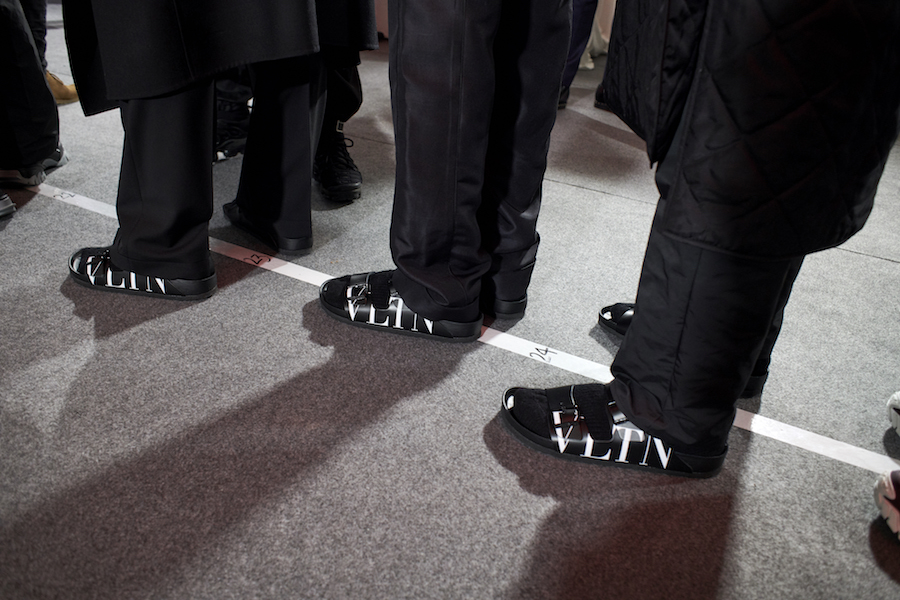
Its recent fashion brand collaborations saw Italian fashion brand Valentino printing a monochrome take on the Arizona sandal at Paris Men’s Fashion Week, and later hot-shot American designer Rick Owen worked with Birkenstock to design an entirely new sandal altogether.
Due to its grounding in authenticity, when it comes to fashion, Birkenstock doesn’t seem to be bound by the rules of conventional big-brands. Its strategy does not require it to chase trends and has turned down potentially lucrative collaborations with red-hot, millennial brands Supreme and Vetements.
In today’s marketplace, the downplayed ’90’s stealth wealth and anti-fashion trend feels very much alive. Just like the anti-fashion statements of minimalism and punk before it, it has gone on to becomea trend all of its own.

The roots of the trend’s recent fashion revival can be traced by to British fashion designer Phoebe Philo. At the time the creative director of Celine, her luxe reinterpretation of the orthopaedic sandal in her 2013 spring runway caused a fashion frenzy and spurred the creation of pieces that now define the ‘ugly shoe’ movement throughout the men’s fashion industry today. Consumers want to appear as if they’re not even trying—a counter balance to Instagram’s faux perfection.
The legacy of Birkenstock as chunky, awkward and conventionally ugly footwear still lingers with today’s consumers, especially with the number of dainty, minimal and elegant alternatives. However, just as the brand was cast off in 1960s America, people’s views and style preferences can change dramatically.
In the frontier of 21st century fashion taste that type of dramatic change is not normally left to chance however. Helping it on its way are decisions from
brands like Birkenstock to further invest in the needs of its consumers. A shining example of this has been the introduction of a small, Paris-based design think tank made up of emerging creatives looking to elevate the in-store experience. One such idea is to ensure that every new store would be different to reflect the local demographic and creating a more immersive concept of the ultimate consumer-brand experience.
This summer, Birkenstock plans to introduce a variety of new developments in the Middle East, Africa and India, doubling-down on successful growth by establishing regional offices. In one of the biggest menswear turnarounds since Jonah’s Hill style transformation, men’s sandals and the use of collaborators to enhance a brand has now become a bona fide trend. At Birkenstock—that bastion of German comfortable style—the future looks bright, especially with further mentions of a “pipeline of global collabs” that are on the way, including upcoming collaborations with Middle East creatives in the not-too-distant future.
We all know how fickle fashion can be. But with authenticity and quailty continuing to an elusive quailty, it seems that the flat, fat-bottomed sandals, with its thick straps and big buckles, have one foot firmly planted in the VIP area.