

Art Dubai 2016 returns in its tenth edition, featuring the largest and most diverse line-up to date. As well as a not-for-profit and education section, the main galleries will be split into three sections: ‘Contemporary’ features 94 galleries from 40 countries, curated by Kate Fowle. ‘Modern’ will be devoted to masters from the Middle East, Africa and South Asia. And finally there is ‘Marker’ a curated section of art spaces that this year focuses on the Philippines.
Esquire spoke to the Marker curator, Ringo Bunoan, about her selection:
***
ESQ: Why was the Philippines selected as the Marker focus of Art Dubai this year?
RB: I was initially surprised when they called me. But at the same time, there are so many Filipinos in the Middle East that there’s already a connection, although there hasn’t been much focus on Filipino culture. And when it is, the topic is usually labour relations — there’s not much exchange on an artistic level. So I think it’s good, especially as the Philippines in the past 10 years has seen tremendous growth in the number of galleries and artists and there’s so much interest in contemporary art from the public. I also think our art is more connected to the larger world. We’re not as isolated. We’ve always been in touch with the West, which makes our art scene different from those of our neighbours.
ESQ: Tell us a little about your preparation for the event
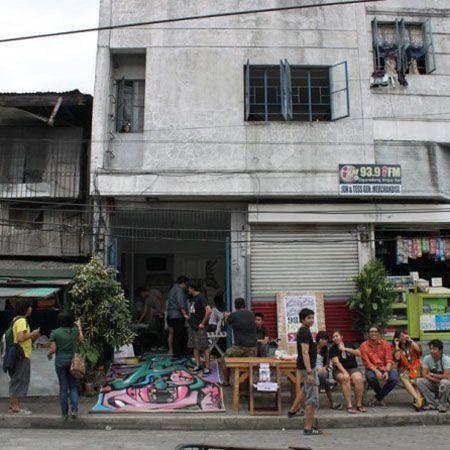
RB: I focussed on artist-run spaces to select the artists and the works. Most of them opened in the last five years, so they’re new. I’ve also included the work of Roberto Chabet [1937-2013, acknowledged as the father of Philippine conceptual art], who is from a different generation. He was such an influential person because back in the 1970s he was running an experimental space and was supportive of many artist-run spaces. We have him alongside 14 young artists, between the ages of 20 and 30.

Ringo Bunoan, curator of Marker 2016
ESQ: What does the art of the Philippines have to offer?
RB: I wanted to put out something new and different. There are a lot of Filipino artists abroad, but they tend to say the same things about national identity. So I tried to get away from that. And also, in the Philippines, painting is the most dominant art form, because it’s more accessible and more popular. So we’re only featuring two painters and we’ve included things like photography and video installation. I wanted to show a diverse selection and not the usual stereotypical images of the Philippines.
“There hasn’t been much focus on Filipino culture in this region. And when it is, the topic is usually labour relations”
ESQ: How will this event showcase the best of what the Philippines has to offer?
RB: I went out of my comfort zone to put this together and not just rely on artists I usually work with. So I hope it offers a different view of the Philippines. They’re not the most popular or best-selling artists; their work is interesting, and I am optimistic about the reaction to it.
ESQ: How will it affect the Philippines art market?
RB: This is the first time that these Filipino artists are being shown in Dubai, so I hope it will open more doors for Filipino artists to engage with Dubai. And vice versa. I hope it will make collectors want to know more about the Philippines.
ESQ: Could you talk about what influences Filipino art?
RB: It’s hard to say what is authentically Filipino, because we’re a mixed culture. We have a long history with Spain, America and Japan, and now with the internet and social media you have influences coming from everywhere. So for me, Filipino art is something made by a Filipino artist. That’s it. I’m not into trying to define our art because when you start to do that, you end up with stereotypes and that’s what I want to avoid.
ESQ: What is your personal favourite in the show?
RB: Well, that’s easy. My favourite artist is Chabet. He was my teacher and I archived his work. During his last few years, I was working with him and we were close. Yes, I’m biased and I’m not going to deny it! I think as curators we do have our biases. But a lot of these other artists involved are good friends, and I like their works too.
– – –
Art Dubai, March 16-19, Madinat Jumeirah, Dubai. artdubai.ae