
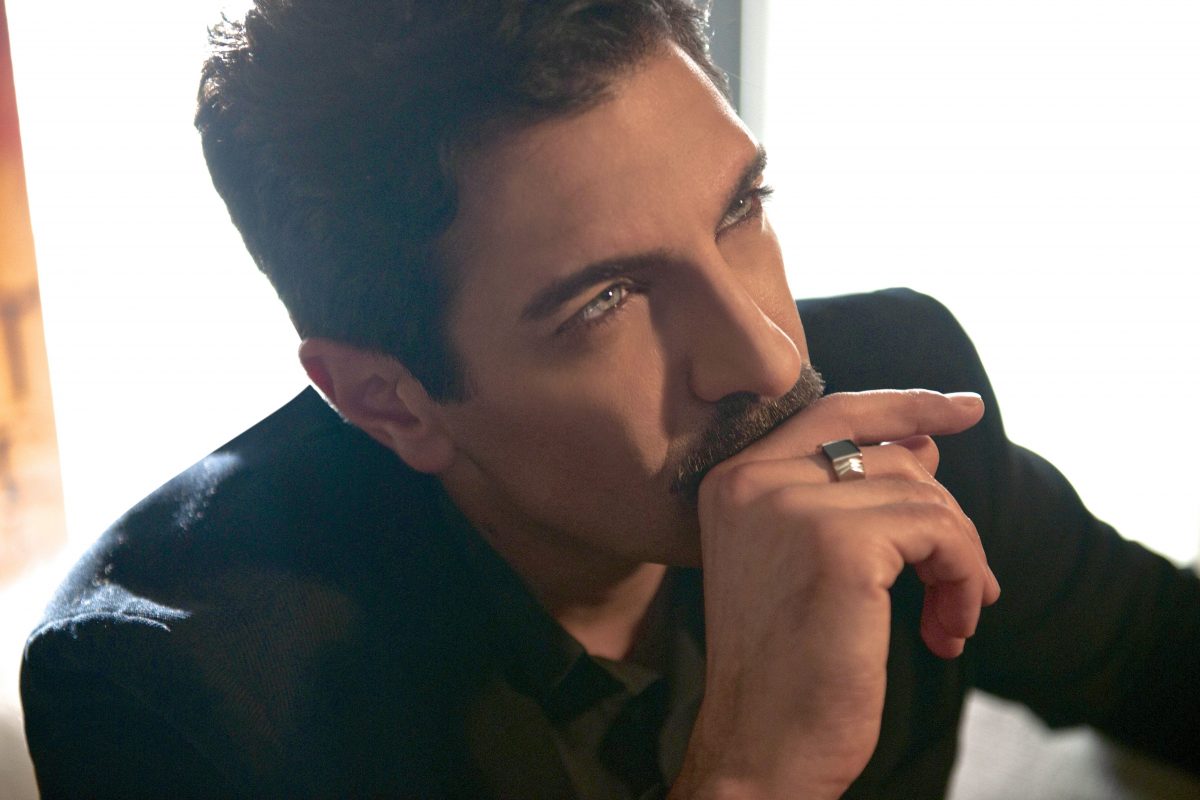

If your first acting class puts you face-to-face with Harvey Keitel and Nicole Kidman, the chances are you’re on the right track. If your first role in a major feature film has you starring opposite Robin Williams, you’re definitely on the right track.
Esquire sat down with Thom Bishops, a young actor who, judging by the above, not to mention his career since, is a name you’re sure to hear more of in the future.
Born in Brooklyn, of Palestinian heritage, the talented NYU graduate’s next big screen appearance, alongside Richard Gere in Time Out of Mind, is set for release on September 9th. We chatted to him about the film, what it was like to star alongside the sorely missed Mr. Williams, and the issues surrounding stereotypes and typecasting for an actor with an Arabic background.
Tell us about Time Out of Mind
The film follows Gere’s character, a homeless man named George, and his long arduous journey to find the daughter he abandoned. The film is set in New York City and highlights the plight of a homeless man living with the consequences of alcoholism and his slow descent into madness. It not only reflects the internal conflict of Gere’s character but also displays the harsh reality that thousands of homeless people face on a daily basis.
Tell us about your role in the film and how you got the part
I’ve known one of the producers, Lawrence Inglee, for about ten years. The director, Oren Moverman, is a wonderfully talented and acclaimed screenwriter who, along with Richard Gere, developed the script. Richard pitched the idea to Oren. I discussed my role in the film with the Lawrence for about three hours and so my part is a Palestinian vegan chef who feeds Gere’s character.
What is it like to work with Gere and what did you make of his performance?
He is a very generous, intelligent and giving man with a lot of integrity. We talked in-between takes and at every festival we attended. I cannot utter a bad word against him, he is that great. He talked about how people do not understand that he is playing characters in performances like Pretty Woman and American Gigolo. It’s not himself. He believes each character is different and refrains from projecting himself into those parts. In Time Out of Mind I think his performance is so distinctive because of the emotion, character and humility he shows, to the point where you watch him and remain awestruck by the extent of his character embodiment. I would really be shocked if the man were not to win an award.

We recently reached the first anniversary of Robin Williams’ passing. How was it working with him?
I was moved by his generosity and kindness. He knew the names of every crew member and would address them each day accordingly. Meanwhile, in-between takes, fans waited for a chance to meet him and he would talk to them, have full conversations and engage with them in a down to earth manner. I was amazed because he could have been another self-absorbed actor who locked himself in a trailer. I recall him talking to me off-camera for two to three hours at a time reading lines with me. He was the most giving actor I have probably ever worked with. And I think he was like that because he felt so humble to be where he was in the movie industry. He never lost that, and it’s a valuable lesson.
You still go to acting classes and workshops in-between working. How common is it for actors to develop their craft once they are already established?
Personally, I believe acting is similar to what athletes do. You’ll find an athlete’s training during the offseason to be far more strenuous than during the actual season itself. Similarly, I feel even if I am not currently playing a part, it should not prevent me from experiencing life or enrolling in classes to better my ability. Acting works like a muscle. You need practice off the pitch before you can perform to your full potential. This is why I train frequently. I take two to three workshops a year and roughly four to five intensive classes a week.
Are there established people or familiar faces attending these classes or are you the odd one out?
I learned quite a bit whilst adjusting to the acting scene when I first hit L.A. It was something I enjoyed and an experience I can reflect on. There are many acting teachers scattered across L.A. alone and so I made a conscious decision to seek knowledge from the best ones. Many people would probably recognise these actors from TV. They are a lively bunch who meet up, brush up, play and learn from others to raise the bar of acting. Initially, it does seem like a lot of messing about but in the thick of it all you are able to witness great moments.
‘I do not exhibit ill feelings towards actors getting parts instead of me. I believe my job is mine and their job is theirs’
When class is over, do you try to figure out who’s got the next job and who’s working where?
Absolutely not, especially in L.A. I believe quite the opposite. However, that does not imply I distance myself from other actors and neither does it mean I go out of my way to become best buddies with them. Acting in L.A. can herald negative competition and my reason for becoming an actor since the early years was solely for my passion. I like doing my own thing, and being friends with some actors can be off-putting when you’re all applying for the same role. If you get the part then all your actor friends will congratulate you but in truth they are probably thinking the worst. I do not function like that and if I am unable to get the part, I think the other person was either better, more suited for the part or it was not the appropriate time for me. I do not exhibit ill feelings towards actors getting parts instead of me because I believe what is mine is mine and what is theirs is theirs. L.A. is a place of abundance and I never fear for job availability.

Has your Arab-American background affected your work and how others see you?
That is a complicated question to answer. After 9/11, people starting calling me in to audition for terrorist roles in films. I was uncomfortable doing so and wanted nothing to do with a role I would not want to tell my future kids about. I want to be merited for my talent of portraying different characters. 9/11 made it difficult for a few years, though since then the situation has changed to the point where playing an Arab can be considered trendy. This surprised me but it is good because I am far more interested in playing roles where Arabs are represented as fully rounded people with internal conflicts rather than stereotypes. I would also like to portray Arab-Americans as people who have served their country honourably and achieved greatness.
‘They put me in a category I was uncomfortable being in, and so I did something about it’
You also changed your name from Tarek Bishara to Thom Bishops. What did that mean to those around you?
When I first changed my name there was a period where I got a lot of flak for it. I remember getting criticised by family, friends and Arab-Americans but I insisted that I only did it for my career prospects. I am not ashamed of my background but I did not like it when the name “Bishara” would provoke phrases like “he’s too ethnic” or “he wasn’t right for it”, especially after 9/11. I looked just as Mediterranean, European or New Yorker as the next person but they put me in a category I was uncomfortable being in and so I did something about it. My American and Middle Eastern friends all address me as Tarek and when we’re together we laugh about it.
What is the climate in America right now for Arab-American actors; has the negativity died down?
I am your typical Brooklyn kid. I grew up going to the ice-cream van, playing varsity soccer at school. I am, of course, bilingual and so Arabic is spoken at home, but I am also American. It is easy for me to blend in anywhere in the United States but I think people generally have the wrong impression about the Middle East. After 9/11, people I have known for years would say stuff like “You terrorist!” and I would feel offended because of the comparison made between me and someone living far away in Afghanistan. The narrow-minded views amazed me but I do not necessarily believe everyone holds such views. Yet, when someone meets me I am likely the only Arab in the room and people struggle to suppress narrow-minded views.
I believe the world is getting smaller while American culture is becoming more integrated with each coming year. I have been watching films since I can remember and Arab-Americans are always represented stereotypically. I made it a mission in life to stop any further clichéd image of Arabs in cinema – I think it is ridiculous and redundant to have to explain to people the nature of these stereotypes. The Middle East I see is beauty, culture, intelligence, professionalism and kindness, and it upsets me greatly when people struggle to make this association.
@Thombishops
Photography credits: Zoobs