
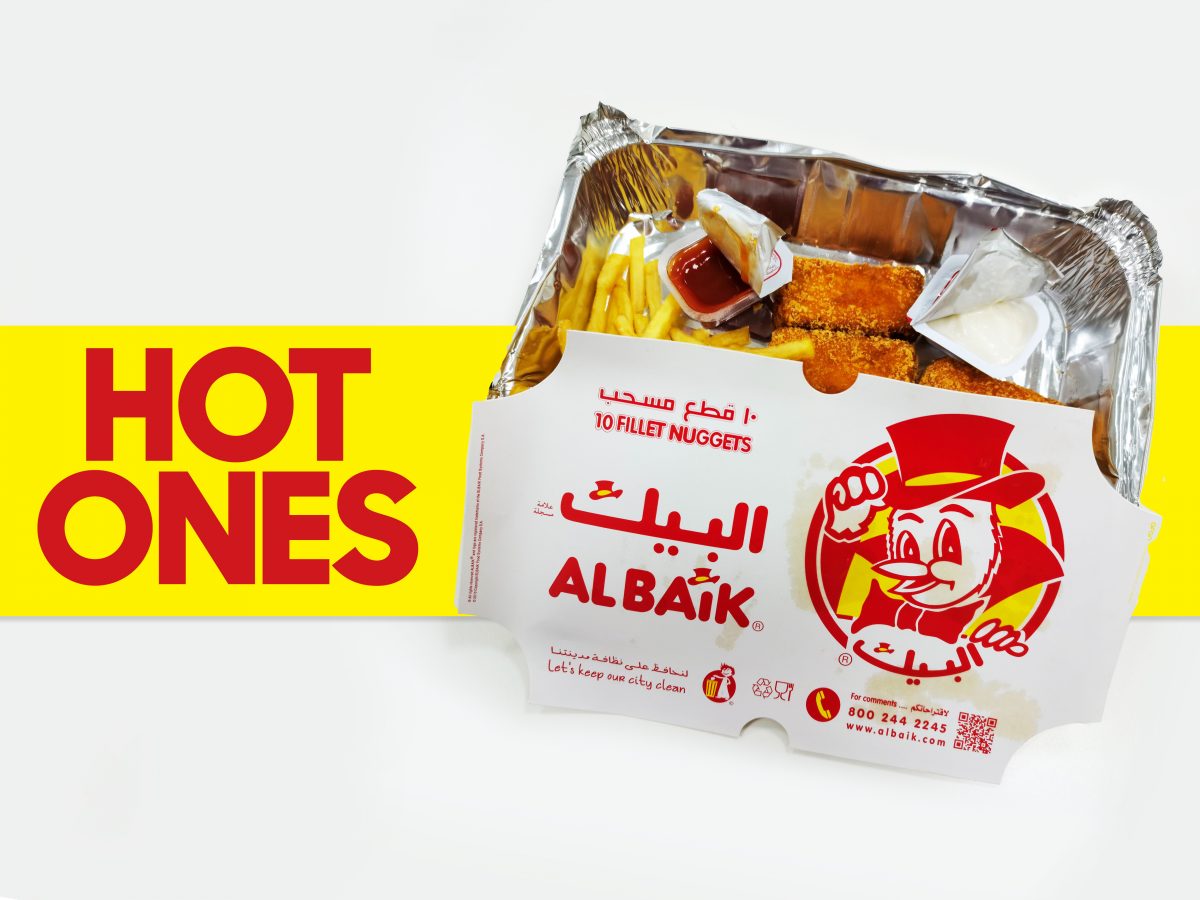
Ask anyone who grew up in Jeddah during the 1980s and 1990s, and they will likely have an ‘AlBaik’ story – the lengths they’ve gone to attain a box or two of Saudi Arabia’s most beloved broasted chicken brand. A personal favorite is that of my sister who, enroute to Jeddah from Dammam, took a nap on the three-hour plane ride and upon landing, recounted a dream in which our Jeddawi hosts welcomed us with a box of AlBaik at the airport.
“I hope my dream comes true,” she said, with a childlike, wistful excitement.
While this anecdote made for good dinner table fodder, our hosts had to oblige with AlBaik the following day. Every trip to Jeddah included a few boxes of chicken and fish fillet meals stuffed into our luggage, to savor once back home.
Since its inception in 1974 – and up until 2020 – Al Baik was only sold in the western province of Saudi Arabia. Namely, Jeddah, Mecca, and Medina, the epicenter of Islamic pilgrimage. Last year the broasted chicken brand ranked third on YouGov’s Best Brands in Saudi Arabia, but its reach has been, and continues to be, global.
The familiar logo of a red-and-yellow chicken in a top-hat has, over time, come to signify many things to Saudi Arabia, the diaspora, and the Muslim world – business acumen and ingenuity, an equalizer in society, and a cult-like loyalty comparable to that of the Filipino fast food chain Jollibee or California’s In-N-Out Burger.
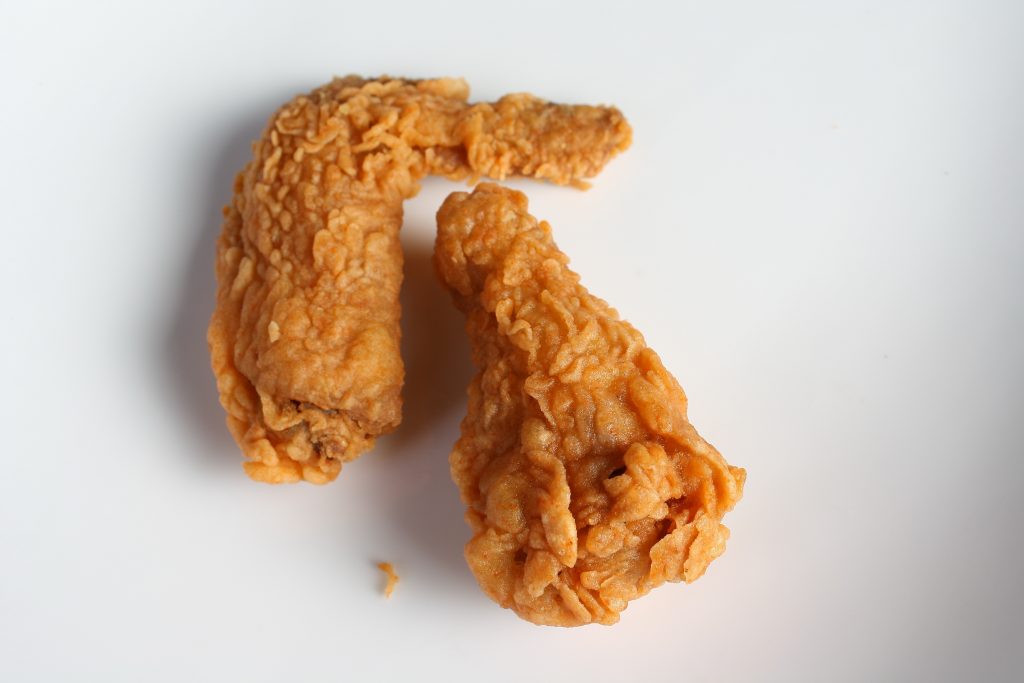
Nearly five decades ago, Saudi entrepreneur Shakour AbuGhazalah set up shop in a warehouse in the Sharafiyah district of Jeddah. The family signed an exclusive agreement with a foreign company for the “proprietary use of deep-fried chicken spice blend and equipment.” While the spice blend remains a secret to this day, the chicken is widely believed to be fried in a pressure cooker, in a method known as “broasting.”
So, what is “Broasting?”
The patented equipment – sold by the Wisconsin-based Broaster Company – is speculated to be the foreign company in question, making AlBaik the first company to pioneer broasted chicken in the country.
“Unlike the UAE, Bahrain, and Qatar, who had deep ties with Britain, and subsequently an Anglo culture, Saudi Arabia has had deep ties with the US,” says Hani AlMalki, an entrepreneur from Jeddah and the food blogger behind ‘The Bedouin Foodie.’ He goes on to explain how Standard Oil of California (now Saudi Aramco) coming to the Kingdom in 1933 led to a cultural influx. American cars, roads, schools, houses, and communities were a way of life in the 1980s and 1990s in Saudi Arabia.
The AbuGhazalah family showed foresight in bringing their take on the American broasted chicken business to the country. AlMalki remembers when AlBaik first opened in Saudi Arabia. “They were the first fast-food restaurant in the country, and it was very quickly accepted and adopted, and people loved it.”
“What is so attractive about this brand is that the product is really good, but it’s also priced incredibly well,” he says. A regular AlBaik meal was priced at 10 Saudi Riyals (about 2.6 US Dollars) and included four pieces of broasted chicken, fries, two packs of garlic sauce, and a bun. “And it was a price barrier that they consciously kept and tried to keep low for as long as possible.”
The price of a regular four-piece chicken meal is now 21 Saudi Riyals (about 5.6 US dollars). Their menu continues to evolve and in recent years, the brand has introduced shawarmas and saj bread sandwiches, all in an affordable price range.

Another reason for their success, AlMalki believes, are the charitable endeavors of the brand. “Despite (what I believe) to be a very low profit margin, the brand contributes to various charities in the region,” he says. In addition to the collective pride of supporting a Saudi business, many patrons are happy to support the brand’s philanthropic ventures, like the not-for-profit outpost in Mina that serves 250,000 meals a day during the Hajj season.
KFC arrived in Saudi Arabia a year later, in 1975. By 1978, there were over 400 copycat restaurants offering broasted chicken in the western province alone. KFC came in at double the price point of AlBaik. Price aside, the harr or spicy version of the chicken, particularly, found favor with the Arab and Asian palate. Over the years, AlBaik introduced chicken and fish fillets, jumbo shrimps, and burgers that also proved to be very popular with the masses.
McDonald’s made its foray into the Saudi market, much later, in 1993.
The AlBaik model of providing American fare at lower prices inspired the local fast-food industry, which today, includes big names like sandwiches and diner-style breakfast at Kudu, burgers at Herfy, and BBQ chicken at Al Tazaj.
Speaking on why, despite their phenomenal success, A Baik was operational only in Jeddah, AlMalki believes that their trade secret may have been one reason.
“Just like KFC’s secret recipe, AlBaik is very protective and secretive of their recipe,” AlMalki adds. “From what we hear, only family members know it, and the need to maintain high standards has kept them from expanding geographically.”
For many Muslims who travelled to Jeddah, Mecca, and Medina on pilgrimage, AlBaik was their first taste of affordable fast-food. Irrespective of social and economic status, pilgrims could enjoy a substantial meal.
A stopover at AlBaik’s strategic locations – right outside the holy mosque of Mecca and the outlets in Mina during Hajj season – was often described as sustenance to the body after an arduous pilgrimage, with some jokingly calling the broasted chicken meal a “reward from God.”
Tasting the golden-brown, crunchy exterior and moist, succulent chicken became an integral part of the Saudi experience for pilgrims. They traveled back home with AlBaik packages, which were perhaps, just as coveted as dates and Zamzam (holy water) from the country.
AlBaik’s exclusivity to the western region of Saudi and the ease of transporting boxed meals also spurred a large reseller business across countries.
On Tokopedia, an Indonesian online marketplace, people can buy asli (or the real deal) AlBaik—but it’ll cost you double what you’d pay in Saudi Arabia.
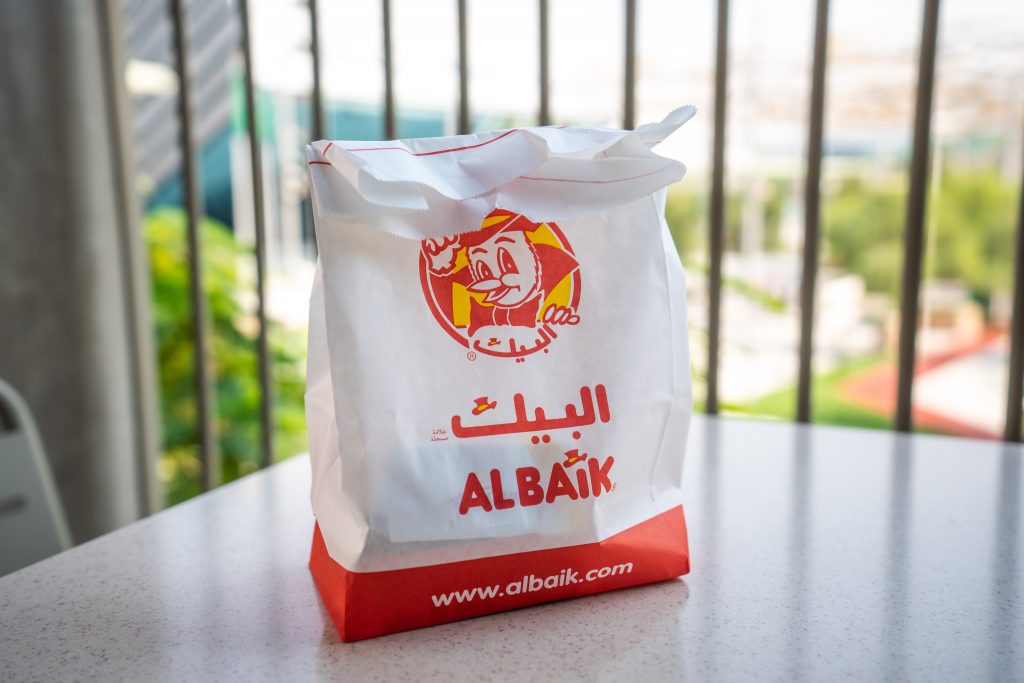
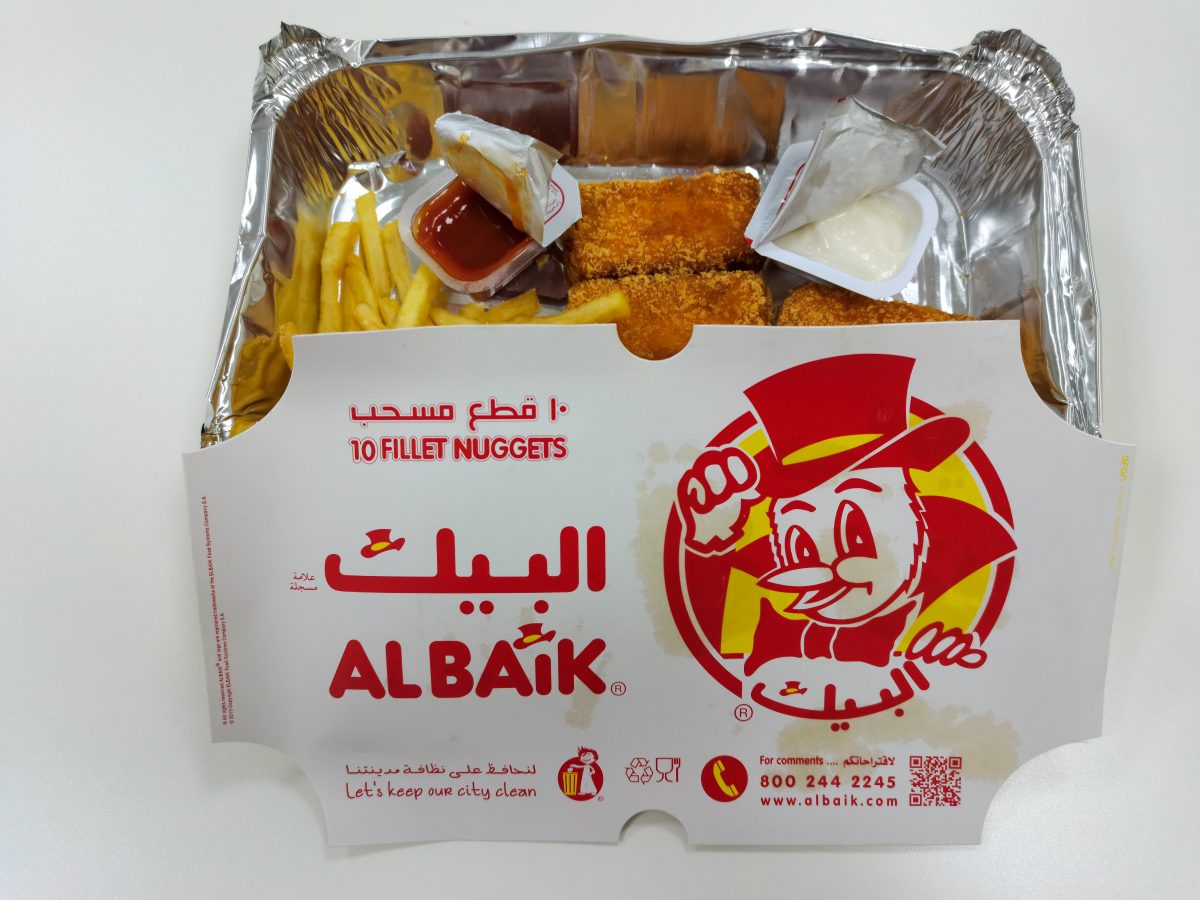
In recent years, Instagram and TikTok has fueled this demand, and resellers have started using creative ways of advertising and selling AlBaik meals. Do a quick search on TikTok and you will find unboxing videos, with users carefully unpacking the familiar red-and-white box to show off their orders. Or ASMR and mukbang videos with bloggers biting into the crispy chicken skin, and even how-to videos on reviving several days-old broasted chicken.
Alliya Tsabita, a jastip or personal shopper in Indonesia noticed a demand for AlBaik during travel restrictions imposed by the pandemic. “Muslim pilgrims who couldn’t go to Mecca during the pandemic were feeling homesick for the taste of AlBaik,” she says.
Working with a flight attendant on a profit-sharing business, Tsabita was able to establish a successful Instagram-based business where Indonesians can pre-order AlBaik boxes and get them delivered within five to seven days.
Even though it takes a week to reach customers and comes with a hefty price, many don’t mind because AlBaik’s Arabic spices differentiate it from other broasted brands in Indonesia. She tells me that people usually use an air-fryer or pop it into the microwave to revive the meal. By only taking on pre-orders, Tsabita is able to sell around 90 to 120 boxes per month.
AlBaik: Oft-imitated, never topped
The popularity of AlBaik also inspired a knock-off culture in many Asian countries, where it’s common to find variations of the company’s logo, broasted, and packaging across India, Pakistan, Malaysia, and Indonesia, all claiming to offer the taste of the original brand.
Closer to home, enterprising Saudis would take on “chicken runs” by filling their car trunks with AlBaik. They would then make the nine-hour drive to Riyadh, and sell their Al Baik stock from their cars. For the return journey, the car would operate as a taxi and drive passengers to Jeddah.
AlMalki, the food blogger, also remembers the time when stores in Saudi Arabia used to close during prayer times. “Yet, people waited in long lines for Al Baik stores to open after prayer,” he says. In Jeddah, it was common to see three-story AlBaik branches swarming with crowds and people jostling for space and wait-times averaging two hours. In the age of social media, there are several YouTube videos that are a testament to the craze that AlBaik stores have seen. There are also several Reddit forums and Twitter threads dedicated to AlBaik discussions.
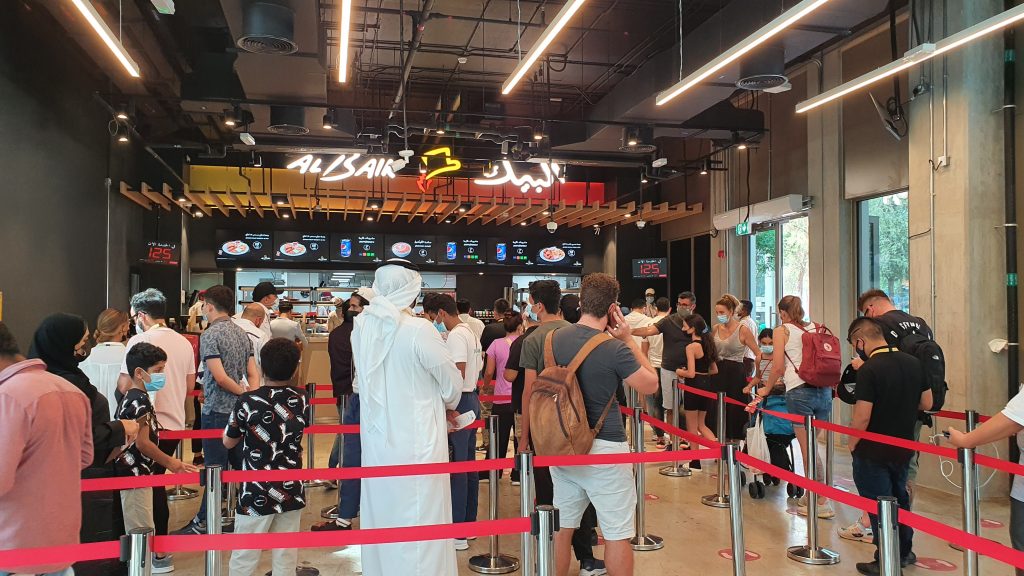
“My father forced me to go to Al-Baik. Pray for me,” says one user, referring to the crowds that they would have to tackle to get to a box of chicken.
After nearly five decades of being in business and 120 branches across the western province, Al Baik opened its first store in Bahrain in 2020, followed by others in Riyadh, Dammam, and as recently as 2021 in Dubai. More recently, they set up two mobile restaurants during the 2022 World Cup in Qatar.
For Nazia J. Khan’s family who lives in Shaqra, northwest of Riyadh, the quest for AlBaik includes a 200-kilometer drive down to the closest location in the capital city. When in Riyadh – and where there is no dearth of fine-dining, international, or local fare – the family chooses AlBaik for all their special occasions like birthdays and anniversary celebrations.
For the expatriate diaspora, the red-and-white bek (or Basha, an Ottoman salutation for sir) chicken logo remains a core memory of their childhood experiences and invokes a sense of nostalgia for home. For Asma Masood who grew up in Jeddah, Al Baik was a treat that most kids (and perhaps, adults) indulged in on the weekends. She fondly recalls enjoying Al Baik with her friends at the Jeddah corniche, and packing leftovers for school lunches.
While Masood has now moved to Seattle, AlBaik always transports her to memories of her childhood in Saudi Arabia. While on vacation in India, her Jeddah aunt surprised Masood with a box of AlBaik.
“I ditched all my prior plans to enjoy my AlBaik in peace,” she says.
Ohio-based Faiqah Arshad who grew up in Yanbu, in the northwest of Jeddah, has been at loggerheads with her husband on the AlBaik debate. He grew up in Pakistan, and prefers KFC and other broasted brands.
“This hurt me to my core,” Arshad jokingly states, as she associates superior taste to AlBaik and fond memories of her childhood in Saudi Arabia.
With the chain expanding to other regions, many who have tasted its broasted chicken before are back to replicate the nostalgia associated with the brand. While others are there for the hype.
Times have changed, and as consumers gain more exposure to different cuisines and brands, their palates, preferences, and choices too, have evolved. Many who sample the chicken nuggets and fish fillets for the first time don’t understand the hype, and opine that there are better broasted brands in the market. Broasted chicken, after all, is not a new concept at this point. And without the layer of nostalgia, what is the first time AlBaik experience in 2023?
Perhaps AlBaik was so coveted because it was ahead of its time or, because it was available only to a certain demographic? Whatever the answer, there is no denying that there continue to be long queues and pandemonium whenever there’s news of an AlBaik branch opening.
And where the brand cannot reach, there’s always alternative ways to get your hands on a box or two – whether that is asking your family and friends to bring one on their travels from Saudi Arabia or buying it off Instagram.