
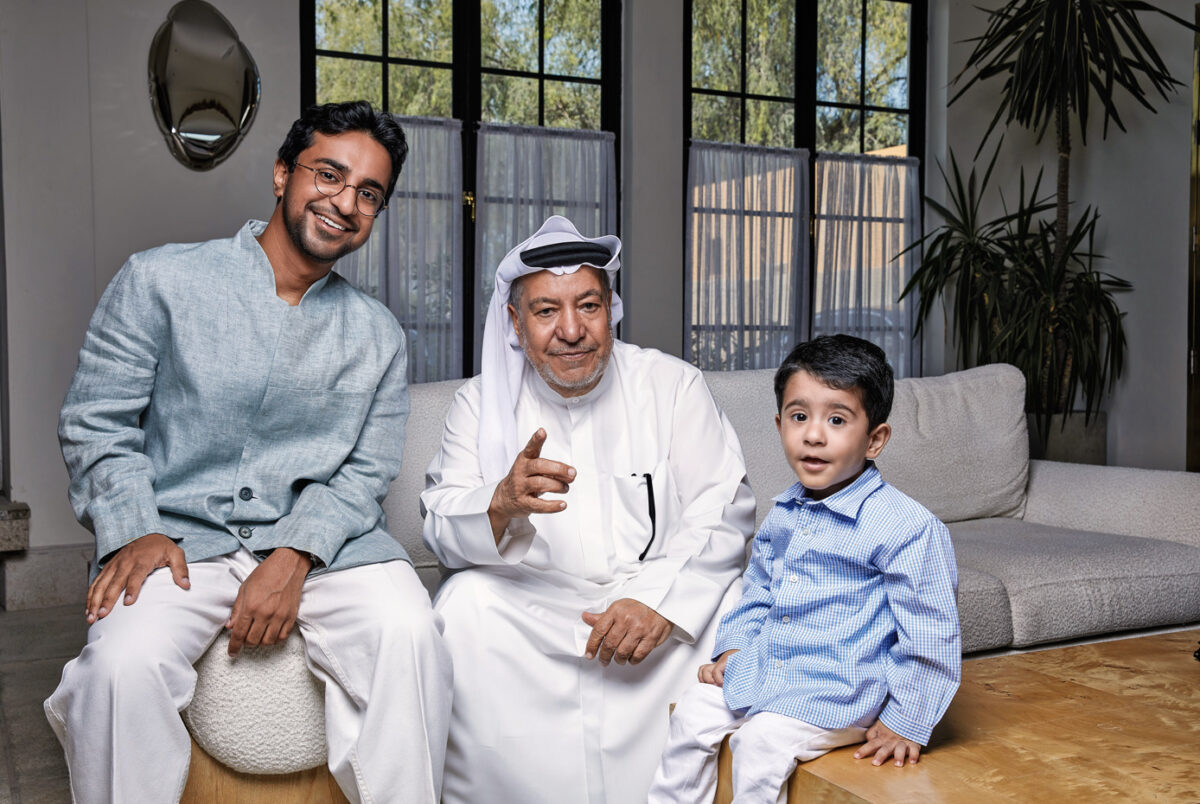

“Do more, say less.” It’s a simple piece of advice that has become a structural principle for Ahmad AlMuhassin. He abides by it, and it is not hard to see why.
The 33-year-old has quietly built an astute resumé as a tastemaker of note for an increasingly clued-in generation of Emiratis. So far, his cultural résumé includes founding multiple community-fostering concept stores and art-curated cafés, included Villa Aumédan, If You Know You Know and, most recently, Tomorrow Morning; as well as creative curations with brand such as Berluti, Ferragamo and Ralph Lauren, and helping support local brands such as leather accessories maker Laggar.
In short, AlMuhassin trades in the hush-hush.
Driven by the belief that quality and relevance travel best via word of mouth, it is something that has proved to be especially relevant in a cultural moment where a sense of belonging is increasingly sought-after over buying.
While he can justifiably take the plaudits for his string of successes, that really isn’t Ahmad’s style. He is often keen to heap praise on those he’s shared the road with—including his sister, and co-founder of Villa Aumédan, Noura—and even those who set him on the path in the first place. Notably his father, Ibrahim.
“My father is a very calm and grounded person,” Ahmad reflects. “He’s not the type to speak a lot or overcomplicate things, but I’ve always admired the way he handles life, work, and family with a quiet strength”.
In many ways, the elder AlMuhassin operates on the timeless principle that actions always outspeak words. “My father never complained much, he simply handled things and kept moving forward,” he says. “Watching that growing up teaches you discipline and resilience without needing to have long conversations about it”.
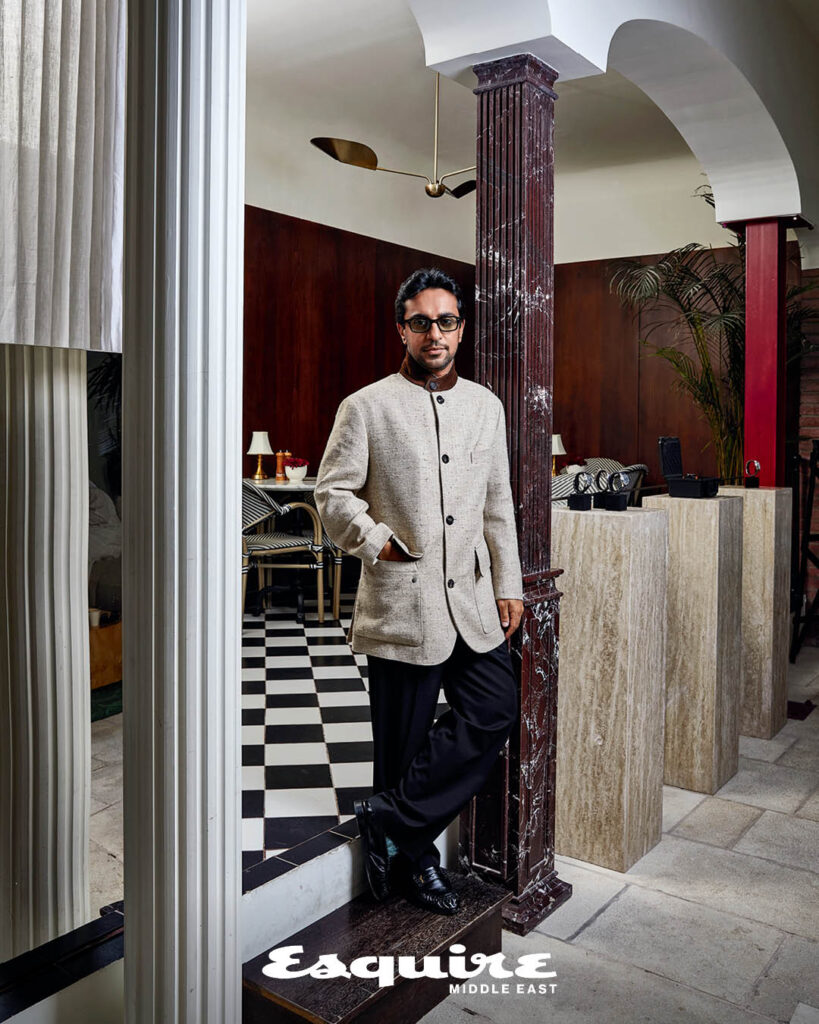
That quiet resilience is matched by a sense of punctuality and patience—a trait that is often underappreciated today’s fast-paced world, which made it an even more poignant example for Ahmad recently.
Last month, before stepping onto the famed red carpet at the Cannes Film Festival for the premiere of the movie Fjord, Ahmad called his father. The advice he received was both characteristically brief and anchored.
“He told me to ‘Be on time, and take your time,’” Ahmad AlMuhassin recalls. “Somehow, in that moment, it all made perfect sense”.
Raising a family in the modern Gulf requires a delicate balancing act, preserving deep-rooted traditions while trying to equip the next generation for an increasingly globalized world. For Ahmad, navigating this is less about compromise and more about building upon the bedrock of his Emirati heritage.
“I don’t think culture should limit growth,” he asserts. “I think it should give you a stronger foundation while moving forward. And honestly, growing up in Dubai naturally builds that balance within you”.
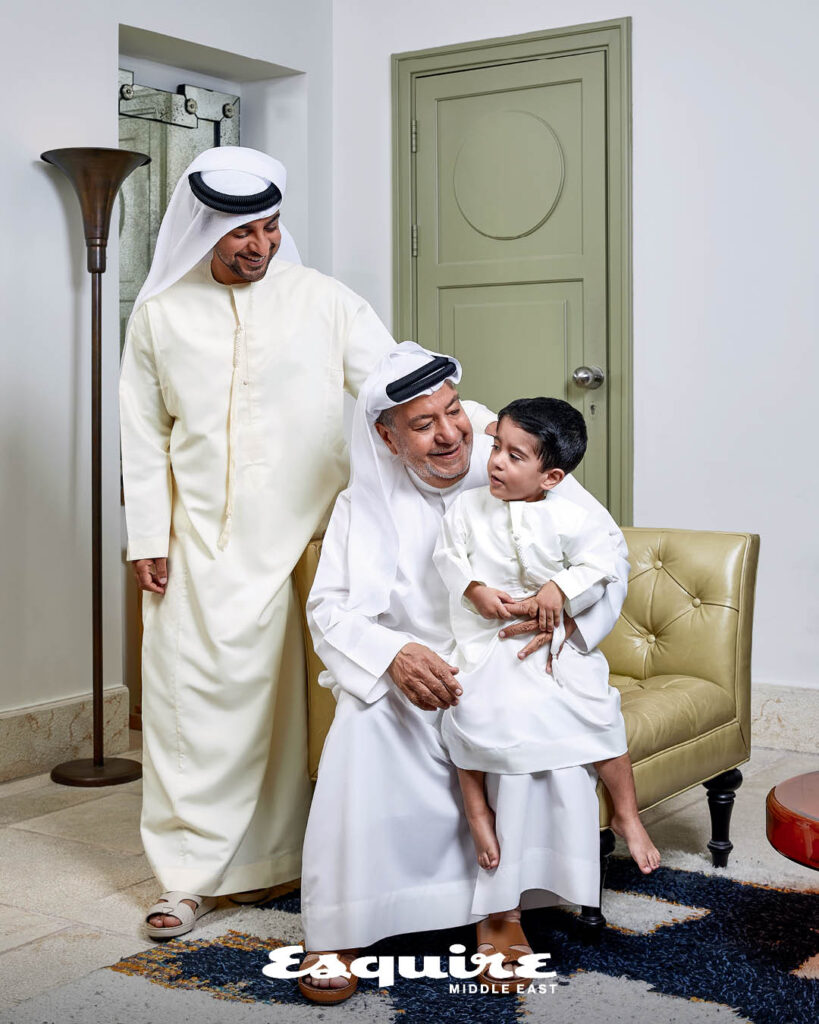
While the city continues to transform, it was actually stepping into the role of fatherhood that helped fundamentally alter Ahmad’s worldview. The arrival of his son, Maktoum, softened him emotionally and sharply refocused his priorities onto long-term stability and protection.
“A successful father is simply a man who dedicates his life to his family, their security, and their happiness,” he says. “No matter what a father does in life, whether he is a businessman, designer, engineer, gardener, or artist, he does it for himself and for his family”.
Becoming a father also served as a mirror for Ahmad AlMuhassin the younger, reflecting a deeper understanding of his own father’s sacrifices.
“As a father you always worry,” says Ibrahim, “you don’t necessary worry about your children, but you worry about being able to give them a good life. That weight is always there.”
Before his retirement, Ibrahim AlMuhassin had a long career working for both the Ministry of Interior and later the Ministry of Health, as well as managing the family’s property portfolio and raising a family of five children. This was no simple feat in a Dubai that was a far-cry from what we know it as today.
He remembers that when he first started working back in the late 1970s, his monthly salary was AED5,000.
“Back then it was a good wage. But today, you can make ten times that much and it doesn’t go as far!”
With a father who always tried to protect his children from the pressures of his professional life, it has taken his own journey into fatherhood for Ahmad to see him not only as “dad”, but to recognize the burden Ibrahim navigated to provide for their family.
“I think what he always wanted was for us to be independent. Not to live a life where you wait for things to happen to you, because no one is going to do it for you.” Ahmad says.
It is a drive that sits deeply within him, and one that he hopes to pass on to his children.
“I want my children to grow up confident, open-minded, and capable of succeeding anywhere in the world, while still feeling proud of their Emirati identity, traditions, language, and values,” he says.
To ensure that foundation remains strong, however, a moderniser knows when it is time to rewrite the rules.
While “do more, say less” might be the structural principle that built the AlMuhassin legacy, Ahmad recognizes that equipping the next generation with true confidence requires evolving how they communicate.
He has learned that the most vital lesson of all actually demands breaking slightly from that stoic tradition. “In many families, we are taught ‘to do more than we say’, but, perhaps, I would add that today it is important to also take the time to say to them that you love them.”