

In the history of the world, learning a modern language has never been easier. So it would make sense that a tool existed to help people learn (or in this case, decode) an ancient one too.
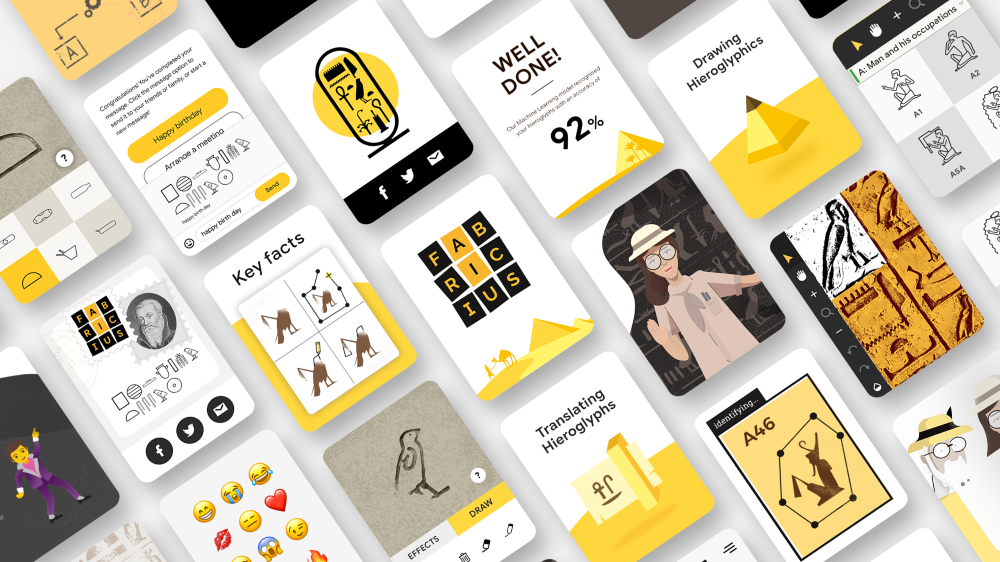
Having long-since evolved from being solely an internet search engine, Google has just released Fabricius: a new machine learning tool that can help decode Egyptian hieroglyphs in Arabic and English.
The tool – available for free on the Google Arts & Culture app – will provide people around the world with an interactive experience to learn about hieroglyphs, while facilitating the work of Egyptologists and raising awareness about the history, heritage of the ancient Egyptian civilization.
Created in collaboration with the Australian Center for Egyptology at the Macquarie University in Australia, Psycle Interactive, Ubisoft and Egyptologists around the world, the goal of Fabricius is to help speed up the process of collating, cataloguing and understanding ancient hieroglyphs.
The “work” section of the tool currently allows translation of hieroglyphs into English, while Arabic translation will be available soon. It also provides an opportunity for people to learn about, write and share their own messages using hieroglyphs.
Since 2013, Google has digitized rich imagery of more than 20 historical landmarks and sites within the Middle East including the Pyramids of Giza in Egypt, Petra in Jordan, Sheikh Zayed Grand mosque in the United Arab Emirates, Baalbeck & the Temple of Jupiter in Lebanon and the Amphitheatre of El Jem in Tunisia and more.
Google has also added digital exhibitions of Palmyra and the Ummayed mosque in Syria which can be found on the Arts & Culture website and app.

Esquire now has a newsletter – sign up to get it sent straight to your inbox.
Want up-to-the-minute entertainment news and features? Just hit ‘Like’ on our Esquire Facebook page and ‘Follow’ on our @esquiremiddleeast Instagram and Twitter account.


