

With London’s famed BFI Film Festival coming up (Oct 5 to 16), we here at Esquire Middle East have taken a particular fancy to the much-hyped film Letters from Baghdad.
Not merely because of its geographical relevance, but because cinematically it stands out among the other hotly anticipated films Prevenge, The Wailing and The Ghoul.
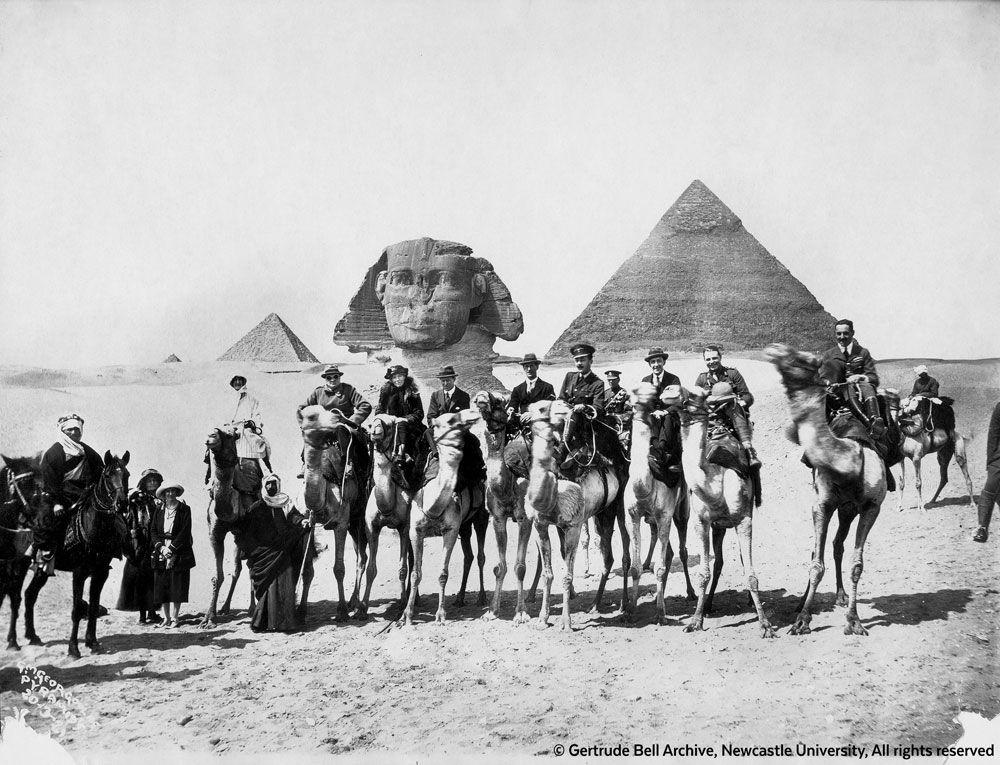
Narrated by Tilda Swinton, Letters from Baghdad tells its tale through the eyes of female spy and explorer, Gertrude Bell, who at the turn of the century is sent on a journey to map out what today is known as modern day Iraq. But unlike many of her fellow countrymen (and women) she was well-versed in Arabic and had established a rapport with key members of the Arab government and representatives of the various ethnic and cultural groups in the region, making her a key figure in negotiations between the British and the Iraqis.
But as is so often the case, history has not been kind to the memory of Bell. Given the time period, women were highly discriminated against in British society and discriminated against in manner of different ways (be it employment, divorce or suffrage).
The first quarter of the 20th century with the suffragist/suffragette movement is testament enough. The closest figure comparably to Gertrude Bell would have to be T. E. Lawrence but to say that the she receives half the amount of praise as the Lawrence of Arabia is a gross exaggeration.
But what really puts Letters from Baghdad up there, so to speak, is how the film is shot. Working with Iraq’s National Library and Archive the film managed to obtain original never-before-seen, 100-year-old footage of the lifestyle of the Iraqi people and ruins across the ancient civilisation of Mesopotamia.
This coupled by academy-award winning actress Swinton’s narration of Gertrude Bell; the film is able to throw the viewers back 100 years on horseback through the legendary Silk Road.
The film’s trailer can be found here.
