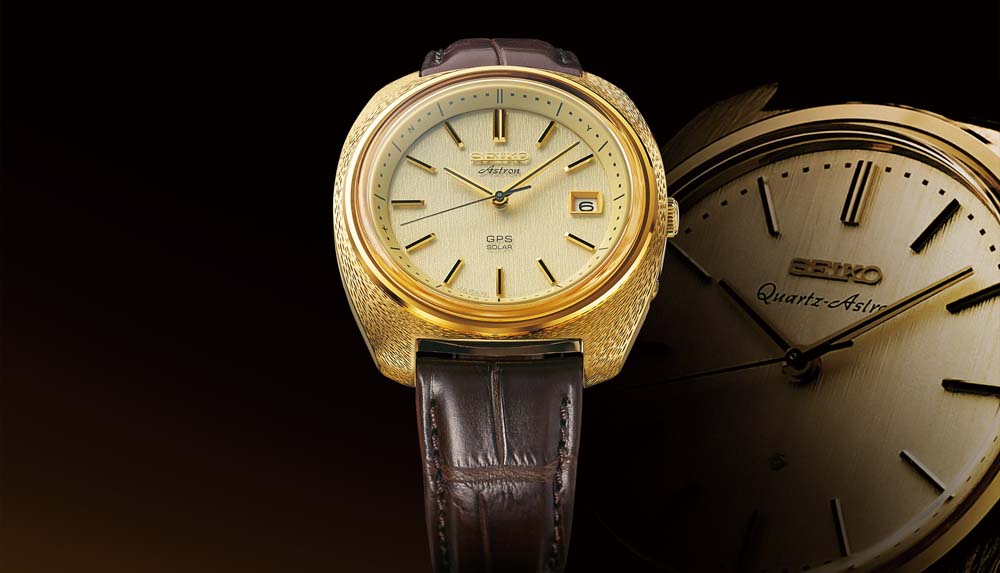
Almost exactly 50 years ago, the Seiko Astron was released exclusively to Japan and shook the entire world. Today, Seiko has created a 50th anniversary edition timepiece celebrating the watch which showed the potential of a quartz movement.
What the Seiko Astron did 50 years ago was show the world the potential of a quartz powered movement. This was an unveiling that shook Swiss horology to its core. As Hodinkee puts it: “it was the wave of the future. The Astron 35 SQ debuted with an accuracy of +/- 0.2 seconds per day, and at a stroke, redefined expectations”
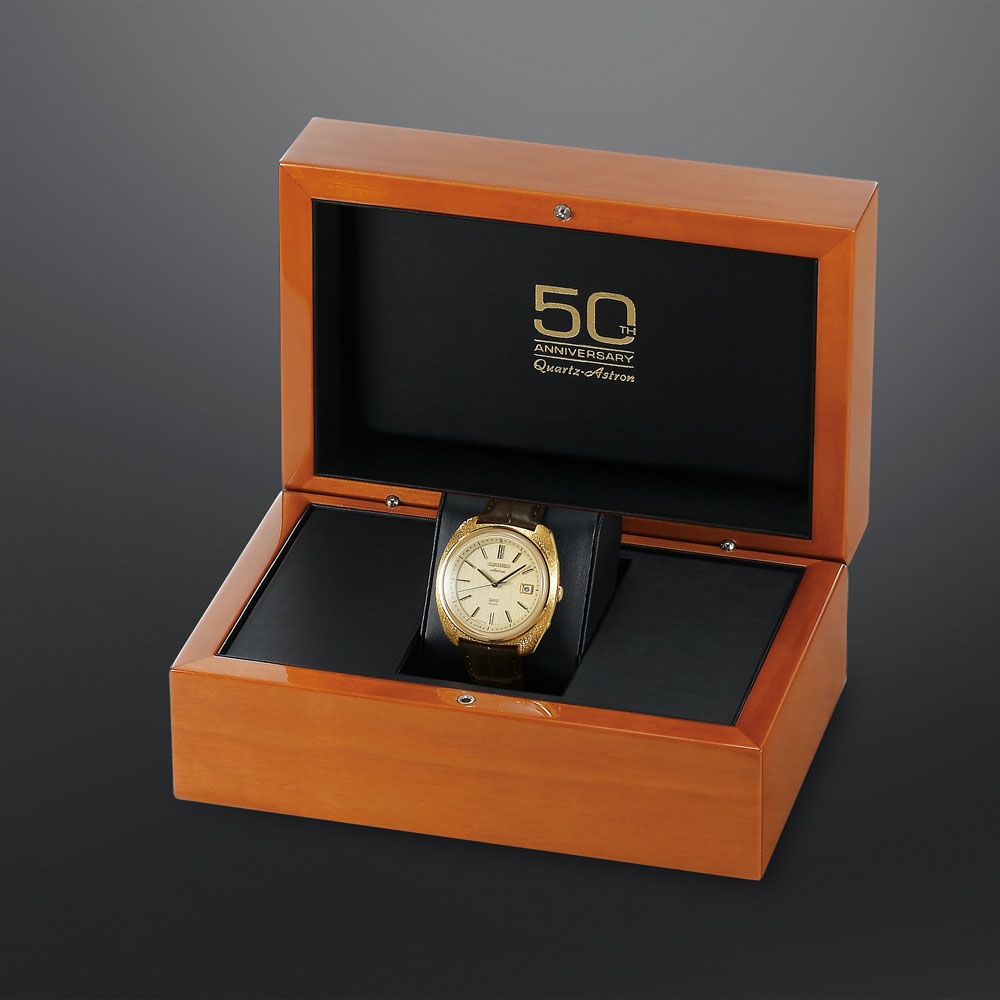
The 1969 Quartz Astron 50th Anniversary Limited Edition is a faithful yet modern release of the original. It has the same 18k gold case, with the same shape, and same finishing. On this piece however the detailing on the case has been hammered on by hand.
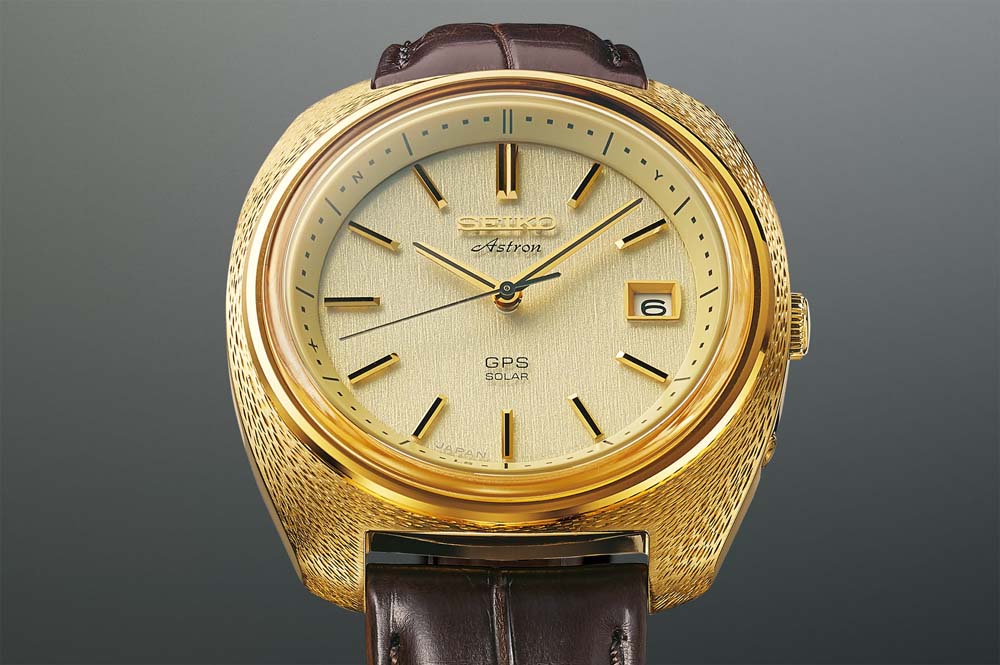
Unlike its inspiration, the new watch uses technology we have already seen, though it’s still impressive. The watch is still quartz powered, but it also uses ‘GPS Solar’ technology. The anniversary watch actually uses the same GPS-based movement seen in some of Seiko’s ladies models.
The watch can recalibrate its time according to GPS satellites around the earth. As Hodinkee notes, not only will the watch be highly accurate, its timekeeping takes into account the effects of relativity on the perception of time.
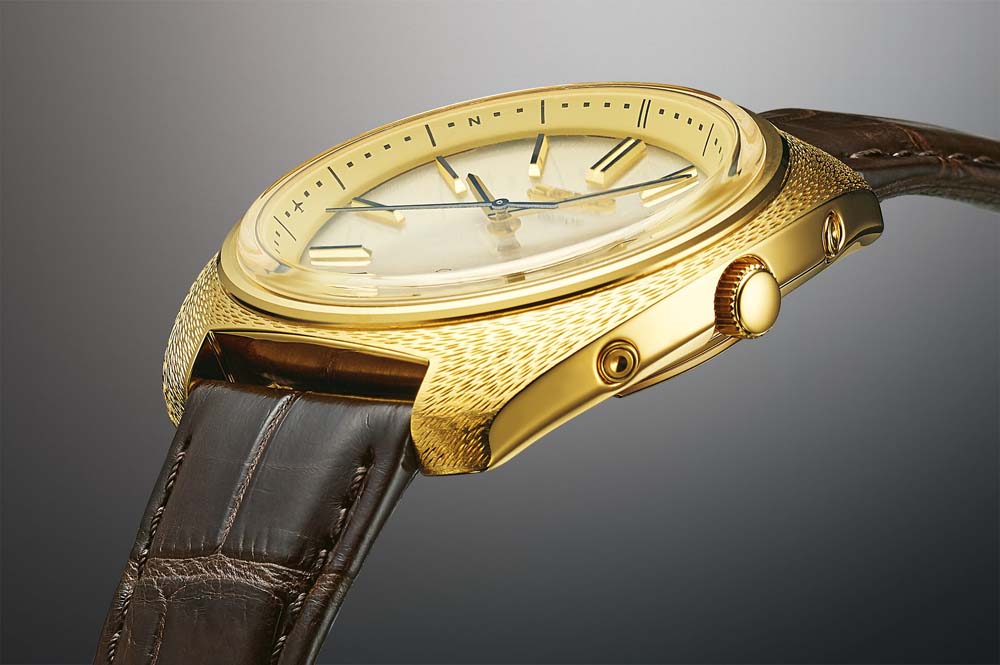
Another perk of a watch which communicates with an international satellite network, the watch can automatically adjust itself to different time zones. The watch is also powered by solar energy, making it very unlikely to run flat. Fun fact about this watch, as it is a solar watch, it’s ‘power reserve’ is the same as the lifetime of the sun, which is almost 11 billion years.
Here’s a little briefing on what makes the original Astron so influential:
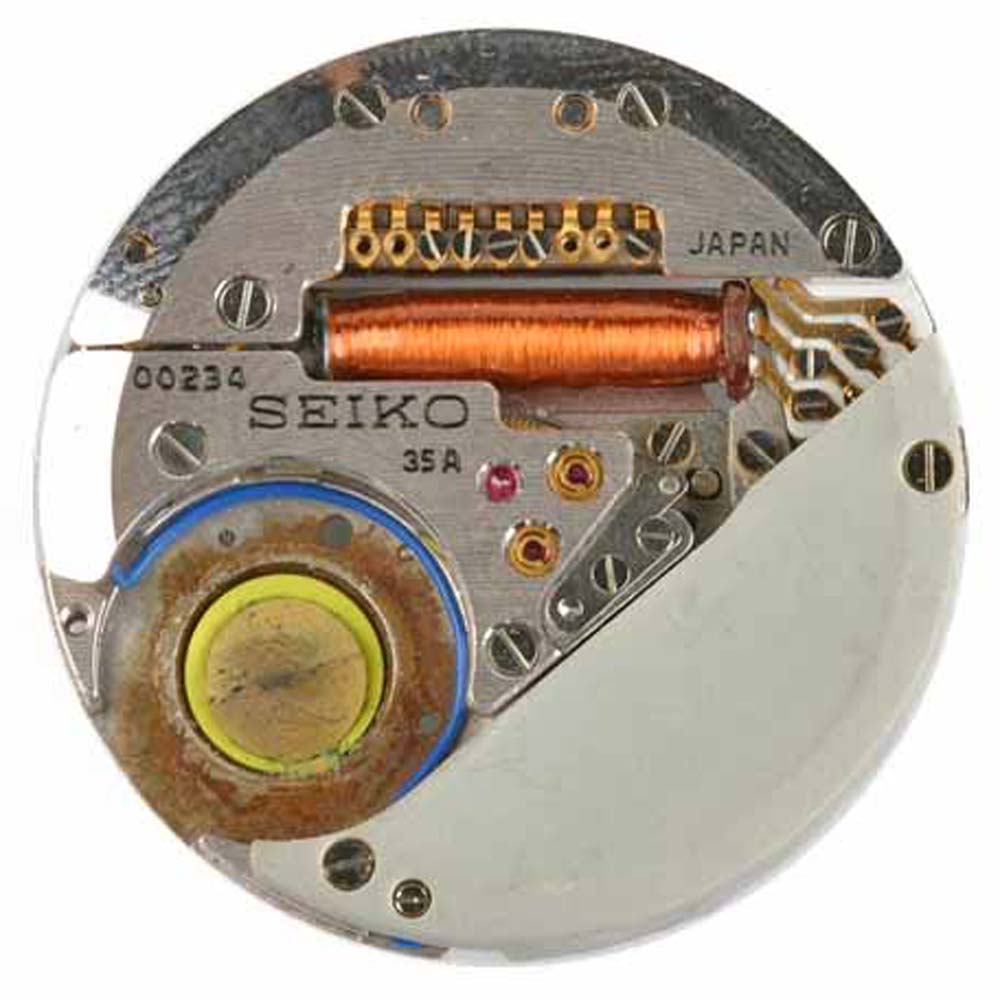
December 25, 1969, in the stockings of the Swiss watch honchos wasn’t coal, it was something far worse. It was a Y-type quartz oscillator of 8192 cps, a hybrid integrated circuit, and a phase locked ultra-small stepping motor.
To put it another way, it was a watch with an accuracy of +/- five seconds a month and a battery life over a year long. The Astron arrived to show the potential of quartz for timekeeping and it almost had Swiss horology go the same way as the dinosaurs.
The Original Seiko Astron
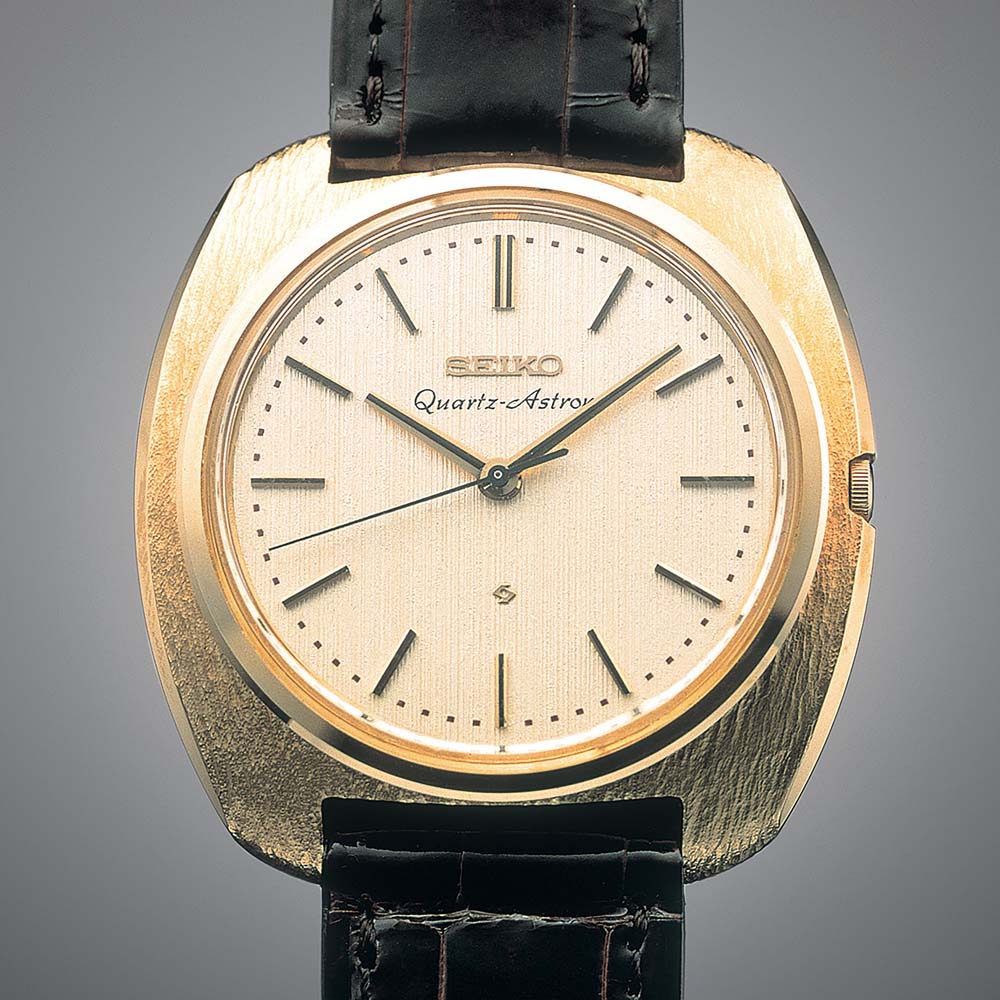
The Astron sparked what is now known as the Quartz-Crisis, an event which at its highest point, destroyed over 1,000 watch brands, many of which had been standing for decades. Between 1970 and 1983, the number of Swiss watchmakers dropped from 1,600 to 600 and employment in the sector between 1970 and 1988 fell from 90,000 to 28,000.
The first Seiko Astron didn’t wipe out the competition by flooding the market, quite the opposite in fact. Only around 200 of the gold watches were made and were only sold in Japan. 100 of those watches sold in the first week at a price of US $1,250. This made the watch about the same price as a Toyota Corolla at the time, making them highly exclusive. What the watch did do however is plant the seed that flourished into the Quartz Crisis.
The Quartz movement
Limited to 50 pieces, the new Astron is priced at US $36,000. Check it out here.