
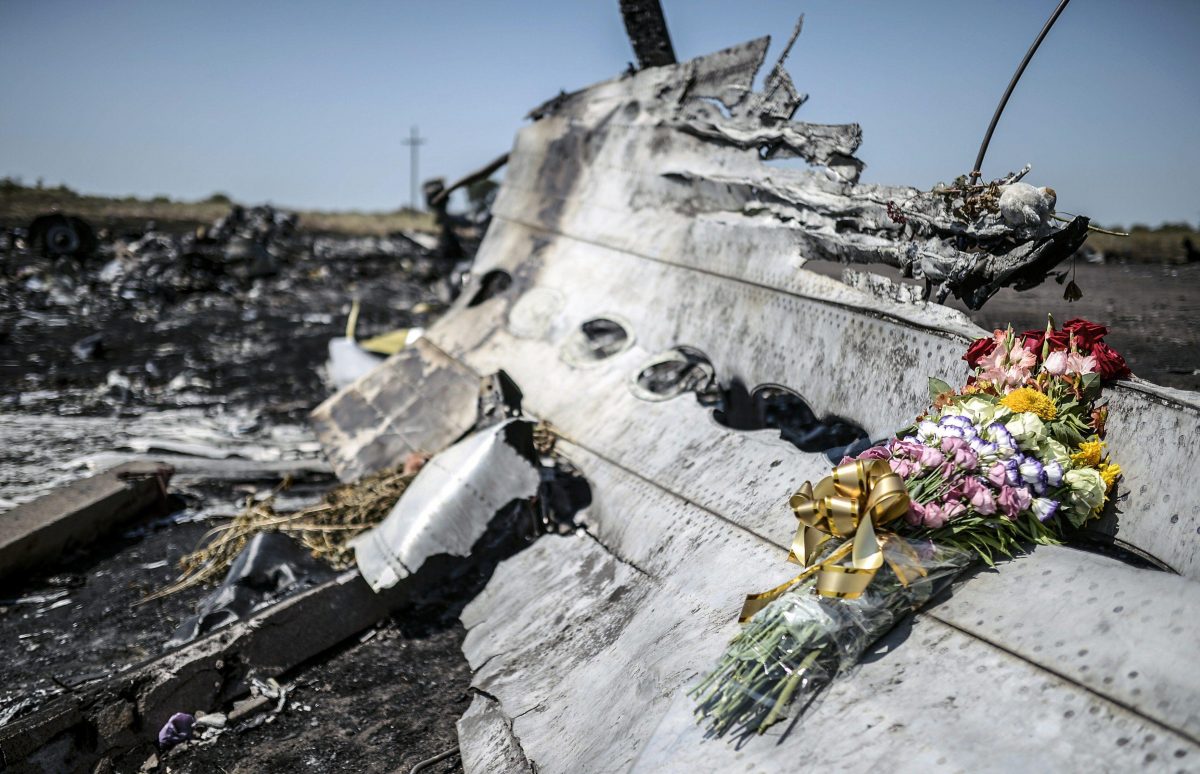

Western relations with Russia are at breaking point, with the US accusing Russia of supplying the Buk missile system that Ukrainian separatists allegedly used to down Malaysian Airlines flight MH17. Esquire talks to Orysia Lutsevych, a research fellow with the Russia and Eurasia programme at the Chatham House think tank in London, to find out how the tragedy has changed the conflict.
How have people in Eastern Ukraine reacted to the MH17 tragedy?
They’re asking if this fight’s worth the human life. They thought there’d be elections, referendums, that sort of thing. Instead, there are bodies in the street, it’s terrible. It’s really shaken support for the separatists, which was winding down anyway. Everybody is now seeing how militarised the area has become and the dangers of putting advanced weapons in untrained hands.
Is there a chance the separatists will give up, or stand down, in light of the incident?
Lots of the fighters are Russian not Ukrainian. There’s not a great local drive to support the separatists. Before the crisis, these were marginalised voices. You’ve got to remember, these are poor areas with high rates of alcoholism, unemployment and HIV. It was easy to convince people to take up arms against the government because they thought they had nothing to lose. But they’re not going to die for this cause.
Will the MH17 tragedy change Russia’s strategy in the area?
The Kremlin won’t change its rhetoric. It’s behaving in the finest traditions of the Soviet Union, sticking to propaganda based on dubious evidence. It works because the Russian media is largely controlled by the state. A recent Gallup poll revealed that 76 percent of Russians trust state media, while just four percent of them trust Western media. On top of this, President Putin has historically had huge support in every war he’s fought. Perhaps it coincides with a historical Russian mind set – they want to be the biggest power in the region.
What do the Russian people make of all this?
I was out there earlier in the year, talking to a lot people in different areas. Essentially, most of them just want to kick the ass of the US. This isn’t about the Ukraine for most Russians. They think the US is meddling in their back garden and they want Putin to do something about it.
What does Putin himself want?
The whole conflict started because Ukraine chose a future that was different from the one Putin wanted for them. He wants to show he’s in charge of this region, that it’s still his sphere of influence. He wants a political bloc in South-East Ukraine that can obstruct decisions in Kiev, but the Ukraine government won’t talk with separatist leaders because they think they’re terrorists.
The separatists have already lost 50 percent of the territory they controlled, and I don’t think the Ukrainian government feels it has to negotiate.
What about the EU and US? What are their aims?
The EU just wants to mediate the conflict, without opening the door to EU membership – that’s a conversation they’re not ready to have at the moment. The US doesn’t have a strong policy on the Ukraine. They were put at the forefront of the crisis by the divisions within the EU and it’s just easier for one country to make decisions than 28 countries. If Barack Obama had a choice, he wouldn’t be involved – politically he can’t win.

MH17 tragedy: A timeline
July 17: Malaysian Airlines flight MH17, travelling from Amsterdam to Kuala Lumpur, crashes in Torez, a Ukrainian region 25 miles from the Russian border. The area is controlled by pro-Russian separatists who boast on a website that they’ve shot down a military cargo plane. The post is quickly taken down.
July 18: A 30-strong delegation from the Organisation for Security and Co-operation in Europe (OSCE) arrives at the crash site to secure the wreckage, but is turned away by well-armed local militia. US ambassador to the UN, Samantha Power, claims the separatists shot down MH17 with a Russian-supplied Buk missile system.
July 19: Pictures show wreckage and bodies strewn everywhere, with separatists appearing to remove the black boxes from the aircraft.
July 20: Confusion reigns as separatists begin loading bodies onto a refrigerated train whose destination is unknown. Moscow denies it supplied the separatists with the Buk missile launcher, claiming it detected a Ukrainian fighter jet “two to three miles” from MH17 before it went down.
July 21: The Ukrainian government releases an audio clip of two separatists discussing Moscow’s request for them to hide MH17’s black boxes from investigators. The Malaysian government reaches an agreement to allow investigators to begin their work and remove the bodies of the 298 victims from the site.
July 22: US intelligence releases a detailed dossier on “Russian complicity” in the downing of MH17, including pictures charting the path of the missile, shrapnel markings on the wreckage and voiceprint analysis of separatists claiming credit for the strike. They rule out Ukrainian involvement.
July 23: Dutch crash investigators take custody of the black boxes, claiming there is no evidence they have been tampered with.
July 25: A five-nation coalition of the Netherlands, Australia, Britain, Germany and Malaysia is formed to secure the crash site using unarmed police officers. They are, however, forced to wait on a green light from Ukraine’s parliament before entering the country.
July 26: Reports surface of locals looting the unsecured crash site, removing wreckage and personal belongings. One Dutch family has to cancel their deceased son’s credit card after it was used in Ukraine.
July 27: Deal reached allowing investigators greater access to the crash site, though their deployment is hindered by fighting in the area.