
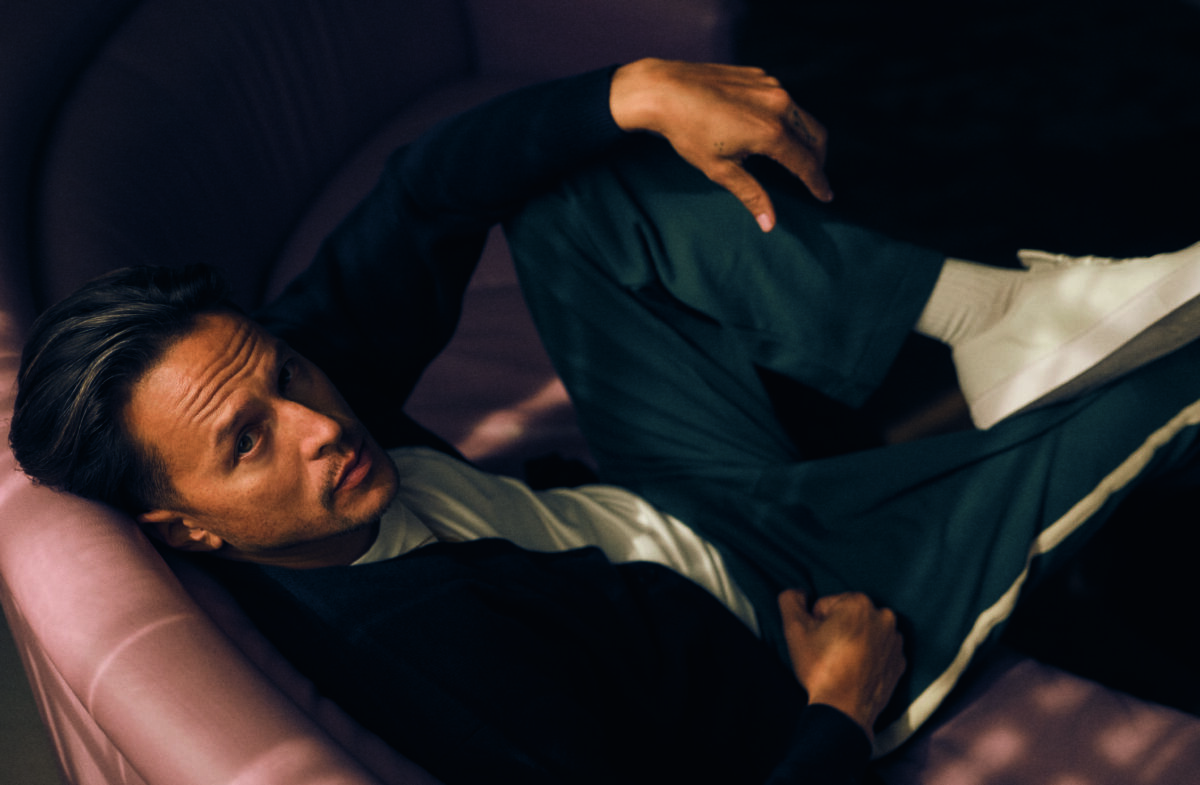

Cary Joji Fukunaga was underwater off the coast of Italy last summer when he rediscovered his voice. That wasn’t what he’d been looking for, but he found it down there nonetheless.
Fukunaga had set off that morning from his friends’ place on the Amalfi coast to find some particularly enticing sea urchin after getting a craving for some fresh sea urchin pasta, knowing nothing he would find in the local market would do.
He was with a guide–let’s call him Marco—that had been recommended to him as an expert diver and sea urchin connoisseur but turned out to be a total bumbling weirdo, all arms and legs with no idea how to spot the spiny shelled animals or seemingly how to swim properly. Fukunaga wasn’t even annoyed—it was too funny to get annoyed.
“He was the most awkward person in the water I have ever swam with. I was, like, how is this guy going to help me with anything? I can just do this by myself,” Fukunaga tells us.
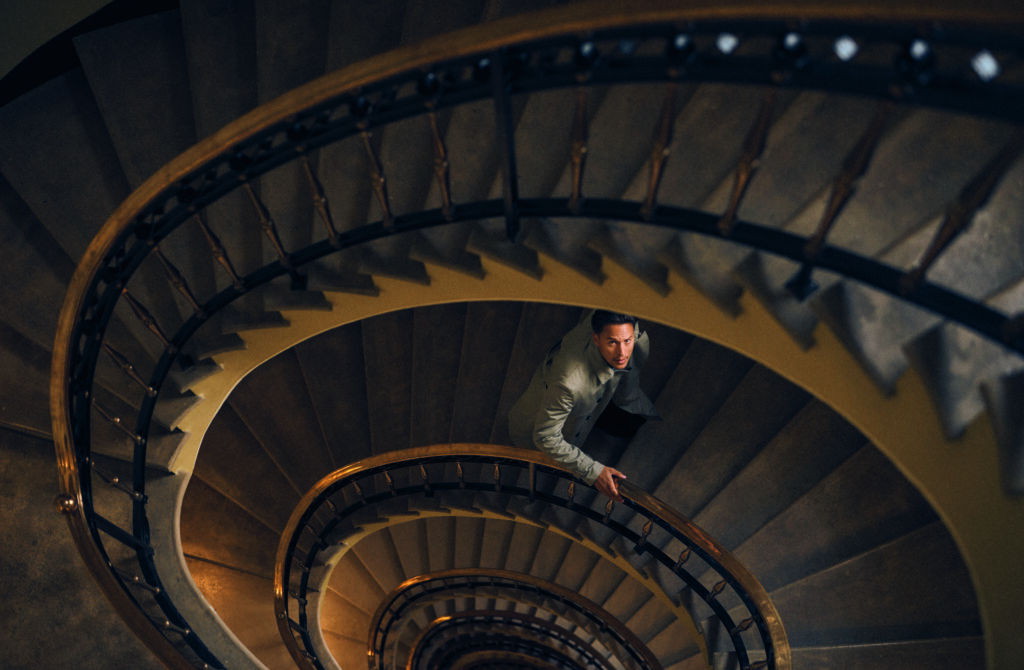
As he swam past Marco and found what would be his dinner, suddenly the whole scene was spinning in his mind into prose, and now it wasn’t sea urchin pasta he had to have, it was a pen and paper, because he knew he had limited time before the turns of phrase that were tumbling through his mind rolled back out into the ether.
He rushed back to the surface, holding onto the ideas as tightly as he could. Luckily, he got there, and wrote the whole thing out from start to finish. It was a revelatory moment.
“I can’t remember the last time I wrote down something that felt like that. It scratched an itch. Or no, that’s not the right word for it, it revealed a passion I had for writing that I’d forgotten about,” he says.
It’s understandable that Fukunaga would forget about a passion of his. After all, the man has enough passions to put Ernest Hemingway to shame. Currently, as we speak over Zoom just a week ahead of the world premiere of No Time To Die, the final James Bond film starring Daniel Craig that Fukunaga directed, he has a few that he’s juggling with what little free time he has.
“I just started climbing again. I used to climb when I was in my late teens, but lately I’ve been doing it at a local gym with Austin Butler, because he’s on this show that I’m directing now. And then I have an oil painting class I’m taking once a week. I also really picked up surfing when I was down in Mexico in January so as to not lose my surfing skills, I’ve been going to this wave pool in Bristol. And then, you know, a full-time job on directing a television series,” he adds off-hand.
Fukunaga thinks of it like this—he’s only got a couple of decades left of relative physical health. So everything he never got good at, he wants to get good at.
“I always sort of lament that life isn’t longer because there’s so many things I want to do. There’s so many lives I want to live.”
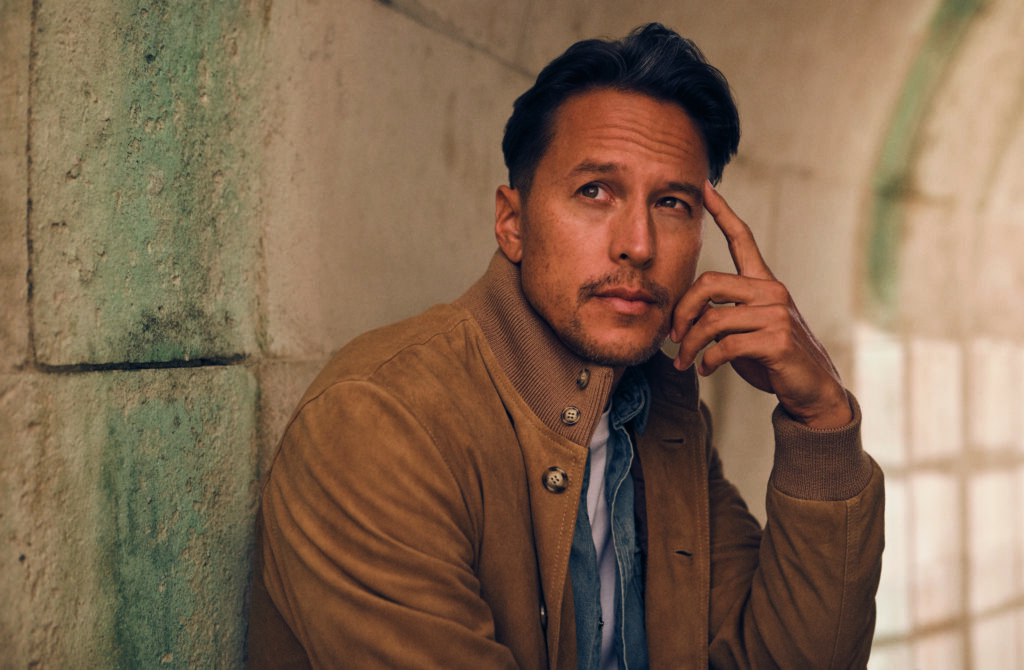
His newfound interest in oil painting is perhaps the best window into Fukunaga as a filmmaker. With painting, he wants to study the nuts-and-bolts technique of the renaissance masters because it’s the craft that he’s interested in rather than pure creative expression and experimentation. He wants to take apart a thing, see how it works,
only finding satisfaction when he reaches that same level of mastery.
In fact, ‘craftsman’ is the best way to describe Fukunaga the filmmaker, a writer and director who sets out to find the style in the thing itself and pull it out, using each project as an excuse to explore a different type of story, learning as he goes what those stories require
in order to be brought to life.
“My intention when I first started making my films was that they were all going to be studies. With Jane Eyre, for example, it was a study on a form of classic cinema. Even with Sin Nombre, my first film, I limited the tricks I can use because I was reacting to the films coming in the ’90s and early 2000s that were employing too many, so I wanted to see if I could go down to the bare minimum of tools and still tell a captivating story,” says Fukunaga.
“After that, when I realized that there’s a certain amount of pigeon-holing that happens in Hollywood, I knew I couldn’t do anything twice. If my films were going to continue to be studies, I needed to vary them. I needed to become a contortionist, and so that’s what I did.”

Vary it he has, helming the entire engrossing first season of True Detective in 2014 and the harrowing African child-soldier drama Beasts of No Nation in 2015, writing the blockbuster adaptation of Stephen King’s IT in 2017, and co-creating the nearly-uncategorizable sci-fi dramedy Maniac in 2018 before jumping into the world of 007 with No Time To Die, the latter finally released this month following nearly 18 months of pandemic-induced delays.
“From the work to my hobbies, it’s all the study of learning. Learning tells so much about who we are as people. How we learn things; how we employ the things we learned; and the style with which we employ them, that defines us. There’s an art to learning. Honestly, on a basic level, it just makes my brain feel healthier.”
No Time To Die was both a learning exercise in itself and a master’s thesis in the first phase of Fukunaga’s career. A novel study inside the action blockbuster Bond milieu, as well as a test of every skill he’d honed in adaptation, characterization and filmic technique.
If it was a test, it was one that he barely had any time to study for.
Fukunaga was famously hired late into the process replacing director Danny Boyle. He throw out his script and starting afresh with only a third of the expected time needed before production began.
“With Maniac we were writing as we shot, and after we finished, I told myself that I was never doing that again. But then with Bond, we were still writing when we’d wrapped. I was even writing in post!”
It would have been hard enough on its own, but Daniel Craig got injured early into filming, forcing Fukunaga to work on the fly and film scenes that he wasn’t even sure yet how he would fit in to the wider film.
“The only set which was really ready to go was M’s office in MI6. I knew more or less in the outline that I made what I wanted to have happen in that section, but none of the body of the script had been written yet,” says Fukunaga. “Luckily, I was sitting there with some of the greatest actors in the world.”
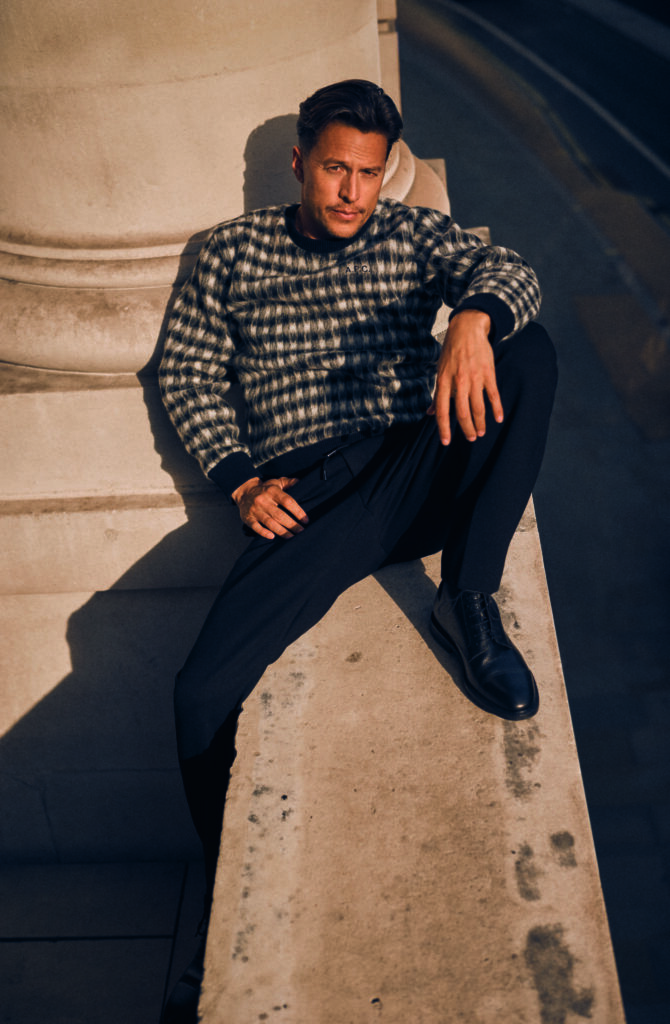
He’s not exaggerating—in that room sat Ralph Fiennes, Ben Whishaw and Rory Kinnear, with Fukunaga in the corner scribbling away from his rough draft script outlines.
“I was writing dialogue that was intentional enough, but vague enough, that I could apply it to a number of different things happening in the third act. It was almost like a ‘Choose Your Own Adventure’ novel writing these pages: ‘If this happened here, and you have to go here, then this page will work for that.’ When we finally put the film together, it all made sense, somehow all fit together. But I’ll tell you a secret, that I think is okay now that we’re so close to release, there are pieces that Ralph Fiennes says in the trailer that neither Ralph nor I knew exactly what he was saying it for,” says Fukunaga.
It turns out, there is something that Fukunaga loves about that process. He loves it when he has the collaborators who are up to the challenge, and his experience working on Bond 25 taught him more than any other project what can happen when you trust the people you’re working with, especially when you don’t have all the answers yourself.
“I would look at what I wrote and say, ‘look, I’m sorry, Ralph, this is the really non-subtextual version of this,’ and then have Ralph deliver something that turns my shitty throwaway line into something great. And Rory Kinnear would know what needs to happen and add in a line of his own, and I would say, ‘Rory, that’s a f**king great line’,” says Fukunaga.
“There’s a kind of an amazing amalgamate that happens in the urgency, where everyone kind of gets a sense of what part of the story is, everyone understands the genre of storytelling, we know what the feeling is supposed to be, the rhythm of the music underneath it, and they can just deliver it, because they’re all f**king pros.”
When Daniel Craig rejoined production, he threw whatever he had into the creative stew as well, often for things well beyond Bond himself.
“Daniel would always come with ideas. I’d say, pitch me something, and he would have written monologues out in his notebook. Sometimes the monologue were for characters in the story that weren’t even him. And we would sit there and work out really critical scenes together—big scenes with the villain or the love interest—he would always have ideas and we would make it work together,” says Fukunaga.
“Rami [Malek] would join those discussions too. He had a very different style, of course. He’s a thinker. He’s supremely intelligent. He would always want to work it more and find the thing that makes his character do what he does that I hadn’t even considered. This was a supercomputer and we were the processors, and all their brains were working to the collective goal of making this story and these characters as good as possible, to make it far more interesting and layered and complex. Hell yeah.”

Although No Time To Die final opens this month, Fukunaga turned in his ‘master’s thesis’ a year and a half ago—ironically, working overtime to meet a deadline that became unnecessary when the pandemic struck. Since then, Fukunaga has taken on
a number of projects—including the Tom Hanks and Steven Spielberg-produced WWII series Masters of Air, which he’s currently working on for Apple—but there has been a marked change in him since his under water epiphany. He’s interested in something new now—not a temporary new hobby, but a pursuit both outward and inward.
“I’m at a point now where I feel confident in the tools of cinema—I feel it’s too much to say ‘mastered’—that are employed to tell a story, to hone into the voice that I’ve been nurturing, but haven’t fully executed in a film.”
Part of that will mean tackling a story that’s been on his mind for his entire life—diving deeper into the issues he turned over in his head growing up as a fourth-generation Japanese-American, with a father who was born in a Japanese Internment Camp during World War II.
Back in university, Fukunaga studied history, writing his historiography thesis on two museum exhibits at the Smithsonian that had fascinated him. The first was called A More Perfect Union, which highlighted times when the US Constitution had failed its citizens, using the internment of the Japanese—in which the entirety of his father’s side of the family had been affected—as one of its central components. Six years later, the curators focused again on the US treatment of the Japanese, this time not its own citizens, instead questioning the choice to drop nuclear bombs on the Japanese cities of Hiroshima
and Nagasaki in 1945.
“The entire exhibition was torpedoed. And veteran’s groups didn’t allow it to happen. No one in the sphere of American history is allowed to question the use of the bomb,” says Fukunaga.
And yet, while the subject matter has stayed with him on a personal level, he’s always shied away from it professionally. When asked again and again throughout his career whether he would ever tackle his heritage or something close to his family’s personal story in his work, he’s always been either dismissive or non-committal. Now that he’s finally in touch with his own voice, however, Fukunaga seems ready to tackle a part of that story in his own words.
Only a few weeks before our conversation, Fukunaga was over the house of his friend Aziz Ansari, famed comedian and creator of Netflix’s Master of None, and the two were discussing a project he’s long had gestating: Shockwave, based on the non-fiction book Shockwave: Countdown to Hiroshima, written by Stephen Walker, about the dropping of the atomic bomb.
A year ago, Fukunaga revealed that the Academy Award-winning British playwright screenwriter Tom Stoppard, who wrote Brazil and Shakespeare in Love as well as some of the most acclaimed theater work of the last 50 years, would be writing the film.
Now, Fukunaga reveals to Esquire Middle East, Stoppard is out of the project. Fukunaga will be writing the film, which he’s been trying to make work since 2017.
“We had a couple of different writers on it. And now I think I’m just going to write it myself. I think it’d be easier. And that actually came out of the conversation I had with Aziz a couple weeks ago,” says Fukunaga.
“Aziz is a great chef, and he was making me pizza in the oven in his backyard. We got talking about work. He’s working on his own feature films recently and he brought up a project he wanted to do, and whether he should write it himself or not.
I recommend that he did it because I have worked with a lot of writers, and ultimately, if you have a vision for something in your mind, it’s better that you just do it,” says Fukunaga.
“No matter how much you explain something to somebody else, they’re going to have their own version, and it’s not going to be the same as yours. If you really have an idea of what a movie should be, you should just write it yourself.”
When Ansari pressed him, Fukunaga started talking about Shockwave, and how it never really came out the way he wanted it to. He asked him, ‘why do you think that is?’ Fukunaga responded that a part of it is perspective.
“Tom is a living legend, and one of the greatest playwrights and screenwriters of our time. But his perspective is a different in a lot of ways. It’s a different era to my perspective and, culturally speaking, there’s not that many people who bridge the culture of Japanese and American like I do,” says Fukunaga.
The realization has made him take stock in how valuable his own identity and upbringing really can be in addition to his mastery of the medium. “I thought that going forward, the reason why I should be writing that is I do need to write in the other perspective. You can’t do a story about the atomic bomb on Hiroshima and not have a Japanese perspective,” says Fukunaga.
Fukunaga’s goal with Shockwave is to bridge both perspectives and play in that duality—he wants you to be rooting for the men on the Enola Gay—the bomber plane that dropped the nuke—and also heartbroken for the people on the ground. It’s an angle that few others could take.
“This is now my philosophy. Going forward, I’m not going to develop too many things, I’m just going to develop things that I want to write,” says Fukunaga.
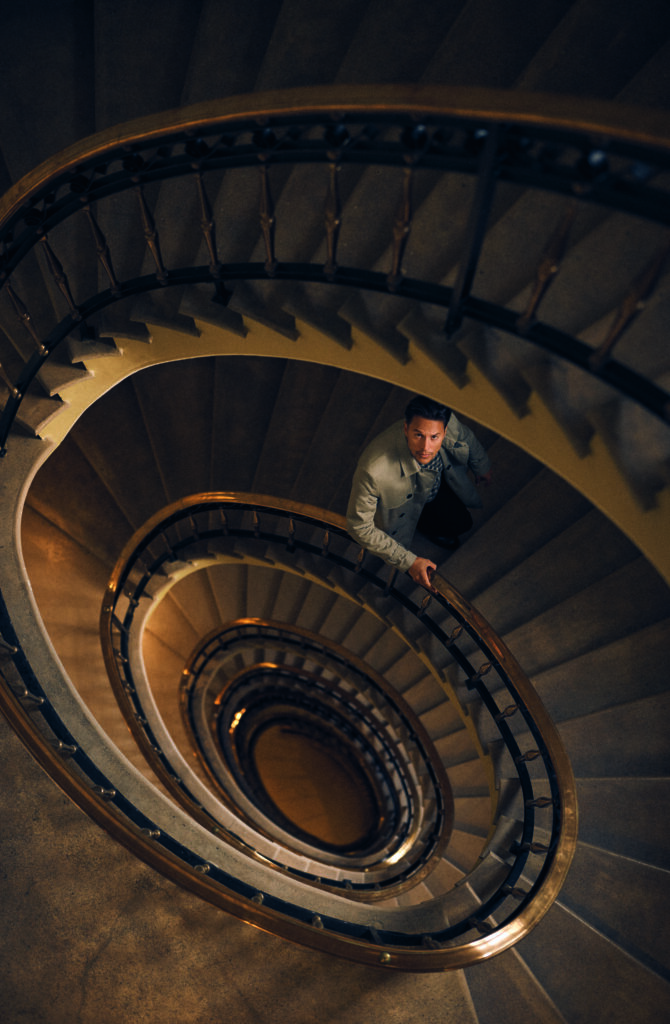
Fukunaga has spent his whole professional life not only meticulously honing his craft, but carving out as much time as he could to be a human being, using every second he has to try new things, to immerse himself in new places, to avoid swanky areas and live around people from all walks of life, even when it wasn’t convenient—especially when it wasn’t convenient.
“If I can’t exist as a human being, then I have nothing to offer creatively. Everything I can offer to an actor in terms of my direction, and the idiosyncrasies that I can put into a character only come from my observation of what humanity is as a person in the world. The more separated you are from being in that world, the harder it is for you to retell those experiences,” says Fukunaga.
Through all of that, the only human being that Fukunaga wasn’t listening to enough was himself. From here on out, with all the tools in his toolbox, Cary Fukunaga will trust his own voice and perspective. Honestly, with a schedule like his, who has time to waste on self-doubt?
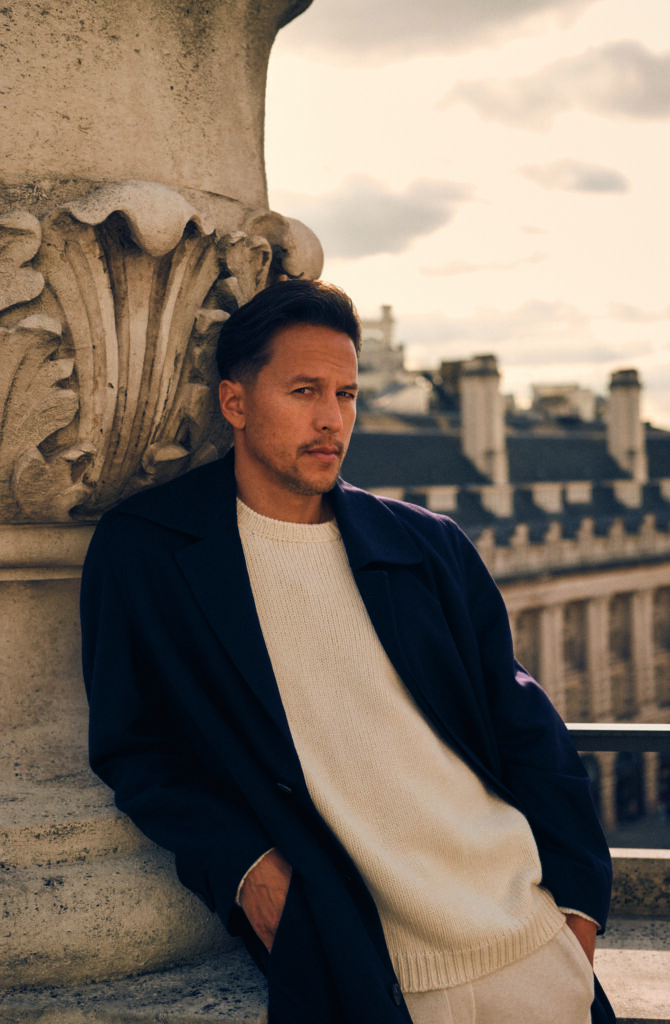
Photography by
Charlie Gray
Styling by
Grace Gilfeather
grooming by
katya thomas
Production by
Jesse Vora
location by
hotel cafe royal, London