
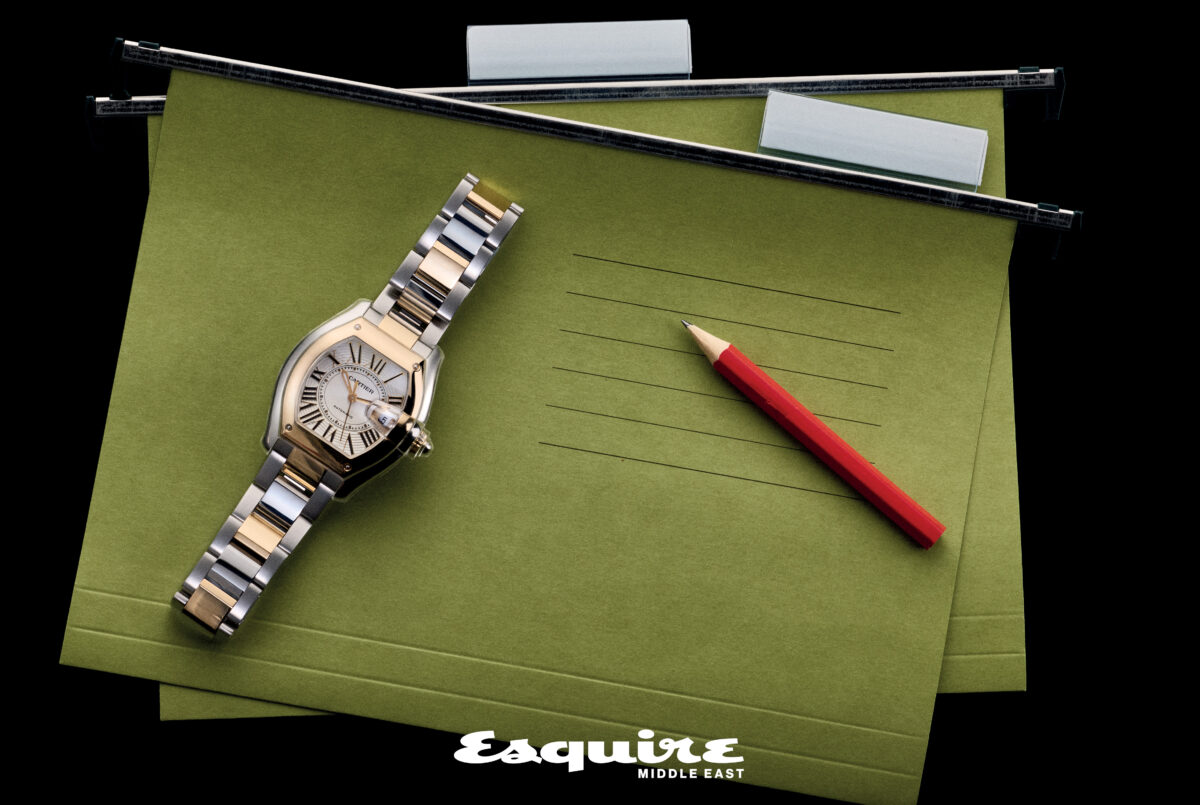

The story of the Cartier Roadster does not begin in a watchmaking atelier, but rather on the sun- drenched coastal roads of the mid-20th century. For design enthusiasts those were halcyon days, where the smell of gasoline, the purring of petrol engines, and the sleek curves of aerodynamic-cut steel represented the pinnacle of craft and the epitome of freedom.
While the original Cartier Roadster was not presented until 2002, it was a timepiece that was born from the inspiration from that great generation of motoring – precise engineering with a design that felt less like it was assembled and more like it was sculpted by the wind. With several elements of its design evoking sports’ car from the ’50s and ’60s – the Roadster is a high-velocity dream captured in steel and sapphire, and finally sees itself reimagined with a new collection released by Cartier at Watches&Wonders in April 2026.
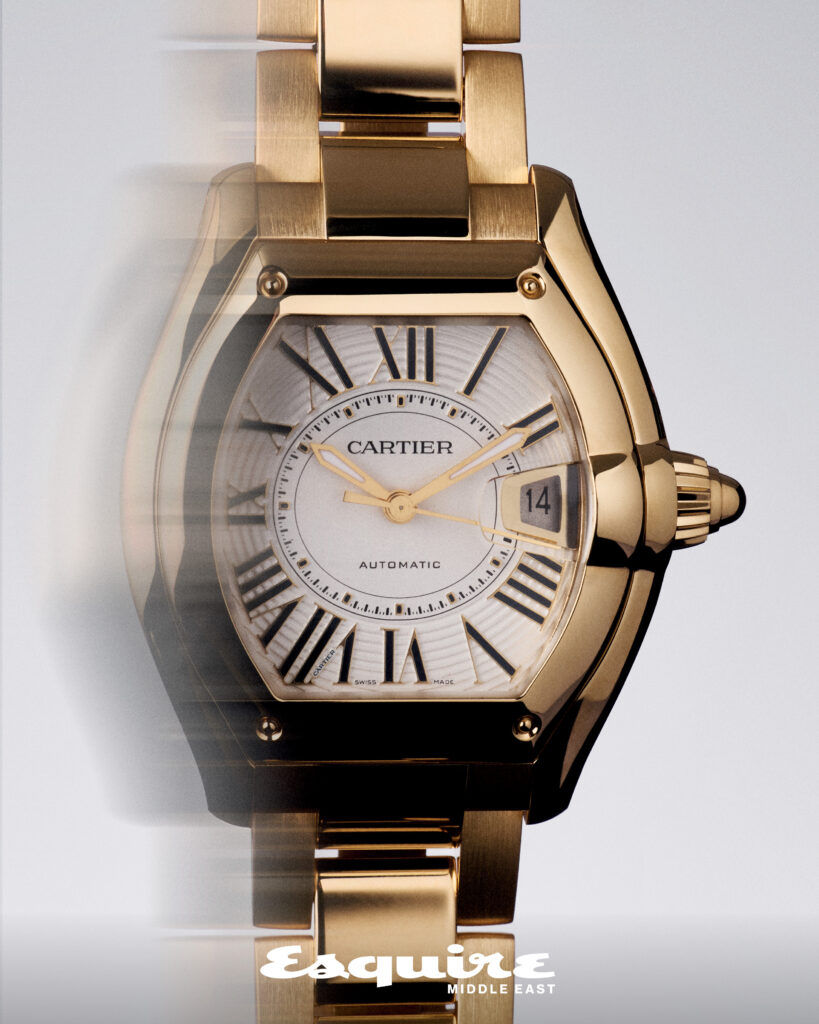
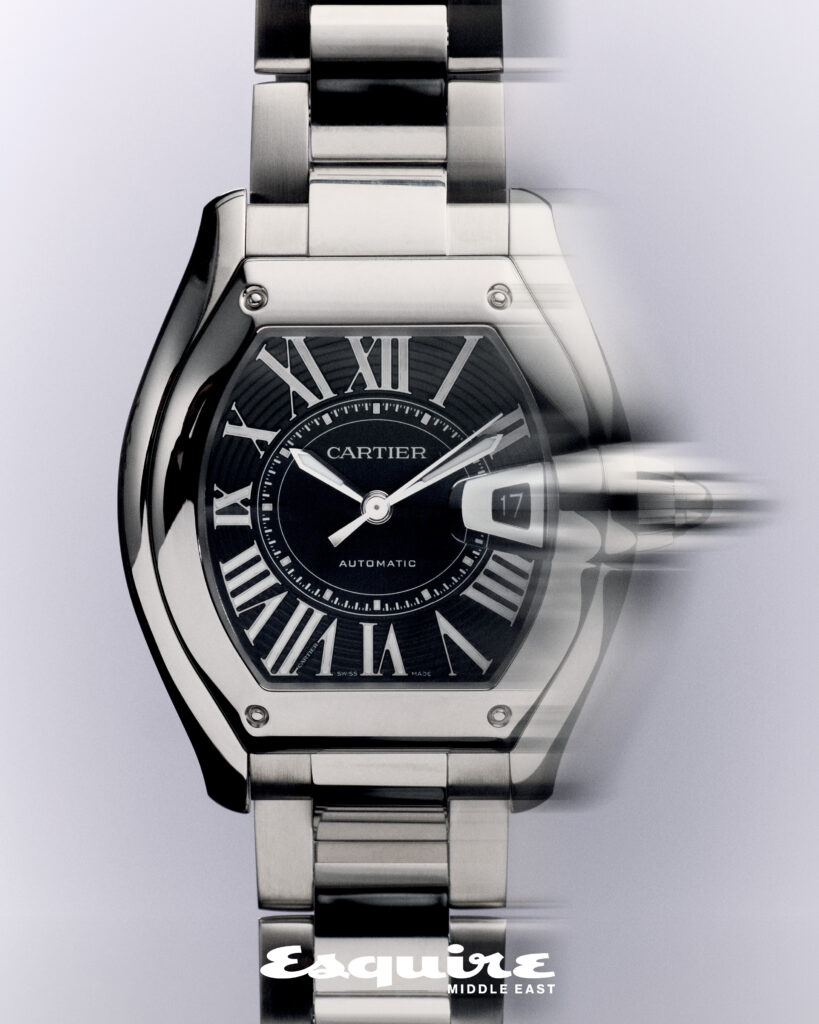
“It is a watch that has a very emblematic shape and with its strong, bold and singular design, it really helps complement our more masculine leaning product offering,” explains Arnaud Carrez, Senior Vice President and Chief Marketing Officer of Cartier.
Both the original and the new Cartier Roadster are love letters to the world of speed – ones that reflect the personal passions of the Cartier found himself. “Louis Cartier was very passionate about speed and racing,” says Pierre Rainero, Cartier’s Director of Image, Style, and Heritage. “He was a great lover and collector of fast cars and speedboats—so this idea of ‘speed’, and how it can be accomplished via great design, was very important to him. That was reflected in the first model of Roadster.”
Louis Cartier was a pioneer of 20th century elegance, and his spirit is remains vital to Cartier’s DNA today. As time progresses the modern world has only helped inspire a new luxury canvas for this elegance.
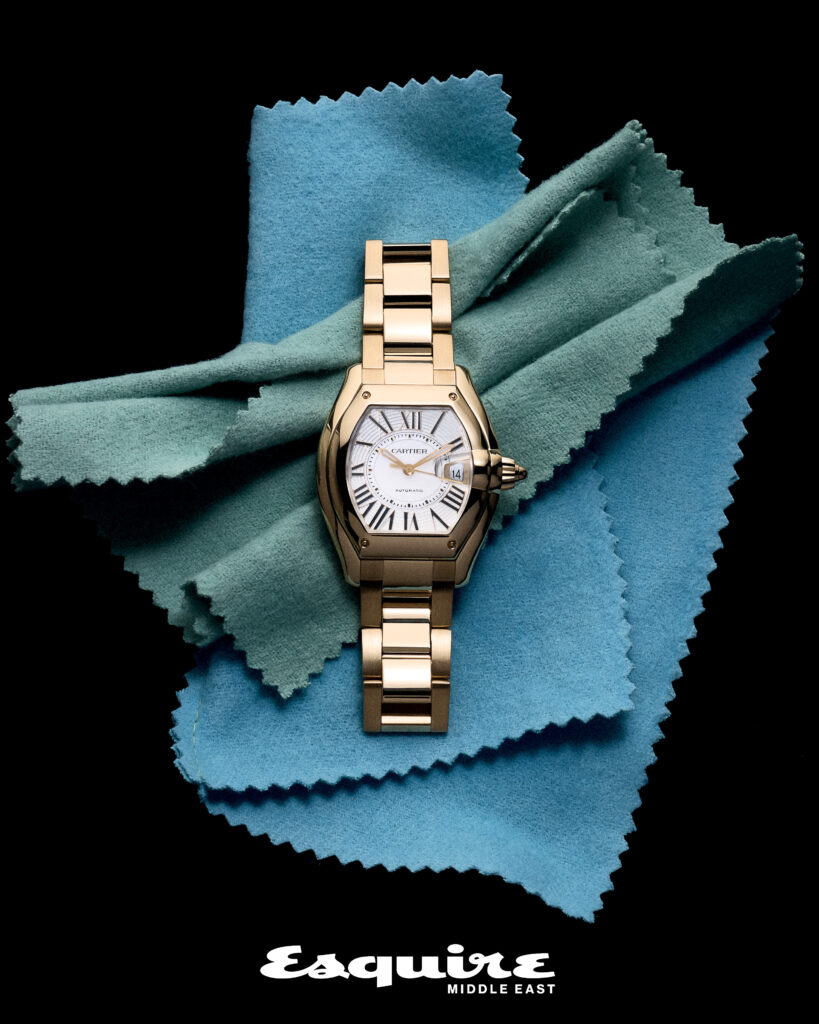
To understand the Roadster, one must first understand that Cartier has always viewed its timepieces through the eye of a jeweller. “Cartier is a first and foremost a jeweller,” says Rainero. “This lens dictates everything in terms of design, and its philosophy of design. Ultimately, what that means is there is always a lot of freedom in everything we create”.
This sense of freedom allowed Cartier to define watchmaking differently at the dawn of the 20th century. While the rest of the industry was obsessed with the traditional trappings of the circular pocket watch, Cartier began experimenting with more abstract designs, which would form the foundation of its future reputation as ‘watchmaker of shapes’. At that nascent stage, the idea of bringing different silhouettes to the wrist was revolutionary, and remains a load baring pillar of the brand today.
For Rainero, the history of the Maison generally travels down two distinct paths. The first is the path of “essential shapes”—the pure geometry of squares, rectangles, and ovals that gave us the Tank, the Santos, and the Baignoire. These models became emblems of Cartier’s taste for essential design mastery. However, there is a second, more evocative path: the “expressive shapes”.
“Very early on Cartier took the world of shapes as an inspiration for its designs,” explains Rainero. “These more poetic shapes we describe as ‘expressive shapes’, and the Roadster definitely belongs in that category.”
History shows us that when the Roadster first broke cover in 2002, it was a striking example of such expressive shapes. It was a bold example of Cartier’s approach to shapes, but with a significant emphasis on craft. The inspiration was literal and visceral: the world of speed.
The case captured the spirit of aerodynamics, featuring a barrel shape that flowed with the grace of a vintage fender. Perhaps its most iconic feature was the magnifying lens over the date, integrated into a metallic part that encapsulated both the crown and the date window together. This singular detail gave the watch a look that was both masculine and refined—
a mechanical silhouette that seemed ready to accelerate even when sitting still.
The impact was immediate. The early 21st century was dominated by oversized “tool” watches, and here was the newly launched Roadster, which offered a sophisticated, automotive-inspired alternative, that very quickly caught on.
“When the Roadster first launched in 2001 it was very successful, accounting for a significant part of Cartier’s watchmaking at the time,” says Arnaud Carrez. Its bold design resonated deeply, particularly in North America, where the ‘Roadster lifestyle’ found a natural home among a wide range of audiences.
For the next decade, the Roadster became a cornerstone of the Cartier catalogue, but it eventually moved into the realm of the archives, becoming a prized target for vintage collectors. However, the ghost of the Roadster never truly left the showroom.
The decision to bring it back as a full-time collection in April 2026 was not born of nostalgia alone, but of rigorous strategic analysis. “We found that there was a demand to bring it back,” continues Carrez. “The modern watch collector is increasingly looking for pieces that stand out from the ‘essential’ crowd —watches with a narrative, a specific DNA, and a unique, emblematic shape.”
The Roadster provides a vital piece of the puzzle for Cartier’s current lineup. While the Santos remains the quintessential pilot’s watch, the Roadster offers a different kind of masculine energy. “It is strong, it is bold and complements the Santos in terms of being our more masculine-leaning collections,” Carrez adds. It is the curves to the Santos’s lines; the speed to its flight.
So, what can we expect when the showroom doors open this April? The new Roadster is not a mere carbon copy of the 2002 original; it is an evolution. While it remains “very faithful to the silhouette” that collectors adore, the 2026 collection focuses on a modern sense of refinement and finesse.
Versatility remains at the heart of the “Roadster” name—a term that specifically refers to open-top, convertible cars. Just as a driver might drop the top on a sunny day, the Roadster owner is meant to adapt their watch to their environment.
The engineering has been tightened, the profiles slimmed, and the materials elevated. As Rainero points out, one of the most significant updates is the development of a new bracelet system. “The goal of this watch was to make it feel like a singular, continuous piece of sculpted metal on the wrist, rather than a case attached to a band. Therefore, we needed to create a new bracelet that went a step further in order to totally integrate the object,” he says.
The result saw the design studio rework the Roadster’s bracelet to refine its aesthetics and optimise functionality. From the shorter, more ergonomic links to the interplay of polished and brushed surfaces, every detail elevates the metal bracelet, which is equipped with the patented QuickSwitch™ system that allows for a simple swap between the metallic bracelet and a sophisticated leather strap, catering to the needs of a modern lifestyle where one might move from a morning meeting to a coastal drive without missing a beat.
The return of the Roadster is a reminder that in the world of Cartier, design is never static. It is a celebration of the “culture of watchmaker of shapes” that has defined the brand for over a century. By reclaiming this “expressive” masterpiece, Cartier is offering a watch that is as much a piece of history as it is a vision of the future.
As the Maison’s major launch for the year, its important to consider that the Roadster stands as a testament to the idea that true style doesn’t just tell time—but rather it captures a feeling. It captures the spirit of the open road, the thrill of the world of speed, and the enduring mastery of a Maison that refuses to be boxed in by tradition.
The Roadster is back, and it’s moving faster than ever.