


Strapped into the cockpit of a race car, there is barely room to breathe, let alone flinch. The harness is cinched brutally tight—your pulse thumping straight through the webbing—while the cabin swelters without air conditioning, waiting on the lights to drop. For Faisal Alkabbani, those seconds of claustrophobic rush is pure oxygen.
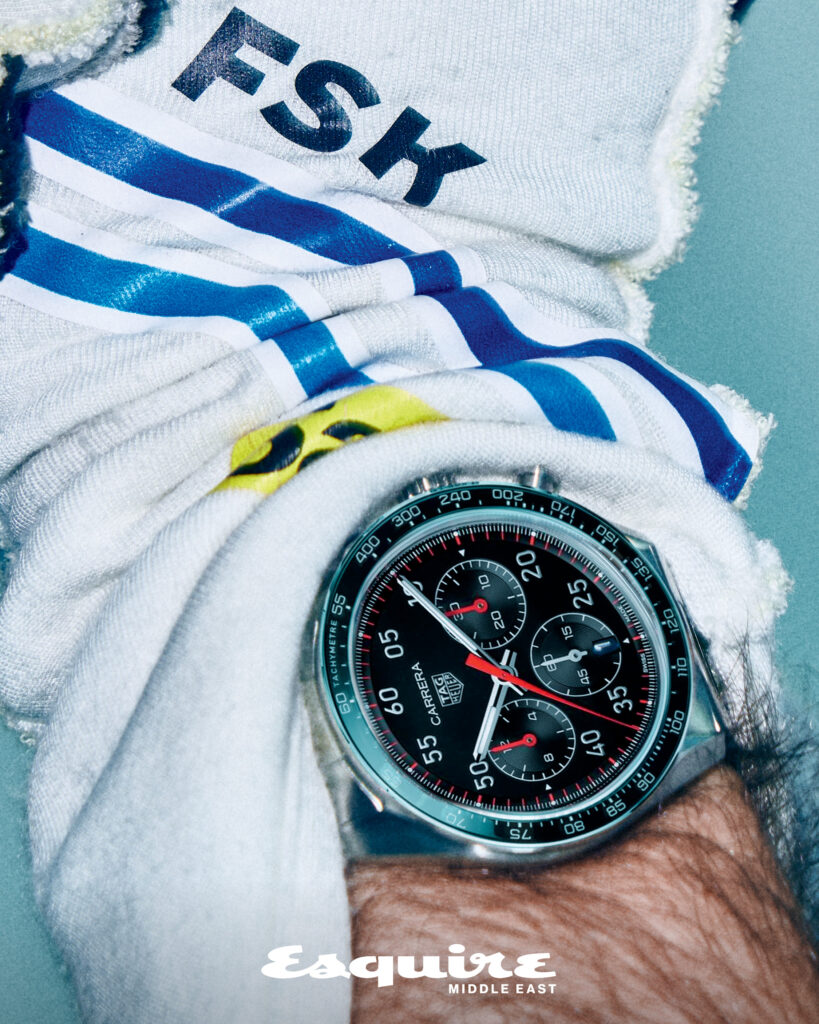
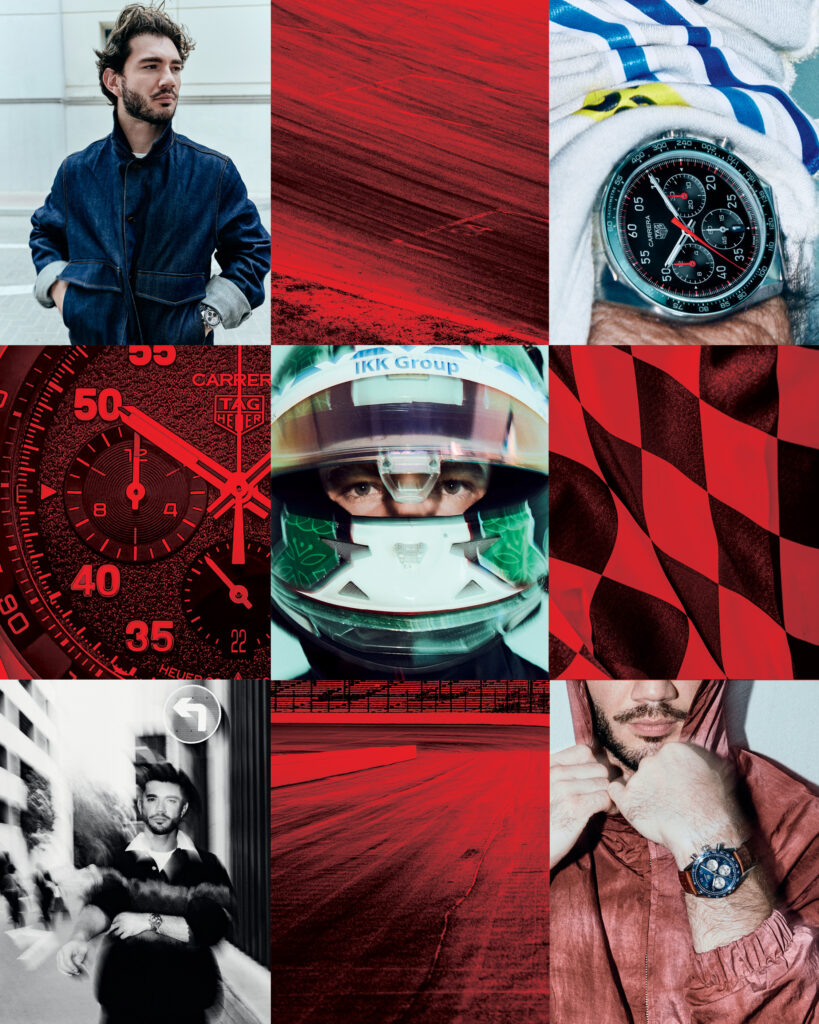
The Saudi racer has emerged as one of the standout figures in the Gulf’s motorsport landscape. Here wearing the new TAG Heuer Carrera Chronograph Sport, Alkabbani tells us how he balances unvarnished speed of a calculated chaos of race day.
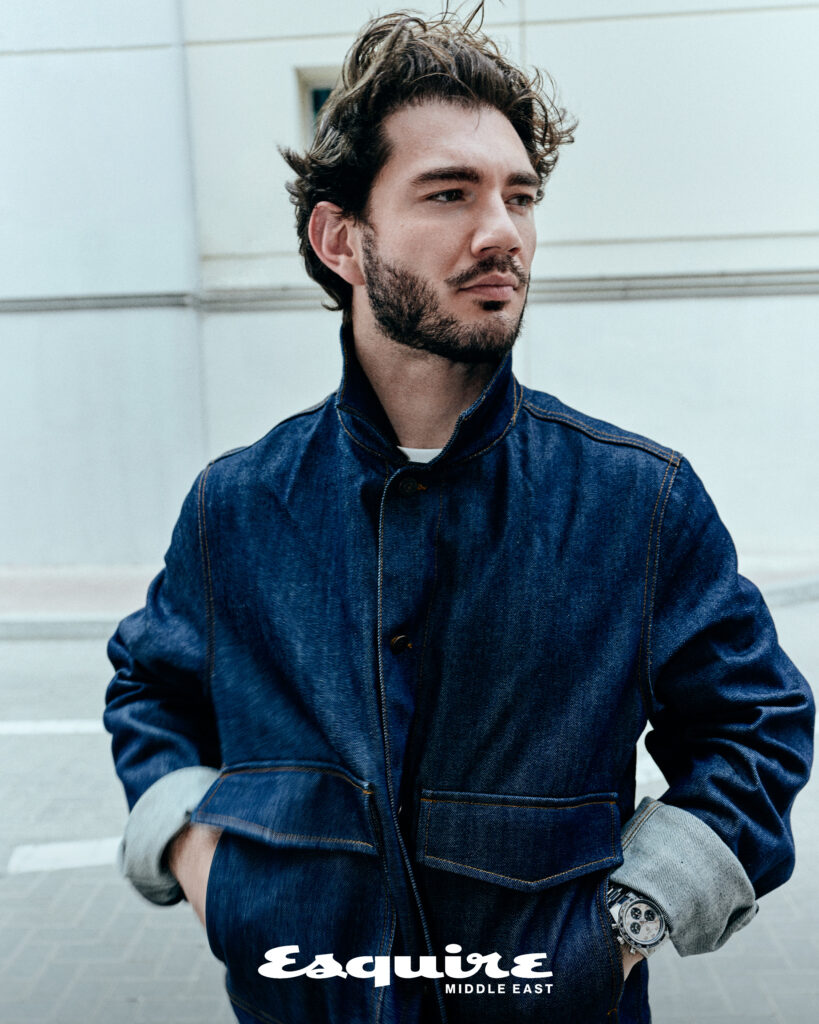
Denim Jacket, by COS; T-shirt in White, by LIMÉ. Denim Trousers, by A.PRESSE AT HARVEY NICHOLS DUBAI
ESQUIRE: Was there a moment when you realized that racing would me more than just a childhood pursuit, and it was something you could do professionally?
FAISAL ALKABBANI: I don’t think there was a specific moment, in fact, even know it is still a dream that I am trying to achieve. When it comes to building a racing career, things are never static, so you need to keep racing, performing well and, hopefully, winning, that will help you carry on building a career out of it.
ESQ: Does it feel different pulling on the helmet now, as it did when you first started?
FK: Every race is different, but the mentality is kind of the same. What I’ve learnt is that experience is super important in racing. The way you manage your race, your nerves, your preparation and concentration, all that gets easier with more experience, but ultimately, the desire and the fire inside is still the same.
ESQ: Which drivers do you look up to the most?
FK: My racing idols are Fernando Alonso and Ayrton Senna.
ESQ: Why those two?
FK: I relate to their characters and their aggressive driving styles. They are quite raw with their talent and their speed, and I can see myself in those qualities.
ESQ: With that natural aggressiveness, how do you keep it in check during a race, where – I assume – there is a need to manage lap consistency with pushing for speed…
FK: That’s a good point, and that is a great example of where experience comes in. From the outside, it looks like we are constantly going flat out all the time. But ultimately, when you push every lap, you open yourself up to make mistakes, and in a race a mistake can be the difference between a podium and the back of the grid. So whether you are chasing or being chased, you need to manage how much you need to push.
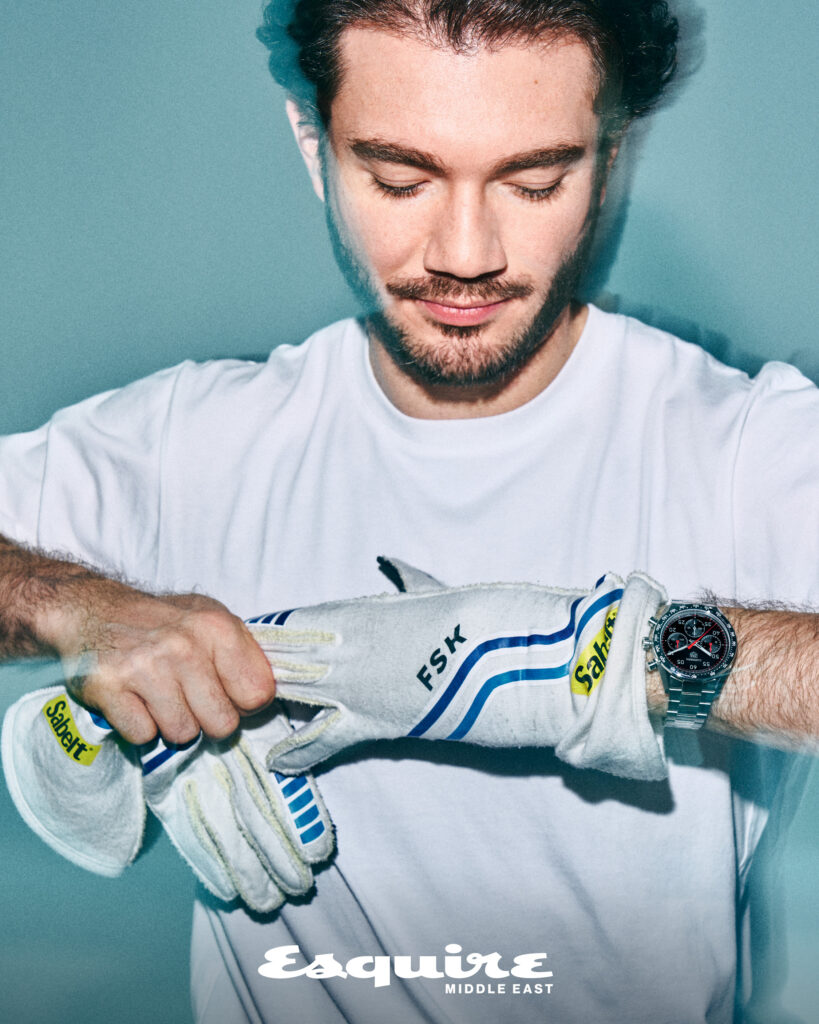
Faisal AlKabbani
ESQ: What is more rewarding: ten consistent laps, or setting the fastest lap?
FK: I have never thought about that before. I guess it is all about context. In qualifying or in a Time Attack, you are looking at that one perfect, fast lap. But in a race, you would absolutely pick 10 consistent laps, because it is often the difference between winning and losing.
ESQ: When you are pushing for that one perfect lap, do things slow down for you?
FK: They do, because you are so hyper focused on what you need to do. Where you’re going to break; how you are going to turn; and how soon can you get back on the throttle… every aspect of these make a difference when you are fighting for a few hundredths of a second. Ultimately you are trying to manage the extreme chaos, with a sense of controlled calm, and being focused allows you to slow things down.
ESQ: Set backs in racing happen all the time. A crash, a mechanical failure, a bad lap. How do you deal with getting back into the car, even though sometimes you don’t want to.
FK: Facing setbacks is something a driver faces, almost on a daily basis – but the drive to get back into the car comes from the desire to improve. Making a mistake on track can cost you a race, or in qualifying can put you in a position you don’t want, and there isn’t another chance to try again. It can be really frustrating, and so it takes a lot of effort to reset yourself mentally, get into the right frame of mind and go again. I’ve found that my method is to spend some time in my thoughts, visualize the lap, identify what I did wrong, mentally correct it and go out there again pretending it never happened.
ESQ: We’ve talked about the mentality of racing, so let me ask you about the physical aspects of it. Most people underestimate the physicality it takes to be a racing driver, what is it actually like?
FK: Yeah, the biggest misconception in motorsport is that we’re just sitting down driving car. People think we are not athletes or athletic, because their experience of driving is mainly going up and down a freeway. The reality is, in a race car, the physical toll is quite incredible. You have to have really high cardio just to be able to handle the repetitions of laps that we do in both practice and race laps – which are even harder because there is much more pressure on you to perform.
ESQ: How hot does it get in the cockpit?
FK: Very hot. The amount of layers that we wear is pretty crazy. You wear a racing suit, yes, but underneath you’re also wearing a thick fireproof full-body suit, and a balaclava, and then your helmet on top of that. Also, these cars don’t have A/C. So you’re locked in a space that is about the size of sardine can, with this roaring, hot engine either right behind or in front of you (depending on the car). You need to be capable of withstanding all that while racing in a 30 or 40 minute stint without making a mistake. It all adds up, honestly.
ESQ: Ultimately, success comes down to seconds. What second do you prefer: the second the race starts, or the second that it finishes?
FK: That’s a really good question. They are very different experiences. The second before the start is when adrenaline is at its peak. The seatbelt is so tight that you’re almost fighting to find space to breathe. You can feel your heartbeat through your belt as you wait for the lights to go green – it is such an intense feeling. However, at the end of the race, the rush comes from relief. Either that you’ve done well and you’re happy, or it is over with and you can get the heck out of there! If I had to choose it would be the start. That adrenaline is addictive.
ESQ: You are one of the most prominent faces of an exciting generation of Gulf racers. Is that something that you think about?
FK: The proudest thing I can say is that I represent Saudi, in what is looking to be a really important moment for motorsport in the GCC. I wake up every day knowing that I am blessed to be able to do what I love; and to have the Saudi flag stitched onto my race suit, it is an honour.
ESQ: Tell us about your helmet…
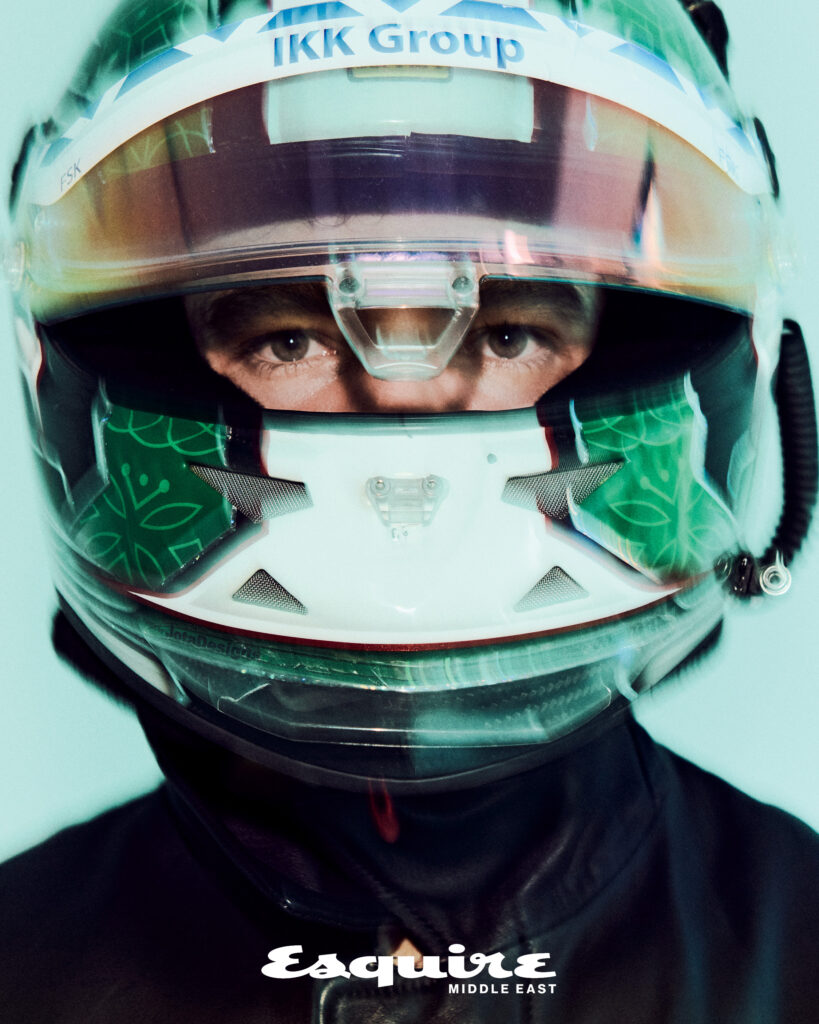
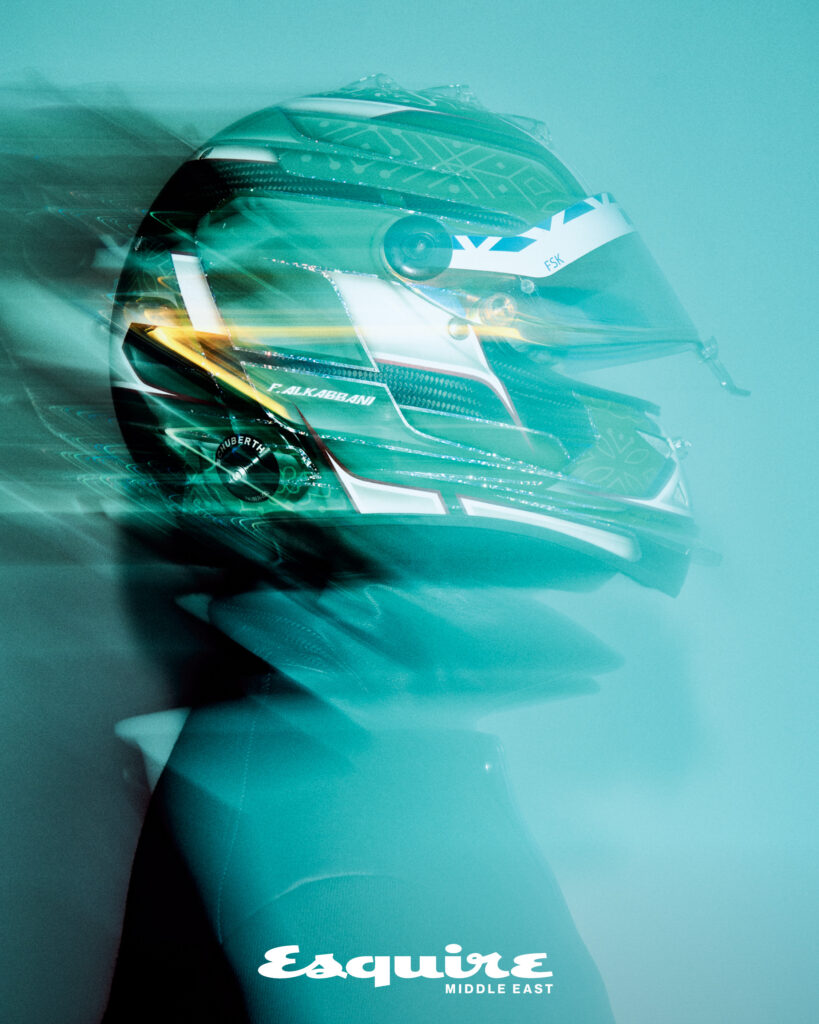
FK: It’s great, isn’t it? It took me quite a while to design, but the main two aspects was that I wanted to include my family and my heritage. The top of the helmet has the names of my family members on it in calligraphy, while the rest of the design has arabesque patterns and shapes in green – which happens to be both my favourite colour as well as the colour of my country.
ESQ: You mentioned that this is an exciting period for motorsport in the GCC. What advice would you give to aspiring upcoming drivers?
FK: To put in the work. Even if an opportunity doesn’t seem to be clearly in front of you, you have to keep working. I’ve learnt that personally. A lot of the time an opportunity can present itself out of nothing, and you have to be ready when the time comes. Motorsport does not give a lot of second chances, so put in the work to make sure you are always ready.