
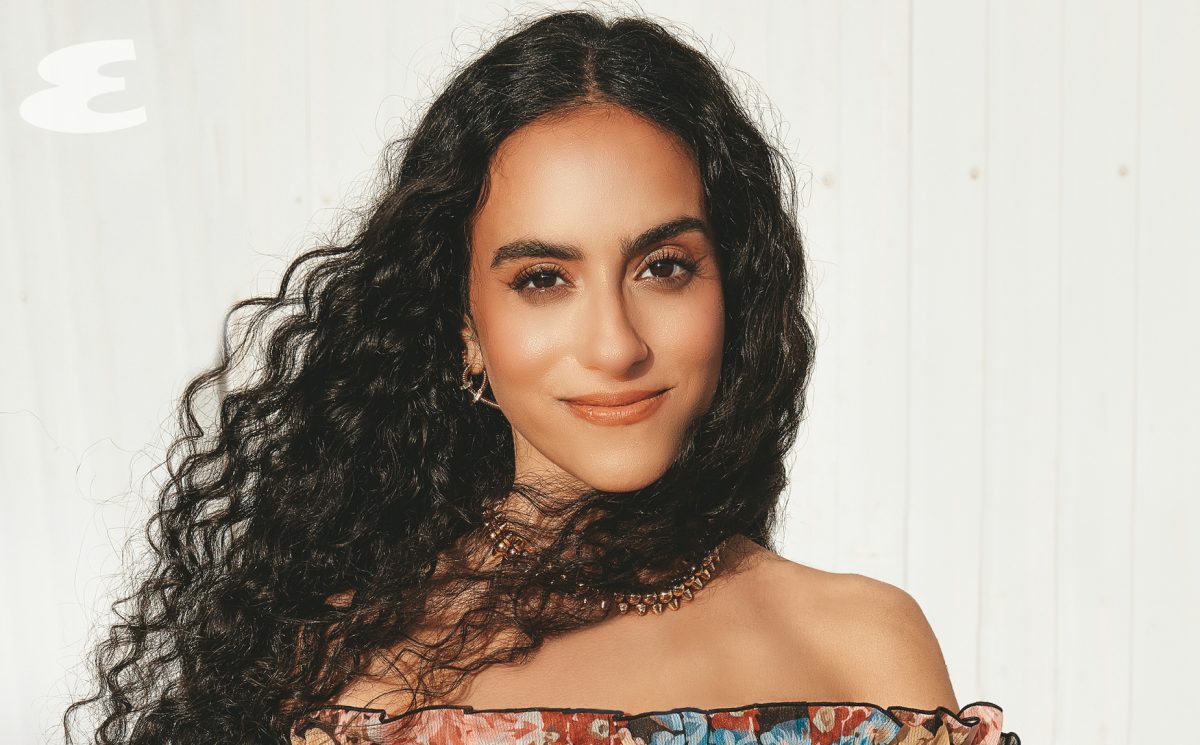

Esquire Middle East speaks with Nourie Flayhan, Cartier Pasha Tribe member
If an artist ever finds themselves in front of a room of people with a microphone being passed around, one dreaded question will come up nearly every time: ‘Where do you get your ideas?’ Rarely, if ever, is this followed by a good answer. After all, the imagination is as tricky a thing to describe as it is to unlock.
There’s a reason this question keeps coming up, of course. After all, anyone who’s ever stared at a blank page or an empty canvas has wondered to themselves how others tap into their creativity, so that they might be able to follow the same treads in the grass.
Allow us, then, to provide some answers, through the story of one of the best contemporary artists in the Arab world.
“My tutor told me you’re the only girl in this class that comes from a different culture…You have something special to share that no one else can take from you. Never push that aside.’
Nourie Flayhan
Nourie Flayhan was never encouraged to be an artist—she was encouraged to find herself. As a child, a paintbrush and a pencil were merely the tools that her interior designer mother laid out to help her search. It’s no wonder then, that decades later, the Lebanese illustrator has become one of the most distinctive and sought-after artists in the Middle East—she’s found in her canvas a soul all her own, and one she’s deeply in tune with.
“I feel really privileged that I grew up in the household that I did. Because my mom and dad told us to find out who we really were, I still to this day find myself thinking there’s so much more to me than what I already know,” Flayhan tells Esquire Middle East.
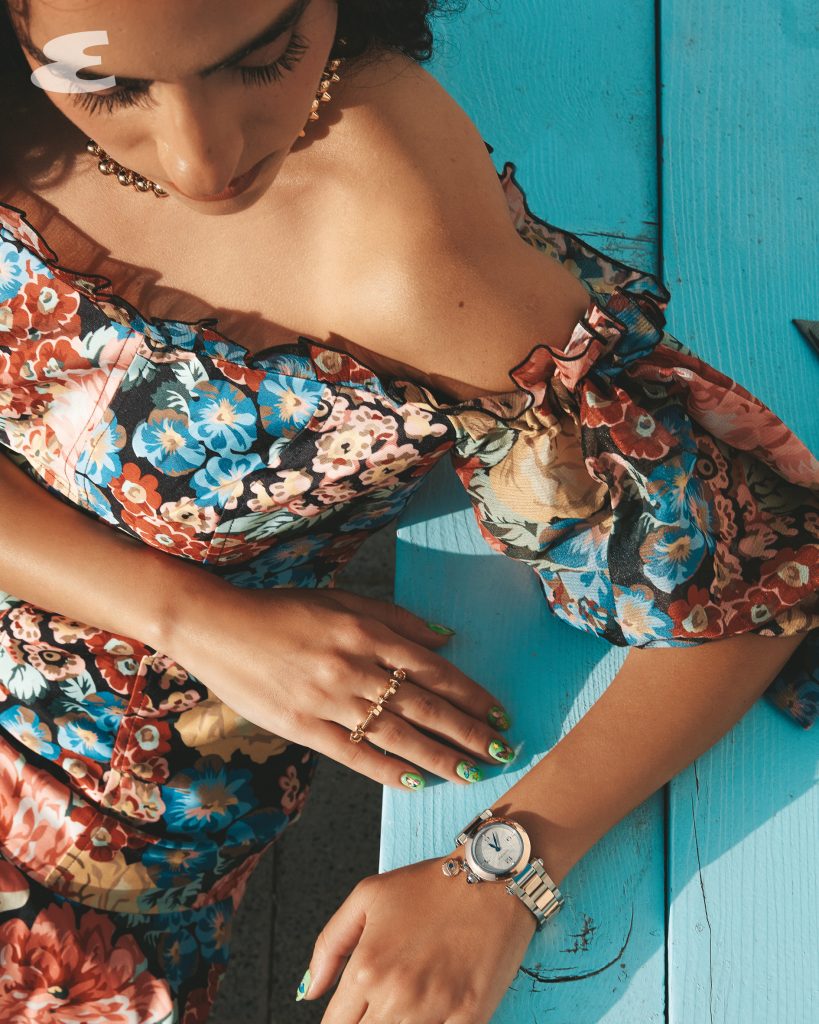
Flayhan’s journey has recently taken her to the UAE, after growing up in Kuwait, studying in the UK and living in Lebanon, and even here, her prolifically-produced art has been a means of self-discovery, fueled by the lessons she’s learned from the place she is in and the tribe she has surrounded herself with.
“When I first moved to Dubai, I was at the end of a burn-out phase. I had taken a few months off creating, and wasn’t sure how I’d get back. Then I started attending art events in the city, I became a Cartier Pasha tribe member, and suddenly I was interacting with people from across the world that either lived here or were visiting, and I found it incredibly motivating. I was inspired by each person’s story, and felt I was part of a community, because everyone was from somewhere else, too. Everyone was here to grow. I knew I couldn’t limit myself any longer, and I couldn’t even label myself purely as an illustrator. I had to journey back to my roots,” says Flayhan.
While Flayhan has learned to excel at communicating with her peers, and her father’s love of poetry helped her fall in love with language, that was not always the case. As a child in Kuwait, Flayhan had trouble speaking with others because around the house, she’d only learned how to express herself through art.
“I was silent. I was so used to saying everything creatively, I couldn’t say anything otherwise. The other kids never really understood that. Home was a sanctuary for me, a place where I could channel all of that into making things. Around the house, the language that my mother, my two brothers and I spoke was through fine arts or other types of design. When I finished school, I had to go to university and study art and design because I didn’t want to lose that. I felt like it was part of me, almost a transference of energy from my soul into something that I could communicate with,” says Flayhan.
There was something else pivotal that Flaynan’s parents gave her as well—a strong sense of identity, both as an Arab woman and a Lebanese citizen. As both had fled Lebanon due to the devastating multi-decade civil war, the two knew that to keep their children connected to their home, it would have to be a conscious task, especially now that they would no longer be surrounded by people from the same world. It’s a mission that Flayhan is supremely grateful they undertook, as once she stepped outside the home, she felt that stark imbalance.
“At my British school in Kuwait, I was really underrepresented. I now feel this responsibility to my younger self to tell stories of underrepresented people or the women around me are things that didn’t have the platform. That drives my creativity, too,” says Flayhan.
As important is the fact that, as Flayhan began to embrace social media, she found that her most overtly political pieces driven by her keen sense of injustice were not only embraced, but were able to break through to the mainstream in a way that traditional new stories or photography couldn’t.
“I realized that illustration holds so much power to translate what’s happening. It stops people in their tracks. It starts conversations that otherwise would never happen. That’s why we create—to platform social issues that otherwise would never have that. And once you start doing it, even if you get pushback, people will see someone doing something, and feel like it’s ok for them to do it as well,” says Flayhan.
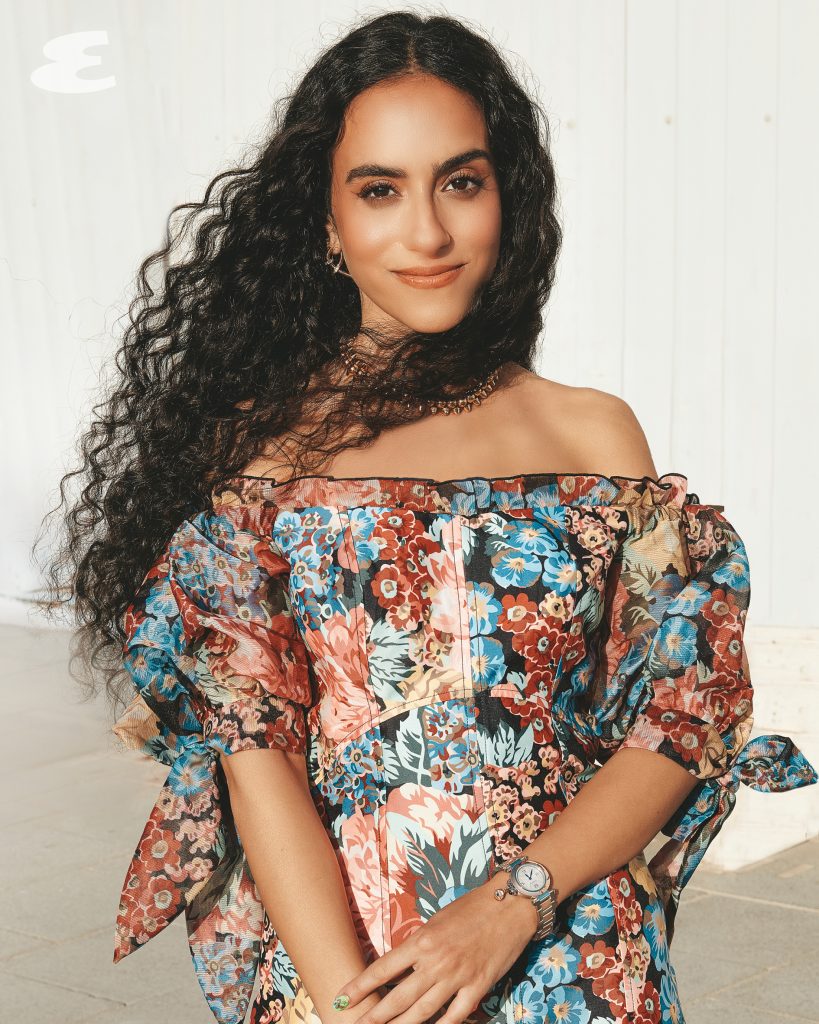
Illustration did not always come as easy for Flayhan. There was, indeed, a time when she stared at the blank canvas too, back when she studied art in London. She’d just arrived, and she was the only Arab in a class full of British kids. Unconsciously, her work in class started to assimilate to the style of everyone else in the room. To her great luck, her professor noticed.
“My tutor came up to me and said, ‘what are you doing? You’re the only girl in this class that comes from a different culture in a different country. There’s beauty that comes out of your country, whether it’s the stories of your parents or your parents or your grandparents. You have something special to share that no one else can take from you. Never push that aside.’ That was a huge wake up call. I had almost forgot who I was. I had lost my voice,” says Flayhan.
From there, illustration became the most powerful tool Flayhan had to aid her journey within.
“Illustration is not a depiction of what you see, it’s a depiction of what you see coupled with how you feel, and all the factors around your environment, including smells, tastes, and memories. I sat with myself for the longest time, drawing and drawing, trying to find different ways I could find myself on the page. And then once I found it, I stood back and reevaluated. I never want to feel comfortable. I never want to illustrate without feeling,” says Flayhan.
Ultimately, even as she plans to explore textiles once again and other media while she pushes herself further in Dubai, there is one constant to Flayhan’s creativity—as far as she moves forward, and the more she grows as a person, the more she’s connecting back to girl who first picked up a pen off her mother’s table.
“The work I’m most proud of is the work I create with my younger self in mind. Connecting with her is like showing her where I am today. It’s the warmest hug you can get, the most rewarding thing is being the person that your younger self needed to look up to. And for me, that is everything, you know?”
Photography by Adel Rashid. This article was first published in the June 2022 issue of Esquire Middle East