
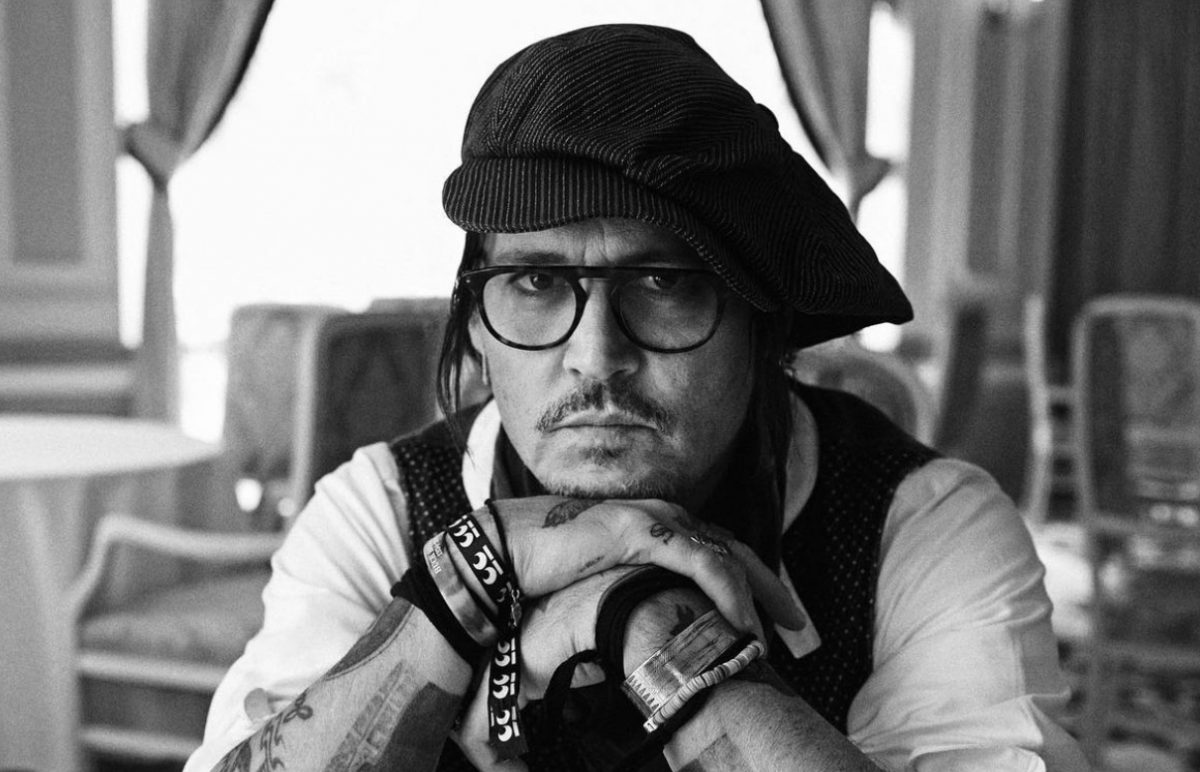

In his own words, Johnny Depp shares with Esquire Middle East’s William Mullally what it feels like to be misunderstood, some of the most important moments of his career, and why his latest film, Minamata, was also one of Depp’s most personal.
Back in the 80s, I wasn’t happy. I was working on a television series 21 Jump Street, and even though I have always loved the process of acting, there, it felt more like a daily grind. It was 15 to 16 pages a day of just a bunch of exposition and numbness. Luckily, those days have been exorcised.
I turned to John Waters to help me do the exorcism. It was invigorating to do Cry Baby with him, after having been accidentally turned into some kind of poster boy teen idol. The choice that I made with John was the perfect opportunity to make fun of what they tried to turn me into.
Every casting role since has been like that in some way. With each choice that I’ve made, there’s a specific need in me to play those people. For me, it’s about the process of becoming prepared. It’s process of finding that person.
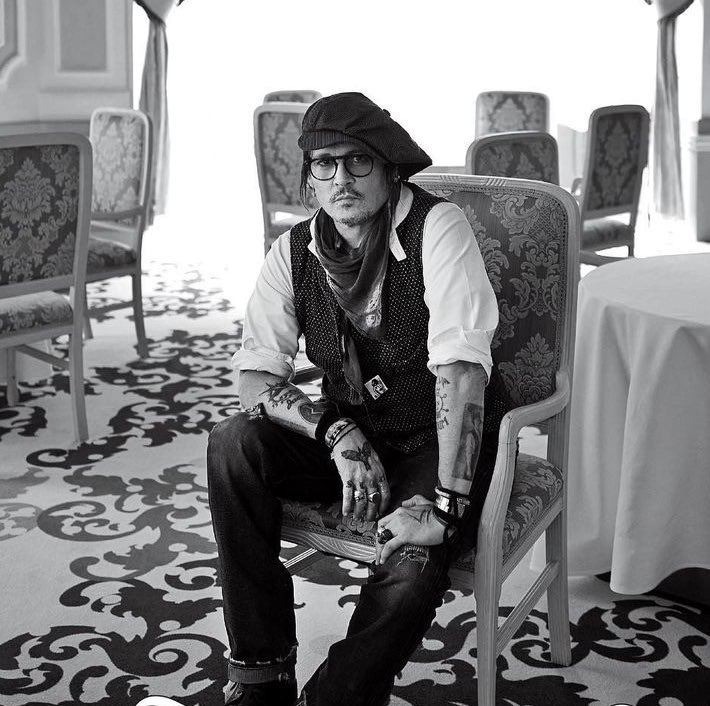
When the person I’m playing really existed, there’s a gravitational weight of responsibility to that person. You have to rebuild that person from bits. You can grab here and you can grab here, and try to bring them back.
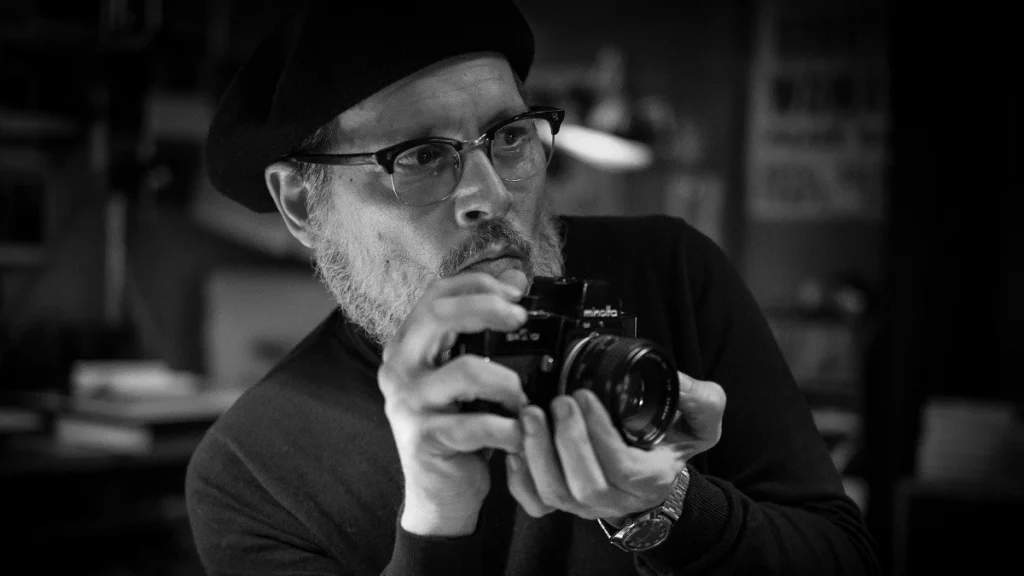
In my latest movie Minamata, I play a guy named Gene Smith—a remarkable man, a photojournalist who helped expose one of the worst cases of corporate malfeasance in history in Japan, an entire fishing village that was devastated by mercury poisoning, and no one was talking about it, until he did.
Gene and I have a lot in common, to be honest. We’re both miserable bastards.
I don’t think I could have played a guy like Gene Smith earlier in my career. I think I needed the years. There’s things that I had to see, things that I had to experience, before I could get to a place where I could really understand Gene to the degree that I do.
And make no mistake, if you want to collaborate properly, you have to bring your truth to the table. My truth shapes how everyone else will react—it doesn’t work if I don’t.
From the very beginning, the more I thought about it, the more I had this enormous responsibility to Gene, and to his wife Eileen. It was monumentally huge, and what they went through was absolutely surreal. I salute these people who experienced this horror.
At the beginning of Minamata, Gene is a lonely place, but it’s a good place. He needed a fire under his ass. Otherwise, he was just going to stay some miserable bastard that his friends wouldn’t talk to anymore. He was just going to make people miserable.
The opportunity he had to shoot what was going on in Japan—I hate to put it in these terms, because it sounds like some award thing—but it gave him another shot at his crown. I think that being separated from his world meant a lot to him.
I also know what it’s felt like to be misunderstood. It’s an area that I’ve explored myself. In terms of state of mind, it’s when you suddenly feel like you’re in the middle of the Colosseum in ancient Rome, and the place is packed, and everyone’s staring, waiting for you to meet the lion.
Getting into Gene’s mind, was honestly the most free I’ve ever felt. No one on set was in fear of my character, which is unusual for me.
Gene and I had some other things in common, too. Andrew Levitas, our director, always says to me that Gene and I have the ability to see the best in people, to want to be part of the solution, to see love and joy in people and in the world, even in the most f***ed up places. Maybe he’s on to something.
A lot of that has to do with Andrew, I think. We first met at my home in Los Angeles. He came over to talk about the film. That’s how it normally goes—you sit there and talk about two hours, but if it’s a good one, the conversations will sometimes go from eight to nine hours. This was one of those.
Andrew and I were sitting outside in this Gazebo thing, sitting from the bright burning sun until it burned out into the cold night. All the while, we sat there just yakking about everything—about art, about cinema, about life, and about the project. I knew instantly that he was the guy. He got it. He got Gene, too. That’s important to me in choosing who I work with.
Making movies, I make strong bonds with the people. Last year, we lost Boston George, the man I played in the movie Blow, who I stayed close with for years after. Even now, I can only see George with a big f***ing smile on his face.
It’s a huge loss that he’s not around anymore because that man lived life with no qualms. He was fearless. He was a very special man. He taught me a whole lot—a very special guy. He was the prison philosopher. Those are my kind of people.
I love to feel free. One of the greatest gifts I can be presented is true freedom—no barriers, no nothing. That’s what I look for in a film. I’m lucky I found that with this one, and I hope to find it again some day.
Johnny Depp’s Minamata is now on Digital and On Demand
Photos by Benedik Trenc for Esquire Czech