
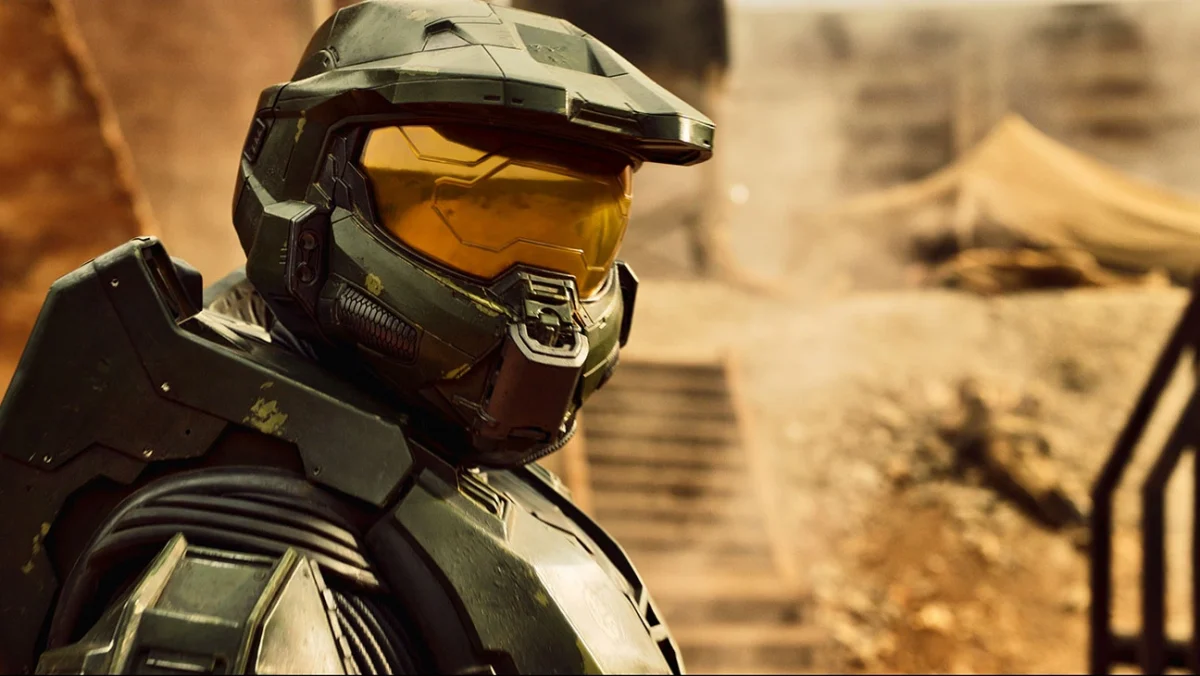

After nearly 10 years of work, Halo the series is finally here–launching in a nine episode series that will drop weekly starting March 25. It wasn’t an easy journey.
Based on one of the most popular and historically important video game series ever made, Halo is a science fiction marvel, following the iconic character Master Chief, a genetically enhanced Spartan supersoldier encased in green armor who faces off against the Covenant in order to find the ‘Halo’, a ring-shaped space station/super weapon that was created by an ancient and extinct race that the Covenant thought were deities.
The budget and scale are massive (officially $90m but rumoured to have cost up to $200m throughout development), setting up Halo the television series to be as big as the video games it follows, a series that has sold a staggering 82 million copies worldwide—not to mention making nearly single-handedly making the Xbox a household device.

The path to completing a show of that level of ambition was anything but a sure thing, as the team worked tirelessly behind the scenes to find the right partners that could bring the project to fruition—and the right approach to tell the story right. The writing team apparently wrote 265 drafts of the show—not a typo—before they began filming, with multiple reshoots and re-edits throughout the pandemic to get the story to where it needed to be.
Ahead of the series launch on OSN+ on March 25, Esquire Middle East sat down with the show’s executive producer Kiki Wolfkill, who oversees all Halo media across both games and beyond, about the show’s production, what it took to get the show right, and the lessons they’re applying from season one to season two, which should go into production later this year, she revealed.
Read our full conversation with Halo producer Kiki Wolfkill below:
It’s been almost 10 years since we first got news that we would be getting a Halo TV series, and that was followed by many ups and downs, push and pull, in what I’m sure was a very fraught and exhausting development process.
Can you give me some insight into what directions you may have headed that allowed you to finally get where you needed to be and tell this story the way it was meant to be told?
I think we’re still learning. The last 10 years has been an incredible learning process of navigating Hollywood, navigating how long deals take, navigating intentions. We were so lucky to sign on with Amblin Entertainment and Spielberg right off the bat, and then quickly thereafter with Showtime, who have been incredible partners.
I feel like the fits and starts were us together, working to figure out what the voice of the show could be, what it should be, what the priorities are, how we balance the character development and story side of it, how we balance the broad entertainment, action-adventure nature of Halo.
I think there was a lot of feeling around those edges to just see what the balance should be, and I think where we landed in season one is in an amazing place of expressing the universe, I think we’ll still continue to work through that balance as we move from season one to season two, with a commitment to building out the world and having it feel somewhere real. The commitment to expressing those themes of Halo, of hope and heroism, and humanity and wonder, those are all sacred and will continue.

We all want to tell a great character story. I feel like we landed in a good place with season one in combining those elements and starting that journey. But again, I feel like it’s been a learning process all the way. I feel great that we have a team and a crew and partners that are all passionate about that, and passionate about continuing to build on what we did with season one. With season two, I think that adventure is part of what Halo is. And we’ve, we focused a little more on character story as well, because that’s not something we can deliver easily, or in the same way, in a first-person game. I think those are the things we’ll continue to double down on.
I think it was really about finding that balance, and finding the right creative team to execute on it. It’s hugely ambitious what we did in terms of bringing the world to life. And that required an incredibly talented crew, which we have.
How did you find the balance to produce a TV show that would be both satisfying for the fan base and newcomers?
It was a really interesting challenge. Part of that was the fact that we have such a diverse fan base. You’re introducing it to a new audience, while also considering about 1000 other constituents within the Halo fan base, in terms of opinions and thoughts and things that they’re most passionate about.
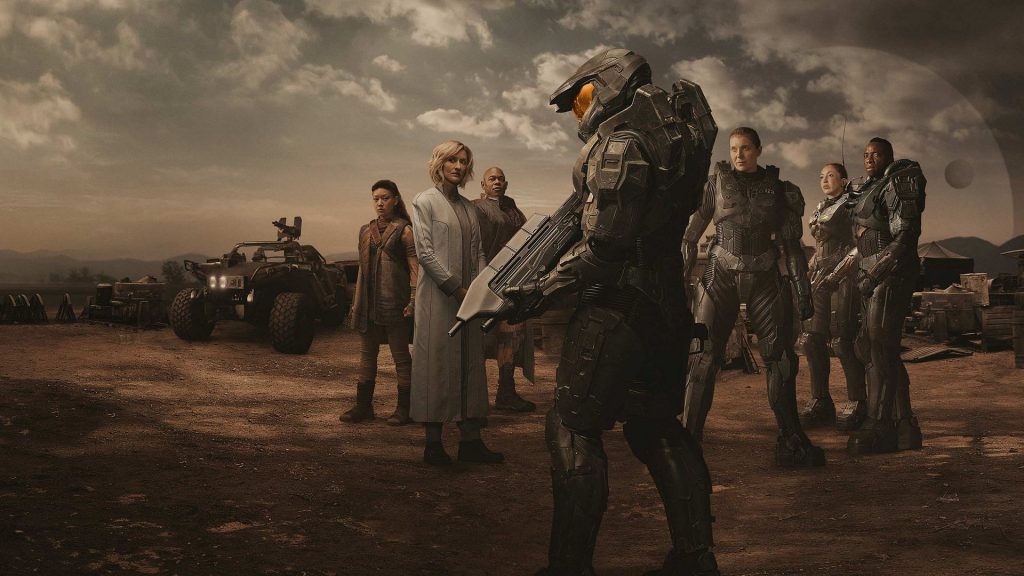
Really, the approach was to first focus on the things that are very fundamental to Halo, and the things that for a lot of us were the things that grabbed us first. In thinking about those themes of hope, and heroism, and humanity and sort of the wonder and awe of sci-fi, those are core themes that that infuse everything that we try to do in Halo, and to me are the things that emotionally connect you to the universe.
How different is the creative process from telling a story in game?
The story has to come first. And that was the difference. I think in creating this, we weren’t thinking about both gameplay and story at the same time. It was all story, t was all how do we service the characters’ stories, and making sure that anything that we did include came from a foundation of everything being canon and then made the decisions of where we move away from it versus the other way around. If we were going to move away from it, it had to be because it served the story. And it couldn’t be just for the sake of making a change, it had to be for making an object or the look feel very grounded. That’s how we balanced how we balanced both, but we very much looked at it as we want to serve the fans. We want them to be excited to see this university have never seen at the scope and scale and live action. And we wanted a new audience to be introduced to the things that that we think are fundamental to Halo.
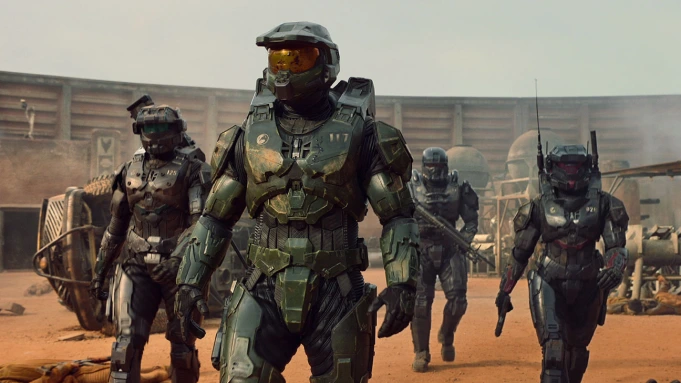
What are the lessons you learned from season one that you’re applying to season two, and how far into the future have you mapped things out?
The big lessons were production based, as we were really ambitious with how we built out the world. We really hit the ground running when we went into production. At one point, we had four directors at the studio, and we were prepping, shooting, doing second unit.
I think one of the big lessons learned is we were trying to do much too much at the same time. iI just spread focus. I think what’s so important about making a show like this is having a holistic vision and having through lines across every single episode. And because we were doing so much simultaneously, that was really hard to manage. I think one of the big lessons learned was about needing to slow down a little bit and needing to make sure we had the time to focus on each block. We also make sure that that the holistic vision was really held across a 1,000 person crew, which is hard to do, especially if your people are in all different places at the same time. I think that was a big lesson because, production decisions very much affect creative.
For season two, we are picking up some of the threads, but also I think in season one, we focused just on that season, because of the scale. We just wanted to get this story done. Season two is really where we’re looking at picking that up and looking at what the next five years of story looks like.
Watch the series exclusively on OSN+ here.